How Do Military-Style Tents Compare to Standard Dome Tents for Weekend Trips?
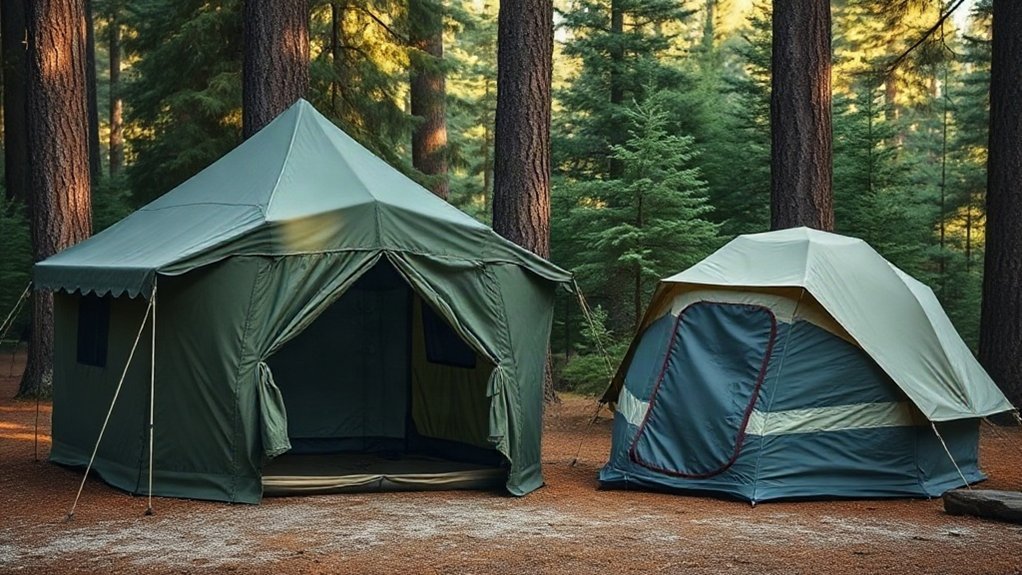
I’d choose a standard dome tent for most weekend trips because it’s lighter, packs smaller, and pitches quickly. Crossed poles handle ordinary rain and light wind when I stake and guy out the tent properly, but most three-season models aren’t built for severe weather. Military-style tents trade portability for rugged materials, repairable construction, and often more base-camp comfort. They suit vehicle-accessible sites and repeated rough use; their weight and canvas care matter. The details can help you choose.
Key Takeaways
- Standard dome tents are lighter, pack smaller, and pitch quickly, making them convenient for established campgrounds and occasional weekend trips.
- Military-style tents use rugged materials and reinforced construction for repeated use, but their weight often makes them better for vehicle-accessible base camps.
- Properly pitched dome tents handle ordinary rain and light wind; military-style tents may suit harsher conditions, though canvas may need waterproofing.
- Compare floor area and peak height rather than advertised capacity; military-style tents and cabin-style domes can offer more usable room.
- For either style, secure anchoring, ventilation, and condition matter; check seams, rainfly, and mildew before heading out.
How Do Military-Style and Dome Tents Compare?
For weekend car camping, choose a military-style tent if you want rugged materials and durability for repeated use; choose a dome tent if you value a lighter, simpler setup. I’d pick military-style tents for a dependable basecamp: heavy-duty fabric, reinforced stitching, and field-use hardware handle repeated outings. Cotton canvas feels substantial, though it may need treatment for full waterproofing. This build brings strength, but adds weight and can demand more effort to pitch.
A dome tent uses crossing aluminum poles to form a self-supporting arch. I find that design a practical choice when portability matters or I want to move between camps. It sheds rain and handles light wind, but a typical three-season model isn’t meant for sustained high winds or heavy snow. Match the shelter to your route and conditions. Military-style tents may also include a stove jack for heating during cold-weather base-camp stays.
Which Tent Packs and Pitches More Easily?
When quick setup and compact packing matter, a standard dome tent is usually easier to manage. I find its crossing poles create a self-supporting frame that beginners can pitch in under 10 minutes with practice. Some models stand without stakes, so I can position one on gravel or a platform. Lightweight designs use fewer poles and pack small, freeing space for other gear on a weekend trip.
Military surplus tents suit repeated field setup, but heavier canvas or reinforced ripstop nylon can make them cumbersome to carry and store. A gp small tent may still take longer to pitch than a dome. If I’m choosing an a-frame tent or modular tent system for base camp, I’ll weigh setup time and packed size against backcountry portability. Staking upwind corners before lifting helps one person raise a military-style tent more quickly. For quick escapes, I’d take the dome.
How Do These Tents Handle Wind and Rain?
In ordinary weekend weather, a correctly pitched dome tent handles rain and light wind well, but it isn’t built for sustained storms. Its crossed poles create a self-supporting arch that sheds rain, while secure stakes and guy lines help it stay put. I’d add tension straps where the design allows and use a groundsheet to protect the floor.
For harsher conditions, a military-style tent’s sturdier frame, reinforced stress points, and heavier fabric can offer better resistance to gusts and rain. A canvas wall tent may need treatment before it’s fully waterproof, so I’d check its coating rather than assume. A low-profile pyramid tent can also shed wind, but construction varies. Neither style is automatically windproof: I’d pitch carefully, stake every anchor, and choose the military-style option when the forecast looks rough. In high winds, pitching low and turning the tent’s narrow end into the wind can help reduce exposure.
Which Tent Offers More Space and Comfort?
Beyond weather protection, space can make or break a weekend setup. I compare floor area and peak height, not just the capacity printed on the bag. A 30-square-foot dome may sleep two, yet sloping walls crowd gear and limit usable headroom.
| Check | What I look for |
|---|---|
| Floor area | Room for a camping cot and sleeping bag |
| Peak height | Space to sit up or stand |
| Gear room | Clear floor for packs and supplies |
A cabin-style tent usually gives me more room to spread out, especially for group camping. Military-style models vary, so I check dimensions before buying; rugged builds can trade carry convenience for dependable base-camp comfort. A bunker tent or four-season tent label doesn’t guarantee extra space. I also verify any listed NATO stock number, then judge the tent’s actual layout for my trip or emergency shelter needs. For four people, a tent around 10×10 or 12×14 feet offers more practical room, especially when I account for sleeping pads and gear and stove clearance.
When Is a Military-Style Tent Worth It?
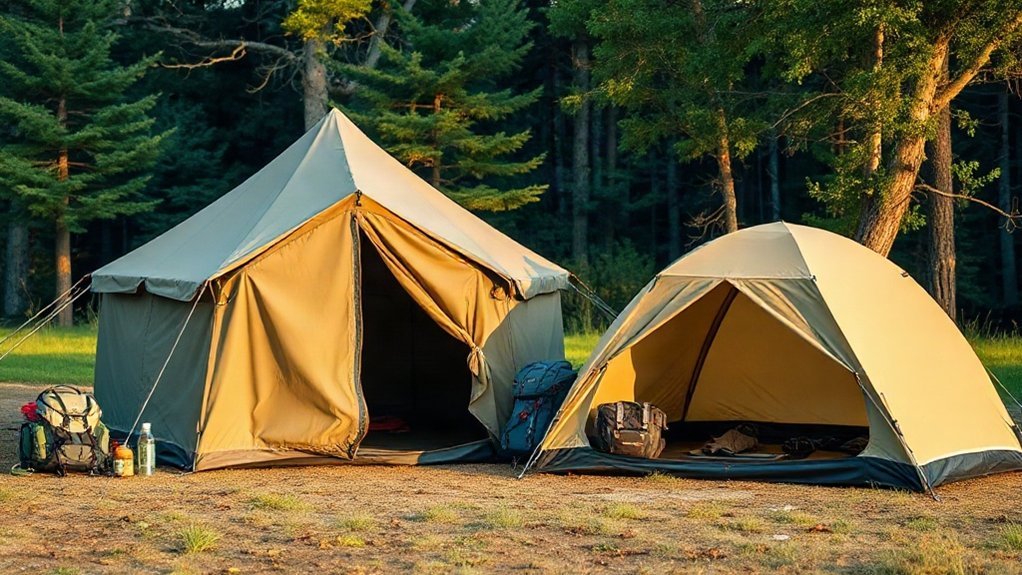
A military-style surplus tent earns its weight on rugged terrain or in harsh weather, where reinforced fabric, strong stitching, and field-use hardware stand up to repeated setup and teardown. I’d choose one when durability matters more than a light load and I can drive to camp.
- For cold-weather camping, its sturdy build can provide a dependable windbreak, but check the model’s hydrostatic head rating.
- If canvas needs a polyurethane coating or other treatment, factor in canvas care before relying on it in rain.
- A generous tent footprint can support a camp kitchen, while the heavier frame suits a base camp better than a hike-in.
- With frequent trips, a lower purchase price and longer service life may beat a dome tent’s convenience; for occasional fair-weather weekends, a dome pitches faster and packs smaller.
Canvas shells and steel or thick aluminum poles can push these tents into double-digit pounds, making them better suited to vehicle trips or base camps than long hikes.
Which Tent Fits Your Weekend Camping Plans?
For a typical weekend at an established campground, I’d choose a standard dome tent: it pitches quickly, weighs less, and packs smaller than most military-style surplus tents. If you’ll hike in or move between sites, that lighter load gives you more freedom; a bivy sack can trim it further for minimalist trips.
I’d pick a surplus tent for rugged terrain, repeated setups, or harsh weather, especially when I’m car camping, overlanding, or building a basecamp. Expect more weight and a more demanding pitch. Check canvas treatment and use seam sealer where needed; inspect the rainfly and ventilation to limit condensation and mildew. A breathable canvas model with a wood stove jack and stovepipe may suit cold-weather stays, but confirm the setup matches your trip and comfort needs. Many all-weather models are valued for repairable construction that can be patched with a needle and fabric patch.
Frequently Asked Questions
What Are the Downsides of a Dome Tent?
A dome tent’s main downsides are limited headroom, cramped floor space, and modest weather resistance. I find its sloping walls waste usable space, especially near the edges, so a two-person model can feel tight once I add packs and sleeping gear. Lightweight designs pack small and travel easily, but often sacrifice storage and comfort. Unlike taller cabin tents, standard three-season domes aren’t built for sustained high winds, heavy snow, or high-altitude trips.
What Is the Rolls-Royce of Tents?
What’s the “Rolls-Royce of tents”? I’d call it a subjective nickname, not an official category or rating. For comfortable weekend camping, I’d look at premium domes like the North Face Wawona 6, with 86 square feet of floor space and a roomy vestibule, or the NEMO Aurora Highrise 4, with two vestibules. Want rugged field durability instead? A military-style surplus tent may suit you, though it’s heavier and slower to pitch.
What Tent Does the US Military USe?
The U.S. military doesn’t use one standard tent; I’d match the model to the mission, crew size, and conditions. Units may use large canvas or reinforced-synthetic shelters for extended field operations, plus smaller one- or two-person tents for individual use. Compared with weekend camping tents, these designs often emphasize rugged fabric, reinforced stress points, durable hardware, and modular layouts over low weight. The French GI two-person tent is surplus, not a U.S. military model.
What Is the 200 Rule for Camping?
The 200 rule means I choose a campsite at least 200 feet from lakes, streams, and trails. That buffer helps protect shorelines, lowers the risk of contaminating water, gives wildlife room, and keeps busy routes less crowded. I treat 200 feet as a practical guideline, not a universal law; local rules may require more or less. I also look for durable ground at an established site instead of clearing a new spot.
Conclusion
For most weekend trips, I’d choose a standard dome tent: it’s lighter to carry, quicker to pitch, and easier to fit in a car. A military-style tent earns its keep when I need extra room, rugged materials, or space for longer stays—but that durability can mean more weight and setup time. Think of it as choosing between a nimble hatchback and a work truck. Match the tent to your route, weather, and comfort needs, and you’ll spend less time wrestling gear and more time enjoying camp.
References
Tent Camping, https://www.nps.gov/subjects/camping/tent-camping.htm
Camping & Hiking, https://www.rei.com/learn/expert-advice/camping.html
How to Choose a Tent, https://www.rei.com/learn/expert-advice/family-camping-tent.html