Why Do Preppers Trust Military-Style Tents for Emergency Shelter?
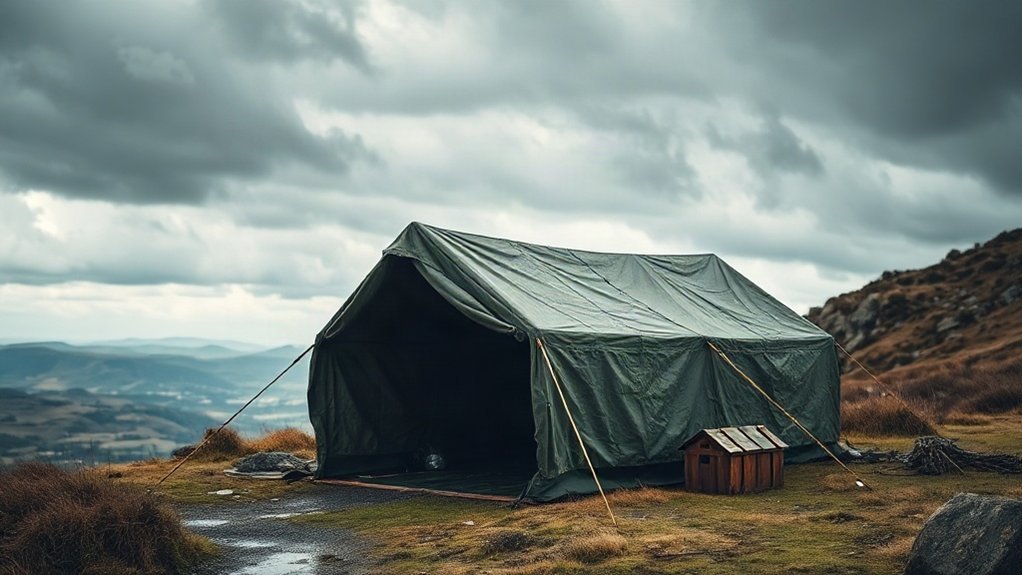
I trust military-style tents for emergency shelter because I can transport, assemble, and reuse them without permanent foundations or specialized infrastructure. Their sturdy frames and durable fabrics can handle repeated use, but protection depends on proper anchoring, sound weatherproofing, and regular inspection. I also check ventilation, group capacity, and safe stove clearances before an emergency. No tent is safe beyond its limits, so I monitor conditions and relocate when needed. The details below can help me choose and prepare one.
Key Takeaways
- Military-style tents are designed for repeated setup and relocation without permanent foundations or specialized infrastructure.
- Sturdy frames, secure anchors, and tensioned guy lines help shelters withstand wind when properly installed.
- Weather-resistant fabrics, reinforced seams, rainflies, and suitable groundsheets help keep occupants dry.
- Durable, portable materials support repeated use, though heavy canvas models are better suited to base camps than long hikes.
- Preppers should check capacity, ventilation, stove clearances, site conditions, and weather limits before relying on a tent.
Why Military-Style Tents Suit Emergency Use?
When an emergency shelter needs to move, a military-style tent can be set up again without relying on permanent foundations or specialized infrastructure. I value that flexibility when roads close or conditions force a relocation. Military-style tents are built for repeated setup and teardown, and their manageable components support practical portability.
For an emergency shelter, protection starts with sturdy frames, secure anchoring, and weather-resistant construction. I’d inspect the site, follow the manufacturer’s setup instructions, and anchor the tent for local wind and ground conditions. No shelter is safe in every storm, so I’d monitor weather and move if conditions exceed its limits.
Ventilation matters, too: I’d keep airflow clear to reduce condensation and maintain comfort. For cold-weather camping, I’d check that the tent’s layout safely accommodates people, bedding, supplies, and any approved stove, with required clearances. I’d choose a size that fits the group without overcrowding, then practice setup before an emergency. Heavy canvas or coated fabric can offer durable construction suited to long-term base camps and harsh weather, though it adds weight and pack size.
What Expeditions Taught Tent Designers?
Expeditions in the 19th and early 20th centuries put tents to the test in driving rain, snow, strong winds, and hot, humid conditions. I see their lesson clearly: a shelter must protect you without becoming too heavy or difficult to pitch. Arctic and Himalayan journeys showed that failure in remote terrain could be fatal, so designers strengthened frames, improved cold protection, and made shelters easier to carry and assemble.
Repeated exposure also drove better waterproofing and durability. Treated fabrics reduced seepage and seam stress; earlier cotton canvas offered useful protection but demanded careful upkeep. Designers learned that windproof construction alone isn’t enough: ventilation matters in heat and humidity, while reliable anchors help keep a shelter secure. Modern aluminum poles and guy lines reflect those practical demands, though safe setup still depends on terrain and conditions. In high winds, pitching low and using every tie-out can help keep a shelter from lifting or collapsing.
I’d choose a modular tent system for adaptable shelter, but I’d balance weather resistance, ventilation, weight, and sound construction—not rely on one feature alone.
Which Features Help Tents Resist Wind and Rain?
To resist wind and rain, I look for a sturdy frame, secure anchors, and well-tensioned guy lines that keep the tent stable under pressure. Reinforced seams and attachment points matter, too; I inspect them before relying on shelter in exposed conditions. A rainfly and waterproof layers help keep water out, while ventilation limits trapped moisture.
- Anchor firmly: I set stakes in suitable ground and tighten tension straps evenly; a natural windbreak can reduce exposure.
- Check rain protection: I look for a polyurethane coating, a reliable hydrostatic head rating, and a groundsheet that covers the sleeping area.
- Seal vulnerable points: I apply seam sealer where needed and check that rain can’t enter through joins or openings.
- Match conditions: A four-season tent suits severe weather; a canvas wall tent needs secure anchoring and appropriate rain protection.
In treeless terrain, turn the shelter end-on to the wind so it slices through rather than catches the gusts.
Ripstop nylon can resist tearing, but I don’t treat any fabric as a substitute for sound setup. I check forecasts and leave unsafe sites.
How Military-Style Tent Materials Balance Strength and Weight?
Military-style tents balance strength and weight with durable fabrics and sturdy frames that remain practical to transport. I look for materials that tolerate repeated setup and rough weather without turning every move into a burden. During World War II, nylon gained favor over canvas because it weighed less, dried faster, and resisted mildew better. Aluminum poles also reduced weight compared with wood or steel.
Canvas still offers dependable durability, but it becomes heavy when wet, a drawback on long backcountry movements. Modern military surplus designs often use ripstop fabric to limit tear damage and lightweight poles to ease carrying. Whether you’re considering an a-frame tent or pyramid tent, check that its fabric and frame suit expected conditions; lighter doesn’t mean safe in severe wind or snow. For base camp or group camping, I value breathable materials and a stable frame. Follow setup instructions, secure anchors, and practice canvas care so your shelter stays reliable while supporting independent travel. Canvas shelters with steel or thick aluminum poles can weigh well into the double digits, making them better suited to base camps than long hikes.
How to Choose a Military-Style Tent for Your Group?
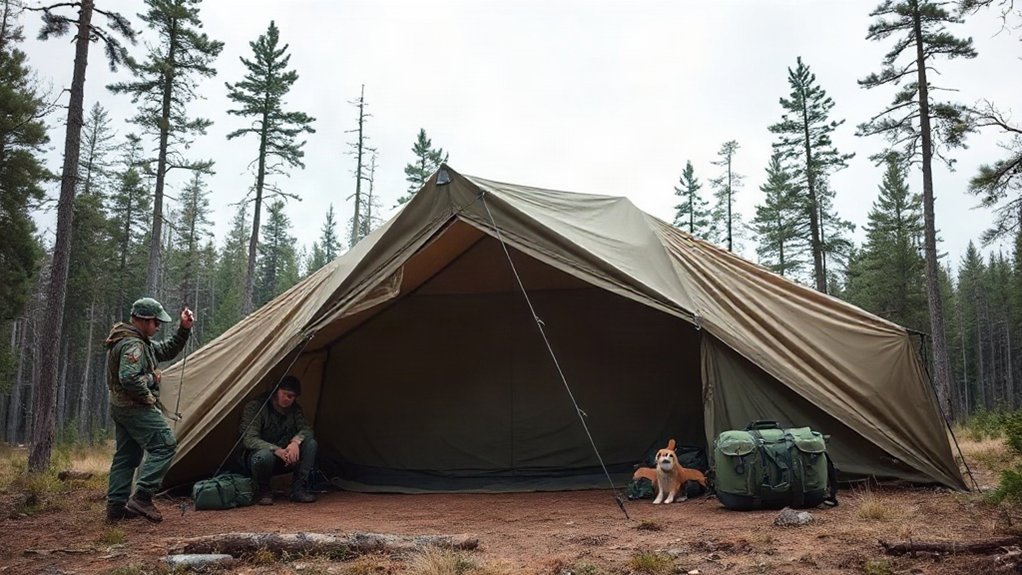
How many people will sleep, cook, and store gear under one roof? I match the tent footprint to the group: 9 × 12 to 12 × 12 feet for one or two, 12 × 15 to 12 × 18 for two or three, and 15 × 18 to 15 × 24 for four or five.
Before buying a gp small tent or larger bunker tent, I sketch its floor on graph paper. Cutouts for a camping cot, sleeping bag, tables, and cylinder stove reveal whether essential gear fits. I test layouts with the stove front left, camp kitchen front right, and bedding at the back.
Four people may fit in a 10 × 10-foot tent or larger, but sizing should account for sleeping pads, gear, and stove clearance—not just the advertised person count.
- Choose sturdy fabric, secure grommets, and a frame rated for severe winds.
- Confirm a wood stove jack and safe heat-shield options.
- Consider windows, doors, dividers, a porch, or cook shack.
- Check the nato stock number when sourcing surplus.
I wouldn’t assume a dome tent suits stove use; verify its design and clearances. Custom sizing can give your group room to shelter independently and safely.
Frequently Asked Questions
What Is the Rolls-Royce of Tents?
I’d call a custom canvas wall tent the “Rolls-Royce of tents” when you need roomy, durable shelter for extended use. The phrase isn’t an official category or rating, so don’t rely on the label alone. I’d match the tent’s size and layout to your occupants, gear, cots, cooking area, stove, and expected weather. Look for reinforced construction, a compatible frame, and safety features such as heat shields, doors, and windows.
What Are Military Tents Called?
I call military tents military field tents, army tents, or field shelters. The name can also reflect the design: you might hear bell tent, wedge tent, or wall tent. For modern models built for durability and quick deployment, I use the broader term tactical shelter. Civilian versions with similar practical features are often called prepper tents, bug-out shelters, or emergency preparedness tents. “Military-style” describes priorities, not one shape or color.
Will a Tent Survive 50 Mph Winds?
A tent might survive 50 mph winds—or fail well below them. I wouldn’t trust its style alone: design, condition, anchoring, and exposure matter more. Check the manufacturer’s wind rating, inspect seams and grommets, and test the entire setup, including frame, guy lines, and stakes. Pitch in a sheltered spot with the narrow end facing prevailing winds. Gusts and shifting directions raise risks; if winds near or exceed the rating, move to sturdier shelter.
Is It Better to Sleep Under a Tarp or a Tent?
I’d choose a tent for uncertain weather because its enclosed walls and rainfly shield you better from wind, rain, insects, and exposure. A tarp makes more sense when conditions are mild and you want to keep your pack light. You can pitch a tarp in severe weather, but open sides leave you vulnerable to drafts and blowing rain. I’d check the forecast, anchor any shelter securely, and carry the option that matches your route and conditions.
Conclusion
I trust a military-style tent only when its design matches my conditions, group size, and skills. Strong fabric and storm-ready features help, but they can’t replace sound site selection, secure anchoring, or regular inspection. I’d practice pitching the tent before an emergency and keep repairs within reach. In bad weather, small setup mistakes can become serious fast. The real test may come after nightfall, when the wind rises—and every stake, seam, and decision must hold.
References
[Choosing a Campsite](https://www.rei.com/learn/expert-advice/campsite-selection.html)
[How to Choose a Tent](https://www.rei.com/learn/expert-advice/backpacking-tent.html)
[Camping Safety](https://www.nps.gov/articles/ 캠핑-safety.htm)