What Makes Military-Style Backpacks Different From a Regular Hiking Pack?
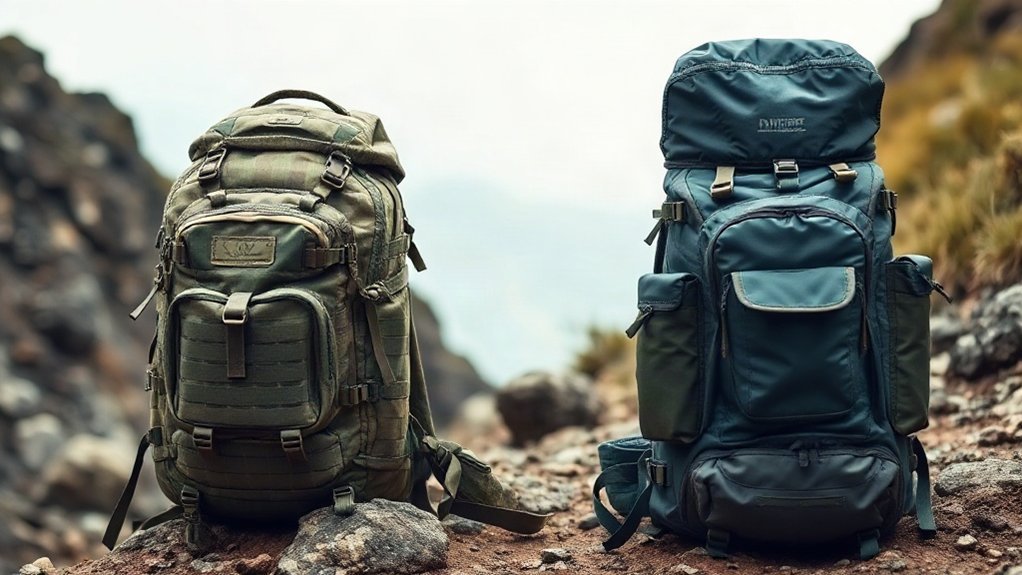
I’d choose a military-style backpack for rugged fabrics, reinforced construction, and MOLLE webbing that lets me attach pouches for modular storage. A regular hiking pack usually weighs less and offers a supportive hip belt, trail-focused fit, and compartments for hydration and trekking gear. Military-style packs can suit demanding outings, but their extra weight and less ergonomic support may cause fatigue on long hikes. The differences in materials, capacity, comfort, and cost can help you choose the right pack.
Key Takeaways
- Military-style packs use tougher, heavier fabrics such as 1000D Cordura; hiking packs often favor lighter materials for comfort over long distances.
- MOLLE webbing lets you attach and reposition pouches, while hiking packs typically offer built-in pockets and trekking-specific storage.
- Hiking packs generally have more supportive hip belts, load lifters, and ventilated backs for carrying loads over extended distances.
- Tactical packs often suit rugged outings and quick access; hiking packs are usually better for long hikes and bulky gear.
- Tactical packs commonly hold 20–40 liters, while hiking packs range from day-hike sizes to over 70 liters for longer trips.
Military-Style Backpack vs Hiking Pack: Key Differences?
A military-style backpack favors rugged durability and customizable carry, while a hiking pack prioritizes comfort over long distances. I’d choose based on how you travel and what freedom means to you.
Military-style packs often use 1000d cordura nylon and molle webbing, so you can attach mission-specific pouches and adjust your setup. Their quick-access design suits rugged use, and typical capacities run about 20–40 liters. Hiking packs usually rely on built-in pockets for essentials, with sizes from roughly 40 liters for day hikes to over 70 liters for longer trips.
For extended trekking, I’d favor a hiking pack’s padded hip belt, supportive shoulder straps, and ventilated back panel. These features improve load distribution and comfort over long distances. Choose customizable carry for rugged versatility; choose hiking-focused support for all-day miles. The extra weight of MOLLE webbing and durable materials can make a packed-weight trade-off worth considering for weekend hikes.
Which Pack Materials Resist Wear and Weather?
When abrasion and heavy use are the main concerns, I’d favor a military-style pack made from 1000D or ballistic nylon; hiking packs typically use lighter ripstop nylon or polyester that resists snags and tears. A tactical backpack built with 500d cordura fabric can offer a useful middle ground: strong durability without the heft of heavier materials. For long days on the move, I’d weigh that added toughness against the freedom of a lighter hiking pack. Both can handle outdoor conditions, but tactical fabrics tend to feel more rigid and substantial.
Water-resistant fabric or a durable water-repellent coating helps shed light rain and moisture; it doesn’t make a pack waterproof. I’d carry a rain cover for prolonged downpours or exposed travel, keeping gear protected without assuming the coating will stop every leak. Sturdy stitching and quality hardware also help a military-style backpack hold up through years of hard use.
How Do MOLLE and Storage Options Compare?
If you want to tailor storage to changing needs, a military-style pack’s MOLLE webbing lets you attach, remove, and reposition compatible pouches for items like a first-aid kit or communication gear. I find the pals webbing grid useful when I need quick access or want to rearrange equipment for a specific outing. An admin pouch can keep small essentials organized, but every add-on brings extra weight and bulk; secure pouches carefully to limit shifting or snagging.
Inside, tactical packs often use large, straightforward compartments, relying on modular pouches instead of numerous built-in pockets. Hiking packs typically organize gear around trekking, with features such as a hydration bladder sleeve, water-bottle pockets, and sleeping-gear compartments. Sewn-in pockets can reduce the need for extra pouches, while offering less flexibility to change your setup. I’d choose molle for adaptable, quick-access storage; for trail-focused organization and load balance, a hiking pack’s dedicated pockets may suit you better.
Which Pack Is More Comfortable and Roomy?
For long treks, which pack feels better often comes down to how it carries weight: hiking packs use padded straps, supportive hip belts, and lumbar designs to shift much of the load off your shoulders. I’d choose a model with a lumbar support pad and load lifter straps for extended days; its mesh back panel can also help keep me cooler. Military-style backpacks usually prioritize durability and quick access over all-day ergonomic support, so I find them less comfortable for bulky loads.
Capacity matters, too. Hiking packs typically range from about 40 liters for day hikes to over 70 liters for multi-day trips. Military-style packs commonly hold 20–40 liters, but removable MOLLE pouches add flexible storage. A 40-liter hiking bag offers a useful capacity benchmark when comparing these options. For freedom on long trips with bulky gear, I’d pick a roomier hiking pack; for a compact, adaptable load, I’d consider military-style.
How Does Pack Weight Affect Trail Mobility?
I find a lighter pack helps me move faster and tire less, especially on steep or long trails. A compact, well-fitted load keeps my balance steadier for turns and uneven ground, while bulky tactical gear can limit mobility. Choose only what your route requires: every extra pound adds effort with each step.
Lighter Loads Move Faster
A lighter pack lets you move faster and conserve energy because every step takes less effort. I notice the difference most on long hikes, steep climbs, and uneven trails, where extra weight can slow my foot placement and make quick turns harder. Military-style packs often use durable materials and modular pouches, which add bulk if I carry gear I don’t need. A hiking pack’s hip belt can shift weight from my shoulders to my hips, while a well-fitted shoulder harness suits my torso length.
- Match each item to the trip, not every possible emergency.
- Skip redundant tools and supplies.
- Use compression straps to keep the load compact.
- Compare pack weight before adding accessories.
- Choose less weight for greater freedom to cover ground with energy left.
Balance Improves Stability
When I keep a pack’s heaviest gear close to my back and centered between my shoulders, it sways less and helps me stay steady on rough trails. An uneven load can pull me sideways or backward, stealing confidence on steep, rocky, or narrow paths. I arrange a military rucksack’s loadout so dense items stay near my torso, then secure loose pouches to its webbing. A tactical assault pack may offer quick access and rugged construction, but shifting attachments can disrupt balance if I leave them unsecured. Compared with many hiking packs, military-style designs may rely less on a supportive hip belt to transfer weight from shoulders to hips. I check the fit and distribution before setting out; a stable pack lets me move with greater control and choose my route freely.
Weight Increases Fatigue
Because a military-style pack may start heavier, its abrasion-resistant fabric and MOLLE webbing add effort before I load a single item. Over distance, each extra pound makes my legs work harder and presses more weight on my shoulders and hips. Compared with a lighter hiking pack, a tactical rucksack can slow my pace, tax me on steep climbs, and limit quick moves around obstacles. An assault pack may suit rugged use, but trail freedom depends on managing its load.
- I carry only gear I’ll actually need.
- I keep heavy items close to my back.
- I check whether the hip belt transfers weight effectively.
- I expect extra load to reduce agility on uneven ground.
- I choose a lighter pack when mobility matters most.
A balanced load helps me stay controlled and conserve energy, so I can hike farther with less strain.
Is a Military-Style Pack Worth the Cost?
I’d pay more for a military-style pack when 1000D nylon and rugged construction match your rough use. MOLLE webbing adds value if you need modular gear, but it can’t replace the ergonomic comfort a hiking pack offers on long trails. Compare capacity and intended use: tactical packs suit rugged, shorter outings, while hiking packs often deliver better value for extended treks. On multi-day trails, the extra weight of a military-style pack can increase fatigue and slow your pace.
Durability And Construction
A military-style pack can be worth the extra cost if you use it hard: 1000D or ballistic nylon typically resists abrasion and tearing better than the lighter fabrics common in hiking packs, and reinforced seams can handle repeated loads. I’d compare construction details before paying a premium:
- Check reinforced stitching at handles and other stress points.
- Inspect YKK zippers; sturdy hardware can outlast bargain closures.
- Treat water-repellent coatings as protection from light rain, not full waterproofing.
- A drainage grommet helps release trapped water but won’t seal the pack.
- Weigh durability against added cost and fabric weight.
For frequent, demanding use, that tougher build can buy years of dependable service and fewer replacements. For ordinary hiking, I’d choose a lighter pack; its lower price may offer better value. The right choice depends on how hard you’ll use it.
Versatility Versus Comfort
If you need adaptable storage, a military-style pack can earn its higher price: MOLLE webbing lets you add or remove pouches for essentials such as a first-aid kit or communications gear. I’d choose that flexibility for rugged outings when quick access and mobility matter more than carrying a large load. Many tactical packs hold 20–40 liters, making them practical as a daysack, while durable nylon handles abrasion at the cost of extra weight.
For long treks, I’d favor a hiking pack. Padded hip belts, lumbar support, and ventilated back panels make all-day carrying more comfortable, and larger models can exceed 70 liters. Aluminum frame stays may improve support, but they don’t erase that comfort gap. An 11 tactical pack is worth its price for customizable, hard-use storage; choose hiking gear when comfort is your priority.
Which Pack Fits Your Hiking or Camping Plans?
For day hikes and multi-day treks, I’d choose a hiking pack, which typically offers 40–70-plus liters of capacity and a supportive hip belt to keep essentials comfortable over long distances.
For day hikes and multi-day treks, a supportive hiking pack keeps essentials comfortable over long distances.
For shorter outings, a 20–40-liter tactical pack gives me durable storage and quick access. Its MOLLE webbing lets me attach specialized pouches, while hiking packs usually offer better hydration and trekking-specific storage. Tactical designs can handle camping, but their heavier build and less trail-focused fit may tire me on long routes. I’d compare Mystery Ranch and Eberlestock options by intended use, not military styling alone. Three-day assault packs may have fixed harnesses that fit some torso lengths better than others, so I’d check the pack’s fit range before buying.
- Match capacity to trip length and gear.
- Prioritize hip and lumbar support for distance.
- Choose MOLLE for modular equipment.
- Keep weight low for faster, freer travel.
- Treat a bug out bag as preparedness gear, not automatically the best hiking pack.
Frequently Asked Questions
Can a Civilian Wear a Military Backpack?
Yes, you can wear a military-style backpack as a civilian; you don’t need military status or permission. I’d choose one for commuting, travel, camping, or rugged everyday use because durable nylon handles rough treatment, and MOLLE webbing lets you add compatible pouches. But I wouldn’t assume it’s best for every trip: many tactical packs prioritize durability and quick access, while hiking packs offer better hip support for long days on the trail.
What Is the 20% Rule for Backpacking?
The 20% rule is a rough guideline: I’d aim to keep your fully loaded backpack at or below 20% of your body weight. If you weigh 150 pounds, that means about 30 pounds, including food and water. I’d treat that as a starting point, not a safety guarantee; fitness, terrain, trip length, and pack fit matter. For children or newer hikers, I’d choose less. Reduce the load if you feel pain, numbness, or instability.
Can I Use a Regular Backpack for Hiking?
Yes, you can use a regular backpack for a short, light hike if it fits comfortably and holds your essentials. I’d choose a hiking pack for longer routes or heavier loads because its padded straps, hip belt, and lumbar support help distribute weight and reduce fatigue. Check that your pack fits water, food, extra clothing, and safety gear. It may lack bottle pockets, a hydration sleeve, or ventilation. Try it loaded before setting out.
What Are Some Good Military Backpacks for Hiking?
For day hikes, I’d choose a 20–40-liter military-style pack—enough room for essentials without expedition-pack bulk. I’d compare options by fit, not camouflage: prioritize a padded hip belt, adjustable shoulder straps, and a supportive back panel. Water-resistant fabric or a rain cover helps protect gear, while hydration compatibility adds convenience. MOLLE webbing gives you flexibility, but I’d keep attachments light. For overnight trips, I’d favor a hiking pack over 40 liters for better load support.
Conclusion
I choose a pack for the trip, not the look. Military-style bags often offer rugged materials, MOLLE webbing, and flexible storage, while hiking packs usually prioritize lower weight, trail comfort, and weather protection. As the saying goes, “the right tool for the job” makes all the difference. For short, gear-heavy outings, I’d consider a military-style pack; for long hikes, I’d favor a purpose-built hiking pack. Compare fit, weight, capacity, and price before deciding.
References
The Ten Essentials (National Park Service), https://www.nps.gov/articles/10essentials.htm
Backpack Safety (American Academy of Orthopaedic Surgeons – OrthoInfo), https://orthoinfo.aaos.org/en/staying-healthy/backpack-safety/
Plan Ahead and Prepare (Leave No Trace Center for Outdoor Ethics), https://lnt.org/why/7-principles/plan-ahead-and-prepare/
6 comments