How Do Knife Sharpening Stones Help Restore Dull Blades?
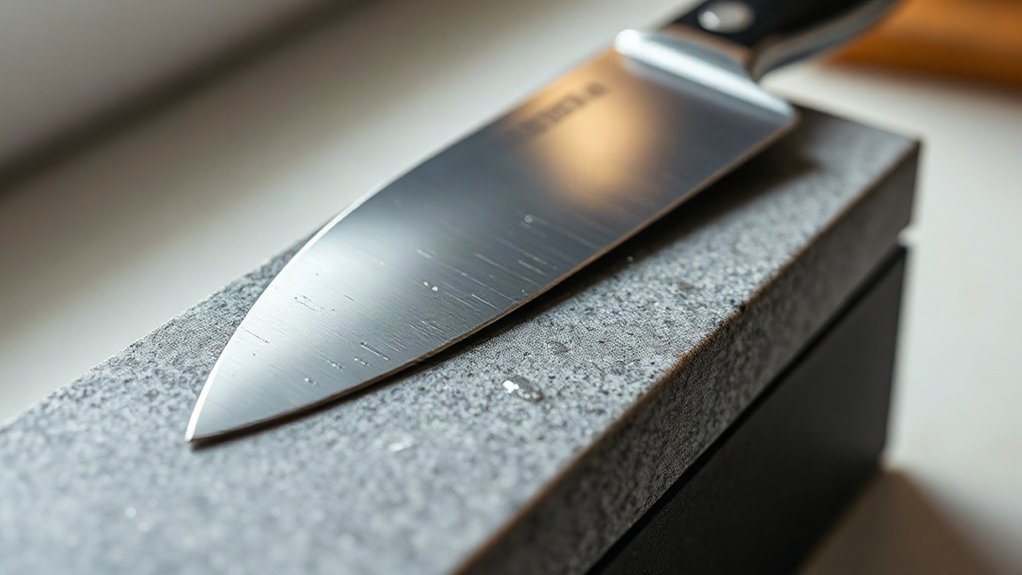
I use a sharpening stone to restore a dull knife by grinding away tiny amounts of steel and reshaping its edge into a sharp bevel. I keep the blade at a steady angle—about 20 degrees for most Western knives or 15 degrees for Japanese knives—and use smooth strokes with gentle pressure. I choose a grit that matches the damage, then refine the edge with a finer stone. With the right setup, I can restore sharpness safely and effectively. The steps below explain how.
Key Takeaways
- Sharpening stones restore dull blades by grinding away worn steel and forming a fresh, sharp bevel.
- Choose grit based on blade condition: medium grit suits dull edges, while coarse grit repairs chips.
- Hold the knife at a steady 15–20° angle and use smooth strokes with gentle, even pressure.
- Alternate sides until a small burr forms along the edge, then refine with lighter strokes on a finer stone.
- Rinse and dry the blade, then test its sharpness on paper.
How Do Whetstones Sharpen a Dull Knife?
When a knife’s edge dulls, a whetstone removes tiny amounts of metal to reshape it into a sharp bevel. I use the stone’s abrasive particle action to grind away worn steel, restoring an edge that cuts cleanly and gives me control in the kitchen. For effective bevel angle formation, I hold the blade at a steady angle—about 20 degrees for a Western knife or 15 degrees for a Japanese one. I wet the stone as directed, secure it on a nonslip surface, and make smooth strokes with gentle, even pressure. I alternate sides until a small burr runs from heel to tip, then refine the edge with lighter strokes. After wiping the blade clean, I test it on paper. A clean slice tells me I’ve restored the edge and can work freely again.
Which Grit Should You Use, and Why?
Which grit should you use? I match the stone to the blade’s condition, so you can choose freely without removing more metal than necessary. For chips or significant edge damage, I start with a coarse stone around 200–220 grit to repair the edge. For a dull or worn blade, I use a medium stone around 800–1,000 grit to restore it and establish a usable edge. If the blade is only slightly dull, I move to a finer stone instead.
This Grit selection for blade damage keeps each step purposeful. My Sharpening grit progression moves from coarse repair to medium sharpening, then fine honing and polishing at 4,000–8,000 grit. With a 1,000/6,000 combination stone, I sharpen on the 1,000 side, then refine on the 6,000 side.
How Do You Prepare the Stone and Knife?
Before sharpening, I soak rough and medium waterstones until air bubbles stop rising—usually 10–45 minutes—while splash-and-go stones need only a quick wetting. I don’t leave finishing stones submerged; I splash them with water and add a little grit with a nagura if needed.
To Soak and secure the stone, I set it in a stone base or on a non-slip mat over a damp towel. I keep water nearby, since the surface may need rewetting if it dries during use.
Next, I clean the knife and Inspect blade from heel to tip for chips. A paper-cut test can reveal catches that may signal damage. If I find chips, I prepare a coarse stone around 220 grit for removal. I also flatten stones periodically with a fixer, preserving a level surface and giving myself reliable control.
How Do You Sharpen, Refine, and Test the Edge?
With the stone secure and the blade clean, hold the knife at a steady 15–20-degree angle—about 20 degrees for Western knives and 15 for Japanese knives. I use smooth strokes across the stone, applying gentle, even pressure and the full surface. Maintain edge angle consistency as you work, alternating sides. Check for a burr from heel to tip; burr progression tracking tells me when each side is ready.
Once a burr forms on both sides, I move from a coarse or medium stone to a finer one. Lighter strokes refine and polish the edge without forcing it. I wipe the blade with a damp cloth to remove metal particles, then slice paper from heel to tip. A clean cut without snags signals a sharp edge. If the blade catches, I adjust my angle or pressure and keep sharpening until it cuts smoothly.
How Do You Clean and Flatten a Whetstone?
After sharpening, I rinse the whetstone thoroughly to wash away metal filings and debris, then let it air-dry completely. This Post sharpening rinsing keeps residue from building up and helps me maintain control over my next sharpening session. If the stone feels dry while I work, I add water; it carries metal particles away as they mix with grit to form sharpening slurry.
Every few months, or whenever I notice an uneven or concave surface, I flatten the stone with a stone fixer or lapping plate. I secure it in a stone base or on a damp, non-slip surface first, so it won’t slip while I clean or flatten it.
For safe stone storage, I keep the clean, dry whetstone in a cool place, away from direct sunlight and extreme temperatures. That leaves me free to reach for a reliable stone whenever needed.
Frequently Asked Questions
Why Does My Knife Still Feel Dull Even After Sharpening?
Your knife may still feel dull because you sharpened at an inconsistent angle, didn’t form a burr along the full edge, or left the edge misaligned. I’d hold it near 15–20 degrees, use steady, moderate pressure, then lighten up on finer stones. Check heel to tip for a continuous burr, and finish with careful Burr removal and Edge alignment. Wipe off metal particles, then slice paper; snags show where you need more work.
Why Do You Soak a Sharpening Stone?
I soak a sharpening stone because, ironically, adding water helps it work smoothly rather than getting in the way. Water absorption benefits include lubricating the surface and carrying away metal filings as I sharpen. Water also helps create a slurry, and slurry formation effects include supporting the sharpening process. I usually soak rough or medium waterstones until bubbles stop rising; splash-and-go stones just need wetting, while finishing stones shouldn’t soak long. I add water if needed.
What Dulls a Knife the Fastest?
I’ve found that cutting abrasive materials—especially on glass cutting boards—dulls a knife fastest. Glass is harder than the edge, so each cut wears it down quickly. Bones, frozen food, and other hard items can chip or damage the blade, too. To keep your knife sharp, I’d choose a wooden or plastic board, make smooth cuts without forcing the blade, and avoid twisting or scraping it sideways. I also hand-wash and dry knives promptly.
Is WD-40 Good for Sharpening Knives?
No—I don’t recommend WD-40 for sharpening knives on a whetstone. Think of water washing a thin, silvery trail of filings from the stone; it keeps the surface working cleanly. I soak most waterstones until bubbles stop, then add water whenever they feel dry. Splash-and-go and finishing stones need only a quick wetting. After sharpening, I rinse the stone and let it dry completely. Avoid WD 40 residue on blades before food preparation.
Conclusion
I use a whetstone to remove damaged metal, shape a fresh bevel, and refine the edge until it cuts cleanly. Choosing the right grit, soaking or wetting the stone as directed, and maintaining a steady angle make the process safer and more effective. After sharpening, I test the blade carefully, then clean and flatten the stone so it’s ready for next time. With a little practice, a dull knife can come back to life—like a quiet tool finding its voice again.