What Should You Look for When Buying Bushcraft Knives for Beginners?
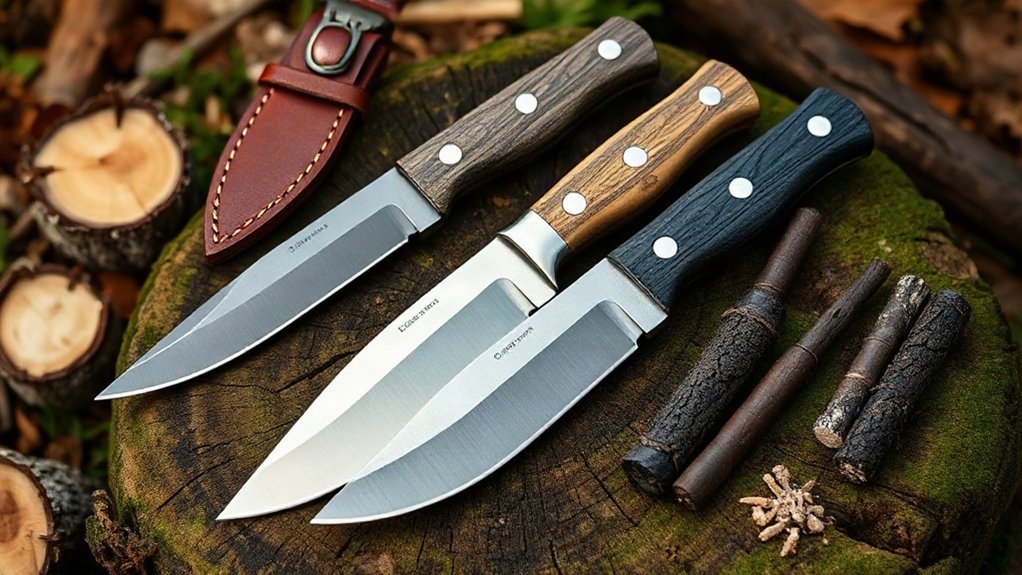
I recommend a fixed-blade bushcraft knife with a comfortable, secure grip and a sheath that holds it safely. For an all-purpose starter, I’d look for a 4–5-inch blade, around 2–4 mm thick, with a Scandi grind for carving or a full-flat grind for food prep. Choose stainless steel for better rust resistance or carbon steel for easier field sharpening. Match the knife to your tasks, and I’ll explain how to choose each feature.
Key Takeaways
- Choose a 4–5-inch blade for a versatile balance of reach, control, and portability.
- Select a Scandi grind for carving or a full-flat grind for better food slicing.
- Match steel to conditions: stainless resists rust; carbon is easier to sharpen but needs prompt drying.
- For carving and light batoning, a standard fixed-blade knife is suitable; frequent batoning calls for a sturdier full-tang model.
- Prioritize a comfortable, secure handle and a sheath that safely retains the knife; practise sharpening before your trip.
What Should Beginners Look for in a Bushcraft Knife?
What should you look for in a first bushcraft knife? I’d start with a comfortable, secure handle and a sheath that keeps the blade safely in place. A blade around four to five inches suits many adults, giving you useful reach for carving and everyday camp chores without limiting your choices outdoors.
For control, I favor a Scandi grind: it’s straightforward to guide through wood and sharpen. A drop-point tip offers a useful balance of strength and utility. Blade thickness matters, too. Two to three millimeters works well for carving; three to four millimeters adds strength for tougher tasks, while thicker blades may feel cumbersome during fine work.
Consider your conditions and upkeep. Stainless steel resists rust in wet weather; carbon steel sharpens easily but needs drying and protection. I’d keep the cost modest while learning: the Mora Companion suits lighter tasks, while its thicker Companion HD handles more demanding work. Careful knife handling supports Fire Safety and Shelter Building, helping you stay capable and self-reliant outside.
Choose a Fixed-Blade Bushcraft Knife
I recommend a fixed-blade knife for demanding bushcraft tasks because it’s generally stronger and more reliable than a folder. If you plan to baton wood, choose full tang for added strength; for most camp chores, a 4–5-inch blade offers useful versatility. Match the blade thickness to your work, and make sure the handle feels secure and the sheath holds the knife safely.
Strength And Reliability
For demanding bushcraft tasks, I’d choose a fixed-blade knife because its construction is generally stronger and more reliable than a folder’s. Without a folding joint, I don’t have to depend on lock strength, which can matter when I’m working far from help. I also consider weather resistance: a simple, well-maintained fixed blade is easier to clean and keep dependable after rain or mud.
I’d match blade thickness to the work. A 3–4 mm blade can handle sturdy camp tasks while still carving comfortably; anything over 4 mm may feel cumbersome for fine work. The Mora Companion HD’s 3.2 mm blade offers more strength than the standard Companion’s 2.0 mm version. I’d split wood only within the maker’s guidance, use a saw or hatchet for large or knotty pieces, and never twist or pry with my knife.
Full-Tang Construction
When I expect to split wood, I look for a full-tang fixed blade: its steel runs through the handle, adding strength and durability for demanding work like batoning. A fixed blade is generally stronger and safer than a folder when I take on tough bushcraft jobs. These Full Tang Benefits matter when I need a dependable tool outdoors, but a full tang isn’t essential for every beginner or task.
I’d match the knife to the work. The Mora Companion isn’t full tang, yet it handles carving, food preparation, and light batoning well; I wouldn’t rely on it for heavy use. For a more robust option, I’d consider the Condor Bushlore or Mora Garberg. Keep Batoning Limits in mind: I follow the maker’s guidance for splitting wood and avoid pushing any knife beyond its intended use.
Fixed-Blade Versatility
A full tang adds strength, but a fixed blade’s versatility makes it a practical choice for demanding bushcraft tasks. I’d choose one for reliable performance and the freedom to handle varied camp chores without switching tools constantly.
For strong Field versatility and task adaptability, look for a blade around four to five inches. That length offers useful control for everyday work while remaining manageable to carry.
- Carve tools and make feather sticks.
- Prepare food and process light wood.
- Choose full tang construction if you’ll baton wood.
- Check that the handle feels secure and the sheath holds safely.
A fixed blade can take on plenty, but I wouldn’t force it through large or knotty wood; I’d reach for a saw or hatchet instead. A comfortable grip and dependable sheath help me work with control and carry the knife confidently.
Pick a Bushcraft Knife Length and Thickness
How long or thick should your first bushcraft knife be? I’d start with a Blade Length of about 4–5 inches, roughly the width of your palm. That size handles carving and everyday camp chores without feeling unwieldy. A 3.5–5-inch blade also suits routine carving; go longer when you need extra reach, but expect to use more care and control for fine cuts.
For Blade Thickness, I’d choose 2–3 mm if carving is your priority, or 3–4 mm for a practical balance of carving ability and strength. Blades over 4 mm may feel heavy and less nimble when you’re making precise cuts, though added thickness can help with splitting.
Let your main tasks guide the choice. A lighter, thinner knife works well for carving and food preparation. You don’t need a heavy blade for batoning if that isn’t part of your routine. A well-matched knife gives you freedom to work comfortably at camp.
Choose a Grind for Your Bushcraft Knife
I’d choose a Scandi grind for controlled carving and making feather sticks; its broad bevel is sturdy and easy to sharpen. If slicing and food prep matter more, a full-flat grind may suit you better. Match the grind to your main tasks, and practise sharpening it before heading outdoors.
Scandi Grind For Carving
For carving wood, I recommend a Scandi grind because its broad, simple bevel makes controlled cuts easier and is straightforward to sharpen. If you’re learning outdoors, this grind helps you practise shaping wood and making feather sticks with confidence. The bevel guides the edge through each cut, giving you useful carving cut control without a complicated setup.
- Check the scandi bevel angle and choose one that feels comfortable to guide.
- Pick a 2–3 mm blade for carving-focused work.
- Consider 3–4 mm if you want added strength alongside carving ability.
- Try a Mora Companion; it arrives factory-sharp and takes basic stones for sharpening, even in the field.
I’d match the grind to your main tasks so your knife supports the skills and self-reliance you want to build.
Flat Grind For Slicing
A full flat grind tapers evenly from the spine to the edge, so it slices vegetables, meat, and other camp foods with ease. I’d choose it when food prep efficiency matters and I want reliable produce slicing on the trail. Compared with a Scandi grind, it favors slicing over controlled wood carving.
| Grind choice | Best suited for |
|---|---|
| Full flat | Camp-food slicing |
| Scandi | Controlled wood carving |
| ESEE 6 | Flat-grind example |
| ESEE 6 edge | 5.75 inches |
The ESEE 6 has a 6.5-inch blade and a highly regarded flat grind. Still, I’d match the grind to my main tasks: steel, heat treatment, and edge geometry also shape cutting performance. If carving wood is your priority, choose Scandi; for camp meals, a flat grind can help you work freely with less effort.
Choose the Right Steel for Your Needs
Which steel suits your needs depends largely on where you’ll use the knife and how much maintenance you can manage. I’d match the steel to your conditions, not just its reputation. Stainless steel offers corrosion resistance in wet, humid, or saltwater settings, and it suits times when you can’t dry your knife promptly. It can still rust, so don’t treat it as maintenance-free.
> Match your steel to your conditions: stainless resists corrosion in wet settings, but still needs care.
- Choose carbon steel if you value easy field sharpening and can dry the blade regularly.
- Apply light oil to carbon steel to help reduce rust.
- Compare sharpening difficulty with edge retention: CPM-S30V holds an edge well but takes more effort to sharpen.
- Check heat treatment and edge geometry, too; a steel name alone won’t predict performance.
For a budget-friendly start, I’d consider the Mora Companion, available in both carbon and stainless steel. Pick carbon for easier sharpening or stainless for added rust resistance. The stainless Mora Kansbol uses Sandvik 12C27. Either way, the right choice lets you roam with confidence while keeping upkeep realistic.
Check the Grip, Sheath, and Edge Care
Before you buy, hold the knife and check that its rounded handle feels comfortable and stays secure in your grip. I look for a handle that fits my hand without forcing an awkward hold. A fuller grip may feel better with larger hands or gloves, but preferences vary. For Wet weather grip, textured rubber or polymer can help me keep control when cold rain or damp conditions set in.
Check the secure sheath before you head out. I want it to retain the knife safely, yet allow a smooth draw. Sheath quality varies, so I’d replace one that feels weak or unreliable rather than trust it on the trail.
For rust prevention, I dry carbon steel promptly and apply a light coat of oil, especially in humid weather. Stainless steel resists rust better, but it isn’t rust-proof. I also carry a small sharpener for field sharpening, so I can maintain the edge during trips and stay ready to move freely.
Match Your Bushcraft Knife to Your Tasks
Match the knife to the work you expect to do most. For a first all-purpose blade, I’d choose one around 4–5 inches long. It balances carving, Food prep, Camp cooking, and everyday chores without weighing you down.
- For carving and feather sticks, I’d look for a Scandi grind and a 2–3 mm blade; they help me make controlled cuts.
- For mixed tasks, a 3–4 mm blade gives me more strength without making the knife unwieldy.
- If I expect frequent batoning, I’d choose a fixed-blade, full-tang knife with a sturdier blade, such as the 3.2 mm Mora Companion HD. For large or knotty wood, I’d reach for a saw or hatchet.
- For easier slicing, I’d favor a thinner blade. Stainless steel also suits wet trips or times when I can’t clean and dry my knife promptly.
For lighter travel or fine carving, I’d carry a smaller knife, like the standard Mora Companion. It’s easier to pack and control than a large survival-style blade.
Frequently Asked Questions
What Are the 5 C’s of Bushcraft?
The five C’s of bushcraft are cutting tools, combustion, cover, containers, and cordage. I use these Core Bushcraft Skills as Outdoor Preparedness Basics because they help me meet essential needs and move more confidently outdoors. A knife supports cutting, fire preparation, and shelter building; containers help me carry supplies, while cordage lets me bind materials. Together, these categories give you practical options to solve problems and enjoy greater freedom in the wilderness.
What Are 5 Essential Knives I Should Have?
I’d carry five tools like five keys to freedom: a Mora Companion for carving and food prep; a Hultafors Craftsman for affordable everyday work; a Condor Bushlore for full-tang strength; a Mora Garberg for heavier tasks; and a Mora Bushcraft Black for a thicker blade and grippy handle. I’d compare Knife blade steel, thickness, and handle ergonomics before choosing; the right mix lets you travel lighter, work confidently, and rely on fewer compromises.
What Is the Best All-Around Knife for Bushcraft?
I’d choose the Mora Companion as the best all-around bushcraft knife for most people. It’s affordable, light, easy to sharpen, and handles carving, feathersticks, food prep, and light batoning. Its Scandi grind gives you control and simplifies field sharpening. For finer work, I’d pick the standard model; for tougher tasks, the Companion HD offers a thicker blade. Consider Blade steel choices and Handle comfort, and avoid heavy batoning with either knife.
What Is the Best Size Knife for Bushcraft?
I’d start with a 3.5–5-inch blade; for most camp chores, I find 4–5 inches gives you useful reach without sacrificing control. Choose a shorter Blade length for carving and food prep, or go longer for larger tasks. I’d match thickness to your work: 2–3 mm suits fine carving, while 3–4 mm adds strength. Prioritize handle comfort, a secure sheath, and an edge you can control; you don’t need maximum size or heavy-batoning capability.
Conclusion
When I help beginners choose a bushcraft knife, I recommend starting with a dependable fixed blade that feels comfortable and suits the tasks they’ll actually do. Balance blade length, thickness, grind, and steel against your experience and conditions, then check that the sheath carries securely and the edge is easy to maintain. What’s the point of a rugged knife if it doesn’t fit your hand? Choose thoughtfully, practice safely, and build confidence one task at a time.