How Do Fixed-Blade Survival Knives Help You Handle Tough Outdoor Tasks?
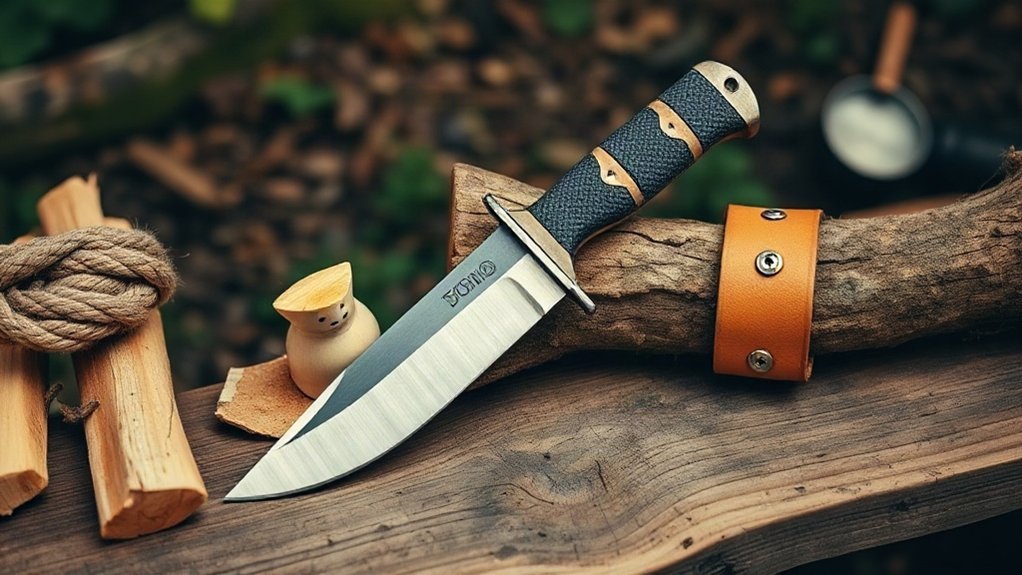
I rely on a fixed-blade survival knife for tough outdoor tasks because its sturdy construction has no folding joint or lock to fail under strain. A full tang adds strength and control for batoning wood, chopping kindling, cutting branches, and carving shelter parts. The same knife can help me prepare food and shape materials around camp. I choose a comfortable grip and blade suited to the job, then maintain it so it stays dependable as conditions change. The details below can help you choose and use one wisely.
Key Takeaways
- A fixed blade has no folding joint or lock to fail, so it’s ready for demanding tasks like chopping, batoning, and carving.
- Full-tang construction helps the knife resist stress and twisting, providing stability during controlled heavy work.
- Choose a blade shape and thickness suited to the task: a drop point is versatile, while thicker blades handle tougher demands.
- A comfortable, secure grip and balanced weight improve control when cutting branches, preparing food, or shaping shelter materials.
- A reliable sheath and regular cleaning, drying, and sharpening help keep the knife safe to carry and ready for outdoor use.
Why Fixed Blades Handle Tough Outdoor Work
A fixed blade handles tough outdoor work reliably because it has no folding joint or lock to fail under strain. When I’m far from help, that simple design gives me confidence to tackle demanding jobs without worrying about a mechanism breaking or sticking. I can chop firewood, baton wood, cut branches, and shape materials for a shelter with one dependable tool. That heavy duty reliability matters when harsh conditions leave little room for equipment failure.
A fixed blade also offers immediate readiness. I don’t need to unfold it or secure a lock before cutting; I can draw it and get to work. If you value the freedom to move quickly and handle tasks on your own, this straightforward design keeps the tool ready when outdoor work calls. It’s a practical choice for rugged use.
How Full Tang Builds a Stronger Survival Knife
I look for a continuous steel core because it connects the blade and handle into one sturdy structure. That full tang resists stress during carving, chopping, and batoning. It can also improve balance and control, helping you work steadily.
Continuous Steel Core
When I need a survival knife for demanding work, I look for a full tang: its steel runs through the handle, creating a continuous core that adds strength, stability, and balance. This Steel continuity gives me confidence when I’m chopping or batoning wood away from camp. The core construction supports the handle along its length, helping the knife stay dependable through tough outdoor tasks. A partial tang reaches only partway into the handle; it may weigh less, but it’s less suited to heavy-duty work. I choose full tang when reliability matters more than shedding weight, so I can work independently and keep moving.
| Construction | What it means outdoors |
|---|---|
| Full tang | Continuous steel supports the handle |
| Partial tang | Less steel inside; lighter, less suited to heavy tasks |
Greater Stress Resistance
That continuous steel core also helps a full-tang knife resist stress during carving, chopping, and batoning, reducing the risk of the blade separating from the handle. When I’m working outdoors, I want a tool that can take demanding use without a folding joint or lock that might loosen or fail. The steel running through the handle supports Resistance to twisting as I turn the blade against wood, while Shock load tolerance matters when each controlled strike sends force through the knife. That added strength can help me keep working with confidence and rely less on fragile gear. Still, full tang isn’t permission to pry or split beyond the knife’s design. I check that the materials and construction are sound, then use the blade for tasks it’s built to handle.
Improved Balance and Control
Because full-tang steel runs through the handle, it can give a survival knife steadier balance during carving, batoning, and chopping. I value that stability when I need to work confidently and stay in control outdoors. Since the blade steel continues through the grip, the knife forms a more unified structure that’s less likely to fail under stress than many partial-tang designs. A balanced knife helps me guide precise cuts, maintain a steady cutting rhythm, and adjust hand placement for different tasks. I also choose a handle that fits securely and comfortably; good grip comfort works with the full tang to support control. Together, these features let me tackle demanding jobs with greater confidence, whether I’m shaping wood or preparing camp materials, without letting the tool dictate my pace or choices.
Choose a Blade Shape for Cutting and Carving
Which blade shape suits your task? I match the profile to the cut so you can work confidently and stay free to adapt outdoors.
| Blade shape | Best use |
|---|---|
| Drop point | Versatile cutting, slicing, carving |
| Clip point | Precise carving |
| Sheepsfoot | Controlled cuts, fewer punctures |
Drop point versatility comes from its curved spine and sturdy tip, which help me handle varied jobs with control. For finer detail, clip point precision comes from a curved spine that narrows to a fine tip; I remember that it’s less robust than a drop point. A sheepsfoot’s straight edge and shallow tip angle help me avoid accidental punctures during controlled cutting. A tanto’s strong, angular tip can pierce tough materials, but it’s less suited to delicate carving. I’d choose a drop point for general tasks, a clip point for detail, or a sheepsfoot when controlled cuts matter most.
Pick Steel and a Grip for Outdoor Conditions
I choose stainless steel for wet or humid trips, while high-carbon steel suits me when I can clean, dry, and oil it regularly. Tool steel can balance toughness, edge retention, and wear resistance, though premium options may cost more. For a secure hold, I look for a comfortable, textured G-10 or Micarta grip that stays firm when wet or used with gloves.
Choose Weather-Resistant Steel
When I choose a knife for wet or humid conditions, I favor stainless steel because it resists corrosion and needs less upkeep than carbon steel. That Stainless steel corrosion resistance lets me spend more time outdoors and less time tending gear. I weigh that convenience against edge performance and field maintenance:
- High-carbon steel holds a sharp edge and sharpens easily, but high carbon steel upkeep means cleaning, drying, and oiling it promptly to prevent rust.
- Tool steel can balance toughness, edge retention, and wear resistance, though premium options may cost more.
- I match steel to my climate, budget, and willingness to maintain it, so my knife stays ready when I need dependable freedom in the backcountry.
No steel is maintenance-free; I clean and dry my blade after use, especially in damp weather.
Prioritize a Secure Grip
Steel choice affects upkeep, but a secure grip matters just as much in the field. I choose stainless steel for wet or humid trips because it resists rust and needs less care. High-carbon steel holds an edge and sharpens easily outdoors, but I clean, dry, and oil it regularly to prevent corrosion.
For the handle, I match materials to the weather. G-10 and Micarta resist moisture; wood may need extra attention when wet. I look for a comfortable Textured handle with reliable glove compatibility, so it stays secure in rain or during demanding work. A good fit helps prevent slips, hot spots, and fatigue, preserving my freedom to keep moving. I also check for a finger guard or choil, which adds control and helps protect my hand during cuts.
Use a Fixed-Blade Survival Knife for Shelter, Fire, and Food
A full-tang fixed-blade knife can handle a range of outdoor tasks, from cutting branches and carving shelter notches for lashing to gathering tinder and splitting kindling. I rely on its sturdy construction when I need to make camp without carrying extra tools.
- Shelter lashing: Cut poles to length and carve notches that help secure them with cord.
- Fire: Gather tinder, split kindling, and, when the design allows, strike a ferro rod with the knife’s spine.
- Camp meal prep: Clean fish, slice vegetables, or open food packages with a fine, controlled edge.
After preparing food, I clean and dry the blade, then apply a light coat of oil to help prevent rust. That simple care keeps my knife ready for the next task outdoors.
Choose the Right Blade Size, Balance, and Sheath
After using a fixed blade for camp tasks, I choose one that fits the work and feels right in hand. For controlled carving and food preparation, I prefer a 3–5-inch blade; heavier outdoor jobs may call for 5–7 inches. A 4–6-inch full-tang knife gives me a versatile middle ground for general use. I also match thickness to the task: under 3 mm helps me slice and work precisely, while 3–5 mm handles tougher demands.
Comfort matters when I’m moving freely outdoors. I check the balance and grip before choosing, since excess weight can tire my hand and limit control. Then I assess the sheath retention: it should hold the knife securely while allowing safe, easy access. I choose durable leather or water-resistant Kydex to suit my conditions.
Maintain Your Fixed-Blade Survival Knife in the Field
To keep my knife dependable in the field, I wipe away dirt and moisture with a soft cloth after each use and dry it completely after washing or exposure to rain, mud, or fish residue. This simple Field Cleaning routine supports Rust Prevention and keeps my gear ready for the next task.
- I apply a light coat of blade oil; carbon steel needs more frequent cleaning and oiling than stainless steel.
- I touch up the edge with a medium-grit diamond stone or ceramic rod, holding a consistent angle of about 20–25 degrees.
- I return the knife to its protective sheath when I’m done and store it somewhere cool and dry.
With these habits, I can rely on a sharp, protected blade and move freely through changing outdoor conditions.
Frequently Asked Questions
What Is the Best Knife for Outdoor Survival?
I’d choose a 4–6-inch, full-tang fixed blade with a drop point as my best all-around outdoor survival knife. Why carry more than I need when control and strength can travel together? For choosing blade steel, I’d pick stainless for wet conditions or carbon steel if I’m ready to clean and oil it. I’d also prioritize survival knife ergonomics: a grippy handle and secure sheath help me work confidently and move freely.
What Fixed Blade Do Navy SEALS Use?
There isn’t one fixed-blade knife used by every Navy SEAL; choices can vary with the operator, mission, and issued gear. I wouldn’t call any model standard without an authoritative military source. Navy SEAL knife selection criteria may differ by task, while military fixed blade knife history includes many designs rather than one universal choice. For your own outdoor use, I’d consider a rugged, full-tang 4–6-inch blade for strength and control.
What Is the Point of a Fixed Blade Knife?
The point of a fixed-blade knife is to give you a sturdy, ready-to-use tool without a folding joint that can loosen or fail. I value its Reliable field performance for demanding jobs, from carving and shelter building to processing wood. A full-tang design adds strength for heavier work, while a sheath keeps the edge protected and accessible. For Versatile camp tasks, it offers dependable capability and the freedom to tackle more outdoors.
What Is the Holy Trinity of Knives?
The “holy trinity” of knives refers to three blade styles: drop point, clip point, and tanto. I see them as distinct knife roles, not a required three-knife kit. A drop point offers a strong, controllable tip for general cutting; a clip point suits precise work; and a tanto handles piercing and tougher materials. Choose the shape that fits your plans, and consider blade balance for comfortable, confident use outdoors.
Conclusion
A fixed-blade survival knife earns its place through strength, simplicity, and steady performance. I choose a full tang, practical blade shape, weather-ready steel, and a secure grip to handle shelter building, fire prep, food work, and more. The right size and sheath make carrying safer, while regular field care keeps the edge ready. Pick a knife that fits your needs, practice using it safely, and you’ll have a dependable tool when tough outdoor tasks test your skills.