What Should You Look for When Buying Fixed-Blade Survival Knives for Camping?
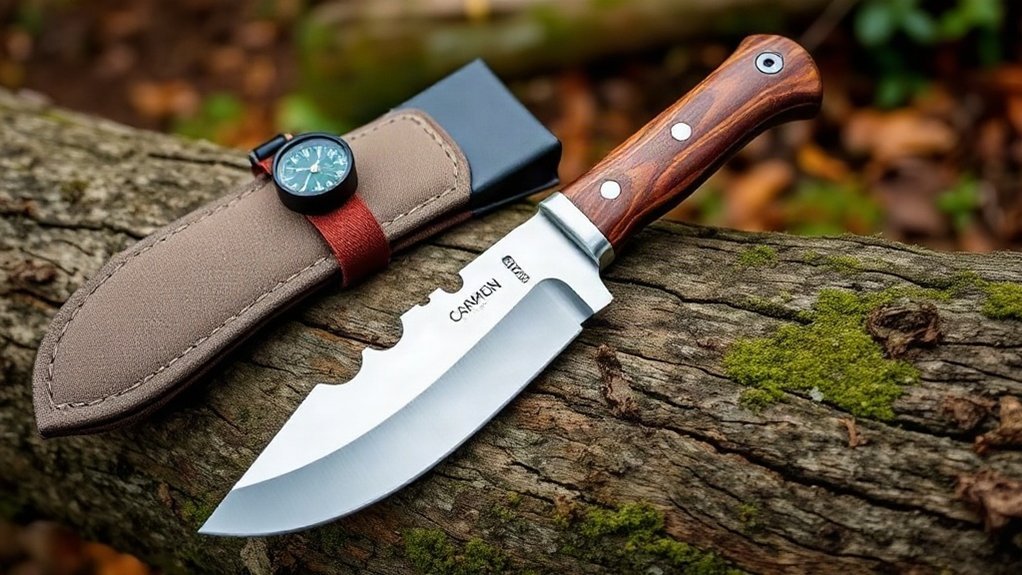
I choose a camping knife by matching its blade and carry method to the work I expect. A 4–6-inch blade suits most camp chores, while shorter blades offer control and longer ones add chopping reach. I favor thin geometry for slicing and a sturdier blade for batoning. I also check steel maintenance, grip security, tang construction, and whether the spine can strike a ferro rod. A secure, comfortable sheath and room for maintenance tools matter too. Here’s what else I consider.
Key Takeaways
- Choose a blade length suited to your tasks and carry method; 4–6 inches is a versatile range for general camp chores.
- Match blade shape and thickness to the work: thinner grinds slice well, while robust geometry handles batoning better.
- Select steel for local conditions and maintenance needs; stainless resists moisture, while carbon steel is easy to sharpen but needs care.
- Check grip comfort, tang strength, and useful features such as a sharp, uncoated spine for ferro-rod striking.
- Evaluate sheath security and comfort, total cost, and whether the knife suits your trips; budget for maintenance and use a saw or axe for heavy firewood.
Match a Camping Knife to Your Tasks
What will you use your knife for most? I start with honest task planning, because the right tool should support your camp setup without weighing me down. For everyday camping and survival chores, I’d choose a fixed blade around four to six inches. It gives me useful control for cutting cordage, carving, making feather sticks, preparing fires, and light batoning.
If you mainly hike, prepare food, or carve, a three- to four-inch blade keeps my kit lighter, though it won’t handle heavier camp chores as well. For processing larger firewood, I’d consider a blade seven inches or longer, but I’d accept extra weight and less control for fine work. I also match the knife to how I carry it: heavier for a truck kit or stationary camp, compact for a hiking pack. For substantial firewood, I’d bring a saw or axe.
Choose a Camping Knife Blade Length and Shape
I’d start with a 4–6-inch blade for a practical balance of camping tasks, choosing shorter for control or longer for reach and chopping. Match the shape to your work: a drop point handles general cutting, while clip, tanto, and spear points suit more specific tasks. I’ll weigh these trade-offs so you can choose a knife that fits your needs.
Choose a Practical Length
For most camping, I’d choose a 4–6-inch blade: it offers good control for carving and food prep while handling cordage, feather sticks, and light batoning. This range gives me useful capability without making the knife cumbersome, so I can move freely between camp chores.
If I’m prioritizing Pack weight on a light hike, I might carry a 3–4-inch blade instead. It works well for carving and cooking, though I’d accept less ability with heavier tasks. A blade 7 inches or longer can help with chopping, but it adds weight and makes precise cutting harder.
Before buying, I’d check regional laws, since blade-length limits can affect what I’m allowed to carry. I’d choose the shortest practical blade for my routine, rather than hauling extra steel I’m unlikely to use.
Match Shape to Tasks
Which blade shape suits your camp chores? I match blade profile and cutting geometry to the work, so you can pack for your own route without carrying a knife that can’t handle your plans.
| Blade choice | Best for | Trade-off |
|---|---|---|
| 3–4 inches | Light hiking, food prep, carving | Less suited to heavy work |
| 4–6 inches | Feather sticks, cordage, fire prep | Versatile, controllable |
| 7 inches or longer | Heavier chopping | More weight, less fine control |
| Drop point | General cutting, gutting | All-rounder |
For game, I’d consider a clip point; for piercing, choose a tanto’s sturdy tip or a spear point’s focused design. Let the task guide you: smaller blades keep light chores manageable, while longer ones tackle tougher jobs. I’d favor a 4–6-inch drop point for a flexible camp setup.
Balance Control and Reach
When you choose a camping knife, balance reach against control: I find a 4–6-inch blade versatile enough for feather sticks, cordage, light batoning, and fire prep without feeling unwieldy. Handle balance and wrist control matter when you’re working away from camp, where each cut should feel steady and deliberate.
- Choose 3–4 inches for lighter hiking, carving, food prep, and everyday camp tasks; it’s nimble, though less suited to heavy work.
- Pick 7 inches or longer when chopping reach matters, but expect extra weight and less precision.
- A drop point handles general cutting and gutting with confidence.
- A clip point suits gutting game; choose a tanto or spear point when piercing is the priority.
I’d match length and shape to the jobs you expect, keeping your kit free to move with you.
Choose a Camping Knife for Slicing or Batoning
Choose your camping knife by matching its blade geometry to your main task. For food, game dressing, and other fine cuts, I’d favor a thin blade with a high or hollow grind. The Buck 119’s hollow-ground, 6-inch blade delivered the strongest slicing performance among the knives compared. A 3–4-inch blade gives you control for food prep and light carving; a 4–6-inch model offers versatile reach for slicing and general camp jobs.
If batoning matters more, I’d choose a sturdy full-tang knife with a robust edge. The 6.35 mm-thick Ka-Bar BK72 split 3–4-inch logs with a mallet, demonstrating batoning strength. That thicker geometry usually slices less cleanly, so don’t expect one knife to excel at both. For substantial firewood, take an axe or saw; reserve your camp knife for lighter splitting and cutting.
Choose Steel You Can Maintain Outdoors
Match your knife steel to the weather and the sharpening tools you’ll carry. I choose for the conditions I’ll face and the care I can manage, so Outdoor corrosion doesn’t limit my freedom on the trail.
Choose knife steel that suits the weather and your sharpening skills, so corrosion won’t limit your time outdoors.
- 1095 carbon steel: Tough and easy to sharpen outdoors, but I clean and dry it after rain, fruit, or salt.
- VG10 or 14C28N stainless: Resists damp, humid, and coastal conditions; some grades take longer to sharpen.
- D2 or Sleipner tool steel: Offers demanding-task capability and reasonable field sharpening, yet can still rust.
- Coated blades: Add a barrier against moisture, though use can wear the coating away.
- Heat treatment: Shapes real-world performance, so I consider it alongside the steel name.
I pick steel I can maintain with my own tools and skills.
Check Grip, Tang, and Ferro-Rod Use
A knife that feels secure in my hand helps me work safely through long tasks, even in rain or gloves. I test the grip for comfort and control, since a poor fit can limit my independence outdoors. Wet weather handle materials such as Micarta and G10 offer durable traction; rubber resists moisture but handles high heat poorly.
I also check the tang before trusting a knife for demanding work. I prefer a full tang or a well-built skeleton tang for stability. Removable scales make cleaning and replacement easier, a practical benefit on extended trips.
For fire starting, I inspect ferro rod spine compatibility. A sharp, uncoated 90-degree spine can scrape a rod, but a coating may stop it. If the spine won’t strike reliably, I carry a dedicated striker.
Choose a Secure Camping Knife Sheath
- On a belt, the sheath stays close and comfortable.
- On a pack, its attachment holds firm as I move.
- For left-handed carry, I check that the sheath supports my preferred draw.
- In wet weather or damp storage, I choose synthetic over leather.
- Before leaving camp, I confirm the knife seats securely.
Good carry compatibility gives me freedom to move while keeping the knife accessible and safely stowed.
Set Your Budget and Choose Knife Size
I’d set a budget based on how often you’ll use your knife: a capable option like the ESEE-4 or BPS Adventurer CSHF can suit occasional camping, while premium models cost more. For most tasks, I’d start with a 4–6-inch blade; choose shorter for lighter camp chores or longer for heavier chopping. I’d also match the knife’s size and weight to how you’ll carry it, whether on your belt or in your pack.
Set a Realistic Budget
Set your budget around how often you’ll use the knife: an affordable model like the BPS Knives Adventurer CSHF can suit occasional camping, while premium steel and construction—such as the Fallkniven S1—may be unnecessary for casual trips. I match spending to usage frequency, then consider total ownership cost, including a sheath that carries comfortably. For a value-oriented full-size option, I’d compare the Cold Steel SRK.
- Picture the BPS Adventurer riding along on a weekend outing.
- Weigh the SRK’s value against the tasks you expect.
- Ask whether premium steel earns its higher price.
- Check that the sheath stays comfortable on the trail.
- Choose a knife that supports your trips without tying up money you’d rather spend exploring.
A low price isn’t a bargain if the knife doesn’t suit your needs; I’d pay for practical value, not features I won’t use.
Choose the Right Blade Size
Once you’ve set a budget, choose a blade size that fits your camping tasks and how you’ll carry it. I find 4–6 inches offers a versatile balance for cordage, carving, feather sticks, and light batoning. Choose smaller for lighter travel; go larger only when heavier work matters.
| Blade size | Best suited to | Trade-off |
|---|---|---|
| 3–4 inches | Food prep, carving, light hiking | Less power |
| 4–6 inches | General camp chores | Moderate weight |
| 7+ inches | Heavy chopping | Bulkier, less precise |
| Belt carry | Stable, accessible use | Must feel comfortable |
Before buying, check legal blade limits where you camp, then match the knife to your carry style. I prefer a compact pack knife when weight matters, and a comfortable belt knife for regular access. Set aside room in your budget for a maintenance kit, too.
Frequently Asked Questions
What Is the Best Fixed Blade Knife for Camping?
I’d choose the Cold Steel SRK as the best all-around camping fixed blade: its 6-inch blade handles rough camp chores, and its SK-5 blade steel offers strong value. I’d check handle ergonomics in person, since comfort matters during extended use. If you prioritize food prep, I’d pick the Buck 119 for its slicing ability; for a lighter, more refined feel, consider the Fallkniven S1. I’d still bring an axe for firewood.
What Are Some Good Camping Survival Knives?
I’d consider the Cold Steel SRK for dependable value, the Fallkniven S1 for nimble handling, or the ESEE Laser Strike for a grippy Micarta handle and tough sheath. For camp cooking and dressing game, I like the Buck 119; the lightweight Mora Companion or full-tang BPS Adventurer CSHF suits a tighter budget. Compare Knife Handle Materials and Blade Steel Choices, then choose the tool that fits your trips and gives you confidence outdoors.
What Type of Knife Is Best for Camping?
I’d choose a fixed-blade camping knife with a 4–6-inch blade: apparently, bigger isn’t always better when you’re carving by the fire. It gives me control for food prep, cordage, feather sticks, and light batoning without weighing me down. I’d check handle ergonomics for a secure, comfortable grip and match blade steel choice to conditions: stainless for wet trips, carbon steel if I’m ready to prevent rust. I’d also want a sturdy tang and safe, comfortable sheath.
What Fixed Blade Do Navy SEALS Use?
I can’t identify one fixed blade as the standard Navy SEAL knife; the available information doesn’t verify a specific model. Don’t treat a “military” label as proof that SEALs use or prefer a knife. For practical Navy SEAL knife selection criteria, I’d focus on your own needs, not branding. Military knife design features may include a sturdy full tang, secure grip, and useful sheath, but I’d prioritize fit, maintenance, and reliable performance outdoors.
Conclusion
I choose a fixed-blade camping knife by matching its size and shape to the jobs I’ll actually do, then checking that its steel, grip, tang, and sheath suit outdoor use. I also make sure I can maintain it and handle it safely. Don’t let a dramatic feature distract you from those basics. Before you buy, picture one cold, wet evening at camp—and ask whether this knife will still feel dependable when the fire won’t catch and the light is fading.