Are Fixed-Blade Survival Knives a Better Choice for Heavy-Duty Outdoor Use?
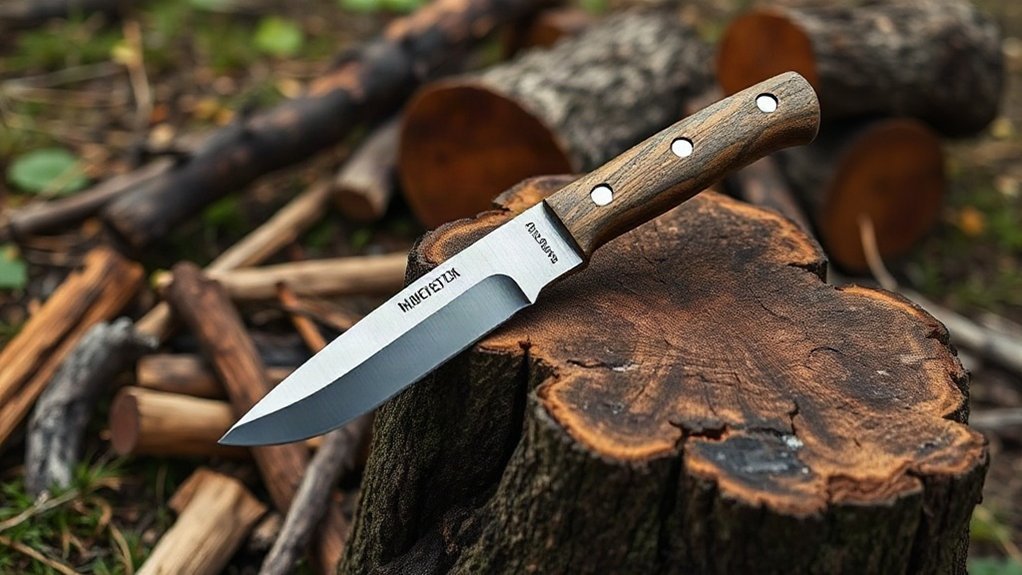
Yes—I’d choose a fixed-blade survival knife for heavy-duty outdoor work because its solid construction avoids a folder’s hinge and lock, which can fail under stress. A full-tang model can handle forceful carving, rope cutting, game processing, and batoning kindling. For general camp chores, I’d look at a 4–6-inch blade; heavier wood processing may call for more length and leverage. Fixed blades add bulk, though, so I’ll weigh carry needs, fit, and maintenance before choosing the right knife.
Key Takeaways
- Fixed blades are generally better for heavy-duty tasks because they lack hinges and locks that can wear or fail under stress.
- Full-tang models suit forceful carving, rope cutting, game processing, and batoning when the knife is sturdy enough.
- Choose a 4–6-inch blade for versatile camp chores; longer, heavier blades offer more leverage for chopping and firewood processing.
- Fixed blades and sheaths add bulk, so folders may be preferable for lighter tasks and compact carry.
- Match the knife’s grind, handle, sheath, and steel maintenance needs to your workload, conditions, and carry preferences.
Are Fixed-Blade Survival Knives Better for Hard Use?
For hard use, I’d generally choose a fixed blade because it has no hinge or locking mechanism to wear out or fail under stress. That simplicity supports Structural reliability when you’re working far from help and need dependable tools.
A full-tang, thick-bladed knife like the 5.25-inch KA-BAR Becker BK2 can take on demanding jobs such as batoning and chopping wood. The 6-inch Cold Steel SRK offers a balanced design, a secure grip, and a reputation for arriving sharp. I’d also consider handle durability and how the knife’s shape matches the task: the Fallkniven S1 handles batoning and carving well, but it isn’t a good chopper. A fixed blade still isn’t the right answer for every outing. Its larger size and sheath add bulk, which can limit convenient carry compared with a folder. For hard work, I’d value the fixed blade’s direct, sturdy construction, while choosing a design suited to the jobs I expect to do.
Which Survival Knife Fits Your Use and Budget?
I’d match your knife to the work: choose a 6–7-inch blade for wood processing, the Garberg for compact carving, or the Buck 119 for food prep. For a lower price, the Schrade SCHF9 offers a capable general-purpose option, while the pricier Fallkniven S1 prioritizes refinement and corrosion resistance. I’ll compare these trade-offs so you can balance performance, task, and budget.
Match Knives to Tasks
Match a survival knife to the work you expect it to do, not just its size or price. For heavy wood processing, I’d choose a full-tang blade around 6–7 inches: the Cold Steel SRK has a 6-inch SK-5 blade, while the 7-inch Ontario Rat-7 handles demanding camp chores. For batoning and chopping, the thick, 5.25-inch KA-BAR Becker BK2 is built for hard use; the shorter Morakniv Garberg excels at carving, not chopping. Know your batoning limits before pushing any blade.
For slicing and game dressing, I’d pick the Buck 119, whose hollow-ground 420HC blade suits precise cuts but not rough woodwork. The $48 Condor Terrasaur makes a capable camp-and-hunting choice, though its carbon steel needs care. For lightweight travel, the compact Morakniv Eldris handles carving and fire-starting; carry a larger tool when substantial wood processing awaits.
Balance Price and Performance
The right knife should fit both your workload and your budget. I’d weigh Price to performance against the budget tradeoffs: pay for features you’ll use, not a name or extra refinement.
- Rough camp work: The Cold Steel SRK pairs a 6-inch SK-5 blade with an 8.2-ounce build; reviewers praise its balance and sharp factory edge.
- Quick budget pick: The Schrade SCHF9 has a 6.4-inch blade; the Ontario Rat-7 offers a 7-inch blade as a value choice.
- Carving and fire prep: At about $82, the full-tang Morakniv Garberg brings a 4.3-inch carbon-steel blade and square spine.
- Lower-cost versatility: The $48 Condor Terrasaur has a 4.2-inch 1095 blade and Scandi grind, but needs steel care and possible spine work.
I’d spend more on the nimble Fallkniven S1 only if its laminated VG10 blade suits your needs.
What Can Fixed Blades Handle Better?
Because a fixed blade has no hinge or lock to wear or fail, I trust it for demanding camp chores such as forceful carving, cutting rope, and processing game. That solid construction gives me confidence when a task calls for steady pressure, not delicate handling. Batoning firewood is a good example: I can strike a sturdy knife’s spine with a baton to split kindling. The 5.25-inch, 1095 Cro-Van steel KA-BAR Becker BK2 is built for that kind of work. A longer blade, such as the 7-inch Ontario Rat-7 or LionSteel M7, can offer more leverage when processing wood. For rope cutting, I’ve tested blades on paracord, nylon webbing, and climbing rope. A square, sharpened spine adds another useful option: the Morakniv Garberg can scrape wood into tinder and throw sparks from a fire steel. These capabilities let me handle demanding tasks directly and keep moving through the outdoors on my own terms.
When Does a Folding Survival Knife Make Sense?
For lighter daily tasks, I’d choose a folding survival knife when compact, discreet carry matters more than maximum strength. It slips into a pocket, keeps your setup light, and suits errands, travel, or casual outdoor use. For Urban carry, that freedom and convenience can make a folder a practical everyday option.
- Easy to carry: A folder takes little space and feels less conspicuous.
- Useful for routine jobs: I’d use one for opening packages, cutting cord, or preparing a snack.
- Check Legal considerations: Rules vary by state and locality, so I’d confirm what’s allowed before carrying.
- Know its limits: I wouldn’t trust a folder for heavy wood processing; extreme force can stress its hinge and lock.
I’d also clean and lubricate the hinge and locking mechanism regularly, since dirt and wear can affect operation. A folder takes longer to deploy than a fixed blade, too. I’d carry one daily and keep a fixed blade ready for camping or tougher outdoor work.
How Long Should a Survival Knife Blade Be?
How long should a survival knife blade be? I’d match blade length to the work you expect, not choose the biggest knife by default. For general camp chores and hunting, a 4–6-inch blade offers a practical balance of control and versatility. It’s easier to carry and handle, though it won’t process large amounts of firewood efficiently.
If you’ll tackle heavier jobs, a blade longer than 6 inches gives you more reach and chopping leverage without the bulk of a giant chopper or machete. The 6-inch Cold Steel SRK makes a capable all-around choice; the 7-inch Ontario Rat-7 and LionSteel M7 add reach for demanding outdoor use. For frequent firewood processing, consider an 8–12-inch fixed blade, but expect less convenient carry.
A shorter option still earns its place: the 4.3-inch Morakniv Garberg handles carving and fine tasks well, but has limited chopping ability. I’d choose the length that preserves your freedom to move while meeting your toughest routine needs.
Which Knife Steel Balances Toughness and Rust Resistance?
Once you’ve chosen a blade length, consider the steel: toughness and rust resistance come with trade-offs, and heat treatment and blade geometry affect performance too. I weigh toughness tradeoffs against the maintenance I’m willing to do. For a reliable balance, consider these options:
Steel choice balances toughness and rust resistance, while heat treatment, blade geometry, and upkeep shape real-world performance.
- Laminated VG10: The Fallkniven S1 pairs toughness with strong corrosion resistance, but its convex edge needs a different sharpening technique.
- 420HC: The Buck 119 is tough and easy to sharpen, making it useful for game preparation.
- SK-5: The Cold Steel SRK arrives sharp and handles rough use, but I’d protect its carbon steel from rust and expect its coating to wear.
- 1066 or 1095: High-carbon steels work well outdoors, yet they need rust prevention; I’d oil the BPS HK5’s 1066 steel frequently.
No steel frees you from every compromise. I’d match the knife to your climate, workload, and willingness to maintain it, then check the maker’s heat treatment. That choice lets you carry a capable tool without being tied to stainless steel—or caught off guard by corrosion.
Why Does Blade Geometry Matter for Cutting?
I look at edge angle and grind because they shape how a knife bites into material. A thin edge slices efficiently, while a sturdier grind offers more control and holds up better to wood processing and batoning. I’ll compare how these trade-offs affect cutting tasks and field use.
Edge Angle and Grind
Blade geometry determines whether a survival knife slices cleanly or withstands hard use. I weigh edge angle, grind geometry, and blade thickness against the work I expect in the backcountry. A thinner edge favors slicing; a sturdier profile handles impact and rough tasks.
- Buck 119: Its hollow grind suits slicing food and game.
- Morakniv Garberg: Its Scandi grind is easy to sharpen outdoors and supports carving.
- Fallkniven S1: Its full convex grind feels slim, but needs a distinct sharpening method.
- Spine shape: A square, burred spine can prepare tinder or strike a ferro rod; coatings may hinder sparks.
I choose geometry for the freedom to tackle varied jobs, while respecting each edge’s limits. For batoning, I favor a thicker blade over a delicate slicing edge.
Cutting Efficiency and Control
The right grind turns edge geometry into cutting efficiency and control: a thin edge slices food and meat cleanly, while a thicker blade better tolerates demanding work like batoning wood. I look at the task before choosing a knife, because the right geometry gives me freedom to work efficiently without forcing one blade to do everything.
For Food slicing and game dressing, the Buck 119’s hollow grind excels, and its six-inch blade leaves room for food preparation. The Fallkniven S1’s full convex grind feels slim and nimble in my hand, helping me carve, make feather sticks, and cut cordage; I’ll just need a different sharpening technique.
For carving control and fine work, I favor the Garberg’s Scandi grind and 4.3-inch blade. It still handles thick-wood batoning, while its square spine can scrape tinder and throw sparks from a fire steel.
How Should a Survival Knife Fit Your Hand and Terrain?
How well a survival knife fits depends on your hand, workload, and terrain. I match the handle to my hand size and the tasks ahead, so I can work confidently without fighting my gear. A secure, comfortable grip matters through different holds and changing conditions.
- The Condor Terrasaur suits varied hand positions; I’d test its grip before choosing.
- The Cold Steel SRK’s Kraton handle stays grippy when wet, a useful edge in damp terrain.
- For lightweight backpacking and fine tasks, the Morakniv Garberg’s 4.3-inch blade keeps things compact, though it’s limited for chopping.
- For firewood, I’d choose more leverage: an 8–12-inch blade, or the 5.25-inch Becker BK2 for batoning and chopping.
I also consider terrain demands and fit: the Garberg may challenge smaller hands, while the compact Sacha Puukko can feel cramped in larger ones. In damp conditions, I favor the Fallkniven S1’s synthetic sheath over leather. The right match lets me move freely and handle the work at hand.
How Do You Carry a Fixed-Blade Knife Safely?
I carry a fixed blade in a secure sheath that suits the weather and my preferred carry position. I also account for its extra weight and bulk, and check local laws before carrying it in public.
Choose a Secure Sheath
A secure sheath keeps your fixed blade covered when you’re not using it and firmly in place as you move. I look for dependable retention security first: the blade should stay put through a hike yet draw when I need it. Then I match its material and carry style to my conditions and preferences, so the sheath supports freedom outdoors rather than getting in the way.
- For wet trips or damp storage, I favor synthetic material for better weather resistance than leather.
- I check mounting options: the Cold Steel SRK sheath offers several ways to attach it.
- I compare ride height; the SRK sits somewhat high, while the Buck 119’s leather sheath can hang lower.
- I choose useful extras, such as the LT Wright Genesis Scandi sheath’s fire-steel loop and dangler loop.
A well-matched sheath keeps my knife secure, accessible, and ready for the conditions I choose.
Follow Safe Carry Practices
When I carry a fixed blade, I keep it in a fitted sheath that fully covers the edge and holds the knife securely. I use its belt mount to keep the knife stable and accessible, not swinging or snagging. Because a fixed blade takes more space than a folder, I choose a position clear of pack straps and other gear.
| Situation | My practice | Purpose |
|---|---|---|
| Not in use | Keep it sheathed | Prevent accidental injuries |
| Drawing or returning | Aim blade away | Protect myself and others |
Before heading out, I Check carry laws, especially for public places; restrictions vary. Knowing the rules lets me carry responsibly and enjoy the freedom of outdoor travel. I also check the sheath’s retention before moving, so the knife stays secure on rough trails.
How Do You Sharpen and Maintain a Survival Knife?
How you sharpen a survival knife depends on its grind and steel: lay a Scandi edge, like the Morakniv Garberg’s, flat against a stone, but use a different technique for the Fallkniven S1’s convex edge. The right sharpening technique preserves the edge and keeps your knife ready when you’re far from help. For high-carbide steel like S30V, I use a diamond sharpener such as the DMT Diafold.
Sharpen to the grind, not just the steel: use a flat stone for Scandi edges and diamonds for high-carbide blades.
- Touch up dull or damaged spots after batoning, carving, or cutting rope.
- Keep carbon-steel blades, including 1095 and SK-5, clean, dry, and lightly oiled for rust prevention.
- Oil the BPS HK5’s 1066 steel frequently to help protect it from corrosion.
- Clean the blade and handle after each outing; removable scales, like those on the ESEE Laser Strike, make thorough cleaning easier.
I check my knife after hard work, rather than waiting for a small nick to grow. Regular care helps you stay self-reliant outdoors, with dependable gear ready for the next task.
Frequently Asked Questions
What Is the Best Knife for Outdoor Survival?
I’d choose the LionSteel M7 as the best outdoor survival knife for demanding work. Its seven-inch blade handles camp chores, game processing, and substantial wood tasks, while its fixed-blade design supports knife durability when you’re far from help. If you want a lower-cost option, I’d consider the Cold Steel SRK, but protect its SK-5 carbon steel from rust. For lighter, more compact wilderness preparedness, I’d pick the Morakniv Garberg for carving and fire-starting.
What Is the Best Fixed Blade Knife for Outdoor Use?
I’d choose the Cold Steel SRK as the best all-around fixed blade for outdoor use—unless your plans involve negotiating with a stubborn tree, in which case the BK2 brings a small lumberyard’s enthusiasm. The SRK balances Blade Length, durability, and affordability for rough camp chores. I’d also check Handle Ergonomics before buying; a knife should feel like a capable tool, not a tiny prison sentence. Keep its steel dry, and you’re free to roam.
What Fixed Blade Do Navy SEALS Use?
I can’t identify one fixed blade that every Navy SEAL uses; Navy SEAL knife selection varies with mission and personal preference. The Cold Steel SRK is popular among military personnel, but I can’t confirm it as a standard-issue SEAL knife. Its six-inch SK-5 carbon-steel blade suits demanding use, though you’ll need to prevent corrosion and expect its coating to wear. Military knife traditions don’t dictate your choice—you’re free to choose what fits your needs.
What’s the Difference Between a Bushcraft Knife and a Survival Knife?
A bushcraft knife prioritizes controlled carving and camp chores; a survival knife aims to handle a wider range of urgent outdoor tasks. The distinction isn’t absolute—one versatile knife can serve both roles. I’d compare Blade design and intended tasks before choosing: a Scandi grind excels at fine cuts, while a longer, heavier blade handles batoning better. You don’t need to buy two knives; choose the tool that best fits your plans and gives you confidence outdoors.
Conclusion
I choose a fixed-blade survival knife when I expect hard work: its solid construction handles chopping, batoning, and messy tasks better than most folders. But the best knife is the one that suits your hand, terrain, budget, and carry plan. I once watched a small, well-sharpened blade outwork a larger knife simply because its owner could control it. Think of a survival knife like a boot: choose for the trail ahead, then maintain it so it’s ready when you need it.