Can Fixed-Blade Survival Knives Handle Batoning and Other Wood Processing Tasks?
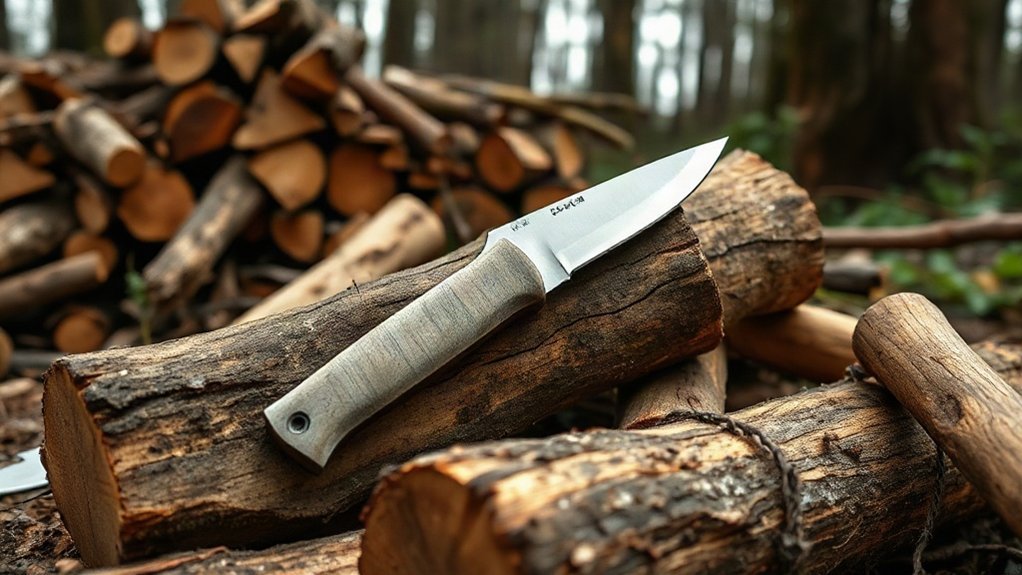
Yes, I use a sturdy full-tang fixed-blade survival knife to baton small pieces of straight-grained, dry wood for kindling or carving stock. I choose a blade around 3 mm thick or more, inspect the wood for hidden hazards, and strike the spine with a wooden baton—not metal. Batoning can dull, chip, bend, or break a knife, so I stop if it shifts or binds. For larger, tougher wood, I choose a saw or hatchet; the details below can help you choose wisely.
Key Takeaways
- Yes—some full-tang fixed-blade knives can baton small pieces of suitable wood, but batoning may dull, chip, bend, or break a blade.
- Choose a sturdy blade at least 3 mm thick; this is a guideline, not a guarantee, and thin or hollow-ground blades are poor choices.
- Use straight-grained, dry wood, inspect it for hidden hazards, and strike the blade spine with a wooden baton using controlled blows.
- Keep your hands and feet clear, use a stable surface, and stop if the blade shifts, binds, bends, chips, or feels unsafe.
- A saw is better for cutting wood to length; an axe or hatchet is more efficient for splitting tough or large pieces.
Can You Baton With a Survival Knife?
Yes, you can baton small pieces of wood with a fixed-blade survival knife: place the blade on the wood and strike its spine with a wooden baton, using the edge as a wedge to split kindling or make carving stock. I’d choose straight-grained, dry wood and check for knots, grit, stones, or hidden metal before striking. These hazards can chip or dull the edge, or even break the blade. Use controlled blows, and stop if the knife shifts or the wood resists.
Batoning creates considerable stress, so I’d use a robust full-tang knife; a blade at least 3 mm thick is a useful rule of thumb. Thin or hollow-ground blades are poor choices, and a folding knife’s lock and hinge aren’t designed for impact. Choose suitable wood types and a solid baton material, such as a stout wooden branch. When splitting larger rounds, I’d reach for an axe or hatchet instead. Baton only when needed and when your knife can handle the work.
Which Survival Knife Features Matter?
When I choose a knife for wood processing, I look for full-tang construction and a blade thick enough for batoning, with a length that balances control and leverage. I also check that the grip stays secure when wet and the sheath carries the knife safely. Finally, I match the steel to the conditions and maintenance I’m willing to handle.
Full-Tang Construction
Because batoning puts heavy stress on a knife, I’d choose full-tang construction, where the steel runs through the handle, to avoid a weak blade-to-handle junction. When comparing tang types, I’d inspect the handle attachment and favor steel that continues through the grip. That gives me a dependable tool for demanding work—and more confidence when I’m far from help.
| Construction | Steel path | Batoning outlook |
|---|---|---|
| Full tang | Through handle | Strongest choice |
| Partial tang | Partway through | Weaker junction |
| Rat-tail | Narrow core | Weaker junction |
| Hollow handle | Handle cavity | Weaker junction |
Full tang isn’t a guarantee that every knife can split wood. I’d pair it with a sturdy blade; thin-ground designs may fail. I’d also check manufacturer guidance first: batoning damage may void warranty coverage. I’d leave folding knives out of this task; hinges and locks can fail under impact and leverage.
Blade Length and Thickness
Full tang gives a knife a stronger foundation for batoning, but blade dimensions also shape how well it handles wood. I find a 4–6-inch blade offers a practical balance of leverage, cutting power, control, and packability. For most camping tasks, 4–5 inches works well. These blade length tradeoffs matter: a shorter blade limits reach and leverage, while one over about five inches can feel unwieldy when I need precise cuts.
For thickness considerations, I use 3 mm as a helpful minimum for batoning, not a guarantee of durability. A thicker blade can take demanding wood processing, but too much thickness makes carving and fine work harder. I also match the grind to the task: a Scandi grind supports carving, while a thin hollow grind isn’t a sound choice for batoning.
Grip, Sheath, and Steel
Grip, sheath, and steel choices affect control, comfort, and maintenance during wood processing. I favor a Textured handle grip in G10 or Micarta; it stays secure when my hands get wet or bloody. A slippery, uncomfortable handle can cause blisters, fatigue, or cuts. I also check balance: a point near my index finger helps me carve with control and confidence.
| Feature | What I consider |
|---|---|
| Handle | Textured G10 or Micarta |
| Balance | Comfortable, near index finger |
| Sheath | Durable, weather resistant sheath |
| Steel | Match toughness and upkeep |
For independent travel, I prefer a plastic or Kydex sheath; leather needs regular care. I’d choose 1095 for toughness and easy sharpening, but oil it against rust. VG-10 laminate suits wet conditions. CPM-3V resists wear and handles stress, though field touch-ups may require diamond abrasives.
What Damage Can Batoning Cause?
When I baton, I can dull the edge or chip it if the blade hits a knot or hidden debris. Repeated impacts can also bend or break a weak knife, especially one with a thin blade or folding design. I’ll explain what damage to watch for and why a sturdy full-tang fixed blade matters.
Edge Chips and Dulling
Even a knife designed for batoning can chip or dull when repeated impacts stress its edge, especially if it hits a knot or a hidden nail, bullet, stone, sand, or small rock. I inspect each piece of wood first, because a quick check can spare you a frustrating repair. A thin grind, including many hollow grinds, is more vulnerable than a robust blade, so choose a heavy-use knife when you want dependable edge retention and fewer interruptions.
- Check wood for hidden debris before striking.
- Watch for knots that can stress the edge.
- Expect sharpening frequency to rise after hard use.
- Inspect for chips or dull spots afterward.
- Check warranty terms; damage from batoning may count as misuse.
With the right blade and a careful inspection, you can process wood confidently while protecting your freedom to rely on your gear.
Blade Breakage Risks
Repeated batoning can do more than chip or dull an edge: the splitting stress may bend or snap an unsuitable blade. I choose a robust, full-tang fixed blade to reduce the risk and keep control in the field. Thin-ground blades, including many hollow-grind models, make poor batoning tools. A thickness of at least 3 mm is a useful rule of thumb, not a guarantee against Blade steel failure or brittle fracture. Knots can redirect impact, while hidden nails, bullets, stones, sand, or small rocks may damage the blade as I split wood. I avoid folding knives for this task because their locks or hinges can fail under stress. Before relying on a knife, I also check its warranty: makers may classify batoning damage as misuse, not a covered defect.
How Can You Baton More Safely?
If you need to baton wood, choose a sturdy, full-tang fixed blade; avoid folders, hollow-handle knives, and thin or flexible blades. I treat 3 mm thickness as a rough minimum, not a promise of strength. Before striking, I inspect the wood and choose a clear, stable piece, checking for knots, nails, stones, or other debris that could damage the edge. Good stance placement matters: I keep my feet clear of the blade’s path and work on a stable surface.
- Use a wooden baton to strike the knife’s spine.
- Don’t use a hammer or steel pipe; hard impacts can damage the knife.
- Keep your supporting hand away from the striking area.
- Strike with controlled force, watching for movement or binding.
- Stop if the blade shifts, bends, chips, or feels unsafe.
I baton only when it’s appropriate, since the task can break a knife. When I have a suitable axe or hatchet, I use it for splitting instead. I’d rather keep my knife intact and my hands free from injury.
When Should You Use an Axe or Saw?
When splitting is the main task, I reach for an axe or hatchet: its heavier head and longer handle make tough wood easier to split than a knife. That extra momentum improves wood splitting efficiency, especially when I’m working with dense logs. If I’m car camping or already carrying an axe, I’ve got little reason to baton with a knife.
For cutting branches and logs to length, I choose a saw. It gives me control over cutting length methods without asking a knife to do a job better suited to teeth and a rigid blade. I pair the saw with a knife for carving or preparing kindling; a Mora knife and Opinel saw make a practical camping kit.
When I’m backpacking light without an axe, a suitable knife can help make kindling. I can carve a wedge to start a split, but I switch to an axe or hatchet for heavier splitting. My tool choice should fit the wood, load, and freedom I want on the trail.
Which Survival Knives Suit Batoning?
For light trips without an axe or hatchet, I choose a stout, full-tang fixed blade for batoning. A blade at least 3 mm thick offers a useful starting point; thin or hollow-ground blades aren’t built for repeated impact.
Choosing a suitable knife model means matching weight and strength to the work. Comparing lightweight and heavy duty options helps me carry only what I need:
- Mora Garberg: a lighter full-tang choice with a 4.3-inch blade.
- ESEE-5: its 5.25-inch blade suits more demanding survival work.
- KA-BAR Becker BK2: a robust option for splitting kindling.
- Fällkniven S1x, TOPS B.O.B. Fieldcraft, and Cold Steel SRK CPM 3V: other capable fixed-blade examples.
- Folding knives: I leave them out; impact can damage locks or hinges.
Even a suitable knife can chip, dull, or break if misused. I use an axe or hatchet whenever available; they split wood more effectively and preserve my knife’s edge for other tasks.
Frequently Asked Questions
Does Batoning Affect a Knife’s Warranty?
Batoning can affect your knife’s warranty, depending on the manufacturer’s policies and how you use the blade. I’d check the written terms before striking it, since some brands exclude damage from batoning or misuse, while others cover defects but not abuse. Warranty coverage varies, so don’t assume your knife is protected. I’d also contact the manufacturer for clarification; that lets you choose freely while understanding the risks before processing wood.
What Types of Wood Are Easiest to Split by Batoning?
Dry wood and straight-grained wood split easiest by batoning; I look for pieces that crack cleanly, like a seam opening beneath a wedge. I choose dry, seasoned hardwood or softwood with few knots, twists, or branches, since tangled grain can catch the blade and demand extra force. Small, straight sections give you control and let you work efficiently. I still inspect each piece first, so I can choose my own pace and avoid hidden cracks or hazards.
Can Batoning Help Remove Bark or Shape Wooden Stakes?
Yes, I use batoning for Bark Removal and Stake Shaping, especially when I need practical results outdoors. To strip bark, I tap the knife spine to drive its edge beneath loose sections, then peel them away carefully. For stakes, I split or rough out the wood, but I switch to controlled carving for finer points. I choose sound wood, keep my hands clear, and work at my own pace for safer, independent preparation.
How Should You Clean a Knife After Processing Wood?
After processing wood, I clean my knife promptly so you can keep yours ready for the next task. I wipe away loose chips, then wash the blade with warm water and mild soap, keeping the handle’s materials in mind. Remove sap and debris with a soft cloth; for stubborn residue, I use a little rubbing alcohol. I rinse carefully, then Dry thoroughly, especially around joints, to prevent rust. I finish by applying a light coat of oil.
What Should You Do if a Knife Becomes Stuck in a Log?
Stop striking, steady the log, and free the knife—don’t force it. I keep the blade aligned, then gently rock the handle to relieve binding pressure. If it won’t move, I tap the log beside the cut or split the wood around the blade with another tool. I never twist hard, strike the knife’s edge, or pull toward myself. Once it’s free, I inspect the blade before continuing, so I stay in control.
Conclusion
I’ve found that a fixed-blade survival knife can handle light batoning and basic wood processing, provided it has a sturdy full tang and I work carefully. You might discover, as I did, that the right knife is already in your pack just when kindling runs short. Still, I don’t force it through thick or knotty logs; an axe or saw is safer and more efficient. Match the tool to the task, and your knife will serve you longer.