How Do You Maintain Fixed-Blade Survival Knives to Prevent Rust and Damage?
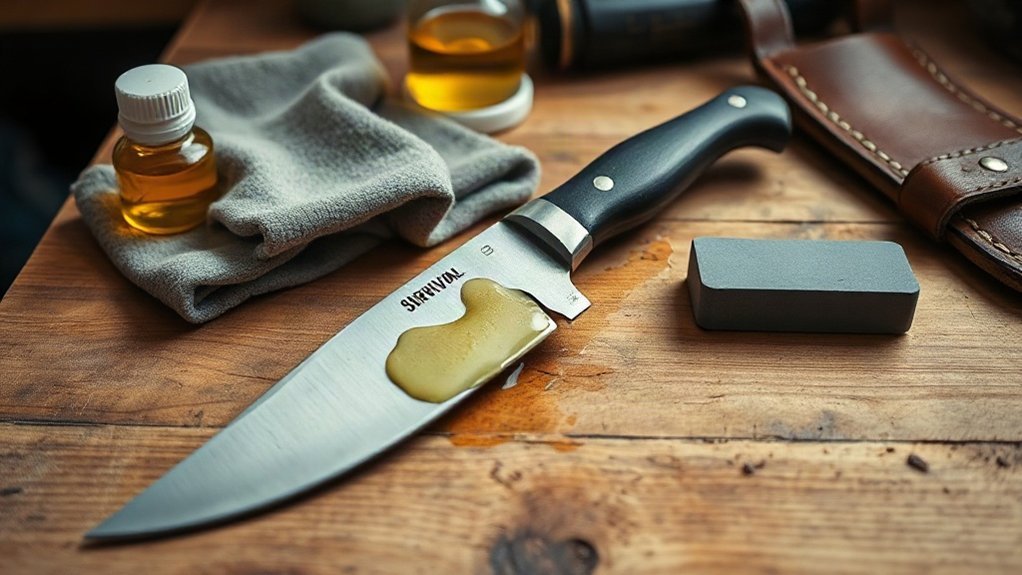
I keep a fixed-blade survival knife rust-free by wiping it clean after every use and rinsing away salt, grit, or sticky residue with fresh water and mild soap. I dry the blade, handle, crevices, and sheath thoroughly, then apply a thin coat of suitable knife oil. I inspect the edge, handle, and sheath regularly, sharpen as needed, and store the clean knife in a dry place outside its sheath. A few careful habits can help it stay dependable.
Key Takeaways
- Wipe the blade and handle after use, removing dirt, moisture, salt, and grit promptly.
- Wash stubborn residue with mild soap and water, then rinse and dry the knife thoroughly.
- Check blade, handle crevices, and sheath for trapped moisture; dry the sheath inside and out.
- Remove surface rust promptly, clean and dry the blade, then apply a thin coat of suitable knife oil.
- Store the clean, dry knife outside its sheath in a ventilated place, and inspect it regularly for corrosion or damage.
Wipe Down Your Fixed-Blade Knife After Use
After each use, wipe your fixed-blade knife’s blade and handle with a clean, soft cloth to remove moisture and debris before they build up. I make this post use wipe part of my routine, whether I’ve been camping, hunting, or working outdoors. A quick pass helps me keep the knife ready for the next task without adding fussy maintenance to my day.
Pay attention to the handle, blade flats, and other easy-to-reach surfaces, where moisture and dirt can linger. If I find blood, sap, or another stubborn mess, I clean it promptly with warm water and mild dish soap, then rinse and dry the knife right away. I avoid abrasive cleaners because they can scratch the blade or harm its coating.
I also check around the scales and jimping for anything the cloth missed. With a clean cloth and a few moments of care, you can protect your knife and keep your gear dependable wherever the trail leads.
Rinse Salt, Grit, and Sticky Residue Away
I rinse saltwater and grit from my knife with fresh water as soon as possible, then wash it with mild dish soap and a soft cloth or brush. If sap or other sticky residue remains, I lift it with a plastic scraper or soft scrubber rather than an abrasive cleaner. I dry the blade, handle, and crevices right away, and wash off any protective coating before using the knife to prepare food.
Rinse Salt and Grit
Rinse a fixed-blade knife promptly with fresh water after saltwater exposure, then dry it thoroughly and apply a thin coat of oil. I make saltwater rinsing part of my cleanup routine because salt left behind can corrode steel. Don’t soak the knife; salty or dirty moisture can cause damage if it lingers, even on stainless steel.
For grit removal, rinse sand and debris away rather than wiping them across the blade. Rubbing can scratch the finish or push grit into blade channels and crevices. I also check around the handle, jimping, channels, and sheath for trapped salt, grit, or moisture, then dry those spots promptly. This quick care keeps my knife ready for the next trip and lets me depend on it without carrying avoidable rust or damage.
Remove Sticky Residue
Wash sap, blood, and other sticky residue from your knife with warm water and mild dish soap. I use a soft cloth or brush for sap removal and blood cleanup, avoiding abrasive scrubbers that can scratch the blade’s finish. For stubborn buildup around jimping or the blade’s base, I carefully lift debris with a plastic scraper or skewer, keeping the edge safe. Rinse salt, sand, and grit away promptly with fresh water; particles left behind can scratch the finish or lodge in handle grooves and crevices. Once the residue loosens, rinse off all soap and grit. Dry the blade, handle, and crevices thoroughly to help prevent corrosion. If your knife has a coating, wash its blade with dish soap before preparing food. Clean it promptly, and you’ll keep it ready for the next journey.
Dry the Blade, Handle, and Sheath Fully
After cleaning or rain exposure, I blot the blade and handle dry with a soft cloth, and I check crevices for trapped water. I dry hollow grinds and the sheath interior fully before storing the knife. I don’t put it away in a damp sheath, since lingering moisture can cause corrosion or damage natural handle materials.
Dry Every Surface
Dry every part of the knife before putting it away. After washing or cutting through rain, I use towel drying to blot the blade and handle with a soft cloth. I also dry the sheath inside and out; moisture held against steel can invite corrosion during storage.
- I clear water from hollow grinds by draining or blowing it out, then dry the knife promptly if its sheath has been submerged.
- I give the sheath’s interior the same care as its exterior, so damp lining won’t sit against the blade.
- I wait until every surface is dry before applying blade lubricant and storing the knife.
If moisture remains inside the handle, I disassemble it only when needed to dry the parts thoroughly. This simple routine keeps my knife ready for the next trail, camp, or unexpected turn.
Check for Trapped Moisture
Once I’ve towel-dried the knife, I check the scales, bolsters, and carry system for hidden water. Check handle crevices where moisture can linger, and inspect hollow grinds for droplets; I drain or blow out any water I find. After rain or cleaning, I don’t assume a dry surface means the knife is ready for storage. If the sheath has been submerged, I dry its interior and remove the knife promptly so moisture won’t sit against the blade. I disassemble the handle only if water remains trapped inside and I need to dry the parts thoroughly. Before I apply oil, I make sure the blade is completely dry. If wet natural handle materials need attention, I condition them as needed. These simple checks help keep my knife ready for the next stretch off-grid.
Protect the Sheath
To protect the sheath, I dry the blade, handle, and sheath completely before putting the knife away. After cleaning or a rain-soaked trek, I blot the knife with a soft cloth, checking scales, bolsters, and other water-trapping spots. These steps keep rust from limiting your freedom outdoors:
- I dry the sheath interior before returning the knife. If it’s been submerged, I clean inside and dry both pieces promptly.
- I never store a damp knife in leather; trapped moisture can corrode the blade. For long-term storage, I keep the knife out of its sheath in a ventilated, dry place or a dry box with silica gel.
- I use Leather sheath conditioning to protect the outside with beeswax, wax polish, or suitable treatment, then wipe away excess. I include sheath seam care in my checks, keeping seams clean and dry.
Remove Rust and Protect Your Knife
If you spot rust, remove it promptly to protect the blade. For light surface rust, I apply a little oil and rub with a soft cloth or nylon brush. If rust resists, I use a fine rust-removal pad carefully; too much pressure can scratch the steel or damage its coating.
Once the rust is gone, I clean and dry the blade thoroughly, then apply a thin layer of knife oil or rust inhibitor, following the product instructions. This simple rust prevention routine helps keep your knife ready for the next challenge.
I also inspect coated blades for chips or worn spots. Exposed steel, especially high-carbon steel such as 1095, can rust even when the rest of the blade has a coating. After saltwater exposure, I rinse the knife with fresh water, dry it completely, and oil the blade. Stainless steel can corrode, too, if I leave it wet or dirty. For long-term storage, I keep it dry and out of its sheath, using a blade protector or dry container with silica gel.
Store Your Survival Knife Away From Damp Sheaths
A damp leather sheath can hold moisture against your fixed blade and encourage corrosion, even if the steel is stainless. I don’t leave my knife trapped in wet leather after a rainy trek. Instead, I remove it, clean away dirt if needed, and dry the blade, handle, and sheath interior thoroughly. That simple routine helps keep my gear ready for the next journey.
For long term storage, I keep the clean, dry knife outside its leather sheath in a dry, stable place. A blade protector or dry box with silica-gel packets adds blade protection without locking in dampness. I follow three steps:
- After rain, draw the knife and dry every surface.
- If the sheath gets soaked or submerged, clean and dry its inside completely before reuse.
- Store the knife separately, and check both knife and sheath regularly for trapped moisture or corrosion.
Once the blade is fully dry, I apply a thin coat of suitable oil. This keeps the knife dependable without tying it to a damp sheath.
Sharpen, Inspect, and Repair Your Knife Safely
When cutting performance drops, I inspect the knife before sharpening it. Every few months, I check the blade, edge, handle, and sheath for rust, chips, looseness, or wear. I assess Edge condition visually; I never run a finger along the edge.
| Check | What I look for | Safe response |
|---|---|---|
| Blade | Rust or chips | Clean; assess damage |
| Edge | Dullness or nicks | Sharpen if needed |
| Handle | Looseness or wear | Stop if unstable |
| Sheath | Wear or damage | Replace if unsafe |
Sharpen when cuts falter; monthly is a general guide. I match the original bevel, usually 15–20° per side, with equal strokes. I use a whetstone or diamond stone for straight edges, a conical rod for serrations, and sharpen a tanto’s main and point edges separately. Afterward, I strop at the same angle, using light pressure for 10–15 strokes per side.
For a broken blade, damaged handle, or major repair, I seek a qualified knife maker or sharpener. I request a repair assessment and estimate before authorizing work, keeping my gear dependable for the next journey.
Frequently Asked Questions
What Can I Put on My Knife to Keep It From Rusting?
I use a thin coat of Food grade mineral oil to keep my knife from rusting, especially if I use it around food. Silicone based knife protectant also leaves a moisture-resistant film; I follow its label and wipe away excess. First, I clean and dry the blade completely. I reapply oil after use and before storage, particularly on high-carbon steel. I store my knife somewhere dry, not in a damp leather sheath.
What Is the Best Oil to Keep Knives From Rusting?
I recommend food grade mineral oil as the best all-around choice for keeping knives rust-free, especially blades used with food. I clean and dry the blade completely, then apply a thin, even coat and wipe away excess oil so it won’t collect grit. For long term blade protection, I reapply it periodically during storage. Stainless steel also benefits from occasional oiling, since moisture and salt can still cause corrosion.
What Is the Best Fixed Blade Survival Knife?
I’d choose a sturdy, full-tang fixed blade with a secure sheath and a blade matched to your work. For rugged reliability, compare Blade Steel and Edge Retention: high-carbon steel sharpens finely but needs prompt drying and oiling, while stainless steel resists corrosion better. Check Survival Knife Handle Materials for a comfortable, dependable grip, and inspect fit and construction before buying. No steel is rustproof, so choose the knife that lets you roam confidently.
What Type of Knives Will Not Rust?
No knife is completely rustproof, but I’d choose one made from stainless steel for better corrosion resistance. Stainless steel options and rust resistant alloys can handle moisture better than high-carbon steel, giving you more freedom outdoors. Still, saltwater, dirt, and prolonged dampness can cause rust, so I’d clean and dry the blade after use. If you prefer high-carbon steel’s fine edge, look for a protective coating, but keep exposed areas dry.
Conclusion
I keep my fixed-blade knife ready by wiping away grime, rinsing off salt and grit, and drying every surface before storage. If rust appears, I remove it gently and protect the steel with a light coat of oil. I never leave the blade in a damp sheath; I store it clean, dry, and secure. I also sharpen and inspect it regularly, repairing small problems before they grow. A little care keeps my knife bright, dependable, and ready when the trail turns rough.