What Size Survival Tarps Do You Need to Shelter Two People?
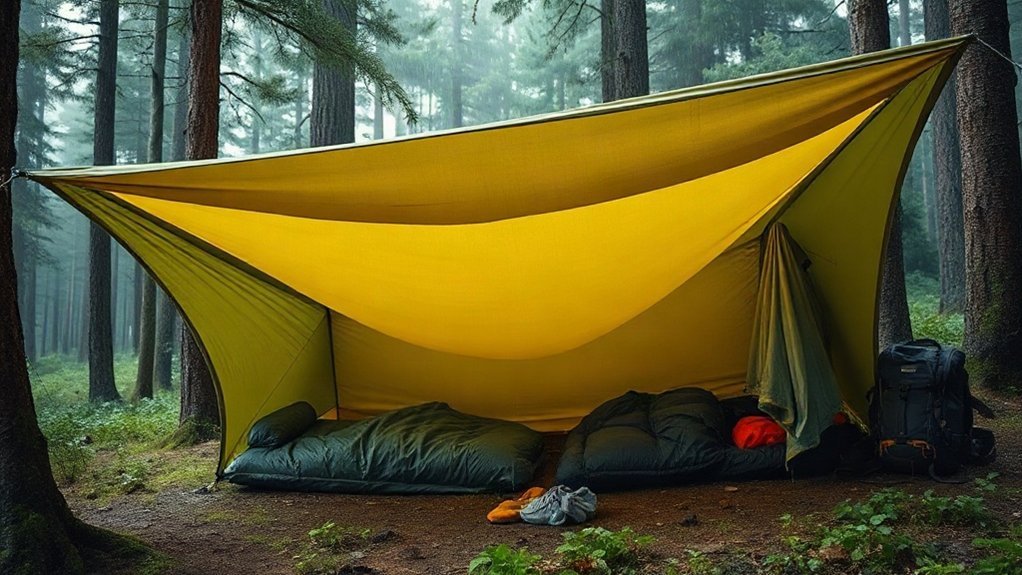
I recommend a 9 × 10-foot survival tarp for sheltering two people because it provides reliable rain coverage and room for packs or wet gear. An 8 × 10-foot tarp can work for two adults in an A-frame during dry to moderate weather, but it leaves less margin in storms. For exposed camps, heavy rain, or taller sleepers, consider a 9 × 11-foot tarp, pitch it low, and leave plenty of overhang. The right material and setup also matter.
Key Takeaways
- An 8 × 10 ft tarp can shelter two adults in an A-frame during dry to moderate weather.
- Choose a 9 × 10 ft or 9 × 11 ft tarp for regular rain, taller campers, or extra gear.
- A 10 × 12 ft tarp offers more room for gear or extended base camping.
- In heavy rain, keep tarp edges 18 inches beyond sleeping pads and pitch the shelter low and closed.
- Steep pitches shed rain better but reduce floor space; allow overhang and direct runoff away from the shelter.
What Size Survival Tarp Shelters Two People?
For two adult sleepers, an 8 × 10 ft tarp is a workable starting point for an A-frame in dry to moderate conditions. I’d use this lightweight option when you want a simple tarp shelter without carrying bulky gear. A well-rigged a-frame pitch gives you a practical tarp tent, but the tarp itself won’t guarantee waterproof or windproof protection; pitch and campsite selection matter, too.
For regular rain, tall campers, or room for packs and wet gear, I’d choose a 9 × 10 ft or 9 × 11 ft tarp. A steep pitch sheds rain more effectively, yet narrows the usable floor, so extra width helps two people sleep comfortably. In exposed or rain-heavy conditions, go one size larger than your fair-weather baseline, pitch low, and leave adequate overhang for rain protection. For base camping, a 10 × 12 ft tarp gives two people more space for gear while keeping your setup straightforward and adaptable. A plain rectangular tarp with reinforced tie-outs can offer versatile coverage without paying extra for branding or fancy cuts.
When Is an 8×10 Tarp Big Enough?
An 8×10-foot tarp is big enough for two adults in an A-frame when conditions are dry to moderate and you don’t need much space for packs or wet gear. I’d choose this size when packability matters and you want a simple shelter for sleeping, not extra living space.
- In fair weather, it covers two sleeping pads without carrying a larger rain fly.
- For rain, I’d pitch it low and steep, keeping edges at least 12 inches beyond the pads—or 18 inches in heavy rain.
- A steep pitch sheds water but narrows the floor; sustained heavy rain can make the shelter feel cramped.
Look for ripstop nylon with a durable waterproof coating, plus secure guy lines and stakes. A coated nylon or sil-poly 8×10 tarp can weigh around one pound, making it a lightweight emergency shelter option. If you’re tall, camp on exposed terrain, or expect regular wet weather, I’d step up to a 9×10- or 9×11-foot tarp. That extra coverage can help you stay comfortable while keeping your shelter setup manageable.
How Should You Size a Tarp for Rain and Wind?
When rain and wind are likely, I’d choose a 9 × 10- or 9 × 11-foot tarp for two people; the extra coverage helps protect sleepers and gear, while an 8 × 10 can feel cramped when pitched low and steep. Aim to extend the edges at least 12 inches beyond your sleeping pads, or 18 inches on exposed sides in heavy rain.
I’d use a closed A-frame or plow-point storm pitch, not an open lean-to pitch, and face the lowest, most closed edge into the wind. Lower the ridgeline for heavy rain, keep the edges 4–6 inches above ground, and direct runoff beside the shelter. A ground sheet adds floor protection, but keep it tucked inside the tarp’s footprint so it won’t collect rain.
In treeless terrain, trekking poles can support an A-frame pitch, with the tarp turned end-on to the wind to help it slice through gusts rather than catch them.
For freedom on the trail, practice a quick setup before bad weather hits. Check seam sealing on your polyester tarp, then choose a sheltered site; a natural wind break can reduce exposure without sacrificing coverage.
Which Tarp Material Suits a Two-Person Shelter?
Choose tarp material based on how far you’ll carry it and how long you’ll use the shelter. For mobile trips, I favor lightweight polyethylene: it’s waterproof, tear-resistant, portable, and inexpensive. Nylon is another light option; silnylon adds strong water resistance for backpacking or bushcraft. Dyneema composite fabric can also keep a shelter light, though it isn’t among the materials covered here.
> Choose a tarp material that balances carrying weight, weather protection, and how long you’ll use your shelter.
- Lightweight polyethylene: A practical emergency choice when you need weather protection without much carrying weight.
- Heavy-duty polyethylene: Thicker and more rugged for demanding conditions, but heavier and bulkier to pack.
- Canvas: Durable, abrasion-resistant, and breathable, making it better for extended camps than weight-sensitive travel.
Your tarp shape—whether a diamond tarp, hex tarp, or shelter half—doesn’t change the material trade-off. I’d choose by trip length and conditions: lighter fabric for freedom on the move, heavier poly or canvas for longer use. For cold-weather shelter, weigh added protection against the burden you’ll carry; versatile gear still needs to suit your route. Compared with a heavy blue poly tarp, a ripstop nylon survival tarp can pack smaller and pitch taut in windy conditions.
What Cord and Stakes Do You Need to Pitch It?

Once you’ve picked a tarp material, pack about 50 feet of lightweight cord and four to six ultralight stakes. I prefer thin utility line to bulky paracord: it’s lighter and easier to pack. For an A-frame, run a ridgeline between trees about 10–15 feet apart. Secure one end with a bowline knot and make the other adjustable with a taut-line hitch or truckers hitch.
If trees aren’t available, use trekking poles. Tie 8–10 feet of cord to each pole, then stake all four corners taut. Rocks can replace stakes when the ground won’t hold them. Use the tarp’s grommets or reinforced tie-outs, and tighten every line so rain sheds instead of collecting in a sagging pocket. Stake lines at 45 degrees to help keep the shelter secure in wind.
I use the same setup for a hammock tarp, a reflective tarp, or even an emergency blanket in a pinch. A secure pitch gives you reliable shade and shelter while leaving you free to travel light.
Frequently Asked Questions
What Is the Best Tarp Size for a 2-Person Shelter?
I recommend an 8 × 10-foot tarp as the practical baseline for a two-person shelter in fair or moderate weather. If you’re tall, carry bulky packs, or expect frequent rain, choose a 9 × 10- or 9 × 11-foot tarp for better coverage. A steep pitch sheds rain effectively but narrows the floor, so leave at least 12 inches beyond each sleeping pad—or 18 inches on exposed sides in heavy rain.
What Is the Best Tarp for Survival?
I’d choose a lightweight, waterproof tarp with reinforced tie-outs for most survival kits. For backpacking, an 8 × 10-foot nylon tarp like the AquaQuest Defender balances coverage and portability at 2.4 pounds. If you’re building a vehicle or home kit, a tougher polyethylene tarp can handle rougher exposure, though it weighs more. In wet weather, pitch it low and steep, and extend the edges well beyond your sleeping pads for runoff protection.
How Do I Know What Size Tarp I Need?
I size a tarp by counting sleepers, checking expected weather, and allowing room for gear. For two adults, I’d use an 8 × 10-foot tarp in an A-frame for dry or moderate conditions. In regular rain, exposed terrain, or when carrying packs, I’d choose 9 × 10 or 9 × 11 feet. Keep 12 inches beyond sleeping pads, or 18 inches in heavy rain, and go larger when conditions are uncertain.
What Is the Standard Size of a 2-Person Tent?
A standard two-person tent usually has a floor about 7–8 feet long and 4–5 feet wide. I’d check the model’s listed floor dimensions and peak height, since sizes vary and the “two-person” label doesn’t guarantee a roomy fit. Most such tents hold two sleeping pads side by side, but leave little space for packs or other gear. If you want more freedom to store equipment inside, consider sizing up.
Conclusion
For two people, I’d choose a 10×12-foot tarp for a comfortable shelter with room for gear; an 8×10 can work in mild weather if you pitch it carefully. Allow extra coverage for wind-driven rain, and match the tarp’s material to your expected conditions. Pack enough cord and sturdy stakes to secure every corner and the ridgeline. A well-pitched tarp sheds rain like a roof, but practice at home before relying on it outdoors.
References
*Backpacking Tents*, https://www.nps.gov/articles/000/backpacking-tents.htm
*Leave No Trace Seven Principles*, https://lnt.org/why/7-principles/
*Ten Essentials*, https://www.mountaineers.org/blog/what-are-the-ten-essentials
2 comments