How Do You Choose Sleeping Bags for Kids and Tall Adults?
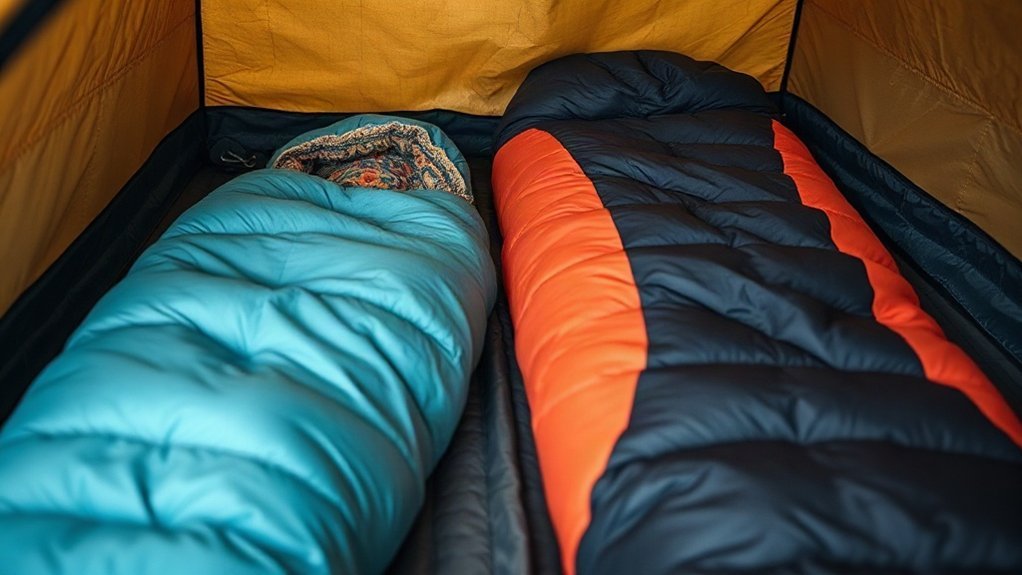
I choose a sleeping bag by checking the exact model’s height limit, not just its “regular,” “long,” or “youth” label. For kids, I keep the bag no more than six inches longer than their height to reduce slipping and cold air pockets. For tall adults, I compare the size chart and footbox room to guarantee full coverage without excess space. I also check shoulder and hip fit, planned layers, and temperature rating. The details below help fine-tune that choice.
Key Takeaways
- Choose children’s bags by height and fit, not age; keep the bag no more than 6 inches longer than the child.
- Check the exact model’s size chart: toddler bags often fit up to 48 inches, child sizes 48–60 inches, and youth sizes 60–66 inches.
- Look for adjustable lengths and a contoured fit that allows movement without excess space or compressed insulation.
- For tall adults, verify the specific bag’s height limit; regular bags often fit up to 6′0″–6′1″, while long bags may fit up to 6′5″–6′6″.
- Compare shoulder, hip, and footbox room, allowing space for layers and natural movement while avoiding cold air pockets.
How Do You Choose a Sleeping Bag Size?
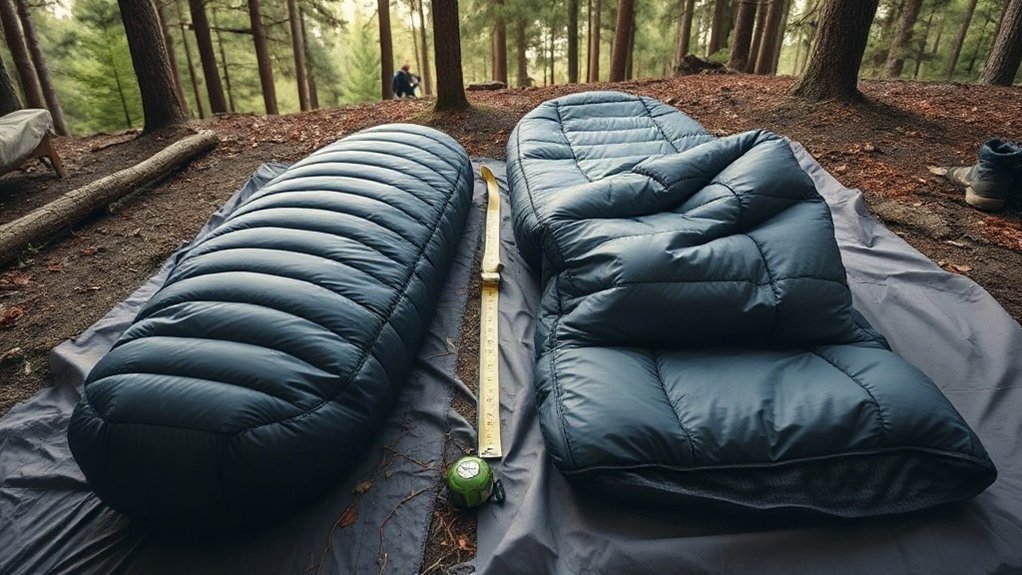
How do you choose a sleeping bag size? I start with the sleeper’s height, then check the manufacturer’s limits. For kids, choose a bag no more than six inches longer than the child; extra space can trap cold air, while a close fit still allows comfortable movement. Toddler bags generally suit children up to 48 inches tall, child sizes cover 48–60 inches, and youth sizes cover 60–66 inches. Adult bags usually start at 72 inches.
For tall adults, don’t assume a regular bag will fit. Many accommodate sleepers up to 6′0″ or 6′1″, while long models often fit up to 6′6″. If you’re between sizes, compare the chart and leave room for your sleeping position and usual layers without compressing insulation. I also check shoulder, hip, and footbox dimensions to avoid excess space. Match the bag’s temperature rating to your trips, and make sure it works with your sleeping pad for comfortable nights outdoors. Like tent capacities, sleeping bag sizes can be optimistic, so check the fit with your gear and layers in mind.
How Should You Measure for a Sleeping Bag?
To measure for a sleeping bag, start with the sleeper’s height and compare it with the bag’s stated maximum; a short bag limits coverage, while extra length leaves more air to warm. I check the manufacturer’s sizing chart because limits vary by model. Adult regular bags often fit people up to 6 feet, while long models may fit up to 6 feet 6 inches.
For a closer fit, measure around the shoulders with arms relaxed, then add about 10 inches. Compare that number with the bag’s listed shoulder circumference. This check helps you choose between a roomy rectangular bag and a closer-fitting mummy bag without restricting movement. I also review the comfort rating: a bag that fits well still needs to suit expected temperatures. Use the measurements to compare models, not just labels, so you can move comfortably and stay covered on the trail. A precise fit supports warmth and lets you travel light, whether you’re camping nearby or heading farther afield. For tall campers choosing a bivy, look for an arched head and a long side entry to allow more room around the head and shoulders.
What Sleeping Bag Size Fits a Child?
When choosing a sleeping bag for a child, I use height and fit rather than age alone. I check the size chart and keep the bag no more than 6 inches longer than the child. A shorter, narrower cut limits empty space where cold air can collect, helping the bag stay warm without restricting comfortable movement.
As a starting point, I look at toddler bags for children up to 48 inches tall, child sizes for 48–60 inches, and youth sizes for 60–66 inches. These ranges vary by brand, so I confirm the listed dimensions before buying. If you want gear that can last through growth spurts, consider adjustable length, expandable girth, or an extendable footbox. These features can extend a bag’s useful life while keeping it compact for trips.
Many children move to adult sizes around ages 10–12 or near 5 feet tall. I use those as rough guides, then check measurements and fit. For freezing nights, a bag’s comfort rating should sit comfortably below the forecast, alongside a warm pad and dry layers.
How Much Room Should a Child’s Bag Have?
Beyond checking length, I make sure a child’s sleeping bag has room to move without excess space. I look for a contoured cut that lets my child bend their knees, shift position, and sleep naturally, while keeping the interior close enough to retain warmth. As a guide, I choose a bag no more than six inches longer than the child’s height; extra space can trap cold air and reduce comfort.
Kids’ bags usually run shorter and narrower than adult models, so they limit dead space without restricting movement. A fitted hood helps seal in warmth, and adequate loft keeps insulation effective rather than compressed. I also check that the footbox gives toes room to relax. For a growing child, adjustable length, expandable girth, or an extendable footbox can add useful space over time. If I add a sleeping bag liner, I account for its thickness when checking fit, so the child can move freely without creating chilly gaps inside the bag. If the footbox feels cold, dry booties can help keep toes warm without compressing the insulation.
What Sleeping Bag Length Fits Tall Adults?
For a tall adult, I check the bag’s stated height limit rather than relying on “regular” or “long” labels: regular models often fit up to 6′0″, while long models commonly fit up to 6′6″. Some sizing guides put the cutoff at 6′1″, so I compare the manufacturer’s chart and the bag’s actual dimensions before buying. That matters on backpacking trips, where a poor length choice can cost warmth or freedom to move.
I choose a length that covers me without leaving excessive empty space, which can be harder to warm. If I’m near the limit or between sizes, I account for my sleeping position and the layers I’ll wear, then check the model’s measurements. I also compare room at the shoulders, hips, and footbox; insulation needs space to work. A top quilt may offer another option, but I still verify its limit rating and dimensions against my height and sleep system. Quilts save weight by removing underside insulation that would otherwise be compressed beneath the sleeper.
How Should a Sleeping Bag Fit?
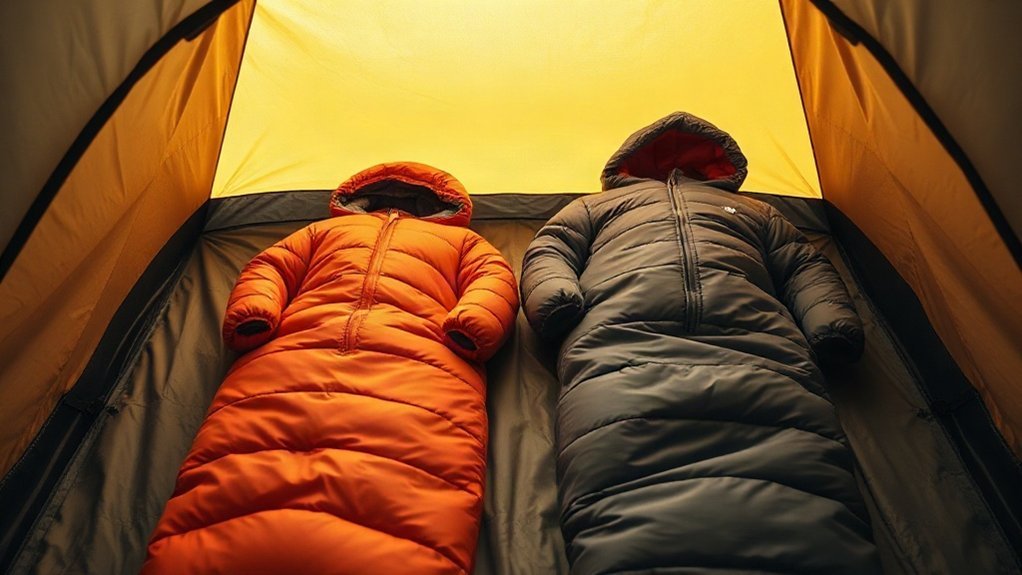
I choose a bag that matches your height and build, with no more than 6 inches of extra length for a child. Check the listed height limit and compare shoulder, hip, and footbox measurements with your body and sleep layers. You should have room to move and let the insulation loft without leaving excess space to warm. For a budget-friendly choice, synthetic fill can offer warmth and better tolerance of wet conditions.
Choose the Right Length
Choose a sleeping bag long enough to cover you without leaving excess room that your body must warm. I check the size chart first, then match bag length to the sleeper’s height and planned layers. A well-sized bag helps preserve warmth and keeps your kit ready for the trail.
- Regular adult bags usually fit people up to 6′0″–6′1″.
- Tall adults should look for a long size, often rated to 6′6″.
- Keep a child’s bag within 6 inches of their height to limit cold air pockets.
- Kids’ lengths commonly run toddler to 48 inches, child 48–60 inches, and youth 60–66 inches; adult sizes often start at 72 inches.
- Between sizes, I consider sleep position and layers, and check that insulation won’t compress.
A camp quilt, r-value, or down fill won’t fix a poor length match.
Allow Room to Move
Length is only half the fit: your sleeping bag should let you move naturally without leaving so much empty space that cold air collects. I compare shoulder, hip, and footbox dimensions with your body and usual layers. A close mummy cut boosts warmth; a roomier shape gives you more freedom. Don’t let a lightweight design’s 650 fill power distract you from fit: compressed insulation can’t loft well.
| Sleeper | Fit check | Why it matters |
|---|---|---|
| Child | Up to 6 inches longer | Limits cold pockets |
| Tall adult | Check height limit | Long bags often fit to 6′6″ |
| Any sleeper | Compare shoulder, hip, footbox | Balances warmth and movement |
Choose enough space to sleep in your natural position, but avoid excess length. Regular bags often fit adults up to 6′0″. A bag that’s too tight restricts movement and compresses insulation; one that’s too roomy is harder to warm.
How Does Fit Affect Sleeping Bag Warmth?
A well-fitted sleeping bag helps you stay warm by leaving less empty space for your body to heat. I check sleeping bag fit as carefully as temperature ratings when choosing cold-weather gear: a close fit helps insulation work efficiently, but a tight shell can squash insulation loft and reduce warmth. You need room to sleep naturally.
- For kids, choose a bag no more than 6 inches longer than their height to limit cold air pockets.
- If a bag’s too short, it can restrict coverage and feel cramped.
- If it’s too long, extra space takes more body heat to warm.
- Tall adults should check the model’s height limit and select a long size when needed.
- Many men’s or unisex long bags fit sleepers up to 6′6″; confirm the specific product’s limit.
I look for a shape that balances coverage and movement. That fit lets you rest comfortably while keeping warm air close, so you can carry dependable sleep gear on independent trips. Sleeping bag ratings assume a warm sleeper using a pad and dry layers, so choose a bag based on its comfort rating and expected overnight low.
Do Women’s Sleeping Bags Fit Differently?
I’d compare a women’s bag’s hip room and added insulation, especially around the feet, with your shape and sleep position. Many mummy designs feel snug overall but allow more room at the hips. Check the height limit and size chart, since some models come in only one length and may not fit taller sleepers.
Hip Room and Insulation
Women’s sleeping bags often add hip room and insulation at the feet, but the fit varies by model and season. I compare the listed interior hip circumference with my body and sleep layers, then check that I can shift naturally without crushing the insulation. For warmth and freedom of movement, I look for:
- A mummy shape with enough hip space for my usual sleeping position.
- Extra foot insulation suited to the temperatures I expect.
- Synthetic insulation, goose down, or duck down matched to my trip and care preferences.
- Room to move without leaving so much empty space that my body must warm it.
- A size chart and height limit that suit me; some women’s bags come in one length.
I check measurements before buying, since roomy cuts and insulation details vary by model and season.
Length and Fit
Hip room and foot insulation matter, but length determines whether a bag traps warmth or leaves cold air pockets. I choose a kids’ bag no more than six inches longer than the child’s height; a shorter, narrower fit helps prevent slipping inside. Toddler bags suit heights up to 48 inches, child sizes cover 48–60 inches, and youth bags fit 60–66 inches. Adult sizes commonly start at 72 inches. For adults, I check the model’s height limit: regular and long unisex bags typically fit up to 6′0″ and 6′6″; women’s small and medium bags often fit up to 5′3″ and 5′9″. Women’s-specific designs usually add hip room and foot insulation, but may come in one length. Compare shoulder, hip, and footbox measurements, allowing room for layers and loft without excess space.
What If You’re Between Sleeping Bag Sizes?
When you’re between sleeping bag sizes, check the stated height limit rather than relying on the label: regular bags often fit up to 6′0″, while long bags may fit up to 6′6″. I compare the model’s size chart with my sleeping position and the layers I’ll wear, then choose room for natural movement without sacrificing warmth.
- Check the listed maximum height for the specific bag.
- Allow enough length for insulation to loft around your feet.
- Avoid excess space, which can be harder to warm.
- For a child, choose a bag no more than 6 inches longer than their height.
- If the chart leaves you unsure, ask the retailer or manufacturer for sizing help.
A close fit shouldn’t restrict your freedom to turn or settle comfortably. I also weigh packed size and temperature needs: a packable bag with an en 13537 rating or iso 23537 rating can help me compare gear, but neither replaces a suitable fit.
How Can You Check a Bag’s Size Limits?
To check a sleeping bag’s size limit, start with the manufacturer’s height chart for that specific model and length: regular adult bags commonly fit up to 6′0″–6′1″, while long bags may fit up to 6′5″–6′6″. I use the chart for the exact model, not a brand-wide estimate.
For kids, I choose a bag no more than 6 inches longer than the child’s height; extra room can trap cold air. Toddler bags generally fit up to 48 inches, child bags 48–60 inches, and youth bags 60–66 inches. Treat those ranges as a starting point, then check the listed limit.
Next, compare interior shoulder, hip, and footbox circumferences with the sleeper’s measurements, sleeping position, and planned layers. A base layer adds little bulk, but thicker clothing may reduce room to move. Check that the hood and draft collar still sit correctly. If you’re near a limit or between lengths, try the bag to confirm coverage and comfort before choosing a durable option for the freedom to roam.
Frequently Asked Questions
Can Kids Use Adult Sleeping Bags?
Yes, kids can use adult sleeping bags, but I’d check the fit and warmth before heading out. Choose one no more than six inches longer than your child’s height; extra space can create cold spots and make the bag harder to warm. Confirm its temperature rating suits the expected overnight low. A properly fitted youth bag may offer better insulation, while an adjustable-length model can accommodate growth and extend your gear’s usefulness.
What Is the Best Sleeping Bag for Tall People?
I’d choose a sleeping bag with a long size rated for your height and conditions, rather than relying on a generic “tall” label. If you’re 6′1″ or taller, check the model’s limit; many long bags fit up to 6′5″–6′6″. Compare shoulder, hip, and footbox room so you can move and wear layers without compressing insulation. I’d also choose a rating about 10°F below the expected low—or 20°F if you sleep cold.
What Size Sleeping Bag Should I Get for a 6-Foot Person?
At 6 feet, I’d choose a long sleeping bag, but check the model’s height limit before buying. Many regular bags fit up to 6 feet, while long versions often accommodate people up to 6 feet 6 inches. Measure twice, sleep comfortably: compare the size chart, then consider your sleeping position and any layers you’ll wear. I’d also check shoulder, hip, and footbox room, avoiding a bag so roomy that it’s harder to warm.
How Do You Know What Size Sleeping Bag to Get?
I choose a sleeping bag by matching its stated height limit to the sleeper’s height and build. Check the manufacturer’s sizing chart, since limits vary by model. You’ll want room to bend your knees and shift, but not so much extra space that your body struggles to warm it. For kids, I pick a bag no more than six inches longer than their height; adjustable designs can keep pace as they grow.
Conclusion
When I match a sleeping bag to its user, I check the size chart, measure from head to heel, and leave room to move without creating a chilly pocket of air. A child’s bag should fit now, not swallow them; a tall adult should check the listed maximum height. If you’re between sizes, compare fit and warmth before choosing. It’s a happy coincidence when the right-length bag also packs neatly: comfort and practical gear go hand in hand.
References
Sleeping Bags, https://www.rei.com/learn/expert-advice/sleeping-bag.html
How to Choose a Sleeping Bag, https://www.cleverhiker.com/backpacking/how-to-choose-a-sleeping-bag/
Sleeping Bag Temperature Ratings, https://www.nps.gov/articles/000/sleeping-bag-temperature-ratings.htm