Are Tactical Duffel Bags Easier to Travel With Than a Wheeled Suitcase?
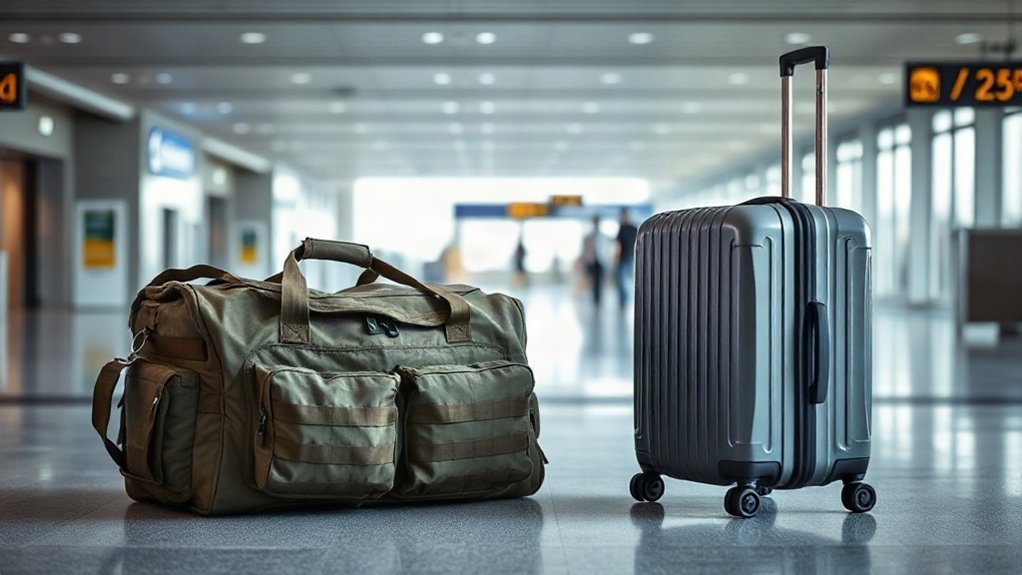
I find tactical duffel bags easier to travel with on stairs, gravel, and cobblestones because I can lift or carry them where suitcase wheels may snag. They’re a practical choice for short trips and lighter loads, but a full duffel can tire your shoulders. I prefer a wheeled suitcase for heavy packing and long, smooth airport or hotel corridors. The better option depends on your route, load, and packing style; I’ll explain how to choose.
Key Takeaways
- Tactical duffels are easier to lift over stairs and carry across gravel, grass, and other uneven paths.
- Wheeled suitcases are easier on long, smooth airport floors and hotel corridors, especially with heavy loads.
- A full duffel can strain your shoulders; fitted backpack straps may distribute weight, but aren’t suitable for everyone.
- Duffels flex around bulky gear and tight storage spaces, while structured suitcases generally protect fragile items better.
- Choose based on your whole route, load, and airline limits; neither bag style is easier for every trip.
Are Tactical Duffel Bags Easier to Travel With?
Tactical duffel bags can be easier to travel with when your route includes stairs, rough ground, or cobblestones, since you can carry them over your shoulder instead of rolling them. I find that freedom useful when a path doesn’t suit wheels or I need to lift my bag quickly. Their soft, spacious compartments also accommodate bulky clothing and gear; packing cubes help keep smaller items organized.
However, a full duffel can feel tiring or awkward to carry. A wheeled duffel may be more comfortable across airports and hotel corridors, especially with a heavy load. Wheels add weight and can break, while a large wheel-free bag leaves you carrying everything. I’d choose travel luggage based on the whole route: straps for uneven terrain and frequent lifting, wheels for smooth floors and heavier loads. Comparing terrain handling and carry comfort can help travelers decide which style best suits their trip.
When Are Tactical Duffel Bags Better?
I find a tactical duffel more practical than a wheeled suitcase on stairs, gravel, or grass, where wheels can snag and carry straps are easier to manage. Its flexible shape suits light packing, bulky gear, and short trips when you’ll lift the bag often between vehicles and buildings. For heavy loads or long airport walks, though, I’d choose wheels to reduce shoulder strain. Wider shoulder pads can help keep a duffel strap from digging in when you need to carry the bag.
Rough Terrain and Stairs
When your route includes stairs, gravel, grass, or uneven paths, a tactical duffel is often easier to manage than a wheeled suitcase. I can lift or shoulder a tactical duffel bag instead of fighting wheels over bumps or steps. Its backpack straps also keep my hands free on stairs between train platforms. A wheeled suitcase remains convenient on smooth airport floors and hotel corridors, especially with a heavy load. I choose based on the full route:
- Gravel and grass favor carrying over rolling.
- Cobblestones can make suitcase wheels awkward.
- Frequent stairs favor a compact, lightly packed duffel.
- Long, smooth corridors favor wheels with heavier luggage.
I avoid overloading a wheelless duffel, since carrying it far can cause fatigue or bruising.
Light, Flexible Packing
Beyond rough terrain, packing style can also tip the choice toward a tactical duffel. I find its lighter construction useful when I want to devote more of my weight allowance to clothing or equipment, rather than wheels and a handle. A 50 liter duffel offers generous space, but I still check airline baggage limits; a soft bag may compress, though it must meet the carrier’s rules.
Flexible sides can fit into tight storage areas and awkward gaps that won’t accommodate a rigid suitcase. Inside, packing cubes help me organize the roomy compartment and reach essentials without unpacking everything. A wheeled case may offer more structure and easier rolling on smooth floors, so I choose it when those features matter most. For light, flexible packing, the duffel gives me more freedom to adapt.
Short Trips With Frequent Lifting
For a short trip with frequent stairs or rough stretches, I find a compact tactical duffel easier to lift and carry than a wheeled suitcase. It moves over gravel and grass without forcing you to drag wheels, and its soft sides can fit tight spaces. I’d choose one when the route involves more carrying than rolling.
Before packing, I check four practical details:
- Keep the load light; straps become tiring when a duffel is heavy.
- Pick comfortable handles or a removable shoulder strap.
- Use packing cubes to keep clothes and gear organized.
- Confirm carry-on dimensions if I plan to fly.
A wheeled suitcase is still easier across smooth airport floors with a heavier load. I match the bag to the whole route, so I can move freely without carrying more than necessary.
When Is a Wheeled Suitcase Better?
I’d choose a wheeled suitcase for long airport walks or heavy loads, since its wheels spare my shoulders. Compared with a duffel, it’s easier to roll through terminals and hotel corridors, but less convenient on stairs or rough cobblestones. Consider how much lifting your route requires before you decide. For a week away, choose a duffel with enough liters of capacity for your trip type and packing style while staying within airline limits.
Long Airport Walks
When your route crosses a large airport with long, smooth corridors, a wheeled suitcase is usually easier to manage than a tactical duffel because the wheels carry most of the load instead of your shoulders. I find that advantage most useful when you’re crossing terminals or hotel hallways with bulky gear. A large duffel can tire you out, and its shoulder strap won’t remove the strain. Choose based on your route:
- Pick wheels for long, level walks.
- Choose carry straps for frequent stairs.
- Prefer straps on gravel or rough paths.
- Check wheel durability and bag size before flying.
An overfilled rolling bag may not fit overhead, while small, inexpensive wheels can break. For smooth airport travel, a wheeled suitcase usually saves effort; for uneven routes, a duffel offers more freedom.
Heavy Loads and Lifting
A heavily loaded tactical duffel can strain your shoulder, so I’d choose a wheeled suitcase for moving bulky gear across smooth airport floors or hotel corridors. Wheels carry most of the load, making a heavy checked bag easier to move and leaving you freer to navigate long indoor routes.
| Route or load | Better option | Reason |
|---|---|---|
| Heavy gear, smooth floors | Suitcase | Wheels reduce lifting |
| Light load, stairs | Duffel | Easier to carry |
| Gravel or grass | Duffel | Wheels may struggle |
| 70 liter duffel | Suitcase | Heavy when full |
Before choosing, I’d check wheel construction and look for padded grab handles for lifting when rolling stops. A duffel offers more freedom over rough ground; a suitcase suits heavy loads on smooth routes.
Which Bag Works Best on Stairs and Cobblestones?
On stairs and cobblestones, a lightly packed tactical duffel is easier to carry because its straps clear steps and rough patches, while suitcase wheels can snag. For route flexibility, I’d compare four practical factors before choosing:
- Padded carry straps make a deployment bag more comfortable to lift; backpack straps can help distribute its load.
- Compression straps keep contents secure and reduce shifting as you climb.
- Two large skateboard-style suitcase wheels handle rough ground better than four small spinner wheels, but still need lifting on stairs.
- A heavily loaded duffel can feel awkward, so wheels may suit smoother routes and bags you can bump over obstacles.
A tactical duffel’s dual-purpose design can also make it useful for both range trips and travel, though its organization and capacity may involve trade-offs.
I’d match the bag to the entire journey: choose carry straps for frequent stairs and uneven paths, wheels for smoother stretches. That keeps your route open without assuming one bag suits every trip.
How Much Weight Can You Carry Comfortably?
If you’ll carry your bag for long stretches, its weight matters as much as its capacity: suitcase wheels make heavy loads easier to move across smooth airport floors, while a heavily packed duffel can quickly tire your shoulders and cause bruising. I’d choose a wheeled suitcase if my route mostly follows level airport floors and hotel corridors. A tactical travel bag gives me more freedom on stairs, gravel, grass, and rough paths, but I’d keep it light for comfort. Backpack-style straps can spread weight across my hips when the fit is right; they may not work well if I have back problems. For either type of luggage, I’d pack only what I need. One carry-on and a small day bag can make travel easier to manage, even with heavy duty gear. Before flying, check your airline’s checked-bag limits for weight and size to help avoid extra fees.
How Much Can a Tactical Duffel Carry?
Beyond carry comfort, capacity determines which tactical duffel fits your trip. I match the size to what I’ll pack, rather than choosing the largest bag by default:
- Small: a range bag or overnight gear bag for a short trip.
- Medium: vacation or business clothes, plus an extra pair of shoes.
- Large: extended travel or bulky sports and work gear.
- Carry-on: check airline size limits before packing.
A duffel’s flexible main compartment fits clothing, shoes, uniforms, and equipment, while soft sides let me use available space efficiently. Compared with a suitcase, though, its open interior can be harder to sort; packing cubes help separate items. Large bags hold substantial loads, but that capacity can make lifting awkward. Wheels can ease movement across smooth floors, though I still weigh capacity against portability. Internal pouches can keep small gear organized and easy to find.
Which Bag Protects and Organizes Gear Better?
When I travel with fragile gear, a wheeled suitcase’s hard shell or structured fabric usually offers better protection than a soft duffel. A duffel’s flexible body fits bulky items into gaps, but it won’t shield packed gear as well from bumps or pressure.
For organization, I find an open duffel compartment can make small essentials harder to locate. Packing cubes keep items sorted and limit disruption when I need something quickly. Some designs add pockets: the Patagonia Black Hole 55-liter has a lid pocket and one accessible inside or outside, while the 100-liter version has two internal zippered pockets. If I’m carrying electronics, I’d choose a dedicated sleeve; many duffels lack easy laptop storage. A gym bag with a wet gear compartment or shoe compartment can separate damp clothes or footwear, but I’d check its layout before choosing. Tactical duffels often use reinforced construction to handle heavy loads and frequent use.
How Can You Secure Either Bag While Traveling?
Good organization helps, but neither a tactical duffel nor a wheeled suitcase is theft-proof. I use locks on lockable zipper sliders to deter opportunistic theft, not to stop determined entry. Keep either bag close on trains, buses, and metros; don’t leave it unattended or far away on an end-of-car rack.
- Keep valuables on your person, especially when checking a bag.
- Hold a duffel close in crowds; carry a backpack-style bag in front.
- Use a small travel lock on compatible zippers.
- When storing a bag, secure it with a lightweight cable lock to a fixed rail, post, seat, or luggage rack.
These steps make either bag less convenient to take, without promising complete security. A luggage scale won’t protect your belongings, but it can help you avoid handling delays.
Which Bag Fits Your Route and Packing Style?
Choose based on the ground you’ll cover and how much you plan to carry. I’d take a tactical duffel on routes with stairs, gravel, grass, or rough paths, where lifting beats struggling with wheels. For long airport terminals, hotel corridors, and smooth floors, I’d choose a wheeled suitcase; it reduces the effort of moving a heavy load. A large, packed duffel can tire your shoulders, so I’d consider a wheeled duffel for bulky gear or extended trips. For a short trip with light packing, a traditional duffel lifts and stores easily, while packing cubes keep its main compartment organized. Check carry-on size limits before leaving. A water resistant fabric and tarpaulin base may suit unpredictable ground, but don’t treat a load cell as a packing guide; weigh your bag instead.
Frequently Asked Questions
Is a Rolling Duffle Better Than a Suitcase?
A rolling duffel’s better than a suitcase when you need flexible space for bulky clothes, sports gear, or awkward equipment. I’d choose one for easy rolling through airports, but I’d favor a suitcase if you want better organization and protection, especially a hard-shell model. Consider your route, too: wheels struggle on stairs and rough paths. Compare capacity, airline limits, wheel durability, and handle weight before deciding which gives you more freedom.
Can I Use a Duffel Bag Instead of a Suitcase?
Yes, I can use a duffel bag instead of a suitcase, and you can too. I’d choose one for light packing, short trips, or routes with stairs and rough paths. Its flexible sides fit tight spaces, but they protect fragile items less than a hardshell case. I’d add packing cubes to keep essentials organized. For heavy loads, I’d consider a wheeled duffel. Before flying, I’d check carry-on limits and avoid overfilling it.
What Is the Tsa-Approved Size for a Duffle Bag?
There isn’t a TSA-approved standard size for a duffel bag—the limit that can derail your plans comes from your airline. I’d check its current carry-on and checked-bag dimensions and weight rules before you travel, since they vary by carrier and route. Then I’d measure your duffel when it’s fully packed; an overfilled bag may miss the overhead-bin limit or sizing rack. Some longer wheeled duffels may need checking, but that’s not a TSA-wide rule.
What Fits More, a Duffel Bag or a Suitcase?
A duffel may fit more when its flexible sides let you squeeze it into irregular spaces, but the bag’s dimensions and design matter more than its type. I’d compare listed capacity in liters or packing dimensions before choosing. A duffel’s roomy main compartment suits bulky clothing or gear, though finding one item can disturb your packing. A suitcase may organize contents better, but wheels and handles reduce interior space. Packing cubes help maximize either bag.
Conclusion
I choose a tactical duffel when my route includes stairs, crowded trains, or uneven streets; it’s easier to lift and squeeze into tight spaces. I prefer a wheeled suitcase for heavier loads and long, smooth airport walks, where rolling saves my shoulders. Neither bag wins every trip: I weigh comfort, capacity, organization, and security against my route and packing style. Before I leave, I check how far I’ll carry it—the wrong choice can feel heavier than a mountain.
References
Applications Manual for the Revised NIOSH Lifting Equation, https://www.cdc.gov/niosh/docs/94-110/
Ergonomic Guidelines for Manual Material Handling, https://www.cdc.gov/niosh/docs/2007-131/
Backpack Safety, https://orthoinfo.aaos.org/en/staying-healthy/backpack-safety/