How Many Liters Should Tactical Duffel Bags Be for a Week Away?
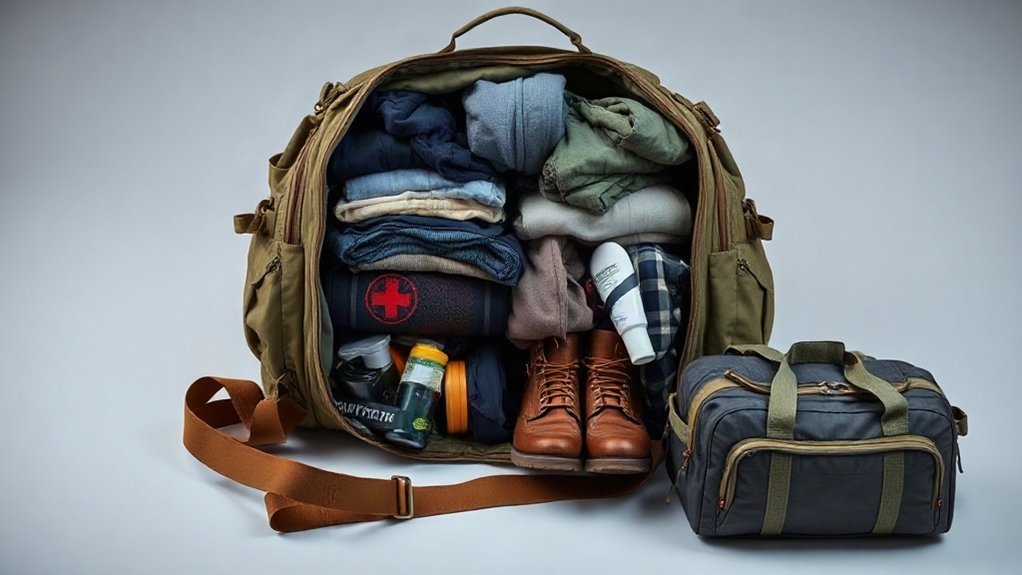
I’d choose a 50–60-liter tactical duffel for a typical week away, especially in warm weather with compact clothing and few extras. A 60–70-liter bag gives me more room for layers, a second pair of shoes, or less-repeated outfits. For a light-packed trip, 30–40 liters may work; winter clothing or specialized gear can require 70–90 liters or more. I’d estimate my packed volume, add about 20% headroom, and check weight and transport limits. The details below can help me narrow it down.
Key Takeaways
- For a typical week away, a 60–70 L tactical duffel is a practical starting point.
- Choose 50–60 L for warm-weather or light packing; 70–90 L may suit winter clothing and boots.
- A minimal load with compact clothes and few extras may fit 30–40 L.
- Add capacity for extra footwear, team equipment, or bulky gear; tactical equipment may require 80 L or more.
- Estimate your packed gear volume, add about 20% headroom, and check the bag’s dimensions and loaded weight.
What Tactical Duffel Size Do You Need for a Week?
For most weeklong trips, I’d start with a 60–70 L tactical duffel: about 60 L usually fits summer clothing, while a winter week may call for 70–90 L. If you’re packing bulky boots, a coat, tactical equipment, or extra team gear, I’d look at an 80 L bag or larger. A 70 liter duffel gives you room to adapt, but don’t choose by capacity alone. I’d estimate my packed gear volume, then check the bag’s actual dimensions and empty weight to see whether it fits my transport plan.
A 50 liter duffel can suit a light packer in warm weather, but I’d leave roughly 20% spare capacity for flexibility. That margin helps when plans change or gear grows. If I’ll carry the loaded bag any distance, I’d avoid excess volume: an 80–100 L duffel can become cumbersome and heavy. Airline size limits can also affect your choice, so compare the bag’s dimensions with your carrier’s baggage rules.
Why 50–55 Liters Works for Most Trips
I find 50–55 liters gives most weeklong kits room for clothing, footwear, and essential gear without making the duffel unwieldy. Choose closer to 50 liters for light, warm-weather packing; the extra five liters helps when you need layers or field gear. I’d estimate your usual gear volume, add about 20% headroom, then check packed dimensions and empty weight to avoid carrying excess capacity. Unlike a typical gym bag, a tactical duffel is often built with durable materials and reinforced straps to handle heavier loads.
Balanced Weeklong Capacity
A 50–55-liter tactical duffel hits a practical middle ground for a week away: it holds more than a weekend bag without the bulk of an 80-liter deployment bag. I find tactical duffel bags in this range offer freedom to travel without overpacking.
| Capacity | Best suited to | Trade-off |
|---|---|---|
| 50-liter | Light clothing | Less spare room |
| 55-liter | Layers, toiletries | Slightly larger load |
| 70–90 liters | Bulky winter gear | More weight and bulk |
For a mild-weather week, I’d start near 50 liters; choose 55 if you’ll bring layers or a second pair of shoes. Estimate your usual gear volume, then add about 20% headroom. Don’t size up without a reason: a packed 50-liter load may weigh 40–60 pounds, before the bag’s empty weight. Consider your carry distance, too.
Room for Essential Gear
When I pack for a week away, a 50–55-liter tactical duffel usually holds clothing, toiletries, and a second pair of shoes without the bulk of an oversized bag. Around 55 liters can cover a summer week’s kit; bulky layers or extra equipment may call for more space.
I estimate my usual gear volume, then leave about 20% headroom for packing flexibility and unexpected essentials. That keeps the tactical duffel bag useful for changing plans without tempting me to bring unnecessary gear. I also check for a wet gear compartment or separate footwear pocket, which keeps damp items away from clean clothes and makes the interior easier to organize. If your essential kit still won’t fit, choose a larger size. Otherwise, this capacity leaves room to travel freely without carrying an oversized bag.
Manageable Carry Weight
How much weight can you comfortably carry for a week? I choose a 50–55-liter tactical duffel when my gear fits with roughly 20% spare capacity. It gives me room for clothing, footwear, and essentials without the bulk of an 80–100-liter bag—or tempting me to pack unnecessary extras.
Weight needs a reality check. Packed gear averages about 8–12 pounds per 10 liters, so a full 50-liter duffel can hold 40–60 pounds of gear. Add the bag’s empty weight, typically 3–6 pounds for a 50–80-liter model. I use a luggage scale to check the actual load before leaving. For a manageable carry weight, match that total to your strength and route; even a medium duffel gets tiring over extended walks. I’d rather pack selectively and keep moving freely.
When Is a Smaller Duffel Enough?
For a one-night trip with minimal gear, I’d start with a 30–40 L duffel and pack only what I’ll use. For a light-packed week, a 50–60 L bag can work if I can rewear clothes and skip bulky gear. I choose the smaller bag when my kit leaves about 20% spare capacity, then check its packed weight and dimensions for carry comfort or flight limits. A three-day assault pack can hold a weekend’s essentials, but how much fits depends on the gear and packing style.
Light One-Night Trips
A 20–30 L tactical duffel usually holds everything I need for a light overnight: a change of clothes, sleepwear, toiletries, and a compact tech pouch. I choose around 20 L when I can rewear a layer; I move toward 30 L for extra clothing or a second pair of tightly packed shoes. Packing cubes keep clothes organized and make the duffel easier to load.
- Estimate your packed gear’s volume before choosing a bag.
- Leave roughly 20% capacity free for essentials and easy access.
- Check the empty weight and strap comfort if you’ll carry it far.
- Consider 30 L for a light weekend; bulky layers or technical gear may need 36–50 L.
The right size gives me room to move without hauling unused capacity.
Minimal Gear Loads
With compact clothing, repeated outfits, and few extras, I can fit a week’s gear in a 30–40 L duffel—though 30 L leaves little room for bulky layers or spare shoes. I’d choose 30 L only when I can keep packing disciplined and travel without backup footwear. If I need toiletries, a second pair of shoes, or extra layers, I’d step up to about 40 L; shoes and thick garments eat space fast.
A light packer might use a 50 L deployment bag, but I don’t need that capacity for a minimal load. Estimate your gear’s volume, then add roughly 20% headroom for easy access. Summer guidelines often point to 60 L, so a smaller duffel works only with especially compact kit. I prefer carrying less capacity than unused space that tempts me to pack heavier.
How Do Season and Activities Change Your Load?
Your season and activities can shift your duffel size as much as trip length does. I match capacity to the layers and kit I’ll actually carry, keeping the bag easy to handle and my travel flexible.
- Summer: About 60 liters usually holds a week of clothes, toiletries, and two pairs of shoes.
- Winter: Plan on 70–90 liters, often 80 or more, for a coat, boots, and bulky knitwear.
- Spring or autumn: I stick close to the trip’s baseline capacity; lighter layers rarely need extra room.
- Sports and outdoors: For team kit, I may size up one step. Camping, skiing, or expeditions can need 80–120 liters or more for equipment.
A tactical duffel can be easier to manage than a wheeled suitcase on rough terrain, so consider terrain handling when choosing a bag.
Choose the smallest comfortable fit. A range bag mindset helps me avoid spare space that tempts heavier packing.
When Does Bulky Gear Need More Capacity?
I find a summer week fits about 60 liters, but a coat, boots, and thick knitwear can push winter packing to 70–90 liters or more. Camping, ski, and expedition gear—such as sleeping bags, tents, and cooking kits—may call for 80–120 liters, while team kit often warrants one size up. I add about 20% headroom, but I also check the loaded weight: a full 100-liter duffel can top 80 pounds. A tactical duffel can also serve as a range bag and travel bag, though its organization and durability should suit both uses.
Bulky Clothing And Layers
Bulky layers can take more space than several lightweight outfits: a week of summer clothing often fits in about 60 L, while winter gear may call for 70–90 L, especially when you pack a coat, boots, and knitwear. I choose capacity by estimating my packed volume, then adding roughly 20% headroom for easy access and flexible packing.
- Pack a thick sweatshirt or insulated coat loosely; compression can hinder quick access.
- Check whether your winter kit pushes the load beyond what you can carry comfortably.
- Treat an 80 L tactical travel bag as a capacity, not a target; a full load could weigh 64–96 lb.
- Choose the smallest bag that fits your layers, rather than sizing up like a gym bag for spare space.
That leaves room to move freely without carrying unnecessary weight.
Footwear And Specialized Equipment
Shoes and specialized gear can change a week’s packing needs more than clothing alone. For a warm-weather trip, I’d start near 60 L for clothing, then count the footwear you’ll actually carry. A second pair can push a 40 L short-trip load toward 45–60 L, especially if your gear bag lacks a shoe compartment.
Winter travel calls for more room: boots, coats, and thick layers may make 70–90 L practical. I’d also size up for team kit; camping, skiing, or expedition equipment can require roughly 80–120 L. Choose a dedicated compartment to keep muddy or wet shoes away from clothes and sleeping gear. Estimate the extra volume your equipment takes, then add about 20% for workable packing space. I avoid oversizing: a full 100 L duffel can exceed 80 lb.
Add Capacity With Headroom
Once you’ve accounted for shoes and specialized gear, leave about 20% headroom so the load fits without forcing the duffel shut. I estimate my usual week-away volume first, then choose the smallest bag that lets me pack and move freely. Bulky layers or equipment change the calculation:
- For compact summer clothing, I’d start around 60 L, with room for loose packing.
- Winter coats, boots, and knitwear often call for 70–90 L; an 80 L duffel offers useful space.
- Add capacity for a second shoe pair, sports kit, or camping and ski gear; heavy duty trips may need 80–120 L or more.
- Choose 100 L or more for extensive or shared equipment, not ordinary luggage.
An oversized bag adds weight and tempts me to pack more, making every carry harder.
How Can You Estimate Your Gear Volume?
To estimate your gear volume, pack each item as you normally would and add the space it takes up; a rolled T-shirt is about 1 liter. I’d use these quick checks before choosing a duffel:
| Method | Estimate |
|---|---|
| Packed items | Add each item’s volume |
| Box dimensions | Length × width × height ÷ 1,000 |
| Rounded duffel | Use 80–90% of box volume |
| Cylindrical load | 3.14 × radius² × length ÷ 1,000 |
| Final capacity | Add 20% to gear volume |
Measure in centimeters for dimension formulas; the result is liters. A load cell can confirm weight, but it won’t tell you whether bulky boots or a sleeping layer will fit. Use internal pouches to keep small gear organized and easy to find. I total my packed kit, then choose a bag near that figure so I can carry what I need and keep my route flexible.
How Much Extra Room Should You Leave?
I leave about 20% extra capacity beyond my usual packed gear volume so I can fit awkward or expanding items without overstuffing the duffel. I estimate my normal load, then add room for gear that won’t compress neatly. For a week away, a summer kit may need about 60 liters; bulky winter layers can push the load to 70–90 liters or more. I use the extra space for:
I leave about 20% extra room for bulky gear, but avoid an oversized duffel that adds weight and invites overpacking.
- Boots that hold their shape
- A coat or damp layers
- Toiletries in a leak-resistant pouch
- Sports equipment or other awkward gear
I don’t chase empty volume: an oversized duffel adds weight and can tempt me to pack more. A water-resistant fabric can help protect gear, but zippers and seams may still let water in. I pack my typical kit, check airline baggage limits if it’ll be a checked bag, then confirm I can carry and close it comfortably.
Which Duffel Size Fits Your Transport?
The right duffel size depends on how you’ll travel: for a week away by air, I’d start with a 35–40 L bag, then check its packed dimensions against your airline’s limits, often around 22 × 14 × 9 inches. Measure the bag fully packed, including handles and pockets; a rounded 40 L shape may not fit the overhead space, and stuffing it tight can push it over the limit. For car trips or checked transport, I’d choose 60–80 L to carry bulky layers and gear without worrying about bin dimensions. A winter week may call for 70–90 L, but a full 100 L bag can exceed typical checked-bag allowances. I’d also look for water resistant fabric and choose a wheeled duffel when rolling suits your route better.
How Heavy Will Your Packed Duffel Be?
How heavy will your duffel feel once it’s packed? I estimate the gear first, then add the empty bag’s weight. That total matters when you’re moving between transport, camp, and rough ground—not just when you lift it at home.
- A 50-liter duffel may carry 40–60 pounds of typical gear, based on roughly 8–12 pounds per 10 liters.
- Add 3–6 pounds for a typical 50–80-liter bag; the empty shell counts.
- A 100-liter bag can exceed 80 pounds when fully loaded. I avoid that burden on uneven routes.
- A large duffel weighing 5–8 pounds empty plus 60 pounds of gear totals about 65–70 pounds. I leave 20% of capacity unused, instead of packing extra weight just because there’s room.
What Features Matter for Comfort and Weather Protection?
Because a week’s gear can push a tactical duffel past 70 liters—especially in winter—I check the load-bearing details before capacity. Reinforced strap anchors, doubled seams, and a padded bottom help a heavy bag handle rough travel. I also look for padded grab handles and securely attached straps, so I can carry it solo or share the load.
| Feature | What I check | Why it matters |
|---|---|---|
| Stitching | Reinforced anchors, doubled seams | Holds under load |
| Carry points | Padded handles, secure straps | Easier carrying |
| Base | Padded bottom | Cushions rough handling |
Cordura nylon sheds water and resists abrasion, but water-resistant isn’t waterproof. I prefer a weather resistant zipper, sealed seams, or storm flaps. For sustained rain, I add a cover, liner, or dry bags and isolate wet gear. That way, I can travel freely without risking dry clothing.
Frequently Asked Questions
What Size Duffle Bag for a 1 Week Trip?
For a one-week trip, I’d choose a 60–70-liter duffle for summer clothes and basic gear. If you’re packing bulky winter layers, boots, or sports equipment, I’d step up to 80–100 liters. You can travel with a 50–60-liter bag if you pack light, rewear clothes, and keep extras minimal. I’d leave about 20% spare capacity, then check the bag’s dimensions and packed weight so it stays comfortable to carry.
How Many Litres Is a Good Size Duffle Bag?
I’d choose a 40–60 L duffle for most short trips; it gives you useful room without becoming a bulky burden. For a week of summer clothes, I’d aim near 60 L, while a light packer may manage with 50 L. Add bulky winter layers or gear? Consider 70–90 L. I’d pick the smallest bag that fits your load with about 20% spare space. For carry-on travel, target 35–40 L and check airline dimensions.
How to Pack a Duffel Bag for 7 Days?
I pack for seven days like I’m loading a field kit: lay out outfits, toiletries, footwear, and activity gear first. I use packing cubes to group clothing, then place heavy items low and close to the duffel’s center for balance. I separate shoes and damp gear in a shoe compartment or waterproof bags. I leave about 20% spare room, then weigh the packed bag, including its empty weight, before heading out.
What Size Luggage Is Good for 7 Days?
For seven days, I’d choose a 60-liter bag for summer or a 70–90-liter bag for winter gear. You can fit a week of warm-weather clothes, two pairs of shoes, and toiletries in 60 liters; bulky coats and boots need more room. If you pack light, 50 liters may work. I’d estimate your gear volume, leave 20% spare capacity, and check dimensions and weight before choosing a larger bag.
Conclusion
For a week away, I’d choose a 50–55-liter tactical duffel for most trips. It gives me room for clothing, toiletries, and essentials without turning every transfer into a deadlift. Pack lighter for warm weather or minimal plans; add capacity only when bulky layers or specialized gear demand it. I leave a little space for the return trip and check that the bag fits my transport. The right duffel is a steady tool, not an anchor.
References
Ergonomic Guidelines for Manual Material Handling, https://www.cdc.gov/niosh/docs/2007-131/
Applications Manual for the Revised NIOSH Lifting Equation, https://www.cdc.gov/niosh/docs/94-110/
Backpack Safety, https://orthoinfo.aaos.org/en/staying-healthy/backpack-safety/