Do 3-Day Assault Packs Fit Your Torso or Just the Average Buyer?
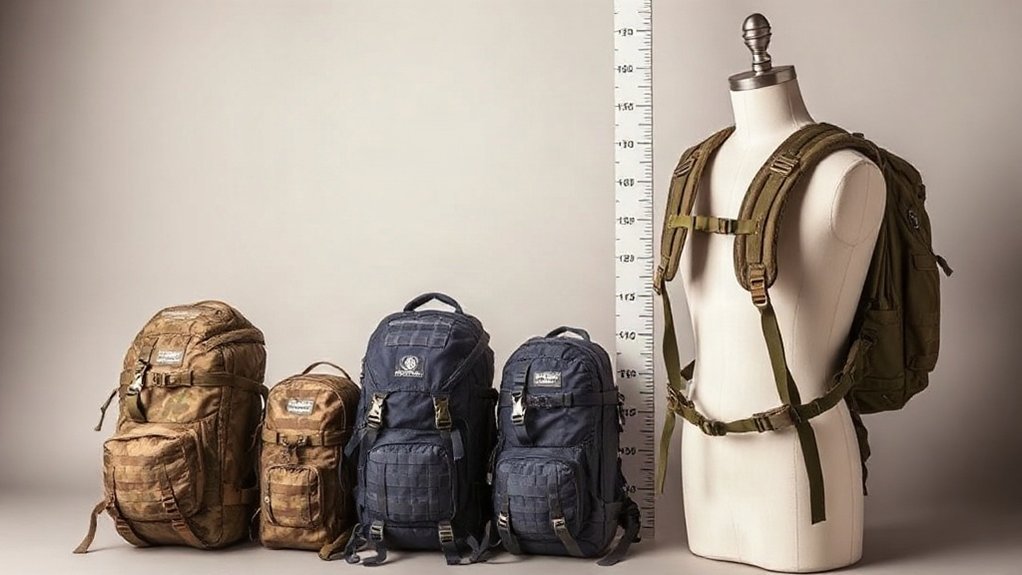
I wouldn’t assume a 3-day assault pack fits your torso just because it’s popular; fit depends on your measurements and the model’s adjustment range. I’d measure from C7 at the base of your neck to the top of your iliac crest three times, average the results, then compare that number with the exact pack’s size chart. Measure around your hips, too, because belt and harness fit affect comfort and load transfer. The sizing details can help you choose between options.
Key Takeaways
- Three-day assault packs do not fit every torso; sizing varies by brand, model, and adjustment range.
- Measure from C7 to the top of your iliac crest three times, then use the average.
- Compare your torso and hip measurements with the exact pack’s size chart, not its volume or size label.
- If your measurement falls within overlapping sizes, try both with a load and check belt security, shoulder pressure, and movement.
- Check harness and hip-belt adjustability or swap options; frame stays, MOLLE webbing, and fabric do not correct a poor fit.
How Do You Measure Your Torso for a Pack?
To measure your torso, ask someone to help you find two landmarks: the prominent C7 bone at the base of your neck and the top of your iliac crest. I find C7 by lowering my chin to my chest; your helper can locate the hip landmark by tracing the top of your hip bone toward your back. Stand tall as they run a tape measure straight along your spine between the points. String and a ruler work if you don’t have a tape. Take three measurements and average them to reduce error. Then measure the widest part of your hips separately. Compare both results with the pack’s sizing chart before choosing among 3-day assault packs. Accurate measurements help you assess torso adjustment and padded waist belt fit without relying on average sizing. A correctly fitted hip belt should sit over your iliac crest so the pack’s weight rides on your hips rather than your shoulders.
Where Are C7 and Your Iliac Crest?
For an accurate torso measurement, locate C7 at the base of your neck by tilting your chin toward your chest and feeling for the prominent bone. I use it as the upper endpoint. To find the lower one, place your hands on your hips and feel the top ridges of your iliac crests. Trace a ridge toward your back to where it meets your spine.
| Landmark | How I find it | Role |
|---|---|---|
| C7 | Feel neck-base bone | Upper endpoint |
| Iliac crest | Hands on hips | Hip ridge |
| Spine point | Trace crest backward | Lower endpoint |
| Tape | Keep it straight | Consistency |
Stand tall and measure between those points. This length helps you judge whether a rucksack’s shoulder harness and padded back panel may suit your torso, rather than an average buyer’s. Compare your measurement with the pack’s torso length range to see whether its harness can accommodate your fit.
Why Take Three Torso Measurements?
I take three torso-length measurements from C7 to the top of my iliac crest to reduce the effect of a misread or shifted tape. I keep the tape straight along my spine, stand tall, and use the same landmarks each time. Then I average the results and compare that figure with the pack’s sizing chart, since ranges vary by brand. This can help determine whether a 3-day assault pack’s torso range suits women and smaller frames.
Reduce Measurement Error
Because even a small difference can affect which pack size fits best, I take three torso measurements and average them. I measure from C7, the prominent bone at the base of my neck, to the top of my iliac crest, following my spine. For a 3-day assault pack with a 40 liter capacity, a careful average gives me a more dependable number than relying on one reading.
- I stand tall for each measurement.
- I keep the tape straight along my spine.
- I record all three readings before calculating the average.
If I measure 16.5, 17, and 16.75 inches, the average is about 16.75 inches. Repeating the process helps limit the effect of a slipped tape or inconsistent posture. I get a steadier measurement without letting one small mistake dictate my result.
Find Your True Fit
Why take three torso measurements? I measure from C7, the prominent bone at my neck’s base, to the top of my iliac crest, keeping the tape straight along my spine. Three readings help limit small errors before I choose a pack.
| Reading | Measurement | Purpose |
|---|---|---|
| First | 16.5 in | Initial check |
| Second | 17 in | Repeat check |
| Third | 16.75 in | Final check |
| Average | 16.75 in | Sizing reference |
I compare that average with the specific brand’s chart; sizing systems differ. This matters whether I’m choosing a 72-hour bag, patrol pack, or 2000 cubic inches model. If I fall between sizes, I try both when possible and judge the actual fit, not an average-buyer label. A comfortable fit gives me more freedom to move under load.
Measure Your Hips at Their Widest Point
To check hip-belt fit, wrap a flexible tape around the widest part of your hips and keep it level. I take this measurement over the clothing I expect to wear, without pulling the tape tight. A belt that sits securely can help stabilize a loaded pack, so don’t judge fit by volume or torso range alone.
- Record your hip measurement alongside your torso length.
- Check whether the exact model offers interchangeable hip belts.
- Use that model’s sizing chart; brands vary.
When I compare options such as the 11 tactical rush 24, direct action packs, or condor outdoor models, I treat each chart separately. A familiar brand or similar pack design doesn’t guarantee the same belt fit. If the standard belt doesn’t suit your measurement, consider another configuration before choosing a pack, so you can move freely without sacrificing stability.
For a stable carry, check that the belt sits securely at your hips without feeling too tight.
How Do You Read a Pack Size Chart?
I compare my average torso measurement with the pack’s size chart, not its volume; I find C7 at the base of my neck and measure to the top of my iliac crest. Since brands set different ranges, I check the specific chart and try both sizes if my measurement falls in an overlap. I also check hip fit, harness room, and available adjustments before choosing. Shorter frames may need a pack with adjustable harnesses to improve fit.
Match Torso Measurements
How do you read a pack size chart? I measure my torso before choosing a 3-day pack, rather than assume a standard size will fit. Find C7, the prominent bone at your neck’s base, then measure straight down your spine to the top of your iliac crest. I take three readings and average them to reduce error.
- Compare your average with the chart’s torso range; brands size differently.
- Check overlapping ranges: an Osprey Aura AG 50 lists XS at 14–17 inches and S at 16–19, so 16.75 inches fits both.
- Consider harness room if broad shoulders, chest, or lats affect your choice.
For a go bag, hunting daypack, or pack with a hydration bladder sleeve, I’d use torso fit as a starting point, then assess the complete fit before buying.
Check Hip Fit
Even when a pack matches my torso, it may not fit well around my hips. I measure my hip width at its widest point with a tape measure, or use a cord and ruler. Then I compare that measurement with the specific pack’s sizing chart; brands use different ranges and systems, so I don’t rely on a chart from another model.
I check hip or waist fit alongside torso length and choose by listed fit, not volume alone. A large weekend pack can still sit poorly if its belt doesn’t suit my measurements. If I fall between sizes, I try both and ask whether I can adjust or swap the hip belt. That check helps me carry a practical loadout comfortably, whether I’m planning a three day trip or a shorter outing.
Why Do Pack Sizes Vary by Brand?
Why can the same pack size fit differently across brands? I check each maker’s torso ranges because brands use different sizing systems. A label alone won’t tell me whether a pack will sit comfortably or move freely on your body.
- Osprey Aura AG 50: extra small covers 14–17 inches; small covers 16–19.
- Gregory Jade 38: extra-small/small fits 14–18 inches; small/medium fits 16–20.
- REI Co-op Flash 45: listed sizes correspond to specific measurements: 16 inches for extra small, 17 for small, and 18 for medium.
An aluminum frame stay, compression straps, and MOLLE webbing don’t standardize torso fit. I measure your torso, then compare it with the chart for the exact pack. Don’t assume similar volume or matching labels mean a similar fit; sizing ranges can overlap or differ. A mismatched torso length can cause poor load transfer, making a pack dig into your shoulders.
Compare Torso Ranges on Example Pack Charts
To compare torso ranges, measure your torso and check it against each pack’s chart: the Osprey Aura AG 50 covers 14–17 inches in extra small, 16–19 in small, and 18–21 in medium; the Gregory Jade 38 covers 14–18 inches in extra-small/small and 16–20 in small/medium; the REI Co-op Flash 45 lists 16 inches for extra small, 17 for small, and 18 for medium.
These charts show why I wouldn’t assume one brand’s size matches another’s. The Osprey and Gregory provide ranges that overlap, while REI lists a single torso measurement for each size. Check the exact chart for any pack you’re considering, including eberlestock or maxpedition tactical models; sizing systems can differ across brands and pack types. I use torso length—not capacity alone—to compare fit information. That gives you a more useful starting point for evaluating how a pack may sit while preserving your freedom to choose by features, load, and intended use. For heavy loads, load-lifter placement can also affect how effectively a pack transfers weight to your hips.
How Should You Choose Between Overlapping Sizes?
When your torso measurement falls within two overlapping sizes, measure from C7—the prominent bone at the base of your neck—to the top of your iliac crest three times, then average the results to reduce error. Compare that average with the pack’s chart, then judge fit rather than choosing by label alone.
- If you’re between sizes, consider your build: broad shoulders, chest, or lats may need the larger size for harness room.
- Try both sizes when possible; check that the hip belt sits securely and comfortably.
- Ask whether the pack’s harness or hip belt can be swapped before buying.
For a bug out bag, I’d prioritize stable carry over a close chart match. Load the pack and walk, including ruck marching, before relying on it. Choose the durable option that fits your body best.
When Does Adjustable Torso Length Help?
If your torso measurement lands near a size boundary, an adjustable harness can help you fine-tune the fit. I measure from the prominent C7 bone at the base of my neck to the top of my iliac crest, then repeat the measurement three times and average the results to reduce error. Next, I compare that figure with the pack’s adjustment range; brands use different sizing systems, so I don’t assume their labels match.
For example, the Osprey Aura AG 50 lists extra-small for 14–17 inches and small for 16–19 inches. At 16.75 inches, I’d test both settings. Adjustment can make a first pack more versatile, whether you’re planning a bug out load or organizing molle panels and an admin pouch. I’d still check that the hip belt fits properly.
How Do Harness and Hip-Belt Fit Affect Comfort?
Comfort depends on how the harness and hip belt fit together, not just on torso length. I measure from C7, the prominent bone at my neck’s base, to the top of my iliac crest, then compare that length with the pack’s chart. I also measure hip width at its widest point and check the belt sizing; the right torso size alone won’t guarantee comfort.
- Between sizes? Broad shoulders, chest, or lats may suit the larger range.
- Ask whether you can swap the harness or hip belt if standard components don’t fit.
- Try the loaded pack on and check both areas; REI staff may help.
For hunting, comfort matters whether the pack uses 500d cordura or 1000d cordura. I’d judge fit separately from fabric, then choose the setup that lets me move freely without pressure or slippage.
Frequently Asked Questions
Can a 3-Day Assault Pack Be Returned if the Fit Is Wrong?
Yes, you can often return a 3-day assault pack if the fit’s wrong, but I’d check the seller’s return policy before buying. Look for the return window, any restocking fee, and whether the pack must be unused with tags and packaging intact. I’d adjust the shoulder straps and hip belt indoors, then load the pack lightly to assess fit without marking it. If you buy from a marketplace, I’d confirm who handles returns.
How Much Weight Should You Carry When Testing Pack Fit?
I’d start with 15–20 pounds—the pack should feel like a steady load, not a boulder on your back. Use the gear and water you’d realistically carry, or add evenly distributed weights to reach that amount. Adjust the shoulder straps, hip belt, and sternum strap, then walk for 10–15 minutes. If you expect heavier loads, test at that weight too, but don’t exceed the pack’s rating or your safe lifting capacity.
Should You Wear Your Usual Clothing When Trying on a Pack?
Yes—I’d wear the clothing you expect to use with the pack, including your usual layers, when you try it on. A thick jacket can change shoulder-strap clearance and how the harness sits, while a thin shirt may make the fit feel different. If you’ll carry the pack in varied weather, test it in both light and heavier layers. I’d also adjust the hip belt over the clothing you’ll wear most often.
Can a Tailor or Gear Shop Modify an Assault Pack?
Yes—a tailor or gear shop can modify some assault packs, but not every change is practical. I’d ask about shortening straps, adding or moving webbing, replacing buckles, and reinforcing seams; I wouldn’t assume they can reshape a padded frame or safely alter load-bearing stitching. Bring the pack, describe your fit problem, and request an estimate before authorizing work. I’d also check warranty terms, since alterations may void coverage or affect durability under heavy loads.
Do Women-Specific Assault Packs Fit Differently?
Yes, women-specific assault packs often fit differently, but the label doesn’t guarantee a better fit. I look for shorter torso options, narrower shoulder straps, and a hip belt shaped to sit comfortably on my hips. You should compare measurements with your own torso and try the loaded pack, checking that straps don’t press or slip. Many standard packs adjust well, so choose by fit and function rather than gender marketing alone.
Conclusion
Before you load a three-day pack, check the fit, not just the label. I measure from C7 to the iliac-crest line, compare all three readings with the maker’s chart, then try any overlapping sizes under load. I also check that the hip belt sits securely and the harness follows my shoulders without gaps. A pack that fits on paper can still shift on the trail. Tighten the straps, take a few steps, and see what moves.
References
Soldier Load Carriage: Historical, Physiological, Biomechanical, and Medical Aspects, https://doi.org/10.7205/MILMED.169.1.45
Backpacking, National Park Service, https://www.nps.gov/subjects/camping/backpacking.htm
Hiking Safety, National Park Service, https://www.nps.gov/subjects/hikingsafety/index.htm