Are 3-Day Assault Packs Better Than a Standard 40 Liter Hiking Bag?
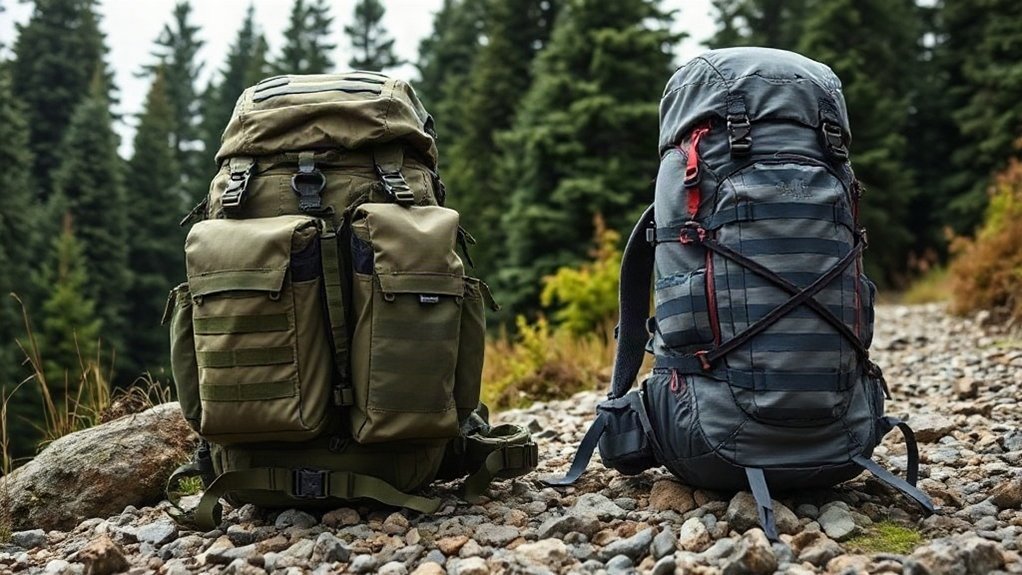
I’d choose a 3-day assault pack over a standard 40-liter hiking bag only when its layout and features suit your gear better; neither is automatically better. For one night, 40 liters may fit, but bulky shelter and sleep gear can require careful packing. I’d compare usable space, access, body fit, and the maker’s weight rating—not just tactical features or capacity. Test-pack your actual load, then match the bag to your trip and preferences; the details below can help you decide.
Key Takeaways
- Neither pack type is automatically better; choose based on your gear, body fit, carrying comfort, and preferred organization.
- A 40-liter hiking bag can work for three days if your gear fits and the load is balanced.
- Assault packs may offer MOLLE webbing and tactical pockets, but those features do not guarantee more usable space or safe carrying capacity.
- Hiking bags often prioritize comfort; check the pack’s weight rating and harness fit, especially for heavier loads.
- Test-pack your shelter and sleep gear before choosing, since layout and dimensions matter as much as listed capacity.
3-Day Assault Pack or 40-Liter Hiking Bag?
When I compare a 3-day assault pack with a 40-liter hiking bag, I don’t assume the tactical label means a better fit. I match the pack to my load, body, and storage habits, so you can choose freely rather than follow a category.
A 40 liter capacity sits between sizes that may pack differently; more liters don’t guarantee easier organization. Tactical models can add MOLLE webbing, tough materials, and pockets for a specific loadout. Hiking rucksacks often focus more on carrying comfort, so I check the shoulder harness and weight rating before buying. I’d also look beyond price: a budget 40-liter option may become unruly above 25 pounds. Choose the pack that carries your intended weight comfortably and gives you useful access, not the one with the most tactical features. A three-day pack can suit short trips when its capacity and carry comfort match the load.
Will Your Overnight Gear Fit in 40 Liters?
I’d start by comparing your overnight gear’s volume with the space a 40-liter bag actually offers. A 40 L pack with well-placed compartments may organize a one-night load better than a larger bag with awkward dividers, but bulky gear can still force careful packing. I’ll compare these tradeoffs with smaller and roomier packs so you can judge what fits your setup. Packing style can affect how much usable space a three-day assault pack offers for a weekend load.
Gear Volume Check
Will your overnight kit fit in 40 liters? I’d judge by your actual shelter, sleep gear, clothing, cooking kit, and essentials—not the capacity label alone. A 36 L pack held a complete one-night load in testing, but packing and unpacking took effort. A 47 L pack carried the same gear comfortably, with space left for bulky items.
When comparing 3-day assault packs, remember that 40 liters is roughly 2000 cubic inches, yet a 72-hour bag’s usable space depends on its dimensions and intended load. Before buying, I’d check the main compartment and test-pack my own kit. Don’t assume packing cubes will create extra capacity; they may help organize gear, but your load still has to fit. This simple check can help you choose freely and avoid a frustrating trip.
Compartment Layout
A 40-liter pack can still feel cramped if its compartments divide the space poorly. When I assess a 40-liter bag, I look beyond its stated capacity to the compartment layout. The REEBOW Gear model has two large compartments and two smaller front pockets, but extra divisions can make bulky overnight items harder to load than one open space.
For a three day trip, check whether your tent, sleeping bag, and pad fit together in the main compartment. A 25 L pack’s single compartment proved easier to use than a 32 L bag with more pockets; the smaller pack still required carrying its tent separately. A 36 L pack held the tested one-night kit, but loading took effort. I’d prioritize usable space and easy access, so you can pack efficiently and keep moving freely.
Pack Size Tradeoffs
Compartment layout matters, but total volume sets the limit on what your overnight kit can hold. A 40 L pack can work for a night out, but I wouldn’t assume every tent, sleeping bag, and pad will fit. In one test, a 36 L pack held a complete kit, though packing and unpacking took considerable effort. A 47 L pack held the same gear comfortably, with room to spare—my safer pick for one or two nights.
An assault pack or hunting daypack may organize gear differently from a weekend pack, so check dimensions and openings, not just liters. The 40 L REEBOW has two large compartments and two smaller front pockets, but its overnight fit hasn’t been tested. For a go bag, test-pack bulky items before you head out; otherwise, you may carry your tent separately.
How Much Weight Can Each Pack Carry?
I’d check each pack’s stated weight rating rather than assume all 3-Day Assault Packs carry the same load. In testing, the REEBOW Gear 40 L felt comfortable but became unruly above 25 pounds, while a framed 60 L pack is built for heavier loads. Fit and adjustment matter too, so I’d test the hip belt and straps with your planned weight. For heavy loads, load-lifter placement helps transfer weight toward your hips and keep the pack stable.
Pack Weight Ratings
Although the REEBOW Gear Tactical Backpack’s adjustable frame, padded straps, hip and sternum straps, and compression features helped manage different loads in testing, it became unruly above 25 pounds, and its waist belt may not fit everyone. That’s a practical limit to note, not a published maximum weight rating. I’d check whether a pack’s maker specifies a load rating before carrying gear for a long trip, ruck marching, or other demanding use. An aluminum frame stay, padded waist belt, and torso adjustment may help a durable pack manage weight, but those features don’t establish a safe capacity. The REEBOW holds 40 liters, yet volume alone can’t tell you how much weight it should carry. I can’t directly compare its rating with a 3-Day Assault Pack or standard 40-liter hiking bag because no ratings are provided.
Load Comfort Limits
A pack’s capacity tells you how much gear fits, not how much weight it can safely carry. I judge comfort by the load rating and how the pack transfers weight, not by liters alone. The REEBOW Gear 40 L felt comfortable in testing but became unruly above 25 pounds, and its waist belt may not fit everyone. By contrast, the 5.11 RUSH 100’s frame, adjustable torso, load lifters, and contoured hip straps are built for heavier loads, though its waist strap may still bother you.
On a trip, the 25 L pack couldn’t hold all our gear; the tent rode separately, risking spills or damage. The 36 L fit everything but needed careful repacking; 47 L carried it comfortably. Check your rating, fit, and compression straps. A hydration bladder sleeve, padded back panel, 11 tactical rush 24, or patrol pack doesn’t guarantee a safe load.
Which Pack Layout Makes Gear Easier to Reach?
When I need gear in a hurry, I look at how a pack opens and where it puts smaller items—not just its capacity. A single roomy compartment can beat extra dividers: I found the 25 L pack easier to load than the 32 L model. The Mystery Ranch 2-Day’s tri-zip opens wide, while its top lid pocket and external pockets keep essentials close. The Dragon 2.0 switches between top-loading and full access, though I must detach its Stick It panel for the latter. For broad access, the 5.11 RUSH 100’s 270-degree zipper pairs with an admin pouch for small tools. I also value molle webbing, paracord zipper pulls, and ykk zippers for adaptable, reliable access. For medical gear, the Mole Pouch opens flat, with customizable pockets. Arranging MOLLE pouches by how often you use them can make essential gear faster to reach.
Where Do Comfort Items Fit in Each Pack?
Access matters, but comfort items need space without disrupting the main load. In a 40 L pack, I like the REEBOW Gear layout: two large compartments hold core equipment, while two front pockets keep camp sandals, a stool, or a book separate and easy to reach. Its compression straps help control a partly filled load, though I’d watch the weight above 25 pounds.
A 3-day assault pack such as the expandable 24 BattlePack offers another approach. I can compress it from 40 liters toward 20 when I carry fewer comfort items, keeping the load compact. A standard hiking bag may provide more room, but extra capacity isn’t always useful: one test’s 36 L pack took considerable repacking, while a 47 L pack left comfortable space for additions. A consistent packing system helps keep frequently used gear easy to find in either pack.
Which Pack Fits Your Trip and Gear?
Which pack fits your trip and gear?
Which pack fits depends on your gear’s volume and weight, not just its listed capacity. For a one-night trip, I’d start around 36 L, but tight packing takes effort. A 47 L pack gives me easier access and room for comfort items; 60 L suits heavier gear or longer freedom on the trail.
| Pack size | Best fit | Trade-off |
|---|---|---|
| 36 L | One night, compact kit | Careful packing |
| 47 L | One or two nights | More room |
| 60 L | Heavy or multi-day loads | Bulkier carry |
I’d check the load rating before buying: smaller packs can strain when overloaded. Sleeping bag straps, a rain cover, waterproof materials, and MOLLE attachment points may help organize a bug out bag, but don’t replace a suitable capacity. A 70 L pack is usually excessive for one night. For a three-day trip, balanced packing helps distribute weight and keep essentials accessible.
Frequently Asked Questions
How Many Liters Should a 3 Day Assault Pack Be?
I’d choose a 40–50-liter pack for a typical three-day trip, but your gear matters more than the “3-day” label. In testing, 36 liters fit a moderate one-night load, while 47 liters offered comfortable extra room. A 40-liter pack may work if you pack efficiently; bulky gear, heavier loads, or shared equipment may call for 60 liters. Check the pack’s load rating, and don’t force gear into an undersized bag.
How Many Days Is a 40L Backpack Good For?
A 40L backpack typically covers one or two nights; I’d plan on two days unless my gear packs especially compactly. For comparison, a 47L pack held a one-night load with room to spare, while a 60L bag better suited heavier or longer trips. I’d check that your sleeping gear, clothing, food, water, and comfort items fit without forcing the zipper. Smart packing helps, but overloading a smaller pack can strain it.
How Many Liters Backpack for a 3 Day Hike?
For a 3-day hike, I’d start with a 40–50-liter backpack, then match capacity to your gear. A 40-liter pack can work if you pack compactly and skip bulky extras; I’d choose closer to 50 liters for easier loading or more comfort items. Don’t judge by volume alone: I’d check the compartment layout and load rating, since awkward sections or a low rating can limit what you carry.
Is a 40L Bag Too Big for a Carry-On?
A 40L bag isn’t automatically too big for a carry-on—but, like a traveler eyeing an open gate, I’d check before boarding. Airlines enforce dimensions and weight, and capacity alone won’t tell you whether your pack fits overhead. The REEBOW Gear Tactical Backpack holds 40L, but I can’t confirm it meets airline limits. Compare its packed dimensions with your airline’s rules; shape, frame, and how full you pack it matter, too.
Conclusion
I don’t consider a 3-day assault pack automatically better than a 40-liter hiking bag; the right choice depends on your gear and priorities. Both offer about the same volume, but a hiking pack usually carries weight more comfortably, while an assault pack makes access and organization easier. A useful rule of thumb: 40 liters is roughly 2,440 cubic inches. I’d choose the pack that fits your overnight load without forcing you to sacrifice comfort or carry unnecessary bulk.
References
Backpack Safety, https://orthoinfo.aaos.org/en/staying-healthy/backpack-safety/
Plan Ahead and Prepare, https://lnt.org/why/7-principles/plan-ahead-and-prepare/