Are Military-Style Backpacks Worth the Extra Weight on Long Trails?
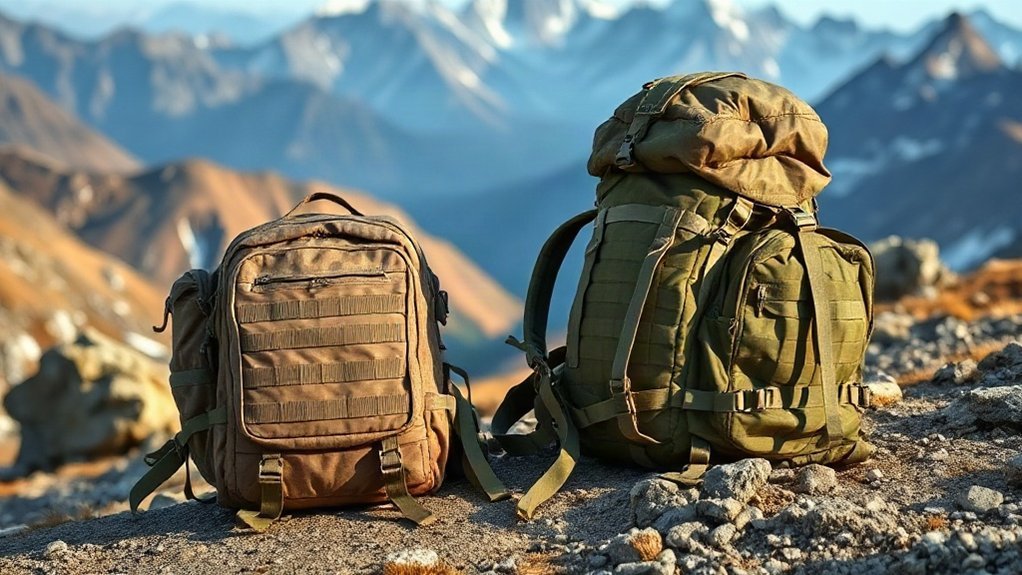
I’d choose a military-style backpack for a long trail only when its durability, modularity, or armor compatibility justifies the extra weight. Tough fabrics and quick-access pockets can help on rough terrain, but added hardware may increase fatigue over multiple days. For predictable trails, I’d usually favor a lighter hiking pack with a supportive hip belt, good ventilation, and a frame suited to my load. The right choice depends on your route, fit, and gear needs; the details below can help you decide.
Key Takeaways
- On long, predictable trails, a lighter hiking pack usually reduces fatigue and is the better choice.
- A military-style pack’s extra weight may be worthwhile on rough terrain or when abrasion resistance and hard-use construction matter.
- Check fit and loaded comfort: a supportive frame, hip belt, and correct torso length matter more than a rugged appearance.
- Choose tactical features such as MOLLE, quick access, or armor compatibility only if you will use them; unused gear adds weight and bulk.
- Compare capacity, ventilation, durability, and access for your route, and protect essentials with liners or dry bags in wet conditions.
Is a Tactical Pack Worth the Extra Weight?
A tactical pack’s durability can be worth carrying extra weight when your load will face rough handling, heavy abrasion, or conditions that make dependable construction a priority. I’d consider 1000d cordura nylon when you expect gear to scrape against rocks, brush, or equipment; its toughness can help the pack withstand demanding use. That strength comes with a weight penalty, though, so I wouldn’t carry it automatically on a long, marked trail.
Think about how the pack fits your load and route. A padded hip belt and effective load distribution can make a heavier pack more manageable, but they can’t erase the extra weight. Over multiple days, that added weight can increase fatigue and slow your pace. If your trip calls for rugged handling or modular storage, the trade-off may suit you. For easier trails and lighter loads, I’d favor less weight and greater comfort.
What Matters Most in a Tactical or Hiking Pack?
When choosing between a tactical and hiking pack, I’d focus first on how you’ll carry it and what the trail demands. Check torso length, load lifter straps, and hip belt comfort; a good fit can reduce fatigue and leave you freer to cover distance.
| Priority | Hiking pack | Tactical pack |
|---|---|---|
| Comfort | Light, ventilated | Often heavier |
| Durability | Lighter fabrics | Tougher Cordura |
| Access | Usually top-loading | Panel or clamshell |
I’d also weigh organization against simplicity. MOLLE/PALS webbing lets you add or remove pouches for a medical kit, radio, or food; a fixed layout keeps things straightforward. Broad-opening tactical designs offer quicker access, while top-loading bags may mean moving gear to reach the bottom. Suspension design can affect how comfortably a pack carries its load over long distances. Neither style wins everywhere: I’d favor trail comfort for sustained walking, or durability, modularity, and rapid access when those advantages matter more. Check that the loaded pack stays comfortable before committing.
Which Pack Fits Your Trip and Load?
I’d choose a hiking pack for marked trails where low weight and a supportive, ventilated suspension matter most, and a tactical pack when abrasion resistance, quick access, or armor compatibility fits the terrain and task. Match capacity to your load: tactical packs often hold 20–40 L, while hiking packs range from about 40 L to over 70 L. For extended trekking with ordinary camping gear, I’d prioritize trail comfort over tactical durability unless modular attachments or rugged construction solve a specific need. A 3-day assault pack may offer organized storage for essential gear, but its capacity can be limiting for longer trips.
Match Pack to Terrain
Choose your pack by matching the terrain and load to its design: for long, maintained trails, I’d favor a hiking pack with a padded hip belt, low weight, and comfort over many miles. For rough routes, military-style backpacks with 500D cordura fabric can resist abrasion from thorns and rubble, though they add weight. A flatter profile also fits better against body armor.
| Trip condition | Better fit | Why |
|---|---|---|
| Maintained trails | Hiking pack | Comfort for distance |
| Thorn brush, rubble | Tactical pack | Abrasion resistance |
| Body armor | Tactical pack | Flatter profile |
| Frequent gear changes | Tactical pack | Clamshell and MOLLE |
| Wet crossings | Tactical pack | Drainage grommets |
I’d choose a hiking pack for comfortable heavy load carry on camping trips; tactical access suits changing equipment needs. You’ll gain freedom by matching features to conditions, not assuming one design wins everywhere.
Size for Your Load
After matching your pack to the terrain, size it for the gear you’ll actually carry. For a day hike, I’d choose a 20–40 L tactical backpack for water, food, and an extra layer without hauling unnecessary bulk. On a multi-day trip, I’d look at 40 L or more to fit a sleeping bag, shelter, clothing, and meals; longer journeys may call for a hiking rucksack above 70 L.
I’d base capacity on my actual loadout, not on the possibility of carrying more. A smaller pack can leave you freer to move when your supplies are light, while a larger one makes room for bulky camping gear. MOLLE pouches let me adjust capacity, but each adds weight. If I won’t use the extra space, a rugged tactical pack may be excessive.
Balance Comfort and Durability
When I’m covering long, marked trails with 40–70+ liters of camping gear, I favor a hiking pack’s padded hip belt, lumbar support, and ventilated suspension to shift weight to my hips and reduce fatigue. Check that its lumbar support pad and aluminum frame stays fit your body and expected load; comfort matters over full days of steady walking.
I’d choose a tactical pack when rough surfaces, thorny brush, or frequent hard use make durability a priority. Its 500D or 1000D Cordura adds weight, so I’d accept that trade only when the protection helps. A flatter profile can also sit better over body armor, while curved hiking suspension suits trekking without it. Since tactical packs often hold 20–40 liters, I’d verify capacity and carry options before choosing.
How Tough Are Tactical Pack Fabrics?
I’ll compare common tactical fabrics, such as 500D and 1000D Cordura, with the 70D or 100D ripstop nylon often used in hiking packs. That heavier material resists abrasion and tearing from rough surfaces and repeated handling, but it adds weight. I’ll also consider water-resistant treatments, which help in wet conditions but don’t make a pack fully waterproof. Years of hard use show that fabric denier is only one factor in a pack’s durability, alongside stitching and hardware.
Heavy-Duty Fabric Choices
Tactical packs often use 500D or 1000D Cordura, compared with the 70D or 100D ripstop nylon common in lightweight hiking packs. I’d choose fabric based on where you’ll travel, not on a military label. A tactical assault pack may also use 1000D nylon, polyester blends, or ballistic nylon; some versions add water-repellent coatings for harsh conditions. These materials suit demanding use, while a military rucksack can carry the cost of that toughness in extra weight. Molle webbing adds attachment options, but it doesn’t make every pack a good trail choice. For ordinary paths, I’d favor lighter ripstop fabric and keep the load manageable. If your route includes rough environments where pack failure matters, heavier fabric may justify its burden. Consider your terrain, expected use, and freedom to move.
Abrasion and Tear Resistance
On rough routes, I’d trust 500D or 1000D Cordura to handle abrasion better than the 70D–100D ripstop nylon found in many ultralight packs. These heavier fabrics suit routes where your pack may scrape rebar, broken window frames, thorn bushes, concrete, or asphalt. Some tactical models use ballistic nylon or durable polyester blends, with construction designed to tolerate dragging and repeated scuffs. But fabric alone doesn’t determine service life: I’d inspect stitching, reinforced stress points, and webbing attachments before relying on any pack. An assault-style silhouette or rugged fabric label can’t prove sound construction. Cordura’s toughness may help you carry gear through rough terrain with fewer worries, but it won’t make a pack indestructible. Check seams and wear areas regularly, especially after hard contact, and repair small tears before they spread.
Weight Versus Durability
When I compare pack fabrics, I weigh the protection against the load I’ll carry for miles. Tactical packs often use 500D or 1000D Cordura, durable polyester blends, or ballistic nylon, sometimes with water-repellent coatings. These materials resist abrasion and tearing from rebar, glass, thorns, concrete, and asphalt better than typical hiking fabrics. That toughness can protect essential gear in a bug out bag, especially when rough routes make preparedness more than a plan.
But stronger fabric adds weight. A molle-equipped tactical pack may also carry extra hardware, so I’d consider the full load, not fabric alone. Lightweight hiking packs often use 70D or 100D ripstop nylon. They can handle ordinary trails, though they’re less abrasion-resistant. For long miles on maintained paths, I’d favor lighter materials; for harsh terrain, durability may justify the added burden.
Is Panel Access Faster Than a Top Loader?
A panel-loading pack can speed up stops because it unzips wide, letting you find items across the main compartment without digging from the top. I can reach a layer or item quickly, which helps when I want to grab a jacket and keep moving. A clamshell opening gives an even broader view, but I check its zippers and closures before carrying it.
A top loader suits me when I pack in layers and rarely need what’s at the bottom. Otherwise, I may have to pull out gear to reach it. Packing cubes can keep contents orderly in either design; think of footlocker packing as a way to group clothing, not a guarantee of faster access. I keep essentials near the opening or in dedicated pockets, and stow my rain cover where I can reach it. A consistent packing system makes it easier to return gear to its place after each stop.
Which Pack Suspension Feels Better on Trail?
I judge suspension by how well the hip belt shifts a loaded pack’s weight off my shoulders during long days. A ventilated trampoline back panel can reduce sweat, though its curved frame may hold the pack farther from your body. I’ll compare that airflow and load transfer with the closer fit of a tactical pack. Narrow straps and a mismatched torso length can make a pack dig into your shoulders, even when its hip belt is properly adjusted.
Hip-Belt Load Transfer
On long climbs, a hiking pack’s shaped hip belt and supportive frame can shift much of a heavy load from your shoulders to your hips, reducing fatigue. For all-day trekking, I’d compare that support with a fully loaded pack, not an empty daysack. Tactical models may offer padding, yet often favor durability and armor compatibility over sustained comfort. A shoulder harness and compression straps can steady the load, but they can’t replace a well-fitted belt.
| Trail check | What I look for |
|---|---|
| Belt position | Sits over iliac crest |
| Weight transfer | Hips carry most load |
| Fit under load | No slipping |
| Pressure points | None after walking |
A flatter tactical pack may feel stable close to your body, especially under armor, but that doesn’t guarantee comfort over distance. I’d choose the fit that lets you roam without constant adjustment.
Back Panel Ventilation
When warm-weather miles leave your back soaked, a hiking pack’s curved trampoline-mesh panel can improve airflow by holding the load away from your body. I find that gap valuable on exposed trails, though it can change how weight rides.
- For hot, long hikes, I’d choose a ventilated hiking suspension to reduce sweat and keep moving comfortably.
- A flatter tactical panel sits close to my body, often feeling steadier under heavy loads and working better with armor.
- I’d compare 11 tactical, Mystery Ranch, and Condor Outdoor packs by fit and intended use; brand alone won’t tell me which suspension feels right.
The trade-off is practical: trampoline mesh may feel cooler but can sit poorly over armor, while a close-fitting panel offers stability at the cost of airflow. I’d pick based on conditions and freedom of movement.
When Does MOLLE Modularity Help?
MOLLE modularity helps most when your gear needs change from trip to trip. I can use the PALS webbing grid to add a medical pouch, food carrier, or radio holder, then remove what I don’t need. That flexibility matters when I’m switching from a 12-hour outing to a three-day trip, or need specialized gear within easy reach. An admin pouch can organize small essentials, while a hydration bladder sleeve keeps a reservoir inside the pack; external MOLLE bottle pouches let me reach water on a hip belt or pack side without taking the pack off.
For a fixed hiking load, though, extra pouches may add weight and bulk without much benefit. In town, I’d choose low-profile colors such as Wolf Grey, Crocodile, or Ranger Green if visible webbing or camouflage might draw attention. Compared with sewn-in pockets, MOLLE pouches offer more flexibility but can add bulk and cost.
Which Pack Handles Rain and Water Crossings Better?
Although neither pack type is waterproof, I protect critical gear with a liner or dry bags during heavy rain and water crossings. Tactical packs often shed water better: their coatings limit absorption, and a drainage grommet can release water after a soaking. Hiking packs may hold water in the main compartment longer, adding weight and slowing drying. Neither design guarantees a dry interior, so I check closures and pack carefully before leaving camp.
- Seal essentials: I use dry bags for electronics, insulation, and documents, regardless of pack type.
- Check features: ykk zippers resist wear, but I don’t treat them as waterproof. Hydration sleeves appear on both; sealed tactical routing ports help block dust and debris.
- Plan for repairs: I carry a field repair kit and weigh drainage, drying time, and comfort against my route’s conditions.
Can a Tactical Pack Look Low-Profile on Trail?
A tactical pack can look low-profile on trail if I choose a muted color, such as Wolf Grey, Crocodile, or Ranger Green, and keep its exterior uncluttered. I’d avoid camouflage or conspicuous black if I want a less noticeable look in town, too. MOLLE webbing lets me attach useful pouches, but filling every row creates a distinctly tactical appearance. I’d carry only the external gear I need and leave the rest at home.
A flatter profile can sit close to my body, even over body armor, while keeping the pack’s modular features available. Details such as itw nexus buckles and a sternum strap don’t have to dominate its appearance. A Maxpedition-style pack can retain durable construction without looking overloaded. This restrained setup gives me room to move freely and keeps the overall look practical on trail.
Should You Choose a Tactical or Hiking Pack?
For long, predictable trails, I’d choose a hiking pack: its lower weight, padded hip belt, and ventilation can help reduce fatigue over many miles. Choose based on your route, load, and priorities:
> For long, predictable trails, a lightweight hiking pack with a padded hip belt and good ventilation can help reduce fatigue.
- For extended trips, hiking packs often offer 40 liters to over 70 liters, with trail-focused comfort. Top-loading designs may make bottom-stowed gear harder to reach.
- For rough terrain or hard use, a tactical pack’s 500D or 1000D Cordura, duraflex hardware, drainage grommets, and panel access can justify added weight. Many 20–40-liter models expand with MOLLE pouches.
- If you need modularity, body-armor compatibility, or a bug out setup, compare tactical models such as eberlestock. I wouldn’t carry one on ordinary long-distance treks unless its durability or access features meet a specific need. Choose the pack that lets you travel freely without carrying features you won’t use.
Frequently Asked Questions
What Is the 20% Rule for Backpacking?
The 20% rule says your fully loaded backpack should weigh no more than 20% of your body weight. If you weigh 150 pounds, that’s about 30 pounds, including food and water. I use it as a starting point, not a guarantee: fitness, terrain, trip length, and pack fit all matter. Weigh your complete pack before leaving, and don’t cut essential safety gear just to meet the target. A lighter load can reduce fatigue.
How Heavy Is a Typical Military Backpack?
A typical 20–40-liter military-style backpack weighs about 3–6 pounds (1.4–2.7 kilograms) empty. I’d check the exact model’s listed weight, since size, materials, and configuration can change it. Heavy 500D or 1000D Cordura, MOLLE webbing, and reinforced construction add weight compared with lightweight hiking packs. Optional frames, belts, and accessories matter, too. External pouches increase both storage and carry weight, so I’d include them when estimating your total load.
What Backpacks Do the Navy Seals Use?
Navy SEALs don’t use one standard backpack; I’d think of their gear as mission-shaped, like a toolbox chosen for the job. Depending on the load and environment, they may carry rugged tactical packs made from abrasion-resistant 500D or 1000D Cordura. MOLLE webbing lets them attach mission-specific pouches, while panel or clamshell openings speed access. Those features add weight, though, so I wouldn’t assume a SEAL-style pack suits your long-distance hiking needs.
What’s the Point of a Tactical Backpack?
I use a tactical backpack when I need rugged construction, quick access, and flexible storage. Tough 500D or 1000D Cordura handles abrasion better than many lightweight fabrics, while panel openings let me reach gear without unpacking everything. MOLLE webbing helps me attach or rearrange pouches for medical supplies, food, or radios. Drainage grommets, hose ports, and flatter profiles add practical features for demanding work, though the extra weight may not suit every trip.
Conclusion
I’d choose a military-style pack only when its durability, organization, or MOLLE attachment points solve a real problem. On long trails, every extra ounce adds up: a 2-pound weight penalty is like carrying a full 1-liter bottle of water all day. I’d compare loaded weights, fit, weather protection, and access before buying, then test the pack with my usual gear. If a lighter hiking pack meets my needs, I’d take the simpler option and save my shoulders.
References
Soldier Load Carriage: Historical, Physiological, Biomechanical, and Medical Aspects, https://pubmed.ncbi.nlm.nih.gov/14964505/
Backpacking – Yosemite National Park, https://www.nps.gov/yose/planyourvisit/backpacking.htm
The Ten Essentials – National Park Service, https://www.nps.gov/articles/10essentials.htm