Which Knife Sharpening Stones Are Best for Sharpening Outdoor Knives?
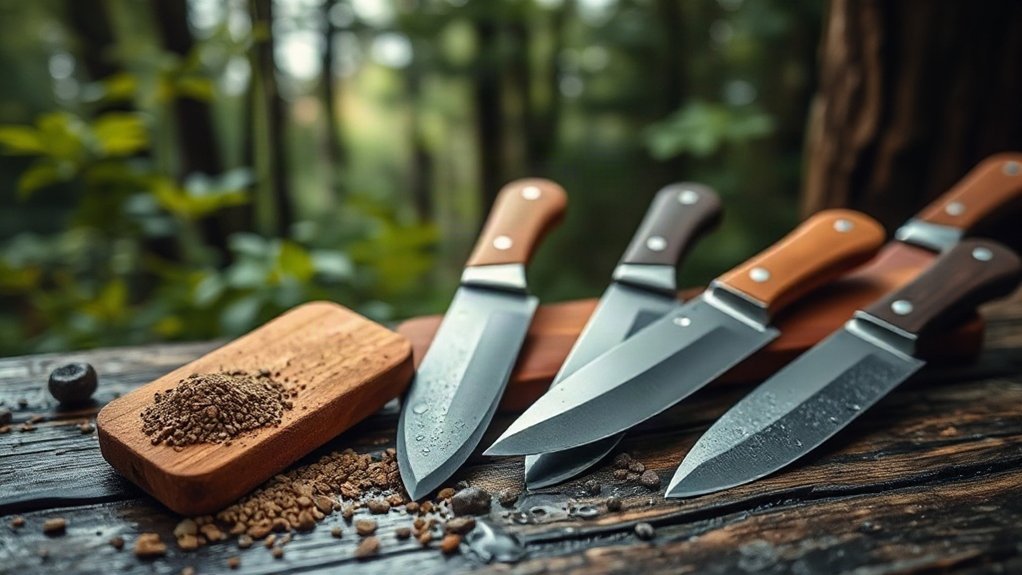
I recommend a compact diamond stone for most outdoor knives because it cuts tough steels efficiently, resists dishing, and needs no soaking or oil. For a versatile kit, choose 300-, 600-, and 1,200-grit surfaces; use the coarse side for chips and the finer sides for routine sharpening. A pocket diamond stone also keeps field maintenance simple and tidy. Match the grit and finish to your knife’s steel and cutting tasks, and I’ll explain how to choose the right setup.
Key Takeaways
- For routine outdoor-knife maintenance, choose an 800–2,000-grit stone; use 1,000–3,000 grit for touch-ups.
- For chips or severe dullness, start with a 220–320-grit stone, then progress to finer grits.
- For stainless, powder, or high-carbide steels, choose durable diamond stones; they cut hard steels efficiently and resist dishing.
- For portability, consider a pocket diamond stone or a compact 6 × 2-inch stone; diamond stones need no soaking.
- Match the finish to the task: a 220–1,200-grit edge suits rope and kindling, while finer grits suit cleaner slicing.
Which Sharpening Stones Suit Outdoor Knives?
For routine outdoor-knife sharpening, I’d choose a medium 800–2,000-grit stone to refine the edge, and keep a coarse 220–400-grit stone for dull blades or chips.
That range lets you maintain an edge on the move without carrying a bulky kit. I’d pack a compact 300-, 600-, and 1,200-grit set when I want options for repairs, sharpening, and touch-ups. For a lighter load, a pocket stone can handle field work; a 3-inch, 200/400-grit aluminum-oxide puck also suits axes and machetes.
Stone material matters when you’re choosing what fits your routine and blade steel. I’d match the stone to the task, then use consistent sharpening angles to preserve the edge. If you want a finer finish, add a 3–6-micron strop, or choose ceramic or bonded diamond stones for high-carbide steels.
Why Diamond Stones Work Well Outdoors
I find diamond stones especially useful outdoors because they sharpen tough, high-carbide steels quickly. Plated stones don’t dish out or need water, so you can sharpen with little mess in the field. A compact coarse-and-fine pair can handle both edge repairs and routine touch-ups.
Durable on Hard Steels
When your outdoor knife uses hard, abrasion-resistant steel, diamond stones sharpen it efficiently because diamond cuts tough carbides more effectively than ceramic. That carbide abrasion matters when you’re maintaining a blade made for demanding work; you don’t have to settle for a stone that struggles with its steel.
Plated diamond stones also resist dishing, so repeated use won’t quickly leave you with an uneven sharpening surface. I value that plating longevity when I’m packing for a trip and need dependable gear. A coarse 220–320-grit stone can restore a dull edge or reshape a bevel, while an 800–1,200-grit stone refines it. Neither needs soaking or water, which gives you more freedom to sharpen in the field. For finer work on high-carbide super steels, I’d choose a bonded diamond stone; 3,000 grit is a typical next step.
Fast Sharpening, Minimal Wear
Hard-steel performance is only part of a good field stone’s appeal: diamond cuts quickly, restoring an outdoor knife with fewer strokes. When I’m away from home, that Rapid stock removal means less time sharpening and more freedom to get back on the trail. Plated diamond stones also handle hard, high-carbide steels that can frustrate softer abrasives.
I value their low surface wear just as much. Unlike water stones, diamond plates don’t dish out, so I can count on a consistent sharpening surface without frequent flattening. They need no soaking or oil, either: I can use one dry or add a splash of water to keep the job simple and clean. For a compact kit, I’d choose a 220–320-grit stone for repairs and an 800–1,200-grit stone for refining edges.
Choose the Right Grit for Your Edge
I match grit to the damage: a coarse stone repairs chips and restores very dull edges, while a medium grit handles routine sharpening. I raise a burr with coarse grit, then progress to finer stones to refine the bevel. For a nearly sharp knife, I use a fine stone to avoid removing extra steel.
Match Grit To Damage
Match the stone’s grit to the damage, because the wrong choice can waste time or remove too much metal. I use a coarse stone to repair damaged edges, not for routine touch ups; it reshapes chips, rolled edges, and severely dull blades. For a dull edge without damage, a moderate grit sharpens the bevel without unnecessary stock removal.
| Edge condition | Suitable grit |
|---|---|
| Chips, rolls, or severe dullness | 80–400 |
| Dull but undamaged | 800–2,000 |
| Maintained edge touch-up | 1,000–3,000 |
Once the edge feels sharp, a fine stone can refine or polish it, but it won’t replace coarse grit for chip repair. I move to a finer stone only after the current one has sharpened the full edge. A burr tells me the bevel has reached the apex, so I can choose my next step with confidence.
Progress From Coarse To Fine
Once you’ve matched the grit to the damage, progress from coarse to fine only after each stone has done its job. For a very dull edge or chips and rolls, I start with 220–320 grit and sharpen until I raise a burr along the full edge. Keep your Sharpening Angle consistent, and use a steady Stroking Direction so you control each pass.
Don’t move on until the knife feels sharp after the coarse stone. Then I refine the edge on an 800–1,200-grit stone. For a light touch-up, I skip coarse grits and use a fine stone; for a more polished finish, I continue to roughly 2,000–5,000 grit. I finish with a 3–6-micron diamond strop to remove burrs, then about 1 micron for refinement. For high-carbide steels, I choose diamond abrasives over ceramic, especially finer than 1,000 grit.
Match Sharpening Stones to Your Knife Steel
Because different steels resist abrasion differently, I choose a stone to suit the blade: water stones or Arkansas stones work well on high-carbon knives, while durable diamond or ceramic stones suit stainless and powder steels. I consider steel composition and carbide structure before I sharpen, so you can choose tools that keep your edge ready for the backcountry. For routine maintenance, I start around 1,000–3,000 grit; if an edge is badly worn or damaged, I begin with 80–400 grit. High-carbide super steels can challenge ceramic abrasives, so diamond cuts them more effectively. For a finer finish on high-carbide steel below 1,000 grit, I use a bonded diamond stone. Match the abrasive to your blade, and you’ll spend less time fighting the steel and more time relying on your knife outdoors.
When to Choose Ceramic or Bonded Diamond
For most outdoor knives, I choose a ceramic splash-and-go stone: it needs no soaking, just a splash of water. That Ceramic splash and go convenience lets me start sharpening without delay. A Shapton Kuromaku 2,000-grit stone offers a practical fine finish, and ceramic options above 5,000 grit can leave an even smoother edge.
When I sharpen modern super steels, ceramic still works, but high hardness and carbide content can slow cutting and make the apex tougher to refine. For those blades, I choose diamond, which cuts hard carbides more effectively. Below 1,000 grit, plated diamond suits the work; for finer sharpening, bonded diamond carbide refinement is the better choice. A 3,000-grit bonded stone is a common next step, though quality 1 × 6-inch stones typically cost $70–$100 each.
Build a Portable Outdoor Knife Sharpening Kit
When I build a portable sharpening kit, I pack a pocket diamond stone: it works on abrasion-resistant steels, needs no water, and makes less mess than a soaking stone. For a compact kit, I’d choose a 6 × 2-inch stone; a three-stone set with 300-, 600-, and 1,200-grit surfaces handles repairs and routine sharpening. When every ounce counts, a 3-inch, 7.8-ounce puck with 200- and 400-grit sides can also service outdoor knives, axes, hatchets, and machetes.
I pack coarse grit to fix chips or revive a very dull edge, then move to finer grit once I’ve established a sharp edge. I keep the stone and knife together with secure storage, so they’re easy to find on the trail. I sharpen with the edge moving away from my body, keeping the process controlled and safe.
Pick an Edge Finish for Your Cutting Tasks
Match the edge finish to the work: I use a coarse-to-medium grit of about 220–1,200 for general outdoor cutting, since a well-apexed edge can feel sharp even straight off a coarse stone. Its toothy bite helps me cut rope, prepare kindling, and handle game processing without fuss. For wood carving or cleaner slicing, I refine the bevel with a finer stone for a smoother finish. A 2,000-grit Shapton Kuromaku ceramic stone needs only a splash of water to get started. After sharpening, I use a 3–6-micron diamond strop to clear leftover burrs and refine the apex; 6-micron diamond works well for everyday needs. If your knife uses high-carbide super steel, I choose diamond abrasives over ceramic for finer finishes, since diamond cuts those hard carbides more effectively.
Frequently Asked Questions
What Is the Best Knife Sharpener for Outdoor Knives?
For outdoor knives, I’d choose the Ultra Sharp II as the Best Sharpener, especially if you use abrasion-resistant steel. Its 300-, 600-, and 1,200-grit diamond stones handle dull edges and careful refinement, giving you reliable performance wherever you roam. If you want guided angles, I’d consider the Lansky system; for maximum precision, the Wicked Edge WE130. For axes and machetes, I’d pack the portable Straight Grain puck, whose Field Durability suits demanding trips.
Should a Knife Sharpening Stone Be Wet or Dry?
Whether your sharpening stone should be wet or dry depends on its type. I wet traditional water stones as directed, often soaking them briefly; splash-and-go stones need only a splash. Waterstone lubrication helps create slurry that carries away metal filings and supports sharpening. I keep splash-and-go ceramics out of soaking water, since it can damage them. Plated diamond stones work dry, simplifying dry stone maintenance, while oil stones need a little honing oil instead.
How to Sharpen a Knife Outside?
I sharpen a knife outside by securing the stone, matching the blade’s bevel, and using light, even strokes. A 300–600-grit stone can restore a dull edge; 800–1,200 grit refines it. Choose a stable outdoor sharpening spot, protect the blade from dirt, and secure the knife safely while sharpening outdoors. I pack a compact sharpening kit and use natural light to check the edge. A consistent angle matters more than speed; finish, wipe, and dry everything before moving on.
Is Diamond or Ceramic Better for Sharpening?
Diamond’s better for hard, high-carbide steels; ceramic’s excellent for most others. In a Diamond vs. ceramic comparison, I’d choose based on your knife’s steel and desired sharpening speed. Diamond cuts tough carbides quickly, while ceramic can take longer on super steels and make a keen apex harder to form. For finer work on those steels, I recommend bonded diamond. For most knives, I like splash-and-go ceramic, such as a 2,000-grit Shapton Kuromaku.
Conclusion
I choose sharpening stones for outdoor knives based on durability, portability, and steel type. A compact diamond stone suits most trips, while ceramic or bonded diamond can refine tougher steels and leave a useful working edge. I carry a medium grit for routine maintenance and a finer option when the task calls for it. Match the finish to your cutting needs, and you’ll be ready to keep your knife sharp when it matters most. A sharp edge is worth its weight in gold.