How Can You Find Affordable Bushcraft Knives Without Sacrificing Quality?
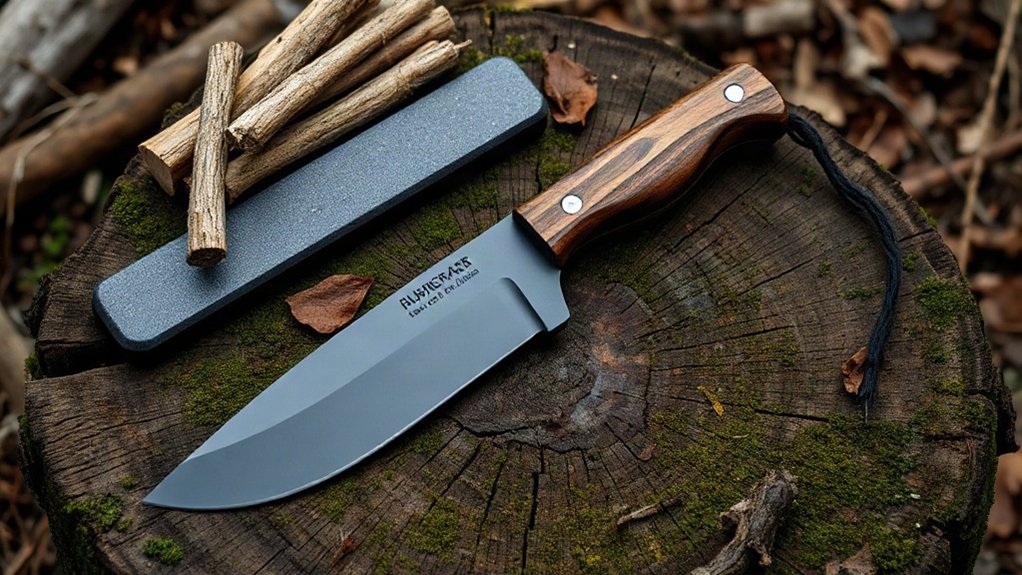
I find affordable bushcraft knives by matching a proven blade to my camp tasks, not by choosing the lowest price. For carving and everyday chores, I look for a 3.5–5-inch blade, reliable steel, and a comfortable grip. A Mora Companion offers practical value, while the Hultafors Craftsman can cost less for basic tasks. I also check construction, sheath quality, and sharpening needs before buying. Comparing these details helps me spot lasting value and choose the right knife for my budget.
Key Takeaways
- Choose a knife for your regular camp tasks; an affordable Morakniv Companion suits carving, food preparation, and lighter chores.
- Compare construction and blade thickness: consider the Companion Heavy Duty, Bushcraft Black, or full-tang Condor Bushlore for tougher work.
- Match steel to your maintenance habits: stainless resists rust, while carbon steel sharpens readily but needs drying and light oiling.
- Check handle comfort, sheath retention, and included accessories; a low price may not cover replacement or upgrade costs.
- Compare current prices and budget for sharpening gear; the Hultafors Craftsman is a lower-cost option for practice.
Find a Quality Bushcraft Knife for Less
If you’re shopping on a budget, match a bushcraft knife to the tasks you’ll actually tackle rather than choosing by price alone. I’d start by listing the camp chores you expect to handle, then compare dependable options instead of trusting flashy claims. The Morakniv Kansbol is light at 3.52 ounces, with a comfortable grip and a sharp, 4.25-inch stainless-steel blade for carving and everyday camp work. The Companion offers another capable, affordable choice, though I’d reserve its non-full-tang design for lighter tasks. If you want a full-tang model, the Condor Bushlore is worth considering. For learning to sharpen without spending much, the Hultafors Craftsman costs less than half as much as the Mora Companion.
Use retail comparisons to check current prices, and consider sales timing before buying. I’d avoid poor-quality imports marketed as bushcraft knives; a trustworthy tool gives you more freedom outdoors and better value over time.
Compare Budget Bushcraft Knife Steel and Build
When comparing budget bushcraft knives, look at build as closely as steel: the Mora Companion uses rust-resistant Sandvik 12C27 but isn’t full tang, while the Condor Bushlore pairs a full tang and Scandi grind with a 4.3-inch high-carbon-steel blade. I weigh steel toughness, care, and tang construction before choosing a tool for independent trips.
| Knife or steel | Build and upkeep |
|---|---|
| Mora Companion | 12C27 stainless; not full tang |
| Companion Heavy Duty | 3.2 mm blade; standard is 2.5 mm |
| Condor Bushlore | Full tang; high-carbon steel |
| Hultafors Craftsman | Carbon or stainless; useful for sharpening practice |
Stainless steel needs less rust prevention, which suits damp outings. Carbon steel, including 1095, is easy to touch up, but I dry it and apply light oil to prevent rust. The Bushlore’s full tang may appeal if you value a continuous handle-and-blade build; the Companion keeps cost and maintenance simple. I’d match the knife’s construction and care demands to your own priorities, rather than assuming a higher price guarantees better field reliability.
Match Blade Size and Grind to Your Tasks
I’d start with a 3.5–5-inch blade for carving and everyday camp chores, then size up if your tasks need more reach. I’d choose a Scandi grind for controlled wood carving or a full-flat grind for slicing and food prep. Consider blade thickness, too: thicker blades split wood better, while thinner ones slice more easily.
Match Size to Tasks
What will you use your knife for most? I’d start by matching blade length to the work you actually do, not the biggest task you can imagine. For carving and each camp chore, a blade around 3.5–5 inches offers useful reach without giving up carving control. It’s a flexible range for camp life and easier to manage during fine cuts.
When I expect larger jobs, I might choose a 6.5-inch ESEE 6 or an 8-inch Ka-Bar Fighter. The extra length helps, but I’d accept less precision for detailed work. Think honestly about batoning, too: a thicker blade can split wood, yet adds weight and may slice less easily. If you value a lighter, more versatile setup, choose for your regular tasks and carry only the size you need.
Choose a Suitable Grind
For controlled wood carving, I’d choose a Scandi grind: its broad bevel is easy to sharpen and helps guide precise cuts. I value that carving control when shaping tent pegs, feather sticks, or simple camp tools, and I appreciate the sharpening ease when I’m away from home.
If your routine includes slicing food and handling varied camp chores, I’d consider a full-flat grind instead. It suits those jobs well and gives you a versatile option without locking you into one style of work.
For carving and everyday camp tasks, I’d start with a blade around 3.5–5 inches. A longer blade, such as the 6.5-inch ESEE 6, gives you more reach for larger jobs, but it can feel less handy for fine cuts. Match the grind and size to your main tasks; extra thickness helps with splitting, yet adds weight and can hinder slicing.
Check the Handle, Sheath, and Included Gear
I check that the handle feels secure and comfortable in the conditions where you’ll use it. I also inspect the sheath’s retention and build quality, since a weak sheath may add replacement costs. Finally, I compare included accessories, such as the TOPS BOB’s ferro rod, which the standard Morakniv Kansbol sheath lacks.
Handle Grip and Comfort
How a knife feels in hand can matter as much as its edge, especially when weather or long work makes grip harder to maintain. I check palm comfort and wet grip before choosing a bushcraft knife; secure control gives me more freedom to work confidently outdoors.
- Textured rubber or polymer can help when rain or cold makes a handle slippery. The Morakniv Kansbol’s rounded, rubbery polymer handle feels comfortable and secure, and its 3.52-ounce weight keeps it light.
- Contours and spine jimping can steady my hold. The TOPS BOB Fieldcraft’s contoured G10 handle supports comfortable control, while the Mini Bushcrafter’s smooth G10 contours to the fingers. I’d test either in hand, since fit varies.
- A hefty handle may suit some hands: the Ka-Bar Fighter’s slightly rubberized Kraton G offers substance. For smoother Micarta or G10, I look for helpful contours or added texture before committing.
Sheath Security and Quality
A bushcraft knife is only as dependable as its sheath and included gear, so I check retention before carrying it. I want secure carry that lets me move freely without worrying that my blade will slip loose. Sheath retention testing should include careful draws and checks for a reliable fit. The TOPS BOB Fieldcraft’s sheath is especially tight, but the tested Ka-Bar Fighter 1269 had inconsistent retention and cheap snaps. Confirm the exact package before buying: current versions may include a newer hard-plastic sheath.
I also factor sheath replacement costs into the knife’s real price. The ESEE 6 sheath is a known weak point, and some owners choose to replace it. Check the handle’s comfort and grip, too: the Kansbol’s rubbery polymer feels comfortable, while the TOPS BOB uses contoured G10.
Included Gear and Accessories
Included gear can change a knife’s real value, so I check the sheath, extras, and handle before buying. A good bundle saves money and helps me head outdoors prepared, but cheap accessories can limit that freedom.
- Check the sheath material and retention. The Condor Bushlore includes leather; the Mora Companion and Bushcraft Black use molded plastic. I’d inspect any sheath closely: the tested Ka-Bar Fighter 1269 had cheap snaps and inconsistent retention, and I might replace the ESEE 6 sheath.
- Compare useful extras. The TOPS BOB Fieldcraft sheath includes a ferro rod; the Kansbol’s standard sheath doesn’t. The Uncharted Supply Co Empire adds a sharpener and ferro rod, though its sheath feels relatively cheap. I’d bring a sharpening stone if needed.
- Test the handle. The Kansbol’s rounded, rubbery polymer grip and the Bushcraft Black’s comfortable grip suit long use; the Bushmaster Survival’s wood scales and brass pins offer another feel.
I prioritize fit and function over extras.
Compare Affordable Bushcraft Knives by Use
Which affordable bushcraft knife suits your work best? I match a blade to the tasks that give me freedom outdoors, rather than paying for features I won’t use.
| Use | Affordable pick |
|---|---|
| Carving and camp chores | Morakniv Companion |
| Tough general bushcraft | Morakniv Bushcraft Black or Condor Bushlore |
The Companion’s 4.1-inch stainless-steel Scandi blade and 4.1-ounce weight with sheath make it easy to carry. Its carving suitability is strong, and it can handle food preparation and everyday camp tasks. For tougher work, the Bushcraft Black adds a 90-degree spine, comfortable grip, and 4.3-inch blade; it weighs 5.7 ounces with sheath. The full-tang Bushlore pairs a 4.3-inch high-carbon-steel blade with a leather sheath.
I’d choose the 2.8-ounce Mora Eldris for compact camp use, or the 5-ounce Old Hickory 7-7 for larger jobs. Its 7-inch blade suits bigger cuts, but it comes without a sheath.
Choose a Knife for Your Experience Level
How much should you spend while you’re still learning? I’d start with an affordable knife under £100. At a beginner skill level, you need room to practise safe handling, cleaning, care, and sharpening—not an expensive blade to worry about. Build knife handling experience first, then choose a pricier model when you know which features fit your needs and outdoor plans.
- Keep it simple: The Mora Companion is a capable general-purpose student knife, available in carbon or stainless steel. It isn’t full tang, but that doesn’t stop it being a practical first choice.
- Seek extra sturdiness: The Mora Companion HD has a 3.2 mm blade. For full-tang construction, consider the Condor Bushlore, with its 110 mm high-carbon-steel blade and Scandi grind.
- Learn to sharpen: The Hultafors Craftsman costs less than half as much as the Companion and comes in carbon or stainless steel.
I’d pick a knife I can practise with confidently, then upgrade when experience—not impulse—guides me.
Avoid Hidden Costs When Buying a Bushcraft Knife
A low sticker price can hide costs in the sheath, maintenance and sharpening. I check what comes in the box before I buy. The Mora Kansbol’s standard sheath lacks a sharpener; its separate Survival Kit adds one and a ferro rod, so compare the full package with your needs.
I also count upkeep among Ownership costs. A 1095 carbon-steel blade needs drying and light oil to resist rust. Stainless Sandvik 12C27, used in the Kansbol, takes less corrosion care. Sharpening matters, too: CPM-S30V holds an edge well, but takes more effort to sharpen. A compact Work Sharp Guided Field Sharpener can help in camp.
Inspect the sheath’s fit and hardware, because replacement expenses can erase a bargain. The tested Ka-Bar Fighter 1269 sheath had unreliable retention and cheap snaps; the ESEE 6 sheath may need replacing. I don’t trust a low price alone: some cheap imports sold as bushcraft knives are poor quality. Compare total costs, then choose gear that keeps you free to roam.
Frequently Asked Questions
What Is the Best Budget Bushcraft Knife?
I’d choose the Morakniv Kansbol as the Best budget blade and my top value knife selection. Its 4.25-inch Sandvik stainless-steel blade holds an edge, while the comfortable grip and Scandi grind make carving and camp slicing easy. I also like its 90-degree spine for scraping and ferro-rod sparks. At just 3.52 ounces, it won’t weigh you down. Its partial tang limits heavy-duty work, and you’ll need to buy the sharpener separately.
What Is the Best All-Around Knife for Bushcraft?
I’d choose the TOPS BOB Fieldcraft as the best all-around bushcraft knife. Its 4.75-inch 154CM stainless-steel blade gives you a capable balance for carving, splitting, and fire-starting, while its contoured G10 grip offers reassuring handle comfort. At 10.5 ounces, it’s heavier than similar-sized knives, but I value its edge retention, controlled blade shape, and jimped spine. You can also use it for feathersticks and field dressing, though its sheath holds tightly.
What Are Some Good Quality, Inexpensive Knives?
I’d shortlist the Morakniv Companion, Bushcraft Black, Kansbol, Hultafors Craftsman, and Condor Bushlore for quality at a low price. The Companion suits everyday camp tasks; the Bushcraft Black feels sturdier, while the lightweight Kansbol slices and carves well. I’d choose the Craftsman to practice sharpening or the Bushlore for full-tang construction. Compare Budget knife materials and Reliable handle construction before buying, so you can pick a dependable tool that fits your skills and budget.
Where Can I Find Bushcraft Knives for Sale?
I find bushcraft knives where open trails meet online shelves: at specialist bushcraft knife retailers like Knives of the North, and on secondhand knife marketplaces. Knives of the North sells Mora Companion, Bushcraft Black, Kansbol, and full-tang Garberg Survival knives, and offers a price-match guarantee on Scandinavian knives. You can also check Amazon for Mora and Hultafors options. I’d compare condition, price, and intended use before choosing a knife for your next adventure.
Conclusion
I find an affordable bushcraft knife by judging the whole tool, not the price tag: steel, heat treatment, grind, handle, and sheath all matter. The theory that cheap always means poor quality doesn’t hold; a simpler design from a reputable maker can outperform a costly knife loaded with extras. I match blade and build to my tasks, then check replacement and shipping costs. Choose carefully, and a budget knife can serve reliably without paying for features you won’t use.