Which Bushcraft Knives Are Lightweight Enough for Backpacking?
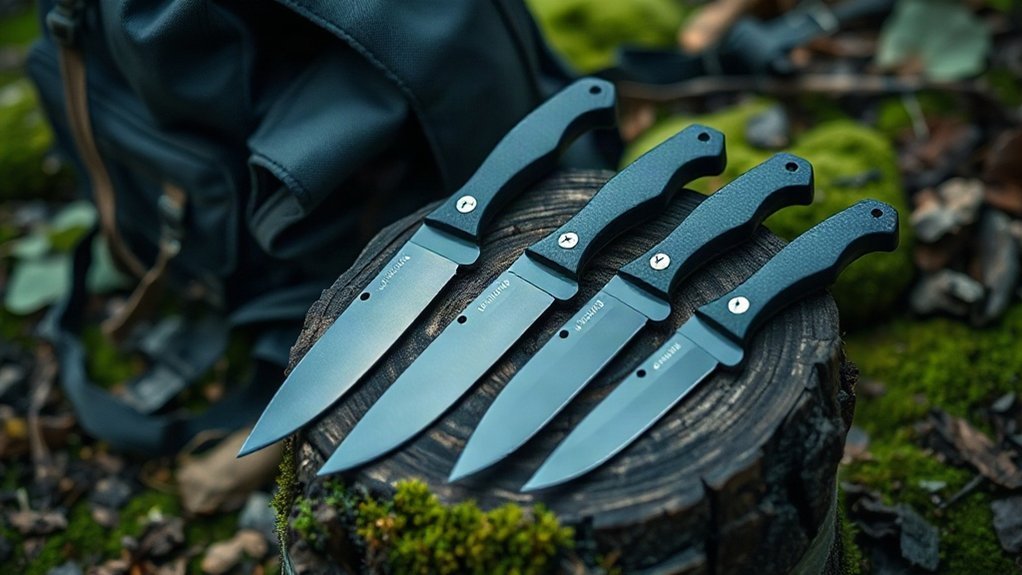
I’d look for a backpacking knife under 3 ounces, ideally with a 2.5- to 3-inch blade for a useful balance of control and cutting ability. Lightweight options include the 1.5-ounce Benchmade Mini Bugout, 1.1-ounce ULA Alpha with sheath, and 1.2-ounce Opinel No. 06. I’d compare each knife’s full carry weight, including its sheath, and choose a secure grip and dependable lock for the jobs I expect. A few details can help narrow the choice.
Key Takeaways
- For most backpacking chores, look for a knife with a 2.5–3-inch blade that weighs under 3 ounces.
- The ULA Equipment Alpha weighs 1.1 ounces with its sheath and has a 2.5-inch blade.
- The CRKT Folts Minimalist weighs about 1.8 ounces without its sheath; its 2.16-inch blade suits light tasks.
- The ESEE Izula weighs about 2 ounces bare, but its sheath adds weight and bulk.
- Compare full knife-and-sheath weight, and choose a secure grip suited to your tasks.
What Should You Look for in a Backpacking Knife?
For most backpacking tasks, I look for a knife with a 2.5- to 3-inch blade that weighs under 3 ounces—enough for food prep and cutting cord or tape without adding much to my pack. That size gives you useful control without making your kit feel cumbersome.
I also consider how the knife handles. Grip security matters when your hands are wet or you’re working near your fingers, so I choose a handle I can hold firmly. On a folding knife, I want a dependable lock; I wouldn’t trust a non-locking folder for tasks that need a stable grip. Tang strength matters too, but I match construction to the job rather than carrying more knife than I need. A compact folder often covers camp chores without the bulk of a fixed-blade sheath. If I expect heavier wood processing beyond carving, I bring a suitably sized fixed blade. For damp trips, I favor corrosion-resistant steel such as LC200N; carbon steel needs prompt cleaning and drying.
How Light Can a Backpacking Knife Be?
A backpacking knife can weigh well under an ounce: the non-locking Spyderco Honeybee weighs just 0.56 ounces, though its blade is only 1.625 inches long. That’s close to the minimum viable weight, but you’ll want to weigh what you give up to get there.
For a more substantial folder, I’d weigh the 1.5-ounce Benchmade Mini Bugout. Among fixed blades, the ULA Equipment Alpha weighs 0.9 ounces without its sheath and 1.1 ounces with it. The ESEE Izula comes in at 2 ounces without a sheath, while the CRKT Folts Minimalist weighs about 1.8 ounces before you add one.
I’d aim for under 3 ounces for most backpacking tasks. That leaves room to choose a practical knife without burdening your pack. Check the full carry weight, including the sheath, and decide which weight tradeoffs fit your needs. A few ounces can buy more capability while keeping you free to travel light.
What Blade Length Works for Trail Tasks?
What blade length handles the most trail chores without adding unnecessary bulk? I find 2.5–3 inches a practical target for backpacking. That span gives you room to cut food, wrappers, duct tape, and small branches while keeping your knife compact. Blade length affects both control and reach, so I’d match it to the work you actually expect on trail.
A 2.5–3-inch blade offers a practical balance of trail-ready cutting ability, control, and compact carry.
- For precise chores, a 2.875-inch Spyderco Delica 4 handled whittling, boring holes, and fire-starting, though I found it less suited to slicing food.
- For balanced Task suitability, a 3-inch Kershaw Leek worked well for food prep and most backpacking tasks.
- If compact carry matters most, the ULA Equipment Alpha’s 2.5-inch fixed blade keeps bulk down, but it’s shorter than average.
A longer 3.35-inch Opinel No. 8 sliced and chopped well, yet adds length beyond many trail needs. I’d choose the shortest blade that still gives you confidence and freedom to handle your regular camp chores.
Which Lightweight Folding Knives Suit Backpacking?
Once you’ve settled on a blade length, the right folder comes down to weight, grip, and lock security. I’d choose the 2.5-ounce Spyderco Delica 4 for a balanced trail companion: its 2.875-inch VG-10 blade, secure back lock, and easy one-handed opening keep routine tasks simple.
If every ounce matters, the 1.5-ounce Benchmade Mini Bugout pairs a 2.8-inch CPM-S30V blade with a compact Grivory handle. That thin handle can flex, so I’d test its grip before relying on it for demanding work. The 1.2-ounce Opinel No. 06 costs little and offers a 2.9-inch stainless-steel blade with a lockable beechwood handle.
For minimal cutting, the 0.56-ounce Spyderco Honeybee saves weight, but its nonlocking blade isn’t my pick for whittling. I’d skip the 3-ounce Kershaw Leek for backpacking; its slick handle adds concern despite assisted opening and a tip lock. Check folding mechanisms, lock security, and Pocket clip carry before choosing your freedom-friendly folder.
Which Lightweight Fixed-Blade Knives Suit Backpacking?
For a fixed blade, I’d compare the full carry weight and packed size, sheath included. That gives you a truer sense of what you’ll carry on the trail and how freely you can move.
- The ULA Equipment Alpha is exceptionally light: 0.9 ounces bare, or 1.1 with its plastic sheath. Its 2.5-inch Nitro-V blade suits small camp chores.
- The CRKT Folts Minimalist weighs about 1.8 ounces without its sheath and has a 2.16-inch blade. I’d choose it for light tasks, not heavy wood processing.
- The ESEE Izula weighs 2 ounces without its sheath; the sheath adds bulk. Optional scales or paracord can improve its grip. The Izula II weighs 3.2 ounces with handle and sheath, and managed mild batoning.
For Lightweight fixed blade durability, match the blade to your workload; don’t expect a tiny knife to replace a larger tool. Consider minimalist knife ergonomics, too: a secure, comfortable grip matters when you’re working outdoors.
Is the ESEE Izula Right for Lightweight Bushcraft?
The ESEE Izula offers more capability than a tiny minimalist blade, but its fixed-blade carry setup may not suit every ultralight kit. At 2.875 inches and about 2 ounces without its sheath, it balances compact size with useful bushcraft strength. I’d weigh the complete carry system, not just the bare knife:
| Feature | Backpacking trade-off |
|---|---|
| Bare knife | About 2 ounces |
| Molded sheath | Adds weight and bulk |
| Handle options | Scales or wrap improve comfort |
The skeletonized handle can feel bare, so Micarta scales or a paracord wrap may improve Handle comfort. The Izula II offers a longer handle, though it weighs 3.2 ounces with handle and sheath. For carry convenience, I’d compare that added security and access with the freedom of a lighter folder.
Its coated 1095 steel is tough, but I’d clean and dry it to prevent corrosion. Choose the Izula for light bushcraft and carving; skip it if short blades and fixed-blade carry constrain your ultralight kit.
Which Backpacking Knife Handles Food and Camp Chores?
When I’m preparing meals and handling routine camp chores, I look for a folding knife with a 2.5–3-inch blade that weighs under 3 ounces—a practical balance of cutting ability and pack weight. The right choice depends on whether you value Food slicing, camp whittling, or simple convenience most.
- The 2.5-ounce Spyderco Delica 4 has a 2.875-inch VG-10 blade that handles precise whittling well. Its shorter edge isn’t ideal for slicing larger ingredients.
- The 1.6-ounce Opinel No. 8 weighs little and has a 3.35-inch stainless blade. I’d choose it for slicing and chopping food, though it exceeds my preferred blade length.
- The 3-ounce Kershaw Leek’s thin 3-inch blade slices effectively, but its slick handle feels less secure during tougher chores.
For opening packages, the 0.7-ounce Victorinox Classic SD is handy, yet its 1.25-inch blade makes vegetable chopping and wood carving awkward. I’d match the knife to my camp menu and tasks, keeping my kit light without giving up useful freedom.
How Much Weight Do a Knife and Sheath Add?
When I compare knives, I check knife-only weight first, then weigh the sheath separately. That added weight can change a light blade’s total carry weight more than you’d expect. I’ll use a few examples to show what you’ll actually pack.
Knife-Only Weight
A knife’s listed weight can hide the extra ounces of its sheath, so I compare the full carry weight before choosing. For backpacking, I focus on blade weight and tang weight, then check what I’ll actually carry. A folding knife can simplify the choice because it needs no separate sheath:
- The Benchmade Mini Bugout weighs 1.5 ounces; the Spyderco Delica 4 weighs 2.6 ounces.
- The fixed-blade ULA Equipment Alpha weighs 0.9 ounces bare, or 1.1 ounces with its 0.2-ounce plastic sheath.
- The ESEE Izula weighs 2 ounces without its sheath; one test put the Izula II at 3.2 ounces with handle and sheath.
For maximum freedom on the trail, compare complete setups, not bare-knife figures. The Kestrel Ti Minimalist totals 14 grams with its sheath, versus 36.5 grams for the KA-BAR Johnson River Piggyback.
Sheath Weight
Bare-knife weight is only part of the load; the sheath can add ounces and take up pack space. I check the full carry setup before choosing a backpacking blade, because every ounce can limit how freely I roam.
The ULA Equipment Alpha rises from 0.9 ounces bare to 1.1 ounces with its 0.2-ounce plastic sheath. The ESEE Izula II weighs 2.2 ounces as a knife and 0.8 ounces in its sheath, for 3.2 ounces with handle and sheath. Its molded sheath also occupies pack space, so I consider how it carries beside a folding knife. The CRKT Folts Minimalist starts around 1.8 ounces without its sheath, which adds weight. By contrast, the Kestrel Knives Ti Minimalist weighs 14 grams including its sheath. Check Sheath material and attachment method before packing.
Total Carry Weight
On the trail, I compare a knife and its sheath as one carry system, not just the blade alone. That total tells me the real packed weight and carry burden I’m choosing, especially when every ounce competes with food, water, and freedom to roam.
- The ULA Equipment Alpha rises from 0.9 ounces bare to 1.1 ounces with its 0.2-ounce sheath—a small, clear addition.
- The ESEE Izula weighs 2 ounces alone, but its molded sheath adds weight and bulk; an Izula II test measured 3.2 ounces with handle and sheath.
- The Kestrel Ti Minimalist totals about 0.5 ounces sheathed; the KA-BAR Piggyback weighs about 1.3 ounces.
I also weigh folding options: the Mini Bugout is 1.5 ounces, while the Delica 4 Lightweight is 2.6.
Which Knife Steel Needs the Least Trail Maintenance?
For the least trail maintenance, I’d choose LC200N: its high corrosion resistance suits damp trips when cleaning and oiling are inconvenient. That freedom matters when I’d rather keep moving than worry about rust. With LC200N maintenance, I still wipe the blade clean when I can, but I don’t need to treat it like carbon steel after every wet task.
MagnaCut is another strong choice. It pairs corrosion resistance with toughness and good edge retention, so MagnaCut upkeep stays simple on extended trips. I’d also consider CPM-S30V, which resists rust and holds an edge well, though its sharpening difficulty can frustrate me if it dulls far from home.
AUS 8A resists rust and sharpens more easily than D2, but I’d expect to touch up its edge sooner. I’d skip 1095 if minimal care is my goal: its exposed edge needs cleaning and drying to prevent rust. For carefree travel, I’d prioritize stainless steel.
When Is a Backpacking Multitool a Better Choice?
When can a multitool earn its extra weight on a backpacking trip? I choose one when its tools let me leave other gear behind, making gear replacement worthwhile. The Leatherman Signal packs pliers, a saw, an awl, a 420HC blade, a ferrocerium firestarter, and a hammer into one tool. At 7.5 ounces, it weighs substantially more than a dedicated knife, so weigh the multitool tradeoffs against your freedom to travel light.
Choose the Signal when its built-in tools let you leave other gear behind; at 7.5 ounces, it’s no lightweight substitute for a knife.
- Leave a separate firestarter behind: the Signal’s ferro rod helps me start campfires.
- Skip a saw or hammer when the built-in saw and hammer can handle trail chores, including cutting wood and pounding tent stakes.
- Use the blade and saw without unfolding the pliers for quicker camp tasks.
I’d still carry a dedicated knife if low weight or easy food slicing matters most. The Signal’s short, partly serrated blade isn’t ideal for every meal. Check whether your package includes a sheath or bit kit; the listed weight excludes a pouch.
Frequently Asked Questions
What Are Some Good Ultralight Knives for Backpacking?
I’d consider the Spyderco Honeybee (0.56 oz) or Victorinox Classic SD (0.7 oz) for simple tasks; both keep your pack light, though neither suits heavy cutting. For more capable Minimalist Blade Options, I’d choose the ULA Alpha (1.1 oz with sheath) or locking Opinel No. 06 (1.2 oz). The Deejo Wood 37g offers a longer blade at 1.3 oz. These Knife Weight Tradeoffs let you balance freedom and function.
What Is the Holy Trinity of Pocket Knives?
The “holy trinity” of pocket knives? I’d say it’s the Spyderco Delica 4, Kershaw Leek, and Opinel No. 8—though no pocket-knife pope has canonized them. My Knife collecting philosophy favors freedom of choice, not commandments carved in steel. Each brings a different strength: all-around utility, fast opening, or lightweight food slicing. Their contrasts reflect pocket knife history, where practical design keeps evolving. Pick the one that serves your adventures—and leave the dogma at home.
What Is the Best Knife for Backpacking?
I’d choose the Spyderco Delica 4 Lightweight as the best backpacking knife for most trips. Its 2.6-ounce knife weight keeps your pack light, while the 2.9-inch VG-10 blade offers dependable blade durability for camp chores. The secure back lock also gives me confidence during cuts. If you value even less weight, consider the Mini Bugout; for a lower-cost option, I’d pick the KA-BAR Dozier. Choose the blade that lets you roam freely.
What Is the Best Multitool for Ultralight Backpacking?
The Leatherman Signal is my best multitool pick for ultralight backpacking—a compact Swiss Army knife for camp chores, though its 7.5 ounces aren’t truly ultralight. In lightweight multitool comparisons, I’d weigh its pliers, locking 2.73-inch blade, saw, firestarter, whistle, sharpener, and bit drivers against the freedom of carrying less. For ultralight tool selection, I’d choose it only if those extras replace other gear; check whether your package includes a sheath or bit kit.
Conclusion
A backpacking knife is more than a cutting edge; it’s a small promise that you can handle what the trail brings. I choose one light enough to carry without resentment, yet capable enough for food, cord, and camp chores. A folder may suit a minimalist’s miles; a fixed blade may offer reassuring strength. Either way, I weigh the whole kit, including its sheath. The best knife doesn’t burden the journey—it quietly helps me move through it with confidence and care.