How Do You Maintain Multitools to Prevent Rust and Tool Damage?
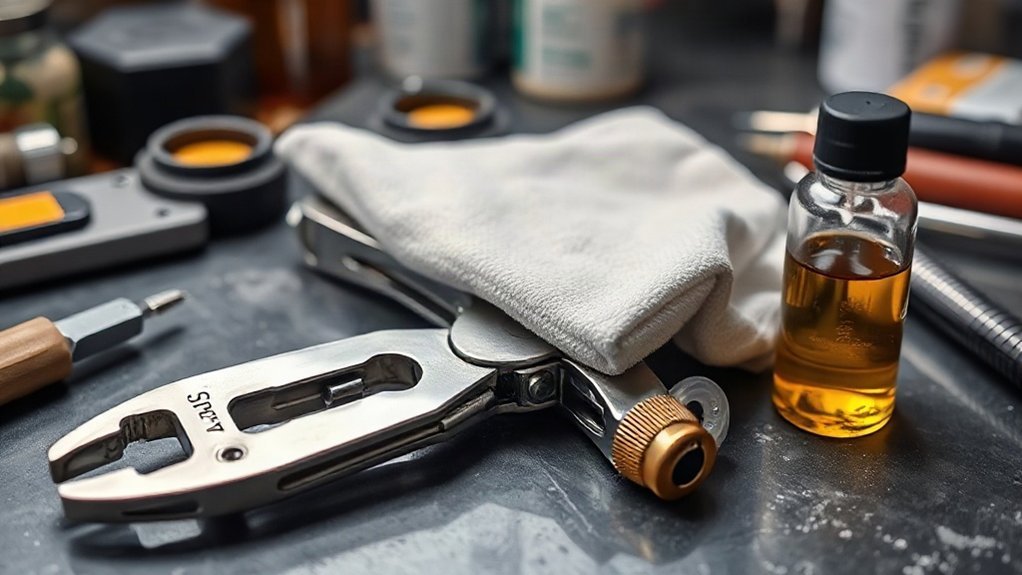
I clean my multitool after every use, wiping away dirt and promptly removing acidic fruit juice or grit. After saltwater exposure, I rinse it with fresh water, then dry the blade, joints, and pivots completely before storing it. I check for rust and treat light spots gently with maintenance oil and a soft cloth. Once dry, I lubricate moving parts, wipe away excess, and store the tool somewhere dry. I also inspect blade edges and avoid damaging cleaning habits. The next steps can help keep it dependable.
Key Takeaways
- Wipe dirt and debris from the multitool after use; promptly clean blades after cutting fruit or branches, and rinse off saltwater.
- Clear grit from pivots gently, then dry every surface, joint, and moving part completely before storing.
- Apply a small amount of purpose-made maintenance oil to the dry blade and pivots; wipe away excess to avoid attracting grime.
- Check for rust, dull spots, and chips; remove light rust gently and sharpen blades using a suitable method.
- Store the clean, dry tool in a dry case or toolbox; avoid damp spaces and olive oil.
Clean Your Multitool After Every Use
After each use, I wipe my multitool with a microfiber cloth to keep dirt and debris out of its pivots and moving parts. This simple debris removal helps me keep the tool ready for the next task, whether I’m fixing gear at camp or handling everyday repairs. During pivot inspection, I check for trapped grit that could make a joint stiff. I clear it carefully with compressed air or a wooden skewer, restoring smooth movement without forcing the tool. I clean the blade promptly after cutting fruit or branches because their acidic juices can corrode steel. If salt water gets on my multitool, I rinse it with fresh water. Before storing it, I remove grime and moisture. Stainless steel resists rust, but it isn’t rust-proof, so regular cleaning protects its freedom to serve wherever I go.
Dry Your Multitool, Including Its Joints
Once I’ve rinsed off salt water or cleaned a blade, I dry my multitool thoroughly before storing it. I open each implement and wipe around the moving parts with a clean, dry microfibre cloth. This simple hinge care keeps trapped water and dirt from restricting movement or encouraging corrosion.
I pay close attention to pivot moisture, since a damp joint can be easy to miss. If grit sits in a pivot, I clear it with compressed air or a wooden skewer, then check that the area is dry. When my tool gets wet, I dry it promptly and apply a little maintenance oil to the joints. That helps guard against rust and keeps the implements moving smoothly, so I can rely on my multitool wherever the day takes me.
Prevent Rust After Wet Use
When rain or salt water soaks my multitool, I rinse it with fresh water to remove corrosive salts, then dry it thoroughly before storing. This simple habit helps keep my gear ready for the next trip, wherever the trail leads.
| Situation | My action | Why it helps |
|---|---|---|
| Salt water | Rinse Away Salt | Removes corrosive residue |
| Wet tool | Dry Immediately | Limits trapped moisture |
| Fruit or branches | Clean promptly | Clears acidic juices |
I wipe the blade, joints, and pivots with a clean microfibre cloth, where moisture and dirt can hide. Once dry, I apply a little maintenance oil to the blade and moving parts. That protects against rust and keeps hinges moving smoothly, so I can rely on my multitool outdoors. I don’t leave it damp in a pocket or pack; quick care preserves its freedom-ready function.
Remove Rust Without Damaging Steel
I first assess the rust: a drop of maintenance oil and a gentle wipe often clears light spots. For stubborn rust, I use an abrasive sponge with light pressure, or a rust eraser for difficult stains, knowing it may dull the steel. Once I’ve removed the rust, I wipe away residue and apply maintenance oil to protect the cleaned surface.
Assess Rust Severity
How severe is the rust? I first check its color, spread, and texture, then look closely at Rust depth and any steel pitting. A light orange film that wipes away usually calls for little intervention. Dark, stubborn spots or visible pits suggest deeper corrosion, so I avoid treating every mark the same way.
For light rust, I apply a drop of maintenance oil and wipe the area with a cloth. If a spot remains, I use an abrasive sponge gently, watching for scratches. For difficult stains, I may try Flitz or a Naniwa Rust Eraser; both can lightly abrade steel and leave its finish dull. On cast iron, I use WD-40 and hand-sand surface rust with 600-grit wet/dry paper on a block, then wipe clean. I choose the least aggressive approach that works, preserving steel and finish.
Choose Gentle Abrasives
To remove rust without damaging steel, I start with the gentlest method: a drop of maintenance oil and a soft cloth. I wipe lightly, then inspect the spot. If rust remains, I choose mild abrasives and use only light pressure, so I can preserve surface finish and keep my multitool ready for the next outing.
| Rust condition | My approach |
|---|---|
| Light rust | Oil and soft cloth |
| Lingering rust | Abrasive sponge, light pressure |
| Stubborn stains | Flitz polish or Naniwa Rust Eraser |
I avoid aggressive scrubbing: even successful abrasion can leave steel dull. I work patiently, stopping as soon as the rust lifts. After treatment, I wipe the tool clean and reapply maintenance oil to help protect the steel. This careful approach gives me dependable gear without unnecessary wear.
Protect Cleaned Steel
Once the rust is gone, I wipe away dirt and residue, then dry the steel thoroughly before applying oil. Moisture in a pivot or on a blade can bring rust back, so I check every surface and joint before moving on. For light rust, I add a drop of maintenance oil and gently wipe with a cloth. I use an abrasive sponge only on stubborn spots, keeping scratches to a minimum. If stains persist, Flitz or a Naniwa Rust Eraser can help, though either may lightly abrade the finish and leave it dull. I avoid aggressive sanding and wire brushing; removing rust shouldn’t mean stripping away steel or freedom from a reliable tool. Finally, I spread a thin oil film as a steel barrier, helping protect the metal and keep moving parts smooth.
Protect Your Multitool From Rust
I keep my multitool dry, especially after contact with salt water, sweat, or acidic juices. I rinse away corrosive residue, clean the tool, and dry it thoroughly after use. I also apply a little maintenance oil now and then to help prevent rust and keep the pivots moving smoothly.
Keep It Dry
After using your multitool in salt water, rinse it with fresh water and let it dry completely, since salt can corrode even stainless steel. I don’t let a damp tool sit in a sheath or pocket; trapped moisture can damage its metal and moving parts. After cutting fruit or branches, I dry the blade because acidic juices can encourage corrosion. I also wipe the tool regularly with a microfiber cloth, paying attention to pivots where moisture and residue can linger. For extra protection, I occasionally apply a suitable maintenance oil, such as Ballistol or Nano Oil. If I spot light rust, I put a drop of oil on a cloth and gently wipe the area. Once dry, store your multitool in a dry place. Dry Storage supports Moisture Prevention—and keeps your gear ready for the freedom to go anywhere.
Clean After Use
Even stainless steel can rust when salt, acidic juices, or grime linger on your multitool. I clean mine after each outing so you can keep yours ready for wherever the day leads. Wipe away residue with a microfibre cloth, especially after cutting fruit or branches; acidic juices can corrode the blade. If salt water touches your tool, rinse it with fresh water, then dry every surface thoroughly before storing it.
To clear pivot grit, blow sand and dirt out with compressed air or carefully lift it away with a wooden skewer. This keeps the joints moving freely instead of letting debris obstruct them. Stainless steel resists rust better than carbon steel, but it isn’t rust-proof, so don’t leave moisture or grime behind. Once clean and dry, apply a little maintenance oil to protect the metal and pivots.
Apply Rust Protection
Once your multitool is clean and completely dry, apply a small amount of maintenance oil to protect its steel and keep the pivots moving smoothly. I use Skerper oil, Ballistol, or Nano Oil, working a little into the joints and wiping away excess. That quick step helps keep your tool ready for the trail, workshop, or whatever comes next.
- After rinsing salt water or cleaning acidic fruit and tree juices, dry every surface thoroughly; moisture, salts, and acids invite corrosion.
- Remember stainless limitations: stainless steel resists rust better than carbon steel, but it isn’t rust-proof. Check blades and joints for corrosion indicators, such as small orange spots.
- For light rust, gently wipe the spot with an oil-dampened cloth. Use abrasive sponges cautiously; for stubborn stains, Flitz or a Naniwa Rust Eraser may help, though they can dull the finish.
A little care preserves your freedom to rely on your multitool anywhere.
Lubricate Pivots After Drying
Let your multitool dry completely after rinsing away salt water or acidic residue, then apply a small amount of maintenance oil to the pivots to help prevent rust and keep them moving smoothly. I use a few drops, then wipe off excess so the tool isn’t greasy.
| Task | Guidance | Benefit |
|---|---|---|
| Dry | Wait until fully dry | Limits trapped moisture |
| Clean | Remove sand or dirt | Prevents gritty movement |
| Choose oil | Try Skerper, Ballistol, or Nano Oil | Protects pivots |
| Apply | Add a small amount | Supports smooth motion |
| Wipe | Remove excess oil | Keeps surfaces clean |
For Pivot oil selection, choose a suitable maintenance oil you can carry on your trips. Set lubrication frequency by use and exposure: oil periodically, especially after rinsing or dusty outings. Clean debris first, and you’ll keep your multitool ready for independent adventures.
Sharpen Blades and Check the Edges
After oiling the pivots, I check each sharpenable blade for dull spots, chips, or other damage. This edge inspection helps me keep my multitool ready for the work ahead and avoid relying on a compromised blade. If an edge feels blunt, I sharpen it with a suitable method, following a dedicated multitool sharpening guide to protect its profile.
> Check each blade for dull spots or damage, and use a suitable sharpening method to preserve its edge.
- I use the recommended sharpening approach rather than guessing at an angle.
- I inspect the edge afterward and remove lingering burrs before putting the blade back to work.
- I handle the keen edge carefully, shielding it from knocks that could cause chips.
When I find serious damage—or don’t know how to repair it—I seek professional help instead of risking more harm. A sound blade gives me confidence to tackle tasks independently, wherever the day takes me.
Store Your Multitool Somewhere Dry
To keep rust at bay, I store my multitool in a clean, tightly closed case or toolbox in a dry spot. This keeps airborne moisture, dust, and corrosive salts from reaching the steel, so my tool stays ready when I need it. Choose storage cases that seal securely, and avoid damp fabric; cotton can hold moisture against metal.
For effective Humidity control, I keep my multitool away from damp areas. In a humid workshop, insulation or a dehumidifier can help reduce moisture that encourages rust. After rinsing off salt water or cleaning away acidic fruit or tree juices, I let the tool dry completely before putting it away. For long-term storage, I wipe it clean and apply a light coat of maintenance oil to protect the steel and moving parts. A dry, protected tool gives me the freedom to rely on it whenever work calls.
Avoid Olive Oil and Other Damaging Habits
I avoid olive oil on my multitool because it isn’t meant for tool maintenance. I choose purpose-made oil to protect the metal and keep pivots moving freely. A few drops of Ballistol, Skerper maintenance oil, or Nano Oil are enough; excessive lubrication attracts grime and can make cleanup harder. I also avoid habits that trap grit or invite corrosion:
- After cutting fruit or branches, I clean the blades so acidic juices don’t damage the finish.
- After saltwater exposure, I rinse the tool with fresh water and dry it thoroughly.
- If sand or dirt reaches a pivot, I clear it with compressed air or a wooden skewer instead of forcing gritty parts to move.
For light rust, I start with oil and a cloth. I use abrasives cautiously, since aggressive scrubbing can scratch or dull the finish.
Frequently Asked Questions
Does WD-40 Prevent Tools From Rusting?
Yes, WD-40 can help prevent tools from rusting by displacing moisture and leaving a protective film. I rely on its water displacement properties for cleaning and short-term WD 40 rust protection, but I wouldn’t count on it alone for lasting defense. First, clean and thoroughly dry your tool, especially after saltwater or acidic exposure. Then apply maintenance oil periodically and store the tool somewhere dry, so you’re free to use it without neglecting care.
What Can I Coat My Tools With to Prevent Rust?
I’d coat clean, fully dry tools with a light maintenance oil, such as Ballistol, Skerper maintenance oil, or Nano Oil. Want longer storage protection? For Protective oil selection, I choose oil that suits the tool and wipes clean; for Long term coating options, I use paraffin-based CRC 3-36 on dry steel. I rinse off salt and acidic juices promptly, then dry and re-oil. I don’t rely on WD-40 alone for lasting rust prevention.
How to Maintain a Multi Tool?
I keep my multitool ready with a simple cleaning routine: I wipe it regularly, clear grit from pivots with compressed air or a wooden skewer, and wash away fruit acids or saltwater before drying it thoroughly. For joint lubrication and rust protection, I apply a little maintenance oil now and then. I remove light rust gently, keep blades sharp, and leave repairs or loose hinges to warranty service rather than dismantling the tool.
How to Keep Leatherman From Rusting?
I keep my Leatherman rust-free by rinsing off salt and grime, drying it thoroughly, and adding a little oil to its pivots. After a weekend fishing trip, for example, I’d wash away saltwater as soon as I got home. Regularly dry the multitool after use, and Store it in a breathable pouch so moisture can escape. Clean blades after cutting fruit or branches, and gently wipe away any light rust.
Conclusion
I maintain my multitool by cleaning and drying every surface, especially the joints, after each use. If it gets wet, I remove moisture quickly, address any rust gently, and apply suitable lubricant once it’s dry. I also check the blade’s edge and store the tool somewhere dry. I avoid olive oil and other habits that can damage metal or attract grime. These simple steps keep rust at bay and help my multitool stay ready for a thousand jobs.