Are Full-Tang Military-Style Knives Better for Tough Outdoor Tasks?
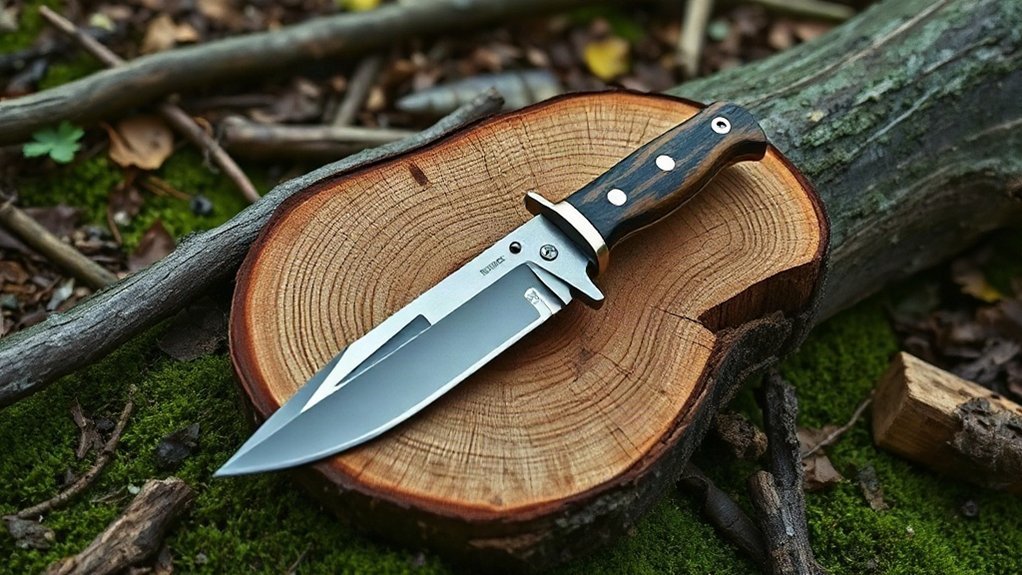
I recommend a full-tang military-style knife for tough camp chores because its solid construction reduces the chance of the handle separating during hard cuts or careful batoning. It isn’t indestructible, though: blade thickness, heat treatment, edge geometry, and grip also matter. For most field tasks, I’d choose a fixed blade with a 4–5-inch blade and a secure handle. Use it for carving and small kindling, not heavy chopping; an axe or saw is better for larger wood. The right steel and carry setup depend on your conditions.
Key Takeaways
- Full-tang fixed blades reduce the risk of handle separation and pivot failure during demanding cutting, notching, and limited batoning.
- Full tang does not make a knife indestructible; steel, heat treatment, blade geometry, handle scales, and grip also affect durability.
- For tough small camp tasks, a 4–5-inch blade with a 5/32–3/16-inch spine balances control and strength.
- Baton only small, knot-free rounds when needed; avoid twisting or prying, and use an axe or saw for larger wood.
- Military-style knives can be heavy or awkward for fine carving, so match blade length, weight, grip, and sheath to the work.
Are Full-Tang Military-Style Knives Better for Camp Work?
For camp work, a full-tang military-style knife can handle demanding tasks because its steel runs through the handle, but it isn’t indestructible. I’d choose one for controlled wood processing, where dependable strength gives you freedom to work without carrying a large tool for every small chore.
For Splitting kindling, a blade around 4–5 inches long, with a 5/32–3/16-inch spine and a clear, square striking area, balances strength and control. The 16-ounce KA-BAR Becker BK2 can tackle heavier chores and small kindling, but its thick blade makes fine carving and food preparation harder. By contrast, the 4.8-ounce Gerber StrongArm Camp handles carving, notching, and meal prep more comfortably, though it isn’t built for heavy splitting.
Field knife ergonomics matter: choose a secure grip and keep your movements controlled. I don’t twist or pry with a knife; those forces can damage it. For large wood, I reach for an axe or saw instead.
Which Full-Tang Field Knife Fits Your Needs?
Choose a full-tang field knife by matching its weight and blade to your work: I’d pick the 16-ounce KA-BAR Becker BK2 for heavy camp chores, but its thick edge is awkward for fine carving and food prep.
For a lighter all-rounder, I’d consider the 8.2-ounce Cold Steel SRK. Its six-inch SK-5 blade handles varied field cutting, while the textured Kray-Ex grip offers a secure hold. Because the steel isn’t stainless, I’d clean, dry, and oil it after use.
If damp conditions matter, the 4.8-ounce Gerber StrongArm Camp brings a shorter, stainless 420HC blade and a sheath for belt, horizontal, or MOLLE carry. I’d choose the 12.4-ounce KA-BAR Fighter 1269 only when its eight-inch blade suits rugged work; its length hinders carving, and its weight can drag on hikes.
Set your chore priorities before building a knife shortlist. A fixed blade keeps cutting simple, but I wouldn’t twist it or replace an axe or saw for large wood.
What Does Full Tang Actually Protect Against?
I look at full tang as protection against handle separation when heavy cutting or batoning stresses the blade–handle joint. It won’t prevent damage from twisting or prying, and the handle scales and overall construction still matter.
Handle Failure Risks
Because the blade steel extends through the handle, a full tang reduces the risk of the handle separating from the blade under heavy use. I value that added security when I’m processing wood, but it doesn’t make a knife indestructible. The blade, edge, and scales can still suffer damage. Handle scale damage may also compromise comfort or control, so inspect the grip before demanding work. A loose, damaged, or slippery handle can cause trouble, regardless of the tang. I also look beyond the label: enclosed and skeletonized designs may carry different tang structure risks, depending on their construction. Use the knife for cutting, not twisting or prying. If the blade binds during batoning, I reach for a wedge instead of levering it free. That keeps the tool safer and my choices open.
Full Tang Limitations
Although a full tang helps keep the handle attached and can improve strength under sideways stress, it won’t stop a blade from snapping. The steel runs through the handle, lowering the chance that hard use will pull the handle loose. I value that reliability when I’m working outdoors, but it doesn’t make a knife indestructible. A full tang may handle lateral stress better, yet blade thickness, heat treatment, and edge geometry also shape durability and wood-splitting performance. Batoning damage remains possible, especially when I strike near the tip, hit a knot, or twist the blade to free a split. For heavy work, I choose a knife suited to the task and avoid forcing it through large wood. A saw or axe gives me greater control and safety there.
What Blade Length and Grind Suit Camp Chores?
For most camp chores, I’d choose a 4–5-inch blade with a flat or convex grind: it stays manageable for carving and notching, resists binding in wood, and still handles modest splitting. That range gives me Blade control without limiting everyday camp tasks. A 4-inch knife can split wrist-thick rounds carefully, but I reach for an axe or saw when wood gets larger; a knife isn’t a chopping tool.
A Scandi grind can also guide my carving against wood. For grind efficiency, I favor a manageable plain edge that works well for both shaping and food preparation. Blades over about 6 inches feel less precise for notches and fine work. Thickness matters, too: 5/32-inch stock balances wood chores with kitchen tasks, while 3/16-inch stock suits harder use but cuts less easily. A quarter-inch blade can take heavy baton strikes, yet I wouldn’t choose it for delicate carving. The right setup lets me work freely without carrying more knife than camp demands.
How Do You Choose Steel for Outdoor Use?
I match steel to your conditions: carbon steels like 1095 Cro-Van sharpen easily and handle hard use, but need cleaning and oiling to prevent rust. For damp weather or less upkeep, I’d consider stainless 420HC, while MagnaCut offers strong corrosion resistance, edge retention, and toughness at a higher price. I also weigh heat treatment, blade geometry, what you’ll cut, and how easily you can sharpen the knife in the field.
Balance Steel Trade-Offs
Choose steel by weighing toughness, edge retention, and sharpening ease, since no steel excels at all three. I’d start by asking what you expect from your knife and how much upkeep you’ll accept. For demanding camp work, 1095 Cro-Van and SK-5 offer non-stainless options, but you’ll need to clean and dry the blade, then apply light oil to prevent rust. A coating won’t protect the exposed edge, so don’t mistake it for freedom from care.
If you want greater corrosion resistance with less maintenance, 420HC is a practical stainless choice; Gerber uses it in the 4.1-inch StrongArm Camp. MagnaCut brings toughness, strong edge retention, and high corrosion resistance, though it still demands a sharpening plan. I’d choose the balance that suits your work and care habits—not chase a steel that promises everything.
Match Steel to Conditions
Steel choice should reflect the weather and work you expect. I match steel to humidity exposure, workload, and the edge maintenance I’m willing to do, so you can choose without being tied to constant upkeep.
| Steel | Best fit | Care |
|---|---|---|
| 420HC stainless | Damp conditions | Resists rust; less upkeep |
| 1095 Cro-Van or SK-5 | Rugged work | Clean, dry, and oil |
| MagnaCut | Mixed demands | Combines toughness, retention, and corrosion resistance |
Carbon steels can serve hard outdoor use, but they aren’t stainless. I clean and dry them after each outing, then apply a light coat of oil. A coating helps protect the blade, yet the exposed edge still needs care. For maximum freedom from frequent maintenance, I’d lean toward stainless in wet weather. For demanding tasks, weigh toughness, edge retention, sharpening ease, and corrosion resistance against your conditions before choosing.
Which Handle Stays Secure in Wet Hands?
A full tang won’t keep a knife from slipping in wet hands; handle texture and fit matter more. For a dependable wet grip, I’d focus on how the handle feels when slick, not on a single “best” material. Textured rubberized handles can offer traction, while Micarta may improve its grip when wet. G-10 is lightweight and weather-resistant, and a well-textured surface can help me keep a firm hold. Paracord wraps also provide a grippy surface, though each style brings trade-offs.
I’d choose a handle that fits your hand without creating hot spots, so you can work comfortably and stay in control. Check its texture with wet or cold hands before trusting it outdoors; a surface that feels secure when dry may feel different in rain. Prioritize handle comfort alongside traction, and judge the actual knife in your hand. That leaves you free to pick what suits your grip, rather than relying on a material label or tang design.
When Is a Fixed-Blade Field Knife More Reliable?
When heavy field work puts a knife under stress, I find a fixed blade more reliable than a folder because it has no pivot or lock to loosen or fail. That simplicity lowers the risk of Pivot failure or lock failure when I’m batoning, notching, or cutting in rough conditions. For dependable work, I look for:
> A fixed blade offers dependable simplicity under stress, with no pivot or lock to loosen during demanding field work.
- A full-tang blade, 4–5 inches long, with a 5/32–3/16-inch spine.
- A flat or convex grind that slips through wood instead of binding.
- A square, clear spine for baton strikes or ferro-rod scraping.
- A secure, textured handle I can control with wet hands.
If wood grips the blade, I don’t twist it free; I work it loose carefully. I also keep steel maintained according to its rust resistance. A field knife gives me freedom to handle demanding small tasks, but I won’t mistake it for an axe or saw when large wood needs cutting.
How Should You Carry a Military-Style Knife?
I choose a sheath with secure retention and a mount suited to the knife’s weight and my activities. Good Sheath retention keeps the blade secure as I move, while carry comfort lets me focus on the trip rather than adjusting my gear. I check both before heading out.
Belt carry gives me quick access, but it may feel awkward when I sit or wear a pack. For a compact fixed blade, horizontal carry can keep the handle within reach without letting the knife hang along my leg. Still, it isn’t comfortable for everyone, so I test the setup in my usual belt, sitting position, and pack.
I use belt loops or a MOLLE-compatible mount when they fit my kit, then verify that the sheath holds the knife firmly. I also check local carry rules before I leave; blade length and carry method can affect what’s legal. That simple check helps me carry confidently and responsibly.
When Should You Use an Axe or Saw Instead?
For larger wood, I reach for an axe or tomahawk; a knife isn’t a substitute for either. When I need a clean cross-grain cut, I use a folding saw. It works more efficiently and gives me better control than forcing a knife through a log. Choosing the right tool—and cutting technique—lets me work safely and keep moving on my own terms.
- I swing an axe into a thick log when I need to split or chop substantial wood.
- I draw a folding saw through a fallen branch, letting its teeth make a steady crosscut.
- I baton a knife through a small, knot-free round only when I need kindling; I stop if the wood resists, since the strain can break the blade.
- If my knife gets stuck, I use a wedge rather than twisting it free.
I reserve knife work for notching shelter poles, carving feather sticks, and splitting wrist-thick rounds. I also consider tree species before choosing my tool.
Frequently Asked Questions
What Knife Do Navy SEALS Really Use?
There isn’t one knife every Navy SEAL uses; I’d treat SEAL knife selection as task-dependent, shaped by personal preference and unit requirements. Cold Steel connects its SRK design to BUD/S training, but that doesn’t prove graduates receive today’s SK-5 version or carry it on every mission. I’d choose mission specific blades based on the job, not marketing claims. The current SRK has a six-inch SK-5 blade that needs cleaning, drying, and rust protection.
What Is the Best Knife for Outdoor Use?
For most outdoor use, I’d choose the Cold Steel SRK (SK-5): its six-inch blade and grippy handle feel ready when a trail turns rough. Versatile outdoor knife features matter, but I’d match them to your tasks and pack weight. The SRK offers strong value; its steel can rust, so clean and oil it after use. When choosing dependable outdoor steel, consider the lighter stainless Gerber StrongArm Camp—or carry a saw for larger wood.
What Is the Best Full-Tang Knife for Bushcraft?
I’d choose a 4–5-inch full-tang fixed blade as the best Full Tang Bushcraft Blade for balanced camp use. Look for a 5/32–3/16-inch spine, flat or convex grind, square spine, and secure handle. For Best Bushcraft Steel, 1095 offers practical toughness, but blade geometry matters too. I’d pick the lightweight Gerber StrongArm Camp for carving and food prep, or the heavier Becker BK2 for hard chores. Choose freely by your tasks and carry weight.
What Is the Holy Trinity of Knives?
The outdoor “holy trinity” isn’t three knives—it’s a fixed-blade knife, folding saw, and axe or tomahawk. I’d choose a 4–5-inch knife for carving, food prep, notching, and light woodwork; then let the saw slice larger branches and the axe handle heavy chopping. That’s the freedom of a smart Three Knife Set—though it’s really three tools. I’d also pack a ferro rod and sharpening stone, but neither belongs in the trio. A Blade Retention Design won’t replace the right tool.
Conclusion
I choose a full-tang field knife for demanding camp work when its size, steel, and grip suit the job—not simply because it looks battle-ready. A sturdy knife can split kindling, cut cord, and handle rough chores, but it won’t replace an axe or saw. Treat it as a dependable tool, not a talisman: even Excalibur was only as useful as the hand that wielded it. Choose carefully, maintain it, and let judgment lead the blade.