What Blade Steel Makes Military-Style Knives More Durable?
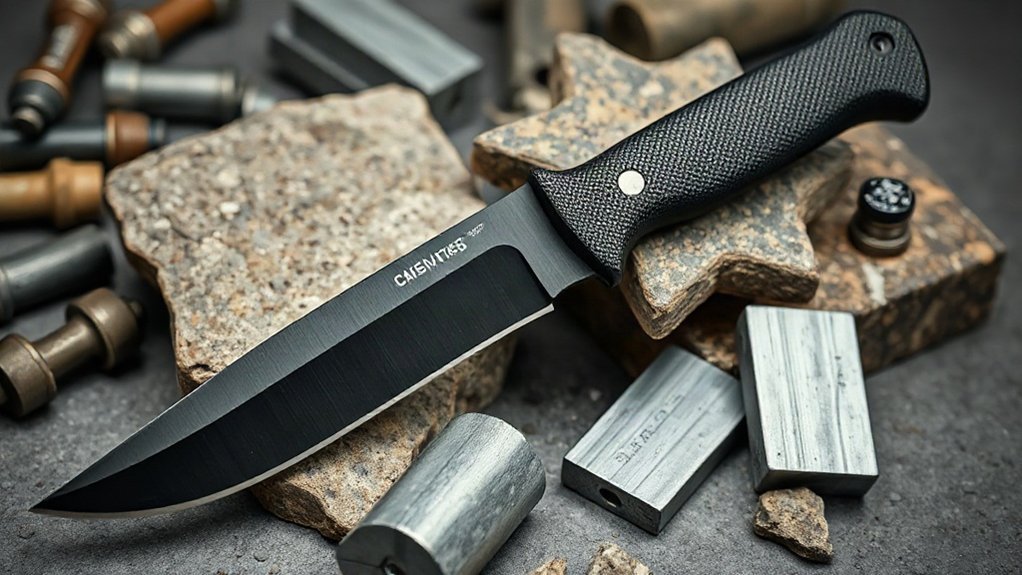
I’d match the steel to the knife’s job, since no grade excels at toughness, edge retention, and corrosion resistance all at once. For impact-prone work, I’d consider tough, easy-to-sharpen 1095 or SK-5; premium 3V offers greater toughness at higher cost. In wet conditions, stainless steel resists rust better, while MagnaCut combines corrosion resistance, toughness, and edge retention at a premium price. Heat treatment, blade thickness, and edge shape matter, too. I’ll explain how these trade-offs guide your choice.
Key Takeaways
- No steel is best in every respect; durability balances toughness, edge retention, and corrosion resistance.
- For impact-prone work, 1095, 1095 Cro-Van, and SK-5 offer toughness and are easy to sharpen.
- Stainless steels such as 420HC, AUS-8, and VG-10 resist rust better in wet conditions.
- D2 holds an edge well but can be harder to sharpen; premium 3V and MagnaCut cost more.
- Heat treatment, blade thickness, edge geometry, use, and maintenance affect durability as much as steel choice.
What Makes Knife Steel Durable?
A durable blade balances toughness, edge retention, and corrosion resistance; no steel excels at everything. When I assess steel composition, I look beyond a label: toughness helps prevent chips and breaks, edge retention reduces how often I sharpen, and corrosion resistance limits rust. Your best choice depends on the conditions and maintenance you’re willing to accept.
Heat treatment matters as much as the alloy. It can change how well a blade holds an edge or withstands impact. Blade thickness and edge geometry also shape performance: a thicker edge may improve fracture resistance, but it takes more effort to cut.
I’d weigh those trade-offs against your need for independence in the field. Some steels sharpen easily but need cleaning, drying, and rust protection. Others resist moisture better, though toughness and edge life vary. High-performance options can balance several qualities, but may cost more. Choose for your tasks, climate, and sharpening skills—not a steel name alone.
How 1095, SK-5, and 3V Handle Hard Use
For hard use, I’d compare 1095 Cro-Van, SK-5, and 3V by how they balance toughness, edge life, and upkeep. If you want a dependable field knife that’s easy to sharpen, these carbon steels offer practical freedom, but they need care against rust.
- 1095 Cro-Van: In my experience, the KA-BAR Fighter 1269 handled wood splitting well and showed little wear after a year. Its edge toughness suits demanding work, though its long, thin blade isn’t made for fine carving or twisting. I clean, dry, and lightly oil it after use.
- SK-5: I see it as a budget-friendly, tough option in the six-inch Cold Steel SRK. It sharpens easily, but I’d watch for rust and expect the coating to wear.
- 3V: I’d choose this powder-metallurgy steel when high toughness and edge retention matter most. It costs more and can be harder to maintain afield.
I also check blade thickness and edge geometry; toughness won’t prevent damage from prying or twisting.
When Stainless Steel Beats Carbon Steel
When you expect wet, humid, or maritime conditions, I’d favor stainless steel for its stronger corrosion resistance over carbon steels like 1095. It can cut down on frequent drying and oiling in the field, though I’d still care for the edge and check any coating for wear. A stainless blade isn’t automatically tougher or better at holding an edge, so I’d weigh the steel, heat treatment, geometry, and task.
Wet-Weather Corrosion Resistance
In persistently wet or maritime conditions, stainless steel often beats carbon steel because 420HC, AUS-8, and VG-10 resist corrosion better than 1095 and SK-5. For saltwater exposure and high humidity resistance, I’d favor stainless steel when I need a dependable blade that won’t quickly surrender to rust.
- The Gerber StrongArm Camp pairs a 4.1-inch 420HC blade with a 4.8-ounce weight, giving you a light, corrosion-resistant option for damp conditions.
- The discontinued SOG Seal 2000 offers a 7-inch AUS-8 blade suited to maritime use.
- Carbon-steel models like the KA-BAR Fighter 1269 in 1095 Cro-Van and Cold Steel SRK in SK-5 can rust; coatings help, but wear exposes bare steel.
Choose steel that lets you move freely in wet environments, while recognizing that no blade is immune to corrosion.
Reduced Maintenance in the Field
If you’re working in damp or maritime conditions, stainless steel can cut down on field maintenance because it resists corrosion better than 1095 Cro-Van or SK-5. That means less time protecting your blade and more freedom to focus on the task at hand. Saltwater exposure still demands attention, though: rinse and dry the edge, since stainless steel isn’t rustproof and coatings can wear.
For lighter camp cutting, I’d consider the Gerber StrongArm Camp’s 4.1-inch 420HC blade, which offers a practical balance in wet weather. The AUS-8 SOG Seal 2000 also suits wet environments, but its satin finish can stain, and sharpening it in the field may take more effort. Carbon steel remains tougher and easier to sharpen, but needs more care. Choose stainless when lower Cleaning frequency and less rust prevention matter most.
D2 or MagnaCut: Which Trade-Offs Matter?
Which trade-off matters more: lower cost or easier upkeep in wet conditions? I’d weigh your mission, budget, and sharpening options before choosing D2 or MagnaCut. Both can serve well, but each asks you to accept a different compromise.
Choose between D2’s lower cost and MagnaCut’s easier upkeep in wet conditions, guided by your mission, budget, and sharpening options.
- Choose D2 for value. It offers strong edge retention and stiffness at a typically lower price. If you’re budget-conscious and can manage its needs, D2 may lower your total cost of ownership.
- Choose MagnaCut for damp conditions. This powder-metallurgy steel combines high edge retention and toughness with better corrosion resistance. I’d favor it when wet environments make corrosion resistance a priority, though you’ll pay more upfront.
- Consider field sharpening. D2 can be harder to sharpen in the field, so sharpening accessibility matters when you’re far from support. MagnaCut isn’t maintenance-free either: hard use can still call for sharpening and care.
I’d match the steel to the freedom you need: spend less with D2, or pay extra for MagnaCut’s added resistance to corrosion.
How Care and Coatings Affect Knife Steel
Care affects every knife steel, but it matters most with carbon blades such as 1095 Cro-Van and SK-5: clean and dry them after use, then apply a little oil when needed to limit rust.
I don’t treat stainless steel as maintenance-free. Grades such as 420HC and AUS-8 resist corrosion better in damp conditions, but I still clean and dry them after use. A blade coating can cut corrosion and glare, yet hard use may wear it away and expose steel to rust. I check worn areas and keep them clean.
Coating friction can make cutting feel less smooth, while a bare carbon-steel blade is easier for me to sharpen and inspect. On bare steel, patina formation may add some protection, but it won’t replace routine care. I choose a finish with its trade-offs in mind, then maintain the blade so it stays ready for use. A few minutes of care give me more control over how my knife holds up, whatever the conditions.
Which Knife Steel Fits Your Use?
I’d match knife steel to the tasks you actually do, from rough field work to damp, maritime use. Then I’d weigh edge retention against toughness, sharpening ease, and the maintenance you’re willing to handle. Your budget matters, too: practical steels can serve well, while premium options often cost more.
Match Steel to Tasks
Match knife steel to the work, because no alloy excels at every camp chore. I choose for the task, then consider Blade geometry and handle ergonomics: steel can’t make a thick chopper carve like a slim slicer.
- For wood processing and impact-prone chores, I favor tough, easy-to-sharpen 1095, 1095 Cro-Van, or SK-5. A thick BK2 handles heavy work, but I’d pick a thinner blade for carving or food prep. Carbon steel needs cleaning, drying, and rust protection.
- In wet or maritime conditions, I’d choose corrosion-resistant 420HC, AUS-8, or VG-10. The lightweight 420HC Gerber StrongArm Camp suits damp outings.
- For toughness and edge retention, I’d consider D2, A2, or O1; D2 sharpens harder and resists corrosion moderately. Premium 3V or MagnaCut offers broad performance, often at higher cost and field-maintenance demands.
Balance Edge and Maintenance
On a wet trip, I’d favor stainless steel such as 420HC or AUS-8; for demanding chores where easy field sharpening matters more, I’d choose carbon steel like 1095 or SK-5 and keep it clean and oiled. Your best choice depends on the work and care you’ll accept. High-carbon steels are tough and affordable, and I can restore an edge with basic tools when sharpening access is limited. But I must dry and oil them to prevent rust. Stainless steel needs less attention in damp conditions, though edge retention and field sharpening vary by grade and heat treatment. I’d also weigh the whole knife: Edge damage depends on blade design and use, not steel alone. Premium 3V or MagnaCut can offer toughness and retention, but I’d pay more for those advantages.
Frequently Asked Questions
What Steel Does the Military Use in Knives?
There isn’t one steel the military uses in every knife; I’d check the specific model and its purpose. The military knife steel standards aren’t a single universal recipe, and the blade steel selection process weighs toughness, corrosion resistance, sharpening, and upkeep. For example, the KA-BAR USMC uses 1095 Cro-Van, while some SOG knives use AUS-8 stainless. I’d choose based on your conditions and maintenance preferences, not a military label alone.
What Is the Holy Trinity of Knives?
I call the knife “holy trinity” toughness, edge retention, and corrosion resistance. You can’t maximize all three in one steel, so I’d choose based on your work and environment. High-carbon steels often sharpen easily and resist impact, but they need care against rust; stainless options handle wet conditions better. Knife design principles also matter: heat treatment and blade geometry debates shape performance, giving you freedom to match a blade to your priorities rather than chase one perfect steel.
What Fixed Blade Do Navy SEALS Use?
There isn’t one fixed blade every Navy SEAL uses; choices vary by person, task, and mission. I’d treat SEAL fixed blade choices as individual decisions, not proof of a standard issue knife. Cold Steel links its SRK design to BUD/S training, but that doesn’t mean every SEAL carries it or receives today’s SK-5 version. The discontinued SOG Seal 2000 reflects Naval special operations knife traditions, yet I’d choose a blade that fits your needs and maintenance habits.
What Type of Steel Is Best for Tactical Knives?
For a tactical knife, I’d choose steel by the job—not by hype. Need rugged toughness and easy field sharpening? I’d pick 1095 Cro-Van or SK-5, but I’d clean and protect it from rust. For wet conditions, I’d favor AUS-8 or 420HC for better corrosion resistance, accepting moderate edge retention. D2 holds an edge longer but takes more effort to sharpen. I’d also check heat treatment and blade geometry; steel can’t prevent damage from prying.
Conclusion
I don’t believe one steel makes every military-style knife indestructible—despite what the marketing department’s action-movie soundtrack suggests. For rough use, I’d choose 3V for toughness, stainless steel for wet conditions, or 1095 when easy sharpening matters. D2 and MagnaCut each bring different trade-offs, so match the steel to your work, not your wish list. Then clean, sharpen, and maintain the blade. Even the toughest knife can’t survive neglect—or a job better handled by a screwdriver.