How Do Multitools Help You Handle Everyday Repairs and Outdoor Tasks?
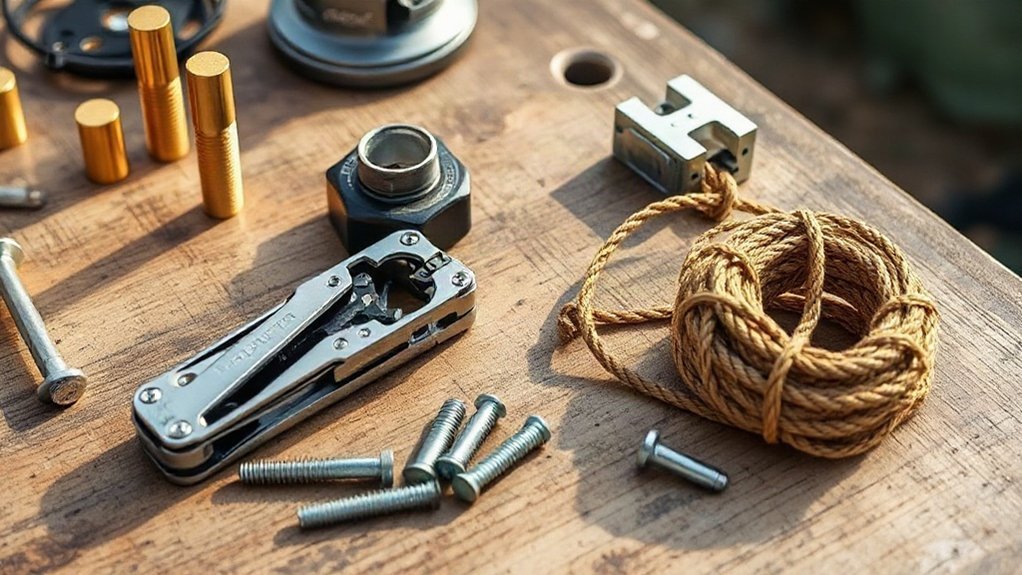
I use a multitool to handle quick home fixes and outdoor jobs without carrying a full toolbox. Pliers grip or bend parts, screwdrivers tighten loose fasteners, and cutters or scissors trim wire, cord, and packaging. A knife, saw, file, or awl helps with food prep, small wood cuts, rough edges, and simple shelter repairs. I choose a multitool when a job needs several functions, then work carefully and check its locks. Next, I’ll explain how to choose and maintain one.
Key Takeaways
- Pliers grip, bend, and pull small parts, while screwdrivers tighten loose screws on furniture, fixtures, and camping gear.
- Wire cutters, knives, and scissors trim wire, rope, cord, packaging, and bandages for everyday fixes and camp repairs.
- Saws, files, and awls help cut small wood pieces, smooth rough edges, and make or widen holes.
- Knives and can openers support food preparation, packaging, and basic camp cooking.
- Choose tools suited to the task, secure the workpiece, check locks, and maintain the multitool clean, sharp, and dry.
What Can a Multitool Help You Fix?
A multitool can handle quick fixes around the house or campsite. When I want to stay independent and keep moving, I use its pliers to grip small parts, tighten loose fittings, or trim wire. The built-in screwdrivers help me secure a loose screw on a trekking pole, camping gear, or furniture. For eyeglass adjustments, I can carefully snug a tiny screw; for zipper repairs, pliers may help realign a stubborn slider.
A knife or scissors lets me cut cord, rope, tape, packaging, or a bandage without searching for another tool. I can smooth a rough edge with a file, punch a hole with an awl, or saw a small piece of wood for simple shelter work. Bottle and can openers also make camp meals and drinks easier to manage.
Which Multitool Tools Help With Home Repairs?
Beyond quick fixes at camp, I rely on a multitool’s pliers to grip, bend, or pull small parts during household repairs, while wire cutters trim thin wire and cables. Pliers and wire cutters give me control over small jobs without requiring a bulky toolbox.
When a hinge loosens or I’m assembling furniture, flathead and Phillips screwdrivers help me tighten screws and secure fixtures. Screwdrivers and scissors are everyday essentials: spring-loaded scissors cut string, tape, and packaging, while the knife handles similar household materials.
For finishing touches, I use a metal file to smooth rough edges and an awl or reamer to make or widen small holes. Bigger renovation tasks call for an oscillating multitool: with the right attachment, I can cut drywall for an electrical box, trim flooring, or scrape away old caulk and adhesive.
What Can You Do With a Multitool Outdoors?
When I set up camp, I use pliers, cutters, or screwdrivers for quick gear repairs, and I keep my multitool close at hand. Its knife, scissors, saw, and opener help me cut cord, prepare firewood, and handle food. I can also use an awl or file for simple shelter fixes.
Camp Setup and Repairs
At camp, a multitool can help me handle quick repairs and everyday tasks without digging through a full toolbox. I use its pliers and screwdrivers to tighten loose fasteners, adjust trekking poles, and tackle tent repairs before a small problem disrupts my plans. The blade or scissors can cut rope, paracord, or a damaged strap when I’m securing a tarp or fixing gear. For shelter supports, I can saw small pieces of wood to size, while the awl helps make holes for simple repairs. Built-in openers and a knife can also come in handy for cans, bottles, and camp food. I choose a model with tools suited to my needs, then keep it clean, dry, and lightly lubricated so it’s ready whenever I want to get moving again.
Survival and Food Preparation
A multitool can support basic survival tasks and food preparation when I’m outdoors. It won’t replace dedicated survival gear, but the right functions can help me stay self-reliant and keep moving.
- I use the knife to prepare food, open packaging, or carve kindling, and the can opener gives me access to canned ingredients.
- I cut rope or paracord to secure shelter, tie down supplies, or make quick field repairs.
- Pliers, screwdrivers, and wire cutters help me fix camping equipment, while scissors can trim cord or bandages.
- A wood saw can cut small pieces of firewood. For Emergency water purification and wilderness signaling, I carry suitable supplies; a multitool alone can’t guarantee either.
I choose functions for my plans and keep the tool clean, dry, and lubricated so its blades and hinges stay dependable.
When Is a Multitool Better Than a Pocket Knife?
Choose a multitool over a pocket knife when a repair calls for pliers, wire cutters, screwdrivers, or scissors—not just a blade. I reach for one when loose screws, stubborn gear, or a minor household fix needs more than cutting. Its extra functions let me handle campsite repairs, trim rope, fix equipment, or help build shelter without carrying a toolbox. That range matters when repair complexity grows, but tool accessibility matters too: I want the right implement close at hand so I can get moving again. A pocket knife still wins for straightforward cutting and everyday jobs like opening packages or bottles; it’s usually lighter and easier to carry. I choose according to the task. For light cutting, I carry a knife; for varied repairs, I take a multitool and gain freedom to adapt.
How Do You Choose a Multitool for Your Needs?
When I choose a multitool, I start with the tasks I do most. My Intended repair types determine which tools I need; carry preferences help me find a model I’ll actually bring along.
- Match the tool to the job. I choose pliers for gripping, screw tightening, and wire cutting. For simple cutting and opening, a pocket knife may be enough.
- Pick useful functions. Scissors and screwdrivers suit everyday carry; a saw, file, and awl help with camping and gear repairs.
- Check size and carry options. I compare bulk and see whether a pocket clip or sheath comes included or costs extra.
- Compare construction. Replaceable cutters, locking tools, and corrosion-resistant materials can better fit frequent or outdoor use.
For Badger Outdoor, I’d compare each model’s functions and note the 10-year warranty.
How Do You Use and Maintain a Multitool Safely?
I choose the attachment that fits the task and secure the workpiece before I begin. I open only the tool I need, lock it if possible, and work with controlled pressure, keeping my fingers clear and cutting away from my body. Afterward, I clean and dry the multitool, lubricate its joints, check for wear, and store it in a dry pouch.
Choose the Right Tool
A safe, useful multitool starts with the right features for the jobs you expect to tackle. I choose a plier-based model with functions that fit my plans, not features I’ll rarely need. For home repairs, screwdrivers and wire cutters earn their place; for outdoor trips, a knife and saw may matter more. I also compare tool material and handle ergonomics, since durability and a comfortable grip help me work with confidence.
- Match each accessory to its intended task; don’t force a blade or driver into another role.
- Before use, check that components and locks feel secure. Stop if anything’s loose, damaged, or won’t lock.
- After use, wash away dirt with warm, soapy water and a soft brush, then dry thoroughly.
- Lubricate joints lightly, sharpen blades along the original bevel, and store the tool in a dry pouch.
Use Tools Safely
Choosing the right multitool is only part of using it well; safe handling and routine care help prevent injuries and keep it reliable. I match the attachment to the material—a wood blade for trim, a bi-metal blade for nails, or a grout blade for tile—and secure it before starting. For safe hand positioning, I keep fingers away from cutting edges and pinch points, lock folding tools open, and use pliers to grip small or sharp objects. I wear Protective equipment, especially eye protection when cutting, grinding, or scraping, and work at a controlled speed. On oscillating tools, I choose 5,000–10,000 OPM for delicate work and 15,000–20,000 OPM for tougher cuts. Afterward, I remove debris, dry the tool, lubricate moving parts, check for wear, and store it dry in a sheath.
Clean and Maintain It
After each task, I clean my multitool with warm, soapy water and a soft brush, clearing dirt from the hinges, blades, and crevices. I dry it thoroughly, especially after rain or creekside use, then apply light hinge lubrication to joints and moving parts. This helps prevent corrosion and keeps every tool ready for the next repair or trail.
- Inspect blades, screws, and locks regularly; tighten loose parts and replace worn components before relying on them.
- For blade sharpening, follow a straight blade’s original bevel with a diamond or ceramic stone. Sharpen each serration individually with a tapered file or rod.
- Store the clean, dry multitool in a sheath or pouch.
- Test locks and specialized features before use.
With simple care, I keep my multitool dependable and my options open wherever I roam.
Frequently Asked Questions
What Are Multitools Useful For?
I use a multitool for Quick Home Fixes and Camp Setup Tasks, keeping useful gear close without carrying a full toolbox. Its pliers, screwdrivers, and cutters help me tighten screws, mend equipment, or strip wire. I reach for the blade or scissors to cut packages, rope, and bandages, and use the file or saw for small projects. Openers and reamers handle campsite chores. It’s handy for quick jobs, not heavy-duty repairs.
Are Multitools Actually Useful?
Yes—a multitool’s real value is freedom in your pocket. I find it earns its space through Everyday problem solving: tightening a screw, cutting rope, opening a package, or fixing a tent strap without hunting for separate tools. That practical tool access can make small repairs and outdoor tasks easier wherever you are. I’d choose one with features I’ll actually use, though; it won’t replace specialized gear for demanding jobs.
What Is the Best Multitool for Survival?
For survival, I’d choose a full-sized, plier-based multitool with strong wire cutters, a reliable blade, a saw, and screwdrivers. It gives you freedom to repair gear, cut rope, and build basic shelter without carrying a crowded kit. For Emergency preparedness, I’d add a whistle or fire starter, but I wouldn’t sacrifice core tools for extras. Choose wilderness durability, and keep the tool clean, dry, lubricated, and ready before you head out.
Is It Legal to Carry a Multitool in the US?
Often, yes—but I can’t give you a universal yes. The US has no single nationwide rule for multitool carry, so check current state carry laws and local rules before you pack one. A blade’s type and length, whether it locks or stays concealed, and where you carry it can affect legality. Watch for travel restrictions at schools, courthouses, airports, and secure facilities. If you’re unsure, choose a bladeless tool or leave it behind.
Conclusion
A multitool won’t solve every problem, but it can turn small setbacks into manageable tasks—tightening a loose screw, trimming a snag, or making a quick trail-side fix. I keep one close because preparation is less about predicting every twist and more about meeting the unexpected with steady hands. Choose a tool that fits your real needs, use each feature carefully, and maintain it well. Like a pocket-sized toolbox, it helps you keep moving when life loosens a bolt.