Are Military-Style Knives Suitable for Camping and Survival Trips?
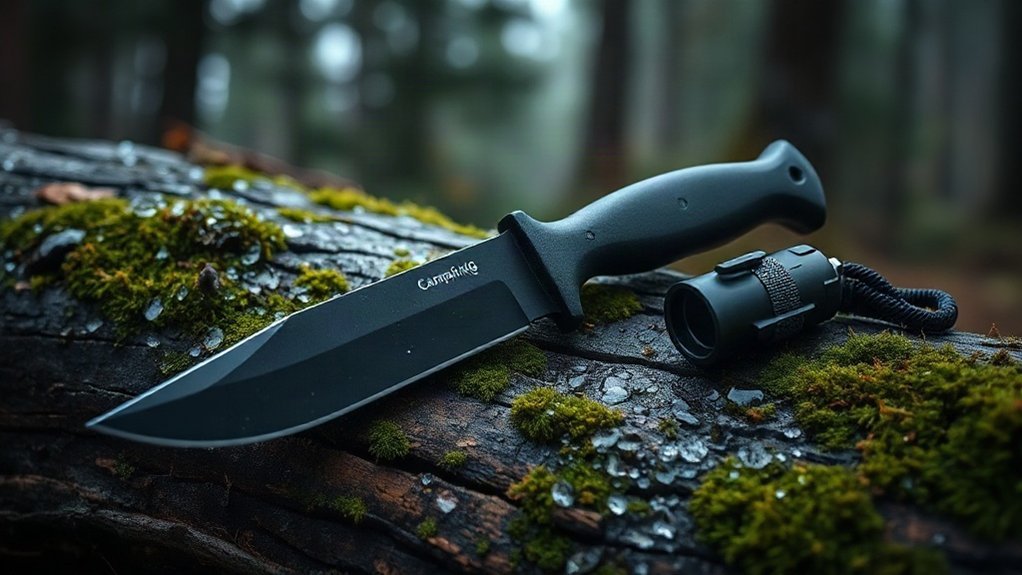
I find military-style knives useful for camping and survival trips when their size and features match the work. A 4–6-inch plain-edge fixed blade can handle meals, carving, cordage, and light kindling, while a longer or thicker model may add weight and feel clumsy for precise chores. I’d choose a secure grip, suitable sheath, and steel suited to the weather, then avoid heavy prying. Check local carry rules, and explore the details below to choose wisely.
Key Takeaways
- Yes—military-style knives can handle camping and survival chores, but choose a size suited to your planned tasks.
- A 4–6-inch drop-point blade offers a useful balance of control and cutting power for food, carving, and camp work.
- Sturdy fixed blades can split small kindling, but avoid heavy prying and use an axe or saw for larger wood.
- Consider weight, grip, steel maintenance, and secure sheath carry; clean and dry the knife after use.
- Check local carry rules and test your setup with a pack before traveling.
Are Military-Style Knives Good for Camping?
Military-style knives can work well for camping, but I’d match the blade to the jobs you expect. Their size and design may exceed what ordinary camp tasks demand, so consider how you’ll use and carry one before choosing.
For food prep, whittling, and controlled carving, I find a shorter plain-edge blade easier to manage than a long fighting knife or bayonet. The 4.1-inch Gerber StrongArm Camp weighs 4.8 ounces and has been tested for carving, notching, food preparation, and cutting cordage. That lighter build can add camping convenience when you want a useful tool without a heavy belt load.
A longer blade may suit harder work: the 8-inch KA-BAR Fighter 1269 performed well splitting wood. But at 12.4 ounces, it’s less convenient for fine carving or all-day carry. For heavy chores, the 5.25-inch, 16-ounce Becker BK2 offers a thick blade, though I wouldn’t choose it for delicate food prep. Let your expected tasks—and budget considerations—guide your pick.
What Is a Military Survival Knife?
I think of a military survival knife as a durable, general-purpose field tool—not just a fighting weapon. I’ll look at how its blade, handle, and sheath balance utility, toughness, and carry weight. You’ll also see which features suit camp tasks and where a knife can’t replace an axe or saw.
Purpose and Design
Although it may look combat-ready, a military survival knife is a fixed-blade field tool designed for more than fighting. I value its practical purpose: it can cut materials, prepare food, help build shelter, and handle emergency repairs. Its historical origins and tactical styling reflect military influence, but they don’t define every knife’s usefulness in camp.
| Design choice | Trade-off |
|---|---|
| 6–8-inch blade | Useful reach without excessive weight |
| Drop point | Controlled, general-purpose cutting |
| Clip point | Narrower tip for precise cuts |
Blade thickness commonly falls around 3/16–1/4 inch, balancing durability and carried weight. Full tang can support strength and balance, though it won’t make a knife indestructible or right for every job. I’d choose a design that suits my needs, not one that promises freedom from sound judgment.
Survival-Ready Features
A military survival knife is a broad category, not a single design: some field knives emphasize everyday utility as much as emergency use. I’d judge one by fit for your tasks, not its branding. Look for features such as:
- A fixed blade avoids a folder’s pivot and lock; full tang can add strength, but don’t twist or pry with it.
- A 4–6-inch drop point offers control; longer blades can hinder carving and food preparation.
- Steel balances toughness, edge retention, sharpening, and corrosion resistance. 1095 Cro-Van and SK-5 need cleaning, drying, and rust protection.
- A secure, textured handle and suitable sheath support confident carry. A lanyard attachment can help retention, while emergency signaling may require separate gear.
I’d choose a knife that suits your conditions, carries securely, and leaves you free to handle practical camp tasks safely.
Which Camp and Survival Tasks Can It Handle?
I use a camp knife for food prep, whittling, cutting cordage, and other light chores. A sturdy fixed blade can also carve tent stakes, trim small branches, and split kindling. I’ll cover where it helps—and when an axe or saw is the better choice.
Food And Camp Tasks
For camp food prep, carving, and fire-starting tools, I find a 4–6-inch fixed blade easier to control than a long military-style knife. Its manageable size gives me more precision during meal preparation, while careful cleaning supports food hygiene.
- I use a plain edge to slice ingredients and carve notches.
- I cut cordage, open packages, and trim small branches for camp needs.
- Serrations can help when I’m cutting rope or other fibrous material.
- I clean and dry high-carbon steel, such as 1095 or SK-5, after use to limit rust.
A thick blade like the BK2’s can split small kindling, but it feels clumsy for fine carving and food work. I avoid twisting or prying with any knife; for larger wood, I choose an axe or saw.
Woodcraft And Fire Prep
Start with controlled woodwork: a 4–6-inch plain-edge fixed blade handles tent pegs, notches, and kindling well, while longer blades can feel awkward for fine carving. I’d use a sturdy military-style knife to baton small wood pieces, but I wouldn’t twist or pry with it; an axe or saw is safer for larger logs. A drop-point blade works well for camp carving and food prep, while a thick blade like the BK2’s quarter-inch stock favors heavier processing over delicate cuts.
For fire-starting, ferro rod compatibility depends on the spine: an exposed 90-degree edge can scrape a rod, but coatings or rounded spines may not. I’d carry the rod’s striker as backup. After fire prep, I clean and dry high-carbon steel, then apply light oil for blade rust prevention and dependable use outdoors.
How Do Military and Camp Knives Compare?
Although camp and military-style knives can both handle field chores, they’re built with different priorities. I’d choose by expected tasks and carry comfort, not by appearance alone. A camp knife’s shorter blade length often makes routine cutting easier, while a larger military-style design offers more heft for rough field work.
- Camp knives: Usually 3–6 inches, they suit food prep, whittling, and everyday camp jobs.
- Military-style knives: Often 6–8 inches, they balance utility with durability and can cut materials or clear brush.
- Weight matters: An 8-inch KA-BAR Fighter 1269 weighs 12.4 ounces; the 4.1-inch Gerber StrongArm Camp weighs 4.8 ounces and handles lighter cutting more comfortably.
- Heavy designs: The 16-ounce Becker BK2 can split small kindling, but its thick blade feels less precise for delicate chores.
For freedom of movement around camp, I’d pack a compact plain-edge knife for routine tasks. Choose a sturdier model when heavier use is likely, but rely on an axe or saw for large wood.
Which Blade Features Suit Your Trip?
Which blade features matter most depends on the work and conditions you expect. I’d start with a 4–6-inch drop point: it balances control and cutting power for food, carving, and camp chores. Your blade edge also matters. A plain edge sharpens easily and handles fine work; serrations can bite into rope and fibrous material.
| Feature | Best suited to |
|---|---|
| 4–6-inch drop point | Versatile camp tasks |
| Plain edge | Sharpening and precise cuts |
| Serrated section | Rope and fibrous material |
| Thin grind | Food prep and carving |
| Stainless steel | Damp conditions |
I’d choose thinner stock for easier slicing and carving; thicker steel tolerates harder use but can feel clumsy on food. For corrosion resistance in wet weather, stainless steel needs less attention. 1095 Cro-Van and SK-5 can serve well, but I’d clean, dry, and lightly oil them to prevent rust. Match the steel and edge to your plans, so your knife supports the work without limiting your choices.
How Do Grip, Weight, and Sheath Affect Carry?
When your hands are wet or cold, a textured handle made from rubber, Micarta, or G10 can help you keep control. For Wet weather grip, I also look for a guard that helps stop my hand from sliding forward during forceful use.
Weight shapes Comfortable carry on long days. The KA-BAR Fighter 1269 weighs 12.4 ounces, which may feel heavy over hours; the Gerber StrongArm Camp weighs 4.8 ounces. I match the sheath’s retention and attachment to the knife’s weight and my preferred setup:
- Belt carry keeps a knife accessible, but check that the sheath holds it securely.
- Horizontal carry can keep a compact fixed blade from hanging along your leg.
- MOLLE attachment offers another option; the StrongArm Camp’s multi-mount sheath supports it.
- Test your setup while sitting and wearing your pack, since comfort depends on the knife, sheath, belt, and position.
I check local rules before carrying, so I can travel freely while staying responsible.
When Is a Military-Style Knife Too Much?
A military-style knife is too much when its size, weight, or thickness exceeds your expected camp tasks. An 8-inch blade like the 12.4-ounce KA-BAR Fighter 1269 may feel cumbersome when I’m preparing food or carving small details. I’d rather carry a blade that fits my plans than haul extra steel.
A thick knife can split small kindling, but it won’t replace an axe or saw for larger wood. The 16-ounce Becker BK2’s quarter-inch stock also limits cutting precision, so I wouldn’t choose it for delicate work. For me, Everyday carry comfort matters too: a bulky 13-inch 5.11 CFK7 may ride better in a pack than on my belt.
For cordage, notches, and meals, a compact option such as the 4.1-inch, 4.8-ounce Gerber StrongArm Camp may be enough. I match blade size to the job and avoid heavy prying or twisting. That leaves me freer to move without carrying more knife than I need.
Frequently Asked Questions
What Is the Best Knife for Camping and Survival?
I’d choose a fixed-blade knife with a 4–6-inch blade for camping and survival; it balances control, cutting power, and portability. When choosing blade length, I’d match it to your expected tasks and conditions. For lighter camp work, I’d consider the 4.1-inch Gerber StrongArm Camp; for heavier chores, the 5.25-inch Becker BK2. I’d prioritize durability without sacrificing handling, and use an axe or saw—not a knife—to process large wood.
What Is the Best Military Knife for Survival?
I’d choose the Cold Steel SRK in SK-5 as the Best military knife for survival: its 6-inch blade feels like a dependable field tool, not an anchor, at just 8.2 ounces. Its textured handle and Secure-Ex sheath support practical survival knife features without burdening your pack. I’d pick the heavier BK2 for brutal camp chores, but its thick edge slows carving. Clean and dry SK-5 after use to prevent rust.
Is It Illegal to Carry a Survival Knife?
It isn’t always illegal to carry a survival knife; knife carry laws vary by location, so I can’t say whether yours is permitted without knowing where you are. Check local and destination rules before carrying one. Regional restrictions may cover blade length, fixed or folding designs, concealed carry, sheaths, and specific places such as public transport, parks, schools, or government buildings. I’d verify the rules for your route and campsite so you can travel freely and responsibly.
What Are Some Good Camping Survival Knives?
I’d choose a camping survival knife based on your tasks and carry preference. The Gerber StrongArm Camp is a versatile, lightweight pick for food prep, notching, and cordage. For tougher chores, I’d consider the durable KA-BAR Becker BK2, though it’s heavy. The Cold Steel SRK offers budget value but needs rust care. Compare Knife blade materials and handle grip designs, then choose the tool that gives you confidence and freedom outdoors.
Conclusion
I’d carry a military-style knife camping when its sturdy blade suits the work: cutting cord, preparing kindling, or handling basic camp chores. But a robust knife can feel like needless weight on a light day hike, while a smaller camp knife may be easier to pack and control. Choose for your trip, not its tactical look. The right blade is the one you’ll carry comfortably—and use safely—when the trail gets demanding.