How Do You Choose Between Hatchets and Tomahawks for Outdoor Adventures?
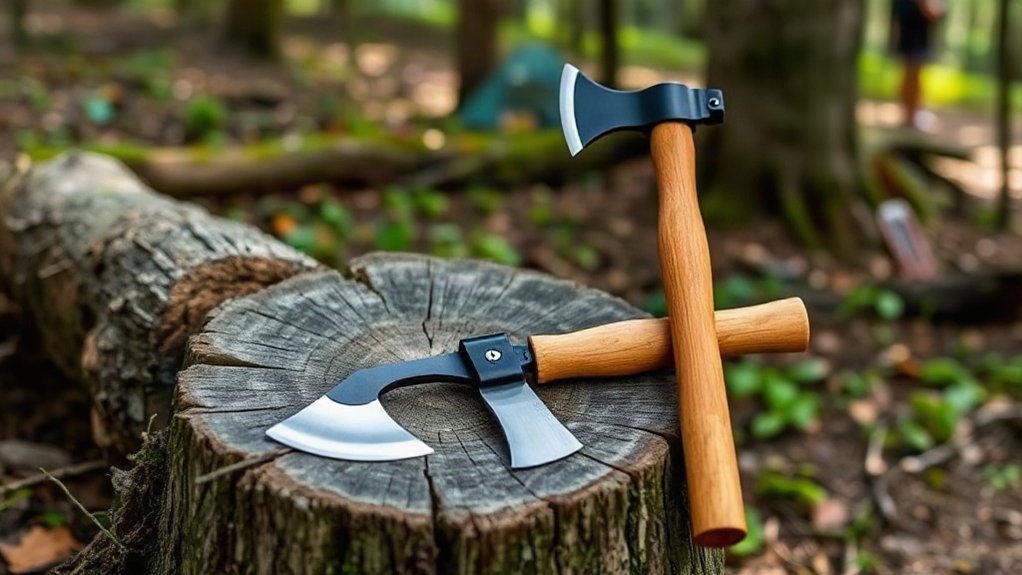
I choose a hatchet when I expect repeated chopping, firewood processing, or splitting small logs; its heavier, wedge-shaped head delivers more force but can tire my arms. I choose a tomahawk for lighter outings, precise camp tasks, and easier carrying because it’s lighter and quicker to maneuver. Before deciding, I consider my planned work, pack weight, grip, head attachment, and local rules. I also check the tool’s condition and sheath. The differences can help you find the right fit.
Key Takeaways
- Choose a hatchet for frequent firewood processing, splitting kindling, and chopping dense wood or small logs.
- Choose a tomahawk for lighter outings, occasional modest cuts, carving, and precise camp tasks.
- Compare weight and balance: hatchets deliver more chopping force, while tomahawks are lighter and easier to maneuver.
- Match the head and handle to your needs, checking grip, head attachment, and control with wet or gloved hands.
- Consider pack weight, route, and local rules; carry the tool securely sheathed and inspect it before use.
Hatchet vs. Tomahawk: Which Fits Your Work?
Choose a hatchet for repeated wood processing; its heavier, wedge-shaped head delivers more force for chopping logs, splitting kindling, and basic camp work. I’d pick one when demanding woodwork is a regular part of your trip and you want a dependable tool for camp tasks. For lighter, varied outings, I’d choose a tomahawk. Its lighter head suits light chopping, carving projects, and precision work, giving you a more agile option when you value mobility. Some tomahawks also offer a spike, hammer poll, or pry feature for tasks beyond chopping. Think about the work you’ll actually do, not just the tool’s look. Either way, I’d keep up with blade upkeep so your tool stays ready. Match your choice to your workload, and you’ll carry what supports your freedom outdoors.
Compare Weight, Balance, and Chopping Power
I find that a hatchet’s heavier, head-forward balance builds momentum for chopping and splitting wood. A tomahawk feels lighter and quicker to maneuver, though it has less power on thick logs. I’ll compare how each tool’s weight and balance match the work you plan to do.
Weight and Balance
Weight and balance affect how hard each tool hits and how tiring it is to use. I choose by considering my route, workload, and freedom to travel light. A hatchet’s heavier, head-forward feel suits repeated firewood tasks, but it can tire my arm during long sessions. A tomahawk balances closer to the handle’s center, so I can move it quickly and carry it with less effort.
- Hatchets put more weight toward the head.
- That balance builds momentum for demanding work.
- Extended use may increase fatigue and Wrist strain.
- Tomahawks feel lighter, faster, and more agile.
- Their lower weight can improve pack distribution when every ounce matters.
I’d carry a hatchet for steady camp chores, but I’d take a tomahawk when nimble handling and a lighter pack matter most.
Chopping Power
When chopping power matters, a hatchet’s heavier, head-forward design drives more force into each swing, making it better for branches and kindling. I notice the difference when I work through repeated cuts: its extra head weight helps overcome wood fiber resistance, though the effort can tire my arm over time. Understanding swing force mechanics helps me match the tool to the task.
A tomahawk feels lighter and more evenly balanced, so I can maneuver it quickly and place precise cuts with less effort. Its thinner head typically struggles more with dense wood, but it’s easier to carry when I want to travel light and stay agile. I choose a hatchet when I need dependable chopping power; I pick a tomahawk when freedom of movement matters more than force.
Choose the Right Head and Handle
I choose a heavier, wedge-shaped hatchet head for splitting firewood, while a thinner tomahawk edge suits lighter, more precise work. I match the handle material and grip to the task, favoring a secure shape for repeated chopping or a lighter balance for agile swings. I also check whether the head is fixed or removable before choosing.
Head Shape and Weight
For chopping or splitting campsite firewood, I’d choose a hatchet with a heavier, thick wedge-shaped head, which builds momentum and drives through wood. Head geometry matters: that broad wedge bites into thick logs, while a tomahawk’s lighter, narrower edge favors quick, precise cuts. I’d match the head to the work—and the freedom I want outdoors.
- Hatchet: head-heavy balance delivers greater impact momentum for splitting.
- Tomahawk: lighter weight feels faster and more agile.
- Thin edge: makes controlled cuts, but struggles with thick logs.
- Poll: may offer a spike or hammer for added utility.
- Attachment: many tomahawks have removable heads; hatchets commonly have fixed heads.
When I’m backpacking, a lighter setup can reduce what I carry. For repeated hatchet swings, I’d prioritize a secure, well-shaped grip to stay in control.
Handle Material and Grip
A comfortable grip matters as much as the head, especially when repeated swings strain your hands. I choose handle materials to match my trips and repair options. Straight-grained wood absorbs some chopping shock and is easy to reshape or replace, but I keep it dry and check for swelling or splits. Fiberglass resists moisture and impact damage, though field repairs can be difficult. Steel lasts, but it sends more vibration into my hands; I look for a substantial rubber or textured grip to limit fatigue and slipping.
I also check the handle’s length and shape. I want a secure full grip and a controlled choke-up grip for precise work. Before heading out, I make sure the head is firmly attached and test grip security with wet and gloved hands.
Pick a Hatchet for Firewood and Woodworking
When firewood is your main task, choose a hatchet: its head-forward weight builds momentum for chopping and splitting small logs, while its thick, wedge-shaped blade works through dense wood and prepares kindling more effectively than a tomahawk’s thinner edge.
Choose a hatchet for firewood: its weighted head and thick, wedge-shaped blade make chopping, splitting small logs, and preparing kindling easier.
For campsite chores, I also rely on a hatchet for small-tree chopping and basic woodworking. Choose a secure, sturdy handle that gives you control through repeated swings, so you can work confidently and stay free to shape your camp to suit you.
- Kindling preparation: split small pieces for a dependable fire.
- Firewood processing: use the wedge-shaped blade on dense wood.
- Small-tree chopping: clear modest branches or saplings.
- Furniture shaping: trim and shape pieces for simple camp projects.
- Handle choice: wood, fiberglass, or steel can provide a firm grip.
Expect the heavier head to tire your arm during extended chopping.
Choose a Tomahawk for Lightweight Versatility
If you’re keeping pack weight low, choose a tomahawk: its lighter build is easier to carry, and its balanced feel suits light chopping, carving, and other precise camp tasks. I value that Lightweight packability when I want to move freely without carrying more than I need. A tomahawk’s balance near the handle’s center feels agile in hand, giving me precision versatility for varied, light jobs around camp. Depending on its design, a spike or hammer poll can also help me pry or drive stakes. Some modern models have removable heads, which can simplify maintenance and let me customize the tool. I wouldn’t choose one for frequent splitting or chopping thick logs; a hatchet’s heavier head handles that work better. For lighter tasks, a tomahawk keeps my kit nimble.
Match Your Tool to Camping or Backpacking
Match the tool to your trip: for car camping, I’d pack a hatchet if I expect to split kindling or chop firewood, since its heavier, wedge-shaped head delivers more force. For backpacking, I’d favor a lighter tomahawk when I need only light chopping or carving and want to keep my pack manageable. Let your plans, not habit, determine what you carry:
- Firewood: I’d choose a hatchet for thick or dense wood.
- Small tasks: I’d take a tomahawk for a more agile feel.
- Pack weight: I’d compare each tool’s weight with my needs.
- Route accessibility: I’d consider how far I’ll travel and what terrain allows.
- Campground regulations: I’d check rules and planned firewood needs.
This match gives me room to roam while bringing a tool suited to camp.
Check Safety, Maintenance, and Carry Options
Before heading out, I check both the tool and how I’ll carry it. Sheath fit matters: I choose a secure cover that fully shields the edge, preventing injuries and damage to my gear on the trail. I carry a hatchet in a sturdy belt or pack-mounted sheath. With a tomahawk, I secure the tool so its lighter, removable head can’t shift or come loose.
I inspect the head for looseness, cracks, or corrosion, and the handle for splits. If I find damage, I stop using the tool. For edge maintenance, I keep the cutting edge sharp and clean, dry it after use, and apply a light coat of oil to the steel. I follow local carry rules and work only in a clear area, keeping others well outside the swing zone.
Decide Which Tool Fits Your Main Tasks
Once I’ve checked safety and carry options, I choose based on the work I do most. If I’m processing firewood, splitting kindling, or chopping small logs, I reach for a hatchet. Its heavier, wedge-shaped head delivers more force, and its sturdy build suits demanding bushcraft or homestead work.
- Firewood: A hatchet handles repeated splitting and chopping.
- Kindling: Its weight helps me split small pieces efficiently.
- Light chopping: A tomahawk suits occasional, modest cuts.
- Carving or prying: I favor a tomahawk’s thinner edge and versatility.
- Low pack weight: A lighter tomahawk supports quick handling and mobility.
Common misconceptions can make one tool seem universally better, but I match it to my routine. My skill preferences matter, too: I choose the tool I can control confidently for the jobs I actually face outdoors.
Frequently Asked Questions
What’s the Difference Between Tomahawks and Hatchets?
A hatchet prioritizes powerful chopping and splitting; a tomahawk favors lighter, more precise work. I’d compare their head design: hatchets carry a thick, heavy wedge, while tomahawks usually have a thinner cutting edge and balance nearer the handle. Handle construction varies—hatchets may use wood, fiberglass, or steel, while many tomahawks offer removable heads. I’d choose the tool that gives you the freedom and control your tasks require.
Do Navy Seals Use Tomahawks?
Yes, some Navy SEALs have used tomahawks, but they aren’t standard gear for every operator. I can’t cite a reliable statistic on how many carry them; public sources rarely document current unit-wide loadouts. Navy SEALs’ field equipment choices depend on mission, unit, and personal needs. A tomahawk may help with breaching, prying, or light chopping, but military tomahawk training practices don’t make it a firearm or a substitute for dedicated breaching equipment.
Which Is Better for Self-Defense, a Tomahawk or a Hatchet?
Neither a tomahawk nor a hatchet is a reliable choice for self-defense. I’d prioritize avoiding danger, creating distance, and getting help; either tool can cause severe injuries, escalate a confrontation, and expose you to legal consequences. For safer defensive alternatives, consider a flashlight, whistle, or personal alarm, and learn to use them responsibly. Check local self defense legality before carrying any tool. I’d choose a hatchet or tomahawk for outdoor work—not protection.
Is an Axe or Hatchet Better for Hiking?
I’d choose a hatchet over a full-size axe for most hikes. Its compact, one-handed design makes it easier to carry, while its heavier head handles kindling and small firewood. For Hiking weight considerations, I’d skip an axe entirely if I don’t expect to chop wood; a saw or knife adds less bulk. Trail task versatility matters, too: I’d match my tool to the route, follow local rules, and cover the blade securely.
Conclusion
I’ve found that choosing a hatchet or tomahawk isn’t really about which tool wins. It’s about whether its weight, balance, head, and handle suit the work you actually do. A hatchet usually earns its place when I split firewood or shape camp projects; a tomahawk makes more sense when I want lighter, versatile carry. The theory that one tool fits every adventure doesn’t hold up. I choose for my main tasks, then carry and maintain it safely.