How Can You Choose Hatchets and Tomahawks for Heavy-Duty Woodwork?
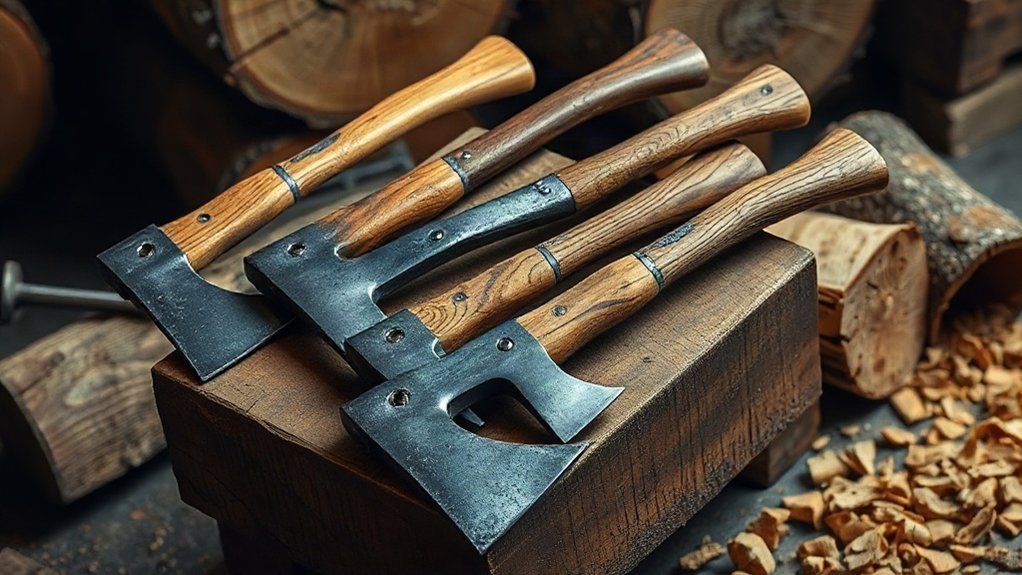
I’d choose a full-sized axe for sustained heavy woodwork, since hatchets and tomahawks are better suited to smaller tasks. For branches, kindling, or small logs, I’d pick a 1–2-pound hatchet with a sturdy, wedge-shaped edge; it handles repeated chopping better than a typical tomahawk. I’d reserve a lighter tomahawk for light chopping and easy carry. Before buying, I’d check the head’s fit, steel, balance, and handle comfort. The right choice depends on your woodwork, tool control, and safety needs.
Key Takeaways
- For felling trees, processing large logs, or extended chopping, choose a full-sized axe with a 24–36-inch handle and 3–6-pound head.
- For firewood splitting, select a splitting axe or heavier maul with a sturdy, wedge-shaped head.
- For repeated chopping or splitting small logs, choose a hatchet over a tomahawk; its thicker edge handles impacts better.
- Check that the head is securely fitted and balanced, and choose high-carbon steel with quality heat treatment.
- Inspect the tool before use, wear gloves and eye protection, and keep bystanders clear of your swing.
Can a Hatchet or Tomahawk Handle Heavy Woodwork?
You can use a hatchet for light camp woodwork, such as trimming branches, making kindling, and splitting small logs, but its short handle and 1–2-pound head limit it during prolonged heavy chopping. Those Heavy work limitations matter when you’re working independently: don’t force a compact tool through large logs or sustained wood processing. A tomahawk, usually close to one pound with a thinner blade, suits light chopping and kindling, not repeated firewood splitting. Heavy impacts can chip its edge; a hatchet’s thicker edge handles wood impacts better, but it still has limits. Before each session, make a safe use inspection: check the head, edge, and handle for damage. For felling trees, large logs, or extended chopping, I’d choose a full-sized axe with a 24–36-inch handle and work confidently within my tool’s capabilities.
Which Axe Fits Your Wood Job?
Choosing an axe starts with matching its head and handle to the wood job. I consider wood type and job scale before choosing a tool, so you can work efficiently without carrying more weight than necessary.
| Wood job | Suitable axe |
|---|---|
| Felling or limbing | Chopping or forest axe; sharp, thin blade |
| Splitting firewood | Splitting axe or heavier maul; wedge-shaped head |
| Kindling or branches | 1–2-pound hatchet; 12–18-inch handle |
For trees, large logs, and other heavy processing, I’d choose a full-sized axe with a 24–36-inch handle and a 3–6-pound head. It gives you leverage for demanding work. A hatchet handles smaller tasks, but I wouldn’t rely on it for heavy chopping. For portable, light work, a tomahawk travels easily, though repeated heavy use can strain its thinner blade.
How Do Hatchets and Tomahawks Compare?
For repeated woodwork, I’d reach for a hatchet: its 1–2-pound head and thicker edge handle chopping and small-log splitting better than most tomahawks. That extra Head weight drives force into wood, helping you work efficiently without relying on specialized gear. A tomahawk often weighs close to one pound and carries a thinner blade, so it’s easier to carry and better suited to throwing or occasional light chopping. Its throwing balance supports rotation, but the lighter head may struggle when you split small logs again and again. I’d choose based on the work you want to do: take a sturdy-edged hatchet for demanding camp chores, or pick a tomahawk when throwing, light carry, and versatility matter more. You’ll have the freedom to match your tool to the job.
What Handle Length Can You Control?
How much handle can you control comfortably? I look for a length that lets me guide each cut accurately without restricting a natural swing. Handle length ergonomics matters: a handle that feels manageable gives me freedom to work with confidence, whether I’m trimming branches or splitting small pieces of wood.
Hatchet handles typically run 10–16 inches, offering close control for chopping and small woodwork. Tomahawk handles often measure 16–22 inches; that extra reach supports throwing rotation, not heavy-duty chopping. A long handle can feel clumsy when I’m guiding cuts, while a short tomahawk handle may rotate poorly in a throw.
I check swing comfort by holding a tool before I buy, if possible. I want its length to feel right in my hands and its movement to stay manageable through the work I plan to do.
What Steel and Balance Should You Look For?
For repeated chopping, I look for tough, high-carbon steel that holds an edge and withstands hard impacts. I favor a thick blade over a thin tomahawk edge that may chip in woodwork. A head-heavy hatchet around 1–2 pounds gives me force and control, so I recommend testing its balance in hand before you buy.
Steel Toughness and Durability
When heavy woodwork demands repeated impacts, I look for a quality high-carbon-steel head that holds its edge and resists damage better than low-quality steel. Steel heat treatment supports toughness; corrosion resistance helps the head endure damp conditions. I check that head and handle feel secure and balanced, so I can work with control instead of fighting fatigue.
| Choice | What I gain | What I risk |
|---|---|---|
| Quality steel | Confidence through repeated strikes | Poor upkeep invites rust |
| Balanced build | Control and freedom to work longer | Poor balance brings fatigue |
| Heavier head | More chopping force | Extra carry weight |
I match head weight to the job: a heavier hatchet powers demanding chopping, while a lighter tomahawk travels easily but offers less force. Before use, I inspect the construction and keep the edge sharp, reducing effort and avoiding forced swings.
Edge Thickness for Woodwork
Although edge thickness should match the cut, I favor a sturdy, wedge-shaped hatchet blade for heavy woodwork because it handles hard impacts and splits firewood more reliably than a thin tomahawk edge. A Wedge shaped splitting profile pushes wood fibers apart, making it a practical choice when I need dependable splitting power. For trimming or cutting across the grain, I’d choose a thinner edge; cross grain cutting edge thickness should suit the task, not follow a one-size-fits-all rule. I also look for quality carbon or high-carbon steel, which holds an edge and stands up to repeated impacts better than low-quality steel. That gives me confidence to work independently, while still matching my tool to the job. Before buying, I check the head’s construction and how securely it’s fitted.
Head Balance and Control
A hatchet’s head should feel balanced in my grip, with enough weight to power a controlled chop without making the swing awkward. I check that the head stays secure and the tool moves naturally, because Grip comfort and swing stability help me work confidently without fighting each stroke.
- For repeated splitting, I choose quality high-carbon steel; it holds a sharp edge longer and handles impacts better than lower-quality steel.
- I favor a thicker, durable edge for small-wood splitting. A thinner blade can suit cleaner cuts, but a tomahawk’s edge may chip under repeated heavy impacts.
- A 1–2-pound hatchet head brings more chopping power. I choose one I can control, not simply the heaviest option.
- A lighter, roughly one-pound tomahawk favors quick handling and throwing. I match its balance and edge to the task, so I can work freely and safely.
How Do You Use and Maintain Your Axe Safely?
Use your hatchet or tomahawk with a secure grip and controlled swings, wearing gloves and eye protection to guard against slips and flying chips. I also keep bystanders at least the combined length of my arm and the axe handle away, giving everyone room to work safely.
Before each use, I check the head, handle, and blade for looseness, cracks, or other damage. This Pre use damage inspection helps me catch problems before they cause an injury. I use proper technique and never rush a swing; careful control lets me work confidently without sacrificing freedom of movement.
Afterward, I remove dirt, sap, and debris, then keep the blade sharp. For secure storage practices, I dry the tool, protect it with a sheath or case, and hang it securely on a wall away from direct sunlight.
Frequently Asked Questions
What’s the Difference Between Tomahawks and Hatchets?
A hatchet is generally heavier and sturdier, while a tomahawk is lighter and often balanced for throwing or quick outdoor tasks. I’d compare head design and balance: a hatchet’s thicker edge handles repeated wood impacts, whereas a tomahawk’s thinner blade bites into targets. Handle materials and construction affect grip and durability, too. Hatchets usually have shorter handles for controlled chopping; tomahawks’ longer handles support throwing rotation and a freer, lighter carry.
Is It Better to Get a Heavier Hatchet or Lighter Hatchet?
I’d choose a heavier hatchet if you’ll chop branches or split small logs; its head delivers more force. For kindling, trimming, carving, or long, precise sessions, I’d pick a lighter one because it’s easier to carry and control. Head weight versus swing control matters: choose a tool you can swing comfortably. I also consider fatigue over extended chopping. A one-handed hatchet isn’t meant for large logs or sustained heavy work.
Do Navy Seals Use Tomahawks?
Yes, some Navy SEALs have used tomahawks, but I wouldn’t mistake occasional use for a universal practice. The details of Navy SEAL tomahawk use can be hard to verify, and choices vary by mission, unit, and individual. In military tomahawk roles, a compact, lightweight tool may offer useful portability for light field tasks. It doesn’t replace a sturdy axe for repeated chopping or splitting; choose the tool that gives you the right balance of freedom and function.
How to Choose a Hatchet?
I choose a hatchet by matching it to the work: for kindling, branches, and small logs, I look for a one-handed model weighing about 1–2 pounds with a 10–18-inch handle. I check the head weight and edge: a heavier, thicker head helps split, while a thinner edge cuts across wood fibers. I also test the balance, grip, handle material, and steel quality. I save large logs and tree-felling for a full-sized axe.
Conclusion
I choose a hatchet or tomahawk for heavy woodwork only when the task suits its size; neither is a magic Excalibur for felling large trees. Match the head and handle to the job, then check the steel, balance, and grip before swinging. I keep my stance clear, cut with control, and maintain a sharp, secure edge. With the right tool and care, you’ll work more safely—and let the wood yield without turning every chop into a saga.