How Can You Find Fixed-Blade Survival Knives That Balance Weight, Strength, and Comfort?
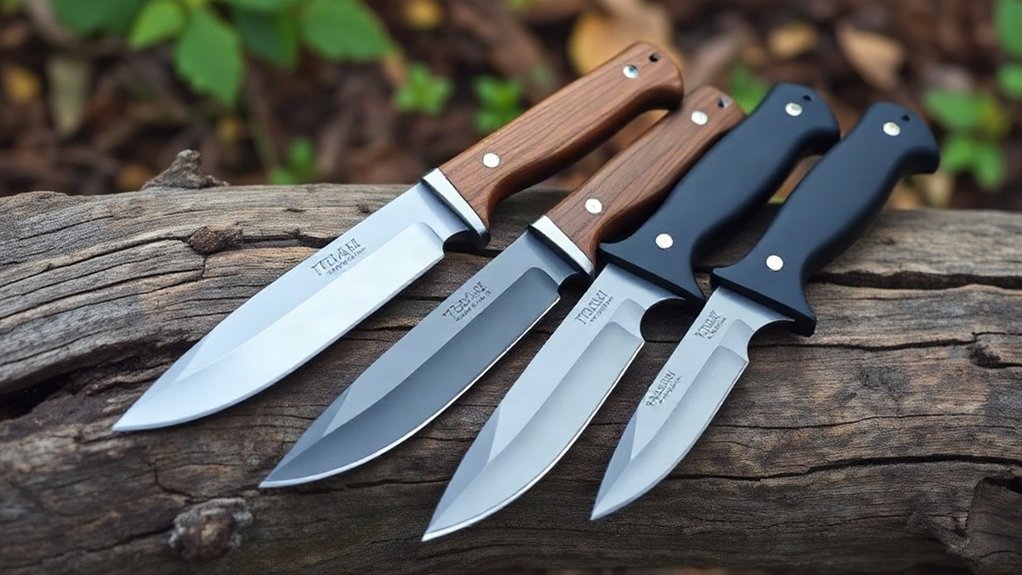
I start with a full-tang fixed blade and a 4–6-inch blade, which balances cutting power, control, and carry weight for most camp tasks. I choose a shape and steel to suit my work and conditions, then check that the handle feels secure and comfortable in my hand. A dependable sheath should hold the knife during movement without making it awkward to carry. I also consider sharpening and rust care; the details below can help narrow my choice.
Key Takeaways
- Choose the shortest blade that covers your likely tasks: a full-tang 4–6-inch knife balances control, cutting power, and carry weight.
- Match blade shape to your work: drop points are versatile, while clip, tanto, and sheepsfoot tips favor specific tasks.
- Select steel for your conditions: stainless steel suits wet environments; carbon steel sharpens easily but needs cleaning and oiling.
- Test handle comfort and grip; simple contours and modest texture can reduce hot spots during extended use.
- Check full-tang construction and secure sheath retention, then compare overall weight, durability, and carry comfort.
Choose a Fixed-Blade Survival Knife
For demanding outdoor work, I’d choose a full-tang fixed blade with a 4–6-inch blade, a range that balances strength, control, and versatility. That construction gives me confidence in a dependable tool without adding needless complexity. When I compare options, I look beyond length: the Fallkniven S1 has a 5.1-inch blade and weighs 6.7 ounces, while the 6-inch Cold Steel SRK weighs 8.2 ounces. A few ounces can matter when I’m carrying gear all day.
I also consider Blade profile, handle comfort, and knife ergonomics before buying. I’d test the grip in hand; Micarta resists moisture, and a handle without sharp edges or overly aggressive texture can stay comfortable through extended use. Steel choice affects upkeep: the S1’s laminated VG10 resists corrosion, while the SRK’s carbon steel needs more rust-prevention care. Finally, I’d check that the sheath secures the knife and carries comfortably. A bulky setup can limit the freedom a manageable blade should offer.
Match Blade Size to Outdoor Tasks
Once I’ve chosen a dependable fixed blade, I match its length to the jobs I expect to tackle. For everyday camp chores, food preparation, and shelter tasks, I find a 4–6-inch blade gives me a practical middle ground. It offers useful cutting reach without taking over my pack or limiting my movement.
When portability and detailed work matter more than cutting power, I prefer a 2–4-inch blade. For processing firewood, an 8–12-inch fixed blade can handle more, though I may carry a saw or axe instead and leave the larger knife behind. A 5–6-inch model, such as the Cold Steel SRK, adds reach for rough camp tasks, but it weighs more than compact options.
My Camp chore fit depends on the work ahead, not on choosing the biggest blade. I also consider carry distance: a larger knife adds capability, but extra pack weight can restrict maneuverability. I choose the shortest length that meets my needs and preserves freedom on the trail.
Choose a Blade Shape for the Job
I match a blade shape to the tasks I expect you to tackle most. For general use, a drop point balances strength and control; a tanto favors tough piercing, while a clip point offers precision with a less robust tip. If you want safer, controlled cuts, consider a sheepsfoot, whose shape helps reduce accidental punctures.
Match Shape to Tasks
Choose a blade shape based on the jobs you expect to do, not just its appearance. I start with my camp task priorities, then weigh the blade profile tradeoffs against the work I’ll actually face. That keeps my choice practical and leaves me free to focus on the task.
- For varied camp chores, I’d choose a drop point. Its curved spine and strong tip suit controlled slicing, carving, and piercing.
- For piercing or cutting tough materials, I’d consider a tanto, whose straight edge meets the spine at a sturdy, nearly perpendicular tip.
- For finer work, I’d pick a clip point for intricate cuts, while remembering its narrower tip may be less robust. A sheepsfoot suits controlled cuts when I want to reduce accidental punctures; its straight edge and shallow spine angle keep the point away from the work.
Balance Tip Strength and Control
When I match a blade shape to a task, I weigh tip strength against precision and control. A drop point gives me a versatile mix: its curved spine supports slicing, carving, and piercing while keeping the tip sturdy. For tough materials, I’d choose a tanto; its nearly perpendicular tip offers strong puncture resistance, though it’s less suited to fine slicing. A clip point gives me a sharper, more precise tip for detailed work, but it’s less robust.
| Blade shape | Best fit |
|---|---|
| Drop point | Versatile cutting and piercing |
| Tanto | Tough materials |
| Clip point | Detailed work |
I also consider a sheepsfoot when controlled cutting matters: its straight edge and shallow-angle tip help limit unwanted punctures. Let the task guide your choice of tip geometry, so your knife supports capable, confident work outdoors.
Consider Precision and Safety
The right blade shape depends on how much precision, tip strength, and puncture safety your task requires. I match the blade to the job instead of expecting one shape to handle everything.
- I choose a drop point for versatile slicing, carving, and piercing. Its curved spine and strong tip support controlled work.
- For fine, precise cuts, I consider a clip point. Its narrow tip offers accuracy, though it’s less robust than a drop point’s.
- When accidental punctures are a concern, I reach for a sheepsfoot: its straight edge and shallow-angle tip help keep the point clear. For tough materials, a tanto’s reinforced tip favors strength over fine slicing.
Whatever shape I carry, I check finger placement and cutting angles before working. That lets me cut confidently while staying in control and moving freely outdoors.
Compare Carbon and Stainless Steel
If I expect to sharpen my knife in the field, I favor carbon steel, such as the SRK’s SK-5 or the Laser Strike’s 1095; both are generally easier to sharpen than stainless steel. That Carbon steel sharpening advantage can help me stay self-reliant on a long trip. I’ll need to clean and oil the blade, though, because carbon steel can rust.
For wet conditions or less upkeep, I’d choose stainless. It resists corrosion, but stainless steel corrosion isn’t impossible, so I still keep the blade clean and dry. The Fallkniven S1 pairs laminated VG10 stainless steel with a 6.7-ounce weight; the coated SK-5 SRK weighs 8.2 ounces. For food prep and slicing, I’d also consider the Buck 119: its uncoated 420HC stainless blade weighs 7.5 ounces and has a hollow grind.
I’d pick carbon if field sharpening matters most and I can maintain it; otherwise, stainless offers greater freedom from routine care.
Check Tang Construction and Durability
For demanding tasks like batoning wood or applying leverage, I look for a full tang, where the blade steel runs through the handle to provide strength and balance. Full Tang Construction gives me confidence when the work gets rough, while a fixed blade’s lack of a pivot removes a potential weak point under heavy pressure.
A full tang and fixed-blade design provide confidence for demanding work by strengthening the handle and eliminating a pivot weak point.
To match durability with practical use, I check three details:
- Tang design: A full tang suits rigorous outdoor work; a partial tang can reduce weight, but Partial Tang Durability may be limited during heavy use.
- Blade length: I favor four to six inches for a useful balance of control and cutting power.
- Maintenance access: Removable scales can simplify cleaning or replacement. The full-tang ESEE Laser Strike has removable Micarta scales; the Fallkniven S1, Cold Steel SRK, and Buck 119 have handles that can’t be removed.
I weigh these trade-offs against the freedom to rely on my knife far from help.
Find a Comfortable, Secure Handle
Once I’ve checked the knife’s construction, I make sure its handle fits my hand comfortably and has no sharp edges. Good Handle ergonomics help me work longer with less fatigue and fewer blisters, leaving me free to focus on the task instead of nursing sore hands. I look for a shape that fills my palm without forcing my fingers into fixed grooves. Simple contours and modest jimping can suit more hand sizes and help prevent hot spots.
I also consider grip materials and the conditions I’ll face. Micarta resists moisture and stays secure in wet weather. Rubber offers dependable traction and absorbs shock, while wood gives me a classic feel but needs care to help prevent cracking. Before choosing, I hold the knife and check that it feels secure during use. A comfortable, stable handle gives me better control and confidence when I’m working outdoors, whether I’m preparing kindling, cutting cord, or handling other demanding camp tasks.
Choose a Lightweight, Secure Sheath
A secure, lightweight sheath keeps my fixed blade easy to carry and safe to access. I look for reliable sheath retention that holds the knife in place without making a deliberate draw difficult. The right design lets me move freely, whether I’m hiking a trail or setting up camp.
A lightweight sheath should keep your fixed blade secure yet accessible, so you can move confidently on the trail or at camp.
I compare materials and carry methods before choosing:
- Kydex is durable, weather-resistant, and light. Its adaptable mounting options let me attach it to a belt or pack.
- Nylon usually costs less, but it’s less durable. A plastic sleeve can add protection while keeping the setup practical.
- Leather works well for belt carry, though it may trap moisture, freeze, and provide fewer mounting options.
I choose based on how and where I’ll carry the knife, not looks alone. If I use leather, I avoid storing the knife in it long-term, since trapped moisture can affect the blade. A secure fit and accessible draw help me carry confidently without unnecessary bulk.
Match Knife Maintenance to Field Conditions
The right sheath protects your knife during carry, but field conditions also shape how I maintain it. After each use, I wash away dirt and residue with mild soap and water, then dry the blade thoroughly. This Post use cleaning routine supports corrosion prevention and keeps my knife ready for the next task.
I pay closer attention to carbon steel. Blades made from SK-5 or 1095 need frequent cleaning and a thin coat of oil, especially after rain or creek crossings. Stainless steel resists corrosion better, but it isn’t rustproof; I still dry and inspect 420HC rather than assuming it needs no care.
In damp country, I choose a weather-resistant synthetic sheath over leather, which can trap moisture. I never store a knife long-term in leather. I also match my sharpener to the edge: a convex grind needs a different touch than a flat one. Carry the right hone, and you’ll stay capable far from resupply.
Compare Five Fixed-Blade Survival Knives
When I compare fixed-blade survival knives, I weigh handling and upkeep alongside price. Weight versus durability matters when you’re carrying gear far, but comfort and sharpening techniques also shape the experience.
> Choosing a survival knife means balancing carry weight, durability, comfort, maintenance, and price.
- The Fallkniven S1 is the lightest refined option at 6.7 ounces. Its slim, nimble feel and 5.1-inch laminated VG10 blade appeal, though the higher price and convex edge call for a different sharpening approach.
- The Cold Steel SRK offers value and ruggedness with a balanced feel, 6-inch SK-5 blade, and 8.2-ounce weight. Its carbon steel needs rust care. The Buck 119 weighs 7.5 ounces; its hollow-ground 420HC blade slices well, but its bulbous handle won’t suit every hand.
- The ESEE Laser Strike has a comfortable Micarta handle and removable scales, but weighs up to 9.5 ounces. The 7.2-ounce Gerber StrongArm mounts its sheath in several ways, though its aggressive texture may bother you during vigorous use.
These differences show what each design asks of your hands, pack, and maintenance routine.
Pick the Best Knife for Your Needs
For most outdoor tasks, I’d start with a 4–6-inch full-tang fixed blade, which balances cutting power, control, and carry weight. If you regularly process firewood, an 8–12-inch blade may suit you better, though you’ll carry extra weight. Let your personal priorities and intended environment guide the steel: stainless resists corrosion, while carbon steel sharpens more easily but needs rust-prevention care.
I’d also weigh the knife, not just compare blade lengths. A 5.1-inch Fallkniven S1 weighs 6.7 ounces; a 4.75-inch ESEE Laser Strike can weigh up to 9.5 ounces. That difference may matter on long trips. Choose a handle that stays secure and comfortable: Micarta grips well when wet, while simple contours may feel better during extended use than deep grooves or aggressive texture. Finally, match the sheath to your carry style. Kydex handles weather well; leather needs more care in damp conditions. Pick the setup that lets you move freely and work confidently.
Frequently Asked Questions
What Is the Holy Trinity of Knives?
I call the “holy trinity” three complementary knives: a large fixed blade for demanding camp tasks, a medium knife for general outdoor work, and a small knife for precise cuts. I choose each for its role, not as a one-tool-fits-all solution. Blade Geometry and Handle Ergonomics matter across the trio, helping me work efficiently and comfortably. You can tailor the selection to your plans, carrying preferences, and the freedom you want outdoors.
What Fixed Blade Knife Do Navy SEALS Carry?
There isn’t one fixed-blade knife every Navy SEAL carries; choices vary by mission, unit, and personal preference. In my view, that freedom matters. The SOG SEAL 2000 became prominent in Navy SEAL knife history after a U.S. Navy trial, but it isn’t universal issue. The Ontario MK 3 Navy Knife is also associated with service. I wouldn’t treat military knife selection as proof of civilian survival suitability; assess your needs and upkeep.
What Is the Best Fixed Blade Knife for the Money?
I’d choose the Cold Steel SRK as the best fixed-blade knife for the money. Its six-inch SK-5 carbon-steel blade, 8.2-ounce weight, and ready-to-use edge handle demanding camp tasks without tying you to a high price. Among value comparisons and budget picks, the Buck 119 is a smarter choice if you prioritize slicing and stainless-steel convenience. I’d pick the SRK for rugged freedom, while remembering to prevent rust and expect its coating to wear.
What Is the Best Bushcraft Knife in 2026?
I’d choose the Fallkniven S1 as my best all-around bushcraft knife in 2026, though your needs may differ. Its 5.1-inch laminated VG10 blade, convex grind, and 6.7-ounce weight offer a capable balance for independent outdoor use. For Batoning performance and rough camp chores, I’d also consider the heavier Cold Steel SRK. Before buying, check the ergonomic handle, sheath security, blade length, and steel maintenance; those choices should fit your skills and adventures.
Conclusion
I find the best fixed-blade survival knife by weighing the work it must do against the weight I’m willing to carry. I check blade size and shape, steel, full-tang construction, handle comfort, and sheath security, then match maintenance needs to the conditions I expect. No single model suits every trip, so I choose the one that fits my tasks and grip without burdening my pack. The right knife becomes a steady companion, not dead weight in the wild.