Are Full-Tang Fixed-Blade Survival Knives More Reliable for Demanding Tasks?
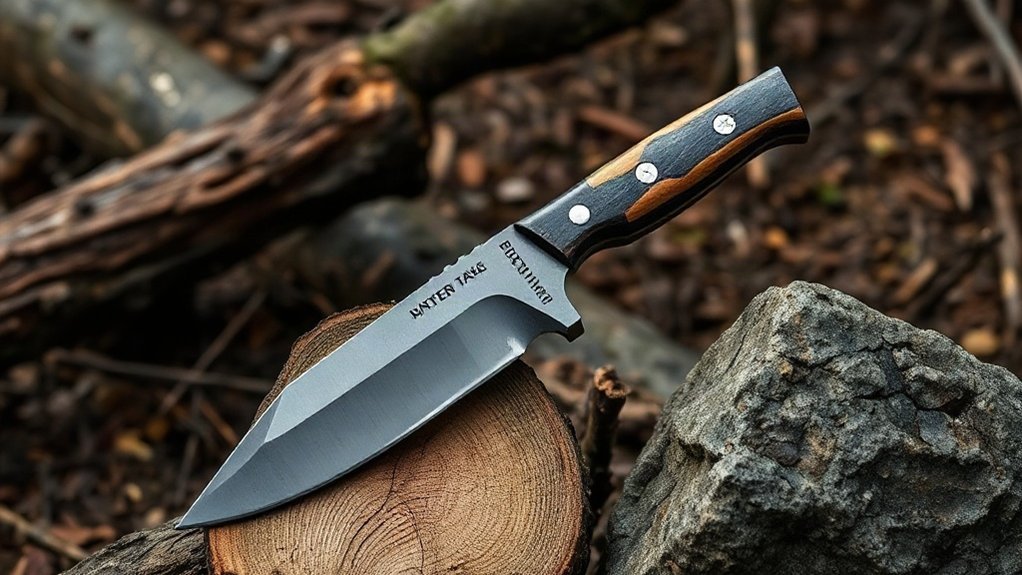
Yes, I generally trust a full-tang fixed-blade knife more for demanding tasks because its steel runs through the handle, avoiding a vulnerable junction, while its fixed design has no pivot or lock to fail. That construction can help with batoning and chopping, but it doesn’t make a knife indestructible. I also consider steel, heat treatment, blade geometry, grip, and sheath security. Keep going to see how those details affect reliability and which features suit your conditions.
Key Takeaways
- Full-tang knives carry steel through the handle, avoiding the weaker handle junction found in partial-tang designs.
- Fixed blades lack folding pivots and locks, reducing parts that can collect debris or fail under stress.
- These features can improve reliability during demanding tasks, but do not make a knife indestructible.
- Steel, heat treatment, blade geometry, handle security, grip, and task suitability also determine performance.
- Choose a dependable sheath, then clean, dry, and inspect the knife after use.
Are Full-Tang Survival Knives More Reliable?
Are full-tang survival knives more reliable? In my experience, their construction gives you a dependable tool when you need one. The blade steel runs through the handle, avoiding the vulnerable point where a partial tang ends. A fixed blade also skips the pivot and lock in a folder, parts that can collect debris or fail under stress. That simpler design can help you stay ready and self-reliant.
Still, full tang doesn’t make a knife indestructible. Reliability also depends on steel quality, heat treatment, handle grip, and sound construction, so I check those before choosing a knife. The Becker BK2, for example, pairs a 4.75-inch 1095 Cro-Van blade with a build intended for demanding outdoor work.
I include Fixed blade maintenance in my routine: I clean, dry, and inspect the knife after use. For emergency preparedness, choose a well-made knife that fits your needs, then care for it. A reliable tool supports your independence, but sound judgment matters just as much.
How Full-Tang Survival Knives Handle Hard Use
When I baton wood or chop, a full tang helps the knife withstand impact without relying on a weak handle junction. I also look at how well it carves and handles shelter materials, since hard use calls for both strength and precision. A secure, textured grip and balanced design help me maintain control, but steel and heat treatment matter too.
Batoning And Chopping
Because a full-tang blade runs through the handle as one piece, it avoids the weak joint that can flex or fail during batoning. For Wood splitting and camp chopping, I’d choose a sturdy 4–6-inch blade: it balances power with control, giving you freedom to work without an unwieldy tool.
| Knife | Hard-use detail |
|---|---|
| Becker BK2 | 4.75-inch 1095 Cro-Van blade; robust build |
| ESEE-5 | 5.25-inch 1095 blade; 5/16-inch stock |
| Shorter blade | Less chopping power |
| Longer blade | Can feel unwieldy |
The BK2 suits batoning and chopping wood, while the heavier-duty ESEE-5 handles demanding survival work. Still, full tang alone doesn’t guarantee performance. I also check blade thickness, heat treatment, handle security, and whether the task suits the knife. A sound match helps me split kindling confidently and keep moving outdoors.
Carving And Shelter Work
For carving notches and shaping shelter poles, I want a knife that stays steady under pressure. A full tang carries steel through the handle, removing the blade-to-handle joint that might flex or fail during hard work. That reliability matters when shelter notching demands repeated cuts through stubborn wood grain. For detailed carving, I’d choose a practical 4–5-inch blade; the 4.3-inch Mora Garberg’s Scandi grind suits fine woodwork. When I need to process thicker pieces, the 4.75-inch, 1095-steel Becker BK2 can handle heavier campsite tasks. Full tang isn’t a guarantee of performance, though: blade geometry still counts. After damp work, I clean and oil carbon steel to help prevent rust. With a dependable blade, I can build shelter using available materials and rely less on specialized gear.
Grip, Balance, And Control
A full tang gives me a solid foundation for grip and control during hard work like batoning and carving, but the handle’s shape and texture matter just as much. For independent travel, I want Wet weather traction and handle ergonomics that keep the knife secure without tiring my hand.
| Choice | Handling benefit | Trade-off |
|---|---|---|
| Textured Micarta or G10 | Better wet grip | Firm feel |
| Rubber, like SRK Kraton | Secure in rain | Model-dependent |
| 4–6-inch blade | Balanced reach and control | Less reach |
Balance matters on long jobs. The JEO-TEC Nº39’s 5.3-inch Micarta handle is noted for comfort during prolonged use. I’d choose a shorter blade for fine work, and weigh the whole knife: the 4.2-ounce Mora Garberg suits lightweight backpacking. A dependable fit lets me work freely, not fight fatigue.
What Else Makes a Survival Knife Reliable?
Beyond full-tang construction, I look for blade steel that suits your conditions and sharpening needs. A textured handle and secure sheath help you grip and carry the knife safely. I’ll also consider how blade shape and upkeep affect reliability.
Durable Blade Steel
Steel choice affects how reliably a survival knife performs and how easily you can maintain it. I weigh Steel edge retention against Sharpening difficulty, because dependable performance means little if I can’t restore a working edge in the field.
- I choose 1095 when toughness and straightforward sharpening matter most, but I clean and oil it regularly to prevent rust.
- I favor stainless VG-10 laminate, as used in the Fallkniven F1, for wet conditions, though sharpening takes more effort than with 1095.
- I consider CPM-3V for exceptional toughness and wear resistance, and D2 for strong edge holding under heavy use; both demand suitable abrasives for field touch-ups.
Steel grade isn’t everything. I also check blade geometry and heat treatment, which shape cutting performance and edge life. This lets me choose a knife I can maintain and trust.
Secure Grip And Sheath
How securely can you hold and carry a survival knife when conditions turn wet or rough? I look first at the handle. Textured Micarta and G10 help me keep control with damp hands, while smooth wood may need extra care in wet weather. Good Wet weather ergonomics matter when I’m working outdoors and want dependable handling without giving up freedom of movement.
I also check the sheath before heading out. A well-fitted Kydex sheath resists weather and holds the knife securely, yet lets me draw it safely when needed. Leather can offer durable, quiet carry, but it needs more attention in damp conditions. For secure transport, I want a sheath that attaches firmly to my belt or pack and covers the blade. The grip and sheath should support confident use and safe carry.
How Blade Length and Shape Affect Performance
For most camping tasks, I’d choose a 4–5-inch blade: it offers a useful balance of cutting power, control, and portability. Blade length shapes how freely you move between camp chores: shorter knives travel easily and handle precise work, while longer ones help with heavier tasks but can feel clumsy when carving.
- Compact freedom: A 2–4-inch blade slips into a light kit and gives me nimble control for detail work.
- Versatile reach: A 4–6-inch blade covers varied outdoor jobs; I find 4–5 inches enough for most camping needs.
- Task-matched shape: A drop point balances a strong tip and control for slicing, carving, and piercing. A tanto favors tough-material piercing; a clip point offers precision with a less robust tip. A sheepsfoot’s shallow point helps me avoid accidental punctures during controlled cuts.
Blade shape matters as much as size. I’d match the profile to the work, so my knife supports independence without adding needless bulk or sacrificing control.
Which Survival Knife Steel Suits Your Conditions?
Blade shape sets a knife’s handling, but its steel determines how it holds up in your conditions. I’d choose 1095 carbon steel for demanding work when quick field sharpening matters. It’s tough, and I can restore its edge in under three minutes with a basic whetstone. I’d clean and oil it regularly, though, because it can rust.
For wet weather steels, I’d consider VG-10 stainless steel. The Fallkniven F1 pairs a VG-10 core with 420J2 stainless layers for added corrosion resistance, but VG-10 takes longer to sharpen than 1095. If toughness and wear resistance outweigh easy maintenance, CPM-3V can handle hard use; I’d bring diamond or ceramic field sharpening tools because it’s difficult to touch up otherwise.
D2 holds an edge well and offers moderate corrosion resistance, but I wouldn’t choose it if I lacked a diamond stone. No steel does everything. I’d match toughness, rust resistance, edge life, and sharpening gear to the conditions I expect, so my knife supports independent travel.
How Grip and Sheath Design Support Safe Use
When rain, sweat, or blood makes a handle slick, textured G10 or Micarta helps me keep control; rubberized grips such as the Cold Steel SRK’s Kraton handle offer excellent traction in wet conditions.
Textured G10, Micarta, and Kraton grips help maintain control when rain, sweat, or blood makes a handle slick.
That wet weather grip supports safer control when I’m working outdoors, but comfort matters too: I check that the handle stays comfortable and controllable through demanding tasks. A dependable sheath also lets me carry a fixed blade with confidence and reach it safely when needed.
- Kydex: It resists weather, holds the knife securely, and can allow easy access. The ESEE-5 sheath, for example, offers one-handed retention.
- Leather: It’s durable, but I give it more care to keep it ready for use.
- Nylon: Lightweight and weather-resistant, it suits belt or pack carry.
Whatever material I choose, I test sheath retention before heading out. Secure carry helps me move freely without worrying that the knife will shift or come loose. I also confirm I can draw and return it safely, keeping control of both knife and gear in changing conditions.
Which Full-Tang Knife Suits Your Main Tasks?
Which full-tang knife suits you best depends on the work you expect it to do. For bushcraft and carving, I’d choose the 4.3-inch Mora Garberg. Its 4.2-ounce weight and Scandi grind make controlled woodwork easier, but the short blade won’t chop efficiently.
For heavy batoning without a steep price, the Becker BK2 gives you a 4.75-inch 1095 blade for about $70. Those budget tradeoffs make sense if you value rugged general-purpose performance over lighter carry. When demanding field tasks call for a longer blade, jimping, and a Kydex sheath, I’d consider the ESEE-5; it costs about $165 and includes a lifetime warranty.
In wet weather or Coastal survival, the 5.1-inch Fallkniven F1’s corrosion-resistant VG-10 laminate is a practical choice at 5.8 ounces. For camp chopping, the 9-inch Ka-Bar BK9 handles hard use, though its 16.8-ounce weight limits carry comfort. I’d match the blade to your tasks, not chase one knife for every job.
How Do You Maintain a Knife in the Field?
After each task, I wipe the knife clean and dry, then apply a light coat of oil—especially to 1095 steel, which can rust in humid conditions. That simple rust prevention keeps my knife ready for the next job, whether I’m cutting cord or preparing camp.
- I remove moisture, dirt, and debris with a soft cloth, then check the blade and sheath for secure retention.
- For edge maintenance, I touch up 1095 with a basic whetstone; it can take under three minutes. If I’m caught without one, a ceramic mug bottom or smooth river stone can restore a workable edge.
- I match my sharpener to the steel: CPM-3V generally needs diamond or ceramic abrasives, so I plan ahead. I also clean and dry leather sheaths, which need more care than weather-resistant Kydex or nylon.
These quick checks help me stay self-reliant in the field and carry a dependable tool without sacrificing freedom of movement.
Frequently Asked Questions
What Fixed Blade Do Navy SEALS Use?
There isn’t one fixed blade that every Navy SEAL uses; Navy SEAL knife selection can vary by mission, unit, and personal preference. I’d avoid treating the KA-BAR’s military fixed blade history as proof that it’s standard issue for all SEALs. If you’re choosing a knife, I’d compare construction, steel, grip, and sheath security for your needs. For current issue details, I’d check authoritative military sources rather than rely on sales claims.
What Is the Best Full Tang Fixed Blade Knife for Survival?
I’d choose the ESEE-5 as the best survival knife for demanding work. Its 5.25-inch 1095 carbon-steel blade handles batoning, shelter building, and firewood preparation, while the full tang avoids a folder’s pivot. You’ll also get a Kydex sheath and lifetime warranty. For lighter carry or lower cost, I’d consider the Becker BK2; for wet conditions, the Fallkniven F1 resists corrosion better. Let your blade selection match your freedom to explore—and maintain 1095 with oil.
What Is the Holy Trinity of Pocket Knives?
There’s no universally agreed holy trinity of pocket knives; I’d choose three distinct tools to suit your freedom and daily needs: a compact everyday-carry folder, a larger locking folder for tougher cuts, and a small utility knife or multitool. I’d compare blade steel, lock strength, weight, and local carry laws before buying. Check Knife handle ergonomics for comfortable control, and pocket clip styles for secure, convenient carry that fits your routine and personal preferences.
What Are the Advantages of a Full Tang Knife?
A full-tang knife offers greater strength, better balance, and dependable control. I see its steel core as a backbone: it supports the blade through demanding work, from chopping to batoning, without relying on a vulnerable blade-to-handle joint. Greater structural strength helps reduce the chance of failure under stress, while improved balance can make cuts feel steadier. You’ll gain a durable tool that lets you work confidently and choose your next move freely.
Conclusion
When I choose a survival knife, I look beyond the full tang: steel, blade shape, grip, and sheath all matter. A full tang can improve confidence under demanding use, but it won’t make a poor design reliable. One useful benchmark: the blade should be long enough for your main tasks without becoming cumbersome—many versatile knives fall around 4 to 6 inches. I’d match the knife to my conditions, maintain it, and practice safe handling before relying on it outdoors.