Which Hatchets and Tomahawks Are Lightweight Enough for Backpacking?
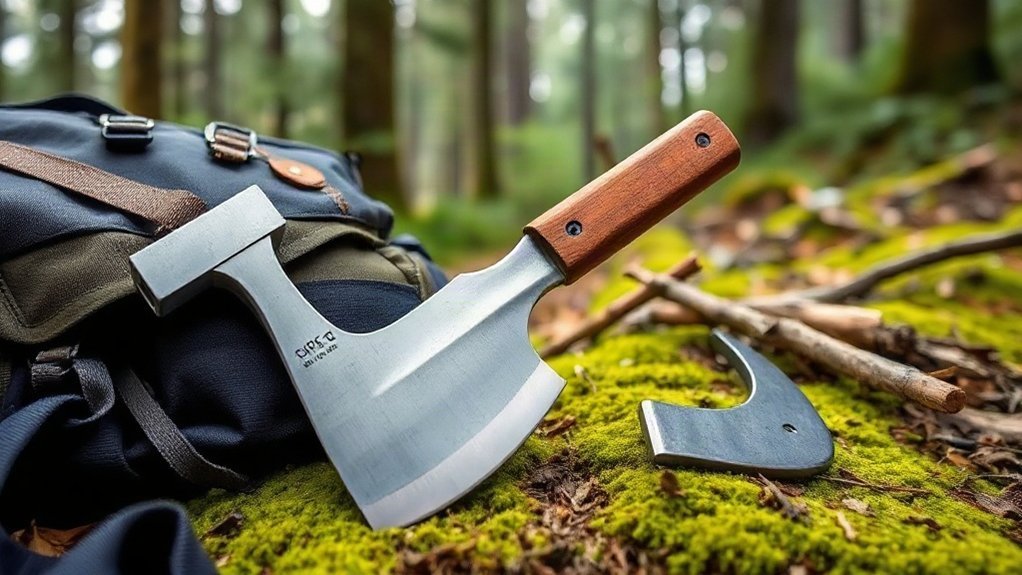
I’d consider sub-pound options such as the Allan Foundry Camp Axe, Bark River Mini-Axe, Elk Ridge ER-272, or UST ParaHatchet FS for carving and kindling, though they’re limited for chopping. For more capable camp chores, the 1.11-pound Fiskars X13 balances light carry with useful leverage; the 1.23-pound Gränsfors Outdoor Axe is another versatile choice. Compact Fiskars X5 and Lexivon V9 models suit kindling. Tomahawks work for twigs and tent pegs, not substantial firewood. I’ll compare their trade-offs below.
Key Takeaways
- Sub-pound options include the Allan Foundry Camp Axe at just over 8 ounces, the Bark River Mini-Axe at 10 ounces, and the Elk Ridge ER-272 at 11 ounces.
- The UST ParaHatchet FS weighs 11.4 ounces, but takes three to four times longer than larger hatchets to chop branches.
- The Fiskars X13 weighs 1.11 pounds with its sheath; its 13-inch handle balances packability with useful chopping and splitting leverage.
- The Gränsfors Bruk Outdoor Axe weighs 1.23 pounds and can handle kindling and 5–6-inch logs, though larger logs take longer.
- Lightweight tomahawks suit twigs, small branches, and tent pegs—not substantial firewood; a roughly six-ounce Bahco Laplander saw may be a better choice.
Which Backpacking Hatchets Are Lightest?
The Fiskars X13 is the lightest hatchet in our tested pack-hatchet list, weighing 1.11 pounds with its sheath and measuring 13 inches long. For a freer, lighter trip, you can go smaller: the UST ParaHatchet FS weighs 11.4 ounces and measures 9.7 inches. The 11-ounce Elk Ridge ER-272 and 10-ounce Bark River Mini-Axe are other Featherweight options mentioned in testing and user discussions.
The Allan Foundry Camp Axe is especially light at just over 8 ounces, including its 14-inch handle. Its head weighs just over 5 ounces and has an approximately 2¼-inch cutting edge. These sub pound hatchets minimize what you carry. If you want a compact axe but don’t need the lowest weight, consider the 1.23-pound Gränsfors Bruk Outdoor Axe or 1.29-pound, 9-inch Lexivon V9.
What Does Less Weight Cost in Performance?
Although a sub-pound hatchet saves pack weight, its light head takes more swings and effort to chop branches or split larger wood. That trade-off matters when I’m choosing how much freedom to carry less is worth in camp.
A sub-pound hatchet saves pack weight, but chopping larger wood takes more swings and effort.
- Small tasks: I find these tools useful for carving, whittling, and making kindling. An 8-ounce Allan Foundry Camp Axe can prepare kindling better than an 8-ounce knife, but it’s near the limit for practical chopping.
- Slower work: The 11.4-ounce UST ParaHatchet FS took three to four times longer than larger hatchets to chop branches. Reduced chopping speed means more Swing effort when wood gets substantial.
- More power: A 16-ounce-or-heavier hatchet generally chops better. Lightweight tomahawks handle twigs and small branches, but their thin blades and light heads struggle with real firewood.
How Do the Fiskars X13 and X7 Compare?
For a compact backpacking hatchet, I’d compare the Fiskars X13 with the heavier X7 based on how much chopping power you need. The X13 measures 13 inches and weighs 1.11 pounds with its sheath, so its X13 compactness helps keep your pack light without giving up a useful handle. In winter testing, I split campfire wood and chopped into a five-inch frozen log with it. The X7 runs about 14 inches and 1.5 pounds; its longer handle adds X7 swing power and can split logs in one swing, but takes up more room. Both use a wedge-style head for chopping and splitting. I’d choose the X13 for lighter travel, or the X7 when extra reach and force matter more. It’s also a practical substitute if the X13 isn’t available.
Are the Fiskars X5 and Lexivon V9 More Compact?
If the X13 still feels too large, I’d compare the Fiskars X5 and Lexivon V9: both are 9 inches long, but the X5 is the more compact choice by design, while the V9 weighs slightly less at 1.29 pounds with its sheath versus the X5’s 1.35 pounds.
Both 9 inches long, the X5 is more compact by design, while the lighter V9 weighs 1.29 pounds with its sheath.
- For a pack where every ounce matters, the V9 saves a little weight. Both short handles suit compact carry, though Handle ergonomics may feel different in your grip.
- The X5’s slim, moisture-resistant plastic sheath keeps its profile neat; the V9’s clip-style sheath is compact too. Consider sheath durability before trusting either on rough trails.
- Both wedge-shaped heads handle chopping and splitting, not fine carving. The V9 costs less, but its rough finish and paint-coated blade need more rust care. I’d choose the X5 for compactness and easier upkeep, or the V9 to trim weight and cost.
Which Gränsfors Axe Suits Chopping or Carving?
I’d choose the 14-inch Gränsfors Bruk Outdoor Axe for versatile chopping and splitting, with enough control for precise work. If you’re focused on carving or shaping green wood, the Hand Hatchet’s thin, keen blade offers better control. I’ll compare how each tool’s design and weight suit these tasks.
Outdoor Axe for Versatility
When I want one compact axe for both chopping and carving, the Gränsfors Bruk Outdoor Axe strikes a useful balance: it weighs 1.23 lb and has a 14-inch handle that stays portable while providing leverage.
- Handle leverage: I find the 14-inch handle gives me useful control and reach without weighing down my pack.
- Chopping: Its mini Hudson’s Bay-style wedge head splits kindling and handles 5–6-inch logs well. I chopped through an 8–9-inch log, too, but slowly; a wider, heavier head splits more efficiently.
- Carving precision: The short edge concentrates force, and the slender swing helps me guide cuts more precisely than with many wedge-shaped hatchets.
A metal collar helps protect the handle when I split kindling. I’ll still sharpen chipped steel and care for the wooden handle to keep this versatile axe trail-ready.
Hand Hatchet for Carving
For detailed carving, I’d choose the Gränsfors Bruk Hand Hatchet: its thin, keen blade and extended cutting edge shape green wood exceptionally well, while a swell beneath the head helps me guide each cut. At 9.2 inches and 1.36 pounds, it packs easily and handles general wood processing, too. Its narrow profile won’t split as readily as a wider axe, so I’d use a controlled technique and choose another tool for frequent splitting.
The 14-inch, 1.23-pound Gränsfors Bruk Outdoor Axe offers a freer balance of chopping, splitting, and fine work. Its compact, sharp head can carve, and its shorter edge gives me precision, but the whippy swing and small head limit splitting power. For carving-first trips, I’d favor the Hand Hatchet. Good Blade maintenance preserves its keen edge, while thoughtful handle ergonomics help me work comfortably and confidently.
Which Hults Bruk Hatchet Fits Backpacking?
I’d consider the Hults Bruk Ågelsjön if you want strong chopping and splitting in a compact 9.5-inch hatchet. At 1.64 pounds, it’s heavier than the lightest backpacking options, especially with its substantial leather sheath. I’ll weigh that added heft against its performance for your trip.
Ågelsjön Weight And Size
At 9.5 inches long and 1.64 pounds, the Hults Bruk Ågelsjön packs easily but weighs more than the other pack hatchets here. Its Compact dimensions give you room to move freely on the trail, but the overall weight deserves a close look if you’re counting every ounce.
- Length: At 9.5 inches, it fits neatly in a backpack or attaches securely outside.
- Head and handle: The 745-gram total makes this a substantial choice, not a featherweight companion.
- Sheath weight: Its heavy-duty leather cover adds weight; newer versions may use a lighter sheath, though the tie can loosen.
I’d weigh the complete, sheathed hatchet before setting out. If you value a compact tool and can spare the ounces, the Ågelsjön offers a portable option; if freedom means carrying less, its heft may matter.
Performance And Trade-Offs
Weight is only part of the Ågelsjön’s backpacking trade-off: at 1.64 pounds, it chops and splits strongly, but its chunky blade and steep bevel are less suited to carving than the Gränsfors Hand Hatchet’s thin, keen edge.
| Hatchet | Best for | Trade-off |
|---|---|---|
| Ågelsjön | Chopping, splitting | Heavier carry |
| Outdoor Axe | Control, carving | Less splitting power |
| Hand Hatchet | Green-wood shaping | Weaker splitting |
I’d choose the Ågelsjön when camp chores demand power, and tune its bevel for finer work if I want more freedom to shape wood. Its handle ergonomics and steel durability support hard use, though the heavy-duty leather sheath adds weight. Some newer sheaths weigh less, but their tie can shake loose. For a lighter, more nimble trail companion, I’d take the 1.23-pound Outdoor Axe; the 1.36-pound Hand Hatchet suits chopping and shaping, not splitting.
Are Tomahawks Practical for Backpacking?
If you only need to cut twigs, small branches, or tent pegs, a lightweight tomahawk can earn its place in a backpack. I value its packable pros and rehafting ease, especially when I want a simple tool I can maintain in the field. But I wouldn’t count on its small head for substantial firewood.
- Match the task: A thin blade may stick deeply, yet the light head can’t chop efficiently. A longer handle helps the swing but won’t add weight.
- Consider alternatives: For small firewood, I’d carry a saw; the roughly six-ounce Bahco Laplander may save time and weight.
- Stay safe: I’d sheath the tool, keep my free hand clear, and watch my feet during every swing.
For freedom on the trail, choose a tomahawk only when its limits fit your plans.
Which Hatchet Works Best for Camp Chores?
For camp chores, I’d choose a hatchet based on the work, not just its weight: the 1.11-pound Fiskars X13 is a versatile all-rounder, with a 13-inch handle that adds leverage for chopping and splitting firewood. For lighter firewood preparation, the X5’s stout wedge handles kindling, though its shorter grip gives you less reach.
| Hatchet | Best task | Trade-off |
|---|---|---|
| Fiskars X13 | Chopping, splitting | Versatile carry |
| Fiskars X5 | Kindling | Less leverage |
| Gränsfors Hand Hatchet | Carving, shaping | Splits less well |
I’d pick the Gränsfors Outdoor Axe for a balance of chores: its 14-inch handle can tackle 5–6-inch logs, more slowly than a larger axe. For heavier work, the 25-ounce Fiskars X7 hits harder. Match your tool to camp tool maintenance and the freedom you want on the trail.
Frequently Asked Questions
What Is the Best Lightweight Axe for Backpacking?
I’d choose the Fiskars X13 as the best lightweight hatchet for backpacking: it weighs just 1.11 pounds with its sheath, yet its 13-inch handle and wedge-shaped head handle campfire chopping and splitting well. I like that it gives you useful power without weighing down your pack. When comparing backpacking axe materials, I’d prioritize a durable head and lightweight handle, then match the tool to your needs. For frequent firewood cutting, I’d bring a saw instead.
Is It Better to Get a Heavier Hatchet or Lighter Hatchet?
I’d choose based on your wood: a heavier hatchet boosts chopping efficiency, while a lighter one frees you to travel farther. That’s the weight versus portability trade-off. If you’ll split logs or cut branches often, I’d carry the 1.5-pound Fiskars X7 and save time with stronger swings. For occasional kindling and small camp tasks, I’d take a sub-pound model. Need a middle ground? The 1.11-pound Fiskars X13 offers useful power and a comfortable handle.
Do Navy Seals Carry Tomahawks?
I can’t confirm that Navy SEALs carry tomahawks as standard equipment. Some military personnel use tomahawks, but that doesn’t establish SEAL tomahawk use. Military breaching tools vary by mission and unit, and I don’t have reliable details identifying a standard SEAL tomahawk model or operational role. If you’re choosing one for your own pack, I’d focus on weight, durability, and intended tasks rather than assuming military use proves a tool’s value in the backcountry.
Is a Hatchet Good for Backpacking?
Yes—a hatchet can be good for backpacking if you’ll chop kindling, split small logs, or shape wood at camp. I’d weigh those tasks against the extra load: hatchet weight limits depend on your tolerance, but lighter models sacrifice chopping power. For backpacking wood prep, I’d consider a compact 1.35-pound Fiskars X5 or a six-ounce folding saw if cutting matters more. Keep your free hand clear, and carry the hatchet sheathed.
Conclusion
I pack a light hatchet when camp chores call for chopping, a compact model when every ounce counts, and a tomahawk only when its versatility earns the space. Lighter tools save weight but give up some reach, power, or comfort. I’d match the tool to the trip, not chase the lowest number on the scale: carry what you’ll use, leave what you won’t, and let every ounce pull its weight.