How Can Beginners Choose Military-Style Knives Without Wasting Money?
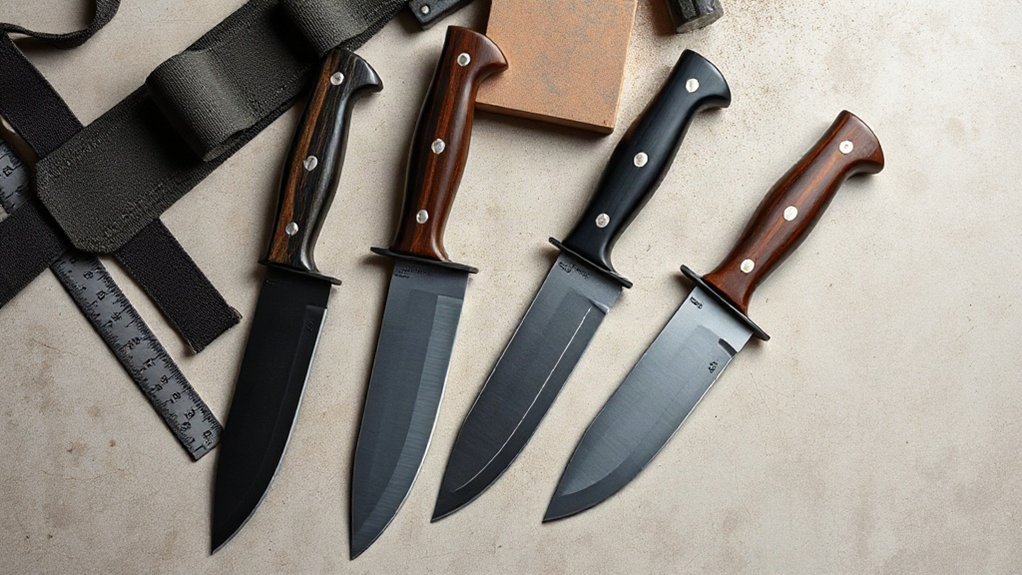
I’d choose a military-style knife for the work I expect to do, not its tactical branding or toughest-looking specs. For carving, food prep, and general camp chores, I’d start with a controllable 4–6-inch blade, then compare grip, steel, sheath, and total carry weight. I’d set a budget around those needs and include the sheath’s cost. I’d also consider maintenance: non-stainless steel needs cleaning, drying, and light oil. The right model, carry setup, and safe techniques depend on what comes next.
Key Takeaways
- Choose a knife for expected tasks, not military styling; a 4–6-inch plain-edge blade suits most camp cutting and carving.
- Compare complete costs, including the sheath, and weigh the knife against how often you’ll carry it.
- Match blade steel and thickness to your needs: SK-5 and 1095 require rust care, while 420HC handles damp conditions better.
- Check grip comfort, edge geometry, sheath retention, and carry fit before buying; test the setup with your clothing and pack.
- Avoid paying for oversized toughness you won’t use; knives aren’t substitutes for axes or saws, and should never be twisted or pried.
Match a Military-Style Knife to Your Tasks
Start with the jobs you expect your knife to handle: a manageable 4–6-inch plain-edge fixed blade works well for carving, food prep, and general camp use, and it’s easier to control than an 8-inch fighter. That shorter reach gives you better carving control and lets you work confidently without carrying more blade than you need.
For heavier wood processing, consider the 5.25-inch KA-BAR Becker BK2. Its thick 1095 Cro-Van blade handles small kindling, but the 16-ounce weight and thick edge make fine carving harder. If you value lighter carry and work in damp conditions, the 4.1-inch Gerber StrongArm Camp weighs just 4.8 ounces; its stainless 420HC blade carved and notched well, though it’s too small for splitting wood.
For hard field use, the 6-inch Cold Steel SRK offers versatility at 8.2 ounces. Its SK-5 steel needs cleaning, drying, and rust protection. I wouldn’t use any knife instead of an axe or saw for large wood, or twist and pry with it.
Set a Budget for a Military Survival Knife
Set your budget around the jobs you expect your knife to handle, not its military branding. I’d spend according to the work you’ll actually do, so you keep more money for the rest of your kit and stay free to choose what suits you. Compare the Upfront Cost with the complete carry cost, including the sheath. Listed knife weights exclude sheaths, and sheath style can affect comfort and attachment.
For budget field use, I’d consider the Cold Steel SRK in SK-5, with its 6-inch blade. If you expect lighter tasks, the 4.8-ounce Gerber StrongArm Camp may be enough. Don’t pay for capacity you won’t use: the 16-ounce Becker BK2 handles heavy camp chores, but its thick blade is less suited to fine carving or food preparation.
I’d also account for Long Term Value and care. SK-5 and 1095 Cro-Van need cleaning, drying, and light oil to help prevent rust.
Check Knife Steel, Handle, Blade, and Sheath
Once your budget is set, compare the knife’s steel, blade, handle, and sheath against the work you expect it to do. I weigh edge retention, toughness, sharpening ease, and rust resistance together. 1095 Cro-Van and SK-5 need cleaning, drying, and light oil to prevent steel corrosion; 420HC suits damp conditions better because it’s stainless.
For carving, I’d look for a 4–5-inch blade that’s easy to control. A 5.25-inch, quarter-inch-thick BK2 handles heavier camp work but feels less suited to food prep. I also check the edge and grind: plain edges are simple to sharpen, while flat or convex grinds can cut wood with less binding than overly thick geometry.
Choose a comfortable, secure handle that fits your hand, even when wet or cold. Compare grip texture and materials such as Kray-Ex, G-10, Micarta, or rubber. Finally, check sheath retention, carry options, and model compatibility so your knife rides safely on your belt or pack.
Compare Four Knives by Best Use
I’d start with the KA-BAR Fighter 1269 as a rugged all-rounder, while the Cold Steel SRK offers a more affordable field option. For heavy camp chores, I’d choose the Becker BK2; for lighter carving, cordage, and food prep, I’d pick the Gerber StrongArm Camp. I’ll compare what each knife does best—and where its trade-offs matter.
Best Overall Choice
If you want one knife for rugged field work, I’d choose the KA-BAR Fighter 1269: its 8-inch 1095 Cro-Van blade and 12.4-ounce weight handle demanding tasks and wood splitting, though they can feel cumbersome for fine carving or all-day carry.
| Knife | Best use |
|---|---|
| KA-BAR Fighter 1269 | Rugged all-round work |
| KA-BAR Becker BK2 | Heavy camp chores |
Its blade reach suits demanding jobs, while its sturdy build offers useful impact tolerance. Still, I’d match your knife to your priorities: the BK2’s thick, heavy blade favors chores over food prep; the lightweight Gerber StrongArm Camp handles cordage, notching, and meals; and the Cold Steel SRK offers versatile field use. Choose the Fighter when you want one capable tool and freedom to tackle rough tasks, not a delicate cutter. Before buying, consider what you’ll actually carry and do.
Budget Field Option
For a more budget-friendly field knife than the KA-BAR Fighter 1269, I’d choose the Cold Steel SRK in SK-5 steel: its 6-inch clip-point blade, textured Kray-Ex handle, and 8.2-ounce weight suit general field work without feeling unwieldy. The Secure-Ex sheath keeps carry practical, while the SRK’s manageable size supports Outdoor versatility and reliable handling. I’d pick it when I want one straightforward tool for varied field tasks without paying for a pricier steel version.
For heavy camp chores, I’d consider the KA-BAR Becker BK2: its thick, 5.25-inch blade handles tough work, though its 16-ounce weight limits finesse. The 4.8-ounce Gerber StrongArm Camp is better for lighter camp use and offers flexible carry. The 12.4-ounce KA-BAR Fighter 1269 gives me an 8-inch blade, but can feel awkward for fine carving or all-day carry.
Best Specialized Fits
Which knife fits best depends on the work and the weight you’re willing to carry: I’d choose the KA-BAR Fighter 1269 as a rugged all-rounder, the Cold Steel SRK for budget field use, the BK2 for heavy camp chores, or the lightweight Gerber StrongArm Camp for finer tasks.
| Knife | Best use and trade-off |
|---|---|
| KA-BAR Fighter 1269 | Wood splitting; 12.4 oz, awkward for carving |
| Cold Steel SRK | Budget field use; 8.2 oz, SK-5 needs rust care |
| Becker BK2 | Heavy chores; 16 oz, poor for carving or food prep |
| Gerber StrongArm Camp | Lighter tasks; 4.8 oz, cordage and food prep |
These specialized roles help you match a blade to your priorities, not marketing. Consider niche applications and carry weight before buying: the StrongArm offers more freedom on lighter trips, while the BK2 brings heft for demanding camp work.
Choose a Carry Method and Care for Your Knife
I match the sheath and attachment to the knife’s weight and how you’ll carry it, checking that it feels comfortable when you sit or wear a pack. I make sure the sheath holds the knife securely and follow local carry rules. After use, I clean and dry non-stainless blades, then apply a light coat of oil; a coating won’t protect the exposed edge from rust.
Match Carry to Your Needs
A secure, comfortable carry setup makes a knife easier to manage on the trail. I match the sheath and hardware to my knife, clothing, and routine so I can move freely and reach it without fuss.
- Choose a sheath that fits your belt, pack, or MOLLE setup, then confirm it stays put with retention testing before heading out.
- Consider pack access comfort: a compact fixed blade carried horizontally may avoid hanging against your leg, but I test it while sitting and wearing my pack.
- Match carry hardware to the knife’s weight, and check local rules before carrying.
- For carbon steel, I clean and dry the exposed edge after use and apply a light coat of oil. In damp conditions, I might choose stainless steel, such as 420HC, but still clean and dry it after use.
Clean, Dry, and Protect
After choosing a carry method that feels secure and comfortable, I make knife care part of my routine. I check that the sheath retains the blade, fits my belt or pack, and stays comfortable when I sit. A horizontal sheath may keep a compact fixed blade off my leg, but I test the full setup before relying on it and follow local carry rules.
After use, I clean and dry SK-5 or 1095 Cro-Van steel, then apply a light coat of oil for rust prevention. A coating won’t protect the exposed edge, so I dry and maintain it too. Good moisture control matters, especially outdoors. In damp conditions, I might choose stainless steel, such as the 420HC Gerber StrongArm Camp, but I still clean and dry it. A few minutes of care helps keep my knife ready for the freedom to explore.
Use Your Military-Style Knife Safely
When you use a fixed-blade knife for outdoor work, treat it as a cutting tool, not an indestructible substitute for an axe or saw on large wood. I rely on sound habits to work confidently outdoors and protect both my knife and my hands:
> Use a fixed-blade knife as a cutting tool, not a substitute for an axe or saw on large wood.
- Batoning safety: Strike the spine over the wood, away from the tip. Never twist a stuck blade; use a wedge to release a stubborn split.
- Make notches carefully: Cut a straight stop line, then angle cuts in from both sides. Remove small chips gradually instead of forcing the blade.
- Carve with control: Keep fingers clear of the edge. For feather sticks, brace the wood against a stable surface and use a steady carving technique.
- Prevent rust: After using non-stainless steels like 1095 Cro-Van or SK-5, clean and dry the blade, then apply a light coat of oil.
These steps let me stay self-reliant without taking needless risks.
Frequently Asked Questions
What Is the Holy Trinity of Knives?
I call the “holy trinity” three complementary tools: a fixed-blade knife, a folding knife, and a larger chopping tool, such as an axe or tomahawk. I’d choose each for a distinct job, not collect duplicates. A sturdy fixed blade offers field-ready knife versatility, while blade geometry should suit the tasks you expect. Add a folder for compact everyday use and an axe or saw for heavier woodwork, and you’ll carry more freedom with less excess.
What Is the Golden Rule for Knives?
The golden rule for knives is simple: choose a blade like a key, cut for the tasks you’ll actually face, not for flashy claims. I’d match its size and weight to my work; a 4–5-inch fixed blade offers control for camp chores. Knife Safety Fundamentals mean I won’t chop, pry, or twist with it. For freedom without needless expense, I’ll check the grip and sheath, then practice Blade Maintenance to keep steel dependable.
What Style of Knife Is Best for Self-Defense?
I wouldn’t call any knife style best for self-defense: a longer blade or military branding doesn’t guarantee safety. Check legal self defense considerations where you live before carrying anything, and prioritize secure retention and a sheath that stays put. A fixed blade avoids a folder’s pivot and lock, but still demands training and careful handling. I’d consider nonlethal personal safety options first, and focus on avoiding danger rather than relying on a knife.
What Brand of Knife Does the US Military USe?
The U.S. military doesn’t use one knife brand—uniformity, ironically, isn’t uniform. I’d look at the specific branch, unit, and role before trusting a “military knife” label. KA-BAR has a strong military history, but it isn’t issued to everyone. The Marine Corps’ Ontario OKC3S is a documented example; claims about other models may reflect training, not current issue specifications. I’d check branch specific equipment choices and choose what suits your needs.
Conclusion
I choose a military-style knife for the work I’ll actually ask it to do, not for a dramatic label or shiny finish. I set a budget, check the steel, handle, blade, and sheath, then weigh each option against my needs. I also plan how I’ll carry, maintain, and use it safely. A good knife isn’t a trophy; it’s a dependable tool—like a compass pointing me toward better choices, long after the excitement of buying has passed.