Which Multitools Are Best for Camping and Wilderness Adventures?
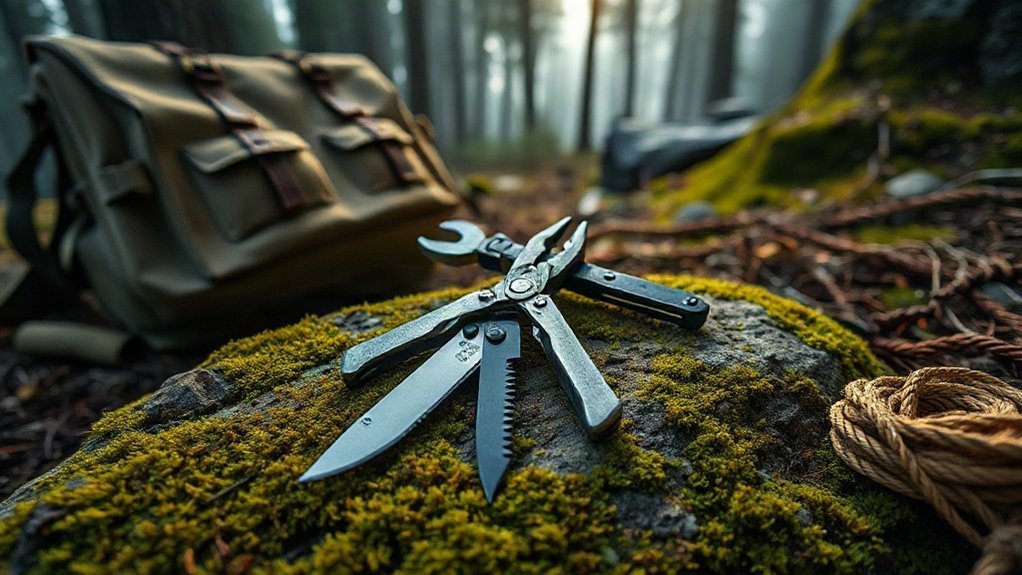
I’d choose the Victorinox Huntsman for lightweight camping chores like food prep, opening packages, and trimming cord. For tougher wilderness repairs, I’d carry the Leatherman Wave+, which adds pliers, locking blades, replaceable wire cutters, a saw, and a file. The SOG PowerPint is a compact middle ground for minor fixes, while the Signal adds useful backcountry features like a ferro rod and whistle. I’d weigh each tool’s capability against its carry weight; the guide below helps you find your best fit.
Key Takeaways
- Choose the Victorinox Huntsman for lightweight camping, food prep, and simple chores; it packs 15 tools into about 3.4–4 ounces.
- Pick the 2.2-ounce Victorinox Tinker for a minimal trail kit, or the 4.2-ounce SOG PowerPint for compact pliers and minor repairs.
- For tougher fixes, the 8.5-ounce Leatherman Wave+ offers pliers, replaceable wire cutters, locking blades, scissors, a saw, and a file.
- Consider the Leatherman Signal for wilderness features like a ferro rod and safety whistle, or the customizable Roxon Flex for specialized tasks.
- Match capability to carry weight: the 12-ounce Surge suits demanding repairs but may feel cumbersome on backpacking trips.
The Best Camping Multitools at a Glance
For an easy starting point, match your camping multitool to the jobs you expect it to handle. I’d pick the Leatherman Wave+ as my all-around choice: its 18 tools cover repairs and camp chores, and it weighs 8.5 ounces. If you want to customize your setup, the Roxon Flex lets you swap nearly every tool, though its 8.8-ounce frame feels bulky.
For lighter travel, the 4-ounce Victorinox Huntsman offers 15 tools, effective scissors, and useful kitchen features, but no pliers. The 2.2-ounce Tinker keeps simple trail tasks covered with 12 functions. For demanding repairs, I’d choose the 12-ounce Surge, best carried on a belt. Consider Multitool durability alongside weight, then use campsite organization to keep your tool accessible and your pack ready for independent adventures.
How to Choose a Multitool for Camping
Choose a camping multitool by matching its tools to your usual jobs. I’d weigh each option against my plans, pack weight, and comfort using it in the field:
- For gear repairs, look for pliers and locking blades; for camp cooking, scissors, a can opener, or a corkscrew may matter more.
- On light hikes, the 2.2-ounce Victorinox Tinker keeps weight low. The 6.5-ounce Swiss Champ adds functions but takes more space.
- If I expect demanding repairs, an 8.5-ounce Leatherman Wave offers pliers, locking blades, a saw, and a file. The 12-ounce Surge may feel cumbersome backpacking.
- Test how tools open and lock before buying. Easy access supports confident use. Plan Tool maintenance, and consider emergency signaling needs when choosing what else to carry.
Leatherman Wave+ for Reliable Camp Repairs
When camp repairs demand more than a compact multitool can offer, I’d consider the Leatherman Wave+. Its pliers, replaceable wire cutters, scissors, bit driver, and straight and serrated blades give me options for fixing gear or trimming cordage. Durable blade materials—420HC stainless steel—handle routine campsite jobs.
| Feature | Camp benefit | Trade-off |
|---|---|---|
| Locking tools | Secure repair work | 8.5 ounces |
| Outside-access blades, saw, file | Quick, one-handed reach | 4 inches closed |
| Hidden lanyard loop | Flexible carry | No clip or sheath |
I appreciate tools I can reach without unfolding the whole multitool, especially when I’m keeping camp setup simple. At about $130, the Wave+ offers broad capability, though you’ll need to plan your carry method and buy extra bits separately. It suits freedom-minded campers who value versatility over minimum weight.
Leatherman Signal for Backcountry Fixes
When I head into the backcountry, I want repair tools that can handle a loose screw, cut wire, or patch gear. The Signal pairs pliers, cutters, drivers, and a saw with a ferro rod, sharpener, and whistle for wilderness needs. I’ll look at how its 19 tools support trail fixes and camp tasks.
Backcountry Repair Tools
For backcountry fixes, I’d pack the Leatherman Signal, which combines 19 tools for repairing gear, preparing food, and building a fire. When you’re far from a trailhead, a compact repair kit helps you stay self-reliant and keep moving. I’d use its tools for:
- Gear patching: The awl and drivers help secure loose straps, fasteners, or shelter components.
- Equipment troubleshooting: Pliers, cutters, a wire stripper, and wrenches address common field fixes.
- Campsite cutting: The saw and straight- and serrated-edge blade handle practical cutting jobs.
- Camp chores: The hammer and can and bottle openers support setup and everyday tasks.
I like having these options in one tool, so I can travel lighter and solve small problems without surrendering my freedom to explore. It’s a useful companion when plans change unexpectedly.
Signal’s Wilderness Features
The Leatherman Signal packs 19 wilderness-ready tools into one multitool, giving me practical options for backcountry fixes and camp tasks. Pliers and cutters let me repair gear, while the straight-and-serrated blade, saw, and hammer handle food prep, cutting, and campsite jobs. When I need a spark, the ferro rod helps me start a fire; the diamond-coated sharpener keeps the blade ready for the next task.
Drivers, wrenches, a wire stripper, and an awl give me useful choices for field repairs, so I can stay self-reliant beyond the trailhead. A safety whistle supports Wildlife awareness by helping me signal when needed, and the can and bottle openers make meals easier. For weather readiness, I value having practical tools close at hand when conditions change. The Signal helps me travel freely and prepared.
Leatherman ARC for Demanding Camping Trips
If your camping trips demand serious repair capability, the 8.6-ounce Leatherman ARC packs 20 tools, including full-handle pliers and a nine-piece double-ended driver set. I’d choose it when a remote repair could keep my plans on track. Its 2.76-inch MagnaCut blade delivers strong MagnaCut blade performance, while magnetic one hand opening lets me deploy and close it easily.
On a demanding trip, I can use it to:
- Loosen a corroded motor connector.
- Clip a stubborn fastener.
- File a terminal smooth.
- Strip wire for a repair.
At about $250, it’s a serious investment. The bulky nylon sheath keeps the tool and bit set in separate compartments, so I can carry the kit together, though it takes up room. For capable repairs far from help, I’d welcome that tradeoff.
Roxon Flex for Custom Camp Tool Sets
When I want to tailor a camp tool set to the trip, the Roxon Flex lets me swap implements from 72 options, with a typical setup carrying 19 tools. That Custom tool selection gives me room to prepare for fishing, biking, or camp chores without accepting a fixed lineup. I can shape a Modular camp setup around the way I travel and the tasks I expect.
The Flex feels comfortable in hand, and its spring-loaded pliers and one-handed implements make quick jobs easier. At 8.8 ounces and 4.2 inches closed, though, it adds noticeable bulk to a backpacking load. I’ve also found the knife average, the file prone to scratches, and the wire cutters soft. Its lock system can annoy me, too. I’d choose it when flexibility matters more than a compact, polished tool.
Victorinox Huntsman for Lightweight Camping
I’d recommend the Victorinox Huntsman if you want camping utility without extra bulk: it weighs about 3.4–4 ounces and packs 15 tools. Its sharp scissors, knives, and openers handle camp-kitchen tasks and small repairs. You won’t get pliers or locking tools, so save heavy repairs for a sturdier multitool.
Lightweight Camping Utility
The Victorinox Swiss Army Huntsman packs 15 useful tools into a roughly 4-ounce frame, making it a capable choice for light camp chores. I like its compact versatility when I want to roam freely without hauling a heavy kit. For everyday campsite tasks, I’d use it to:
- Make tent stake adjustment easier by trimming cord or clearing small obstructions.
- Prepare emergency firestarter use by shaving dry tinder with care.
- Snip thread or lightweight material with its exceptionally sharp scissors.
- Handle small fixes with its blades, while avoiding demanding repairs.
The Huntsman’s profile is bulkier than some lightweight alternatives, and its tools don’t lock. It also lacks pliers, so I wouldn’t rely on it for forceful work. Still, for simple chores on a short trip, I find its useful range a practical trade-off for carrying one modest tool.
Versatile Camp Kitchen Tools
Beyond light campsite fixes, the Victorinox Huntsman can handle simple meal prep without adding much weight to your pack. At about 3.4–4 ounces, it carries 15 tools, including multiple knives, a can opener, a corkscrew, and a bottle opener. For Camp food prep, I’ve found its sharp scissors especially useful for trimming packaging or snipping ingredients. The bottle opening tool also makes it easy to enjoy a drink at camp without packing a separate opener.
The Huntsman gives you practical kitchen versatility while keeping your load light, so you can roam farther with fewer bulky tools. It doesn’t include pliers, and its tools don’t lock; some can also be difficult to open. I’d choose it for straightforward meals and a lighter pack, but take care when using the blades and scissors.
SOG PowerPint for Compact Camp Carry
If you want to keep your camp kit light, the SOG PowerPint weighs just 4.2 ounces and packs 18 functions into a compact multitool. I’d choose it when I want useful campsite capability without letting gear weigh down my pack or limit my route.
> At just 4.2 ounces, the SOG PowerPint packs 18 functions for lightweight campsite fixes without weighing down your pack.
- Compact plier handling: Its capable pliers can help with small camp tasks, from adjusting gear to gripping items.
- Pocket carry balance: At 4.2 ounces, it’s easy to carry when you’d rather travel light.
- Useful attachments: The many functions give me options for minor fixes around camp.
- Know its limits: The tools are very small, so I wouldn’t rely on them for demanding jobs.
For quick, modest tasks, the PowerPint offers a compact way to stay prepared and keep moving freely.
Check These Features Before You Camp
Before you choose a multitool for camp, match its features to the jobs you expect. I look for pliers, a knife, screwdrivers, and scissors to handle repairs without packing separate tools. For tougher wilderness fixes, durable construction, locking implements, and replaceable wire cutters matter.
| Feature | Camp advantage |
|---|---|
| Saw | Trims small branches |
| Scissors or blade | Opens food and cuts cordage |
| Outside access | Deploys blades and saws quickly |
Check Pack Weight before buying: the Leatherman Wave+ weighs 8.5 ounces; the Swiss Army Tinker weighs 2.2. I’d choose the lighter Tinker for simple hikes, or the Wave+ for demanding jobs; it also has a saw and file. Check Tool Maintenance, too: replaceable cutters can extend service life. The right balance keeps your kit capable without tying you down.
Frequently Asked Questions
What Is the Best Multitool for Camping?
I’d choose the Leatherman Wave+ as the best camping multitool for most trips. Its pliers, replaceable wire cutters, straight and serrated blades, scissors, saw, and file cover essential multitool features for camp repairs and everyday tasks. At 8.5 ounces, it isn’t the lightest option, but I find its versatility worth carrying when I want freedom to handle unexpected jobs. If you prioritize low weight, I’d consider the 2.2-ounce Victorinox Tinker instead.
Are There Better Multitools Than Leatherman?
Yes—Leatherman alternatives can be better when you want a tool tailored to your needs; I wouldn’t call one universally superior. Roxon’s Flex is a customizable toolbox in your pocket, scoring 7.5 versus the Wave+ at 7.0, though it’s bulky and its lock can frustrate. For lighter carry, I’d consider the Huntsman or Nextool F12; for savings, the Gerber Suspension NXT. Compare multitool durability, weight, and features before choosing your freedom.
What Is the Best Equipment for Camping and Hiking?
I’d choose camping and hiking equipment around your route, weather, and pack weight. Start with a comfortable, properly fitted backpack, reliable shelter, sleeping bag, water filter, first-aid kit, headlamp, and layered clothing. Add camping cookware that’s lightweight and easy to clean, plus a map or GPS. I’d carry a compact multitool for small repairs; choose a fixed-blade knife if you’ll split wood. Pack only what you need for a safer, freer trip.
What Is the Best Knife for Camping and Survival?
For camping and survival, I’d choose the Gerber StrongArm: its sturdy fixed blade knife is an anchor when wilderness tasks turn demanding. Its nearly five-inch 420HC blade handled game processing without cracking or chipping, making it a dependable bushcraft knife. If you prize freedom from extra weight, I’d consider the 1.85-ounce Benchmade Bugout, which opens one-handed and locks securely. A drop-point blade offers versatile control; for heavier work, I’d trust a fixed blade.
Conclusion
I don’t think one multitool is best for every camping trip. The theory that more tools mean better preparation doesn’t always hold: weight, useful functions, and ease of use matter more than a crowded handle. I’d choose a Leatherman Wave+ for dependable repairs, a Victorinox Huntsman for lighter outings, or a Signal when backcountry emergencies are a concern. Picture your trip, list the tasks you’ll face, then carry the tool that fits—not every tool you can find.