What Blade Steel Should You Choose for Fixed-Blade Survival Knives?
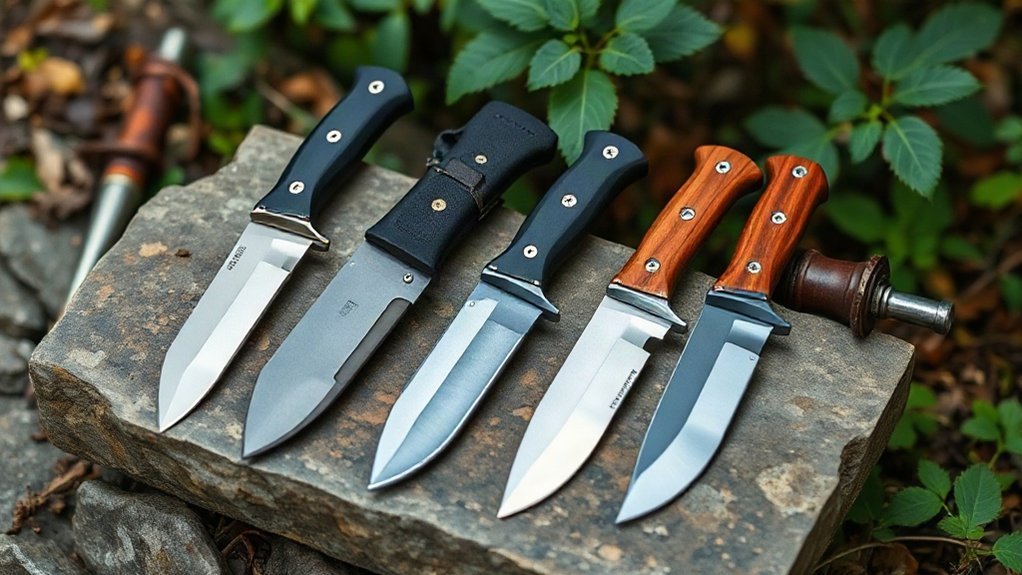
I choose fixed-blade survival steel by matching toughness, corrosion resistance, and edge retention to the work and conditions. For hard use, I favor CPM 3V for exceptional toughness, provided I can clean, dry, and oil it regularly. In wet or varied weather, I’d consider MagnaCut for its balance of toughness and rust resistance; LC200N also merits comparison for coastal exposure. I also weigh blade geometry and sharpening tools, since steel alone won’t predict performance. The key trade-offs become clearer below.
Key Takeaways
- Choose CPM 3V for demanding survival tasks such as batoning and heavy camp work; its exceptional toughness does not make prying safe.
- Choose CPM MagnaCut for a balanced fixed blade in varied or wet conditions, combining toughness, edge retention, and strong corrosion resistance.
- Consider LC200N for persistent wetness or coastal spray, and 52100 or 1095 if easy field sharpening matters and you can prevent rust.
- Match steel to cutting demands: AEB-L sharpens quickly and takes a fine edge, while wear-resistant steels suit repeated abrasive cutting but may need diamond abrasives.
- Compare heat treatment, grind, edge thickness, construction, and sharpening tools—not steel name or hardness alone; higher HRC can increase chipping risk.
How to Choose Survival-Knife Steel
Choose survival-knife steel based on the jobs you expect it to handle and the conditions you’ll face: prioritize toughness for hard use, corrosion resistance in wet environments, and edge retention for repeated cutting. I’d start with your real needs, not a steel’s reputation. If you want a low-maintenance all-rounder, CPM MagnaCut balances toughness, corrosion resistance, and Edge retention; the supplied guidance places it at 60–63 HRC. That balance can help you stay ready without constant upkeep.
For hard use, I’d also consider 52100, a tough carbon steel that’s readily sharpened. You’ll need to protect it from rust more carefully than stainless steel, especially in wet conditions. CPM 3V brings exceptional toughness for demanding tasks, but it isn’t stainless and requires regular maintenance. Toughness doesn’t make any knife safe for prying. Before choosing, I’d check the finished knife’s heat treatment, blade geometry, and sharpening difficulty, too. Those details shape performance and help you choose a tool that supports self-reliance wherever you roam.
Compare Survival-Knife Steel Trade-Offs
Wet conditions favor CPM MagnaCut’s balance of edge retention, toughness, and corrosion resistance, while 52100 offers greater toughness and quick sharpening at the cost of more rust-preventive care. I’d match steel to your conditions, sharpening setup, and preferred freedom from maintenance.
| Steel | Main advantage | Trade-off |
|---|---|---|
| MagnaCut | Edge retention and corrosion resistance | Balance may cost more |
| 52100 | Toughness and sharpening speed | Needs rust-preventive care |
| AEB-L | Fine edge and quick sharpening | Lower edge retention |
For skinning and processing, I’d consider AEB-L if you value a fine edge and can sharpen often. For everyday use, compare CPM-154, A2, and S35VN against your tools and expected tasks; CPM-154 is a tough, all-around stainless option for a roughly three-inch blade. Don’t judge a knife by steel name alone: heat treatment, geometry, and construction shape performance, and higher HRC doesn’t automatically mean better or tougher. Choose the trade-offs that suit your work, then spend more time outdoors and less time managing gear.
CPM 3V: Toughness for Hard Use
I’d consider CPM 3V when you need exceptional impact resistance for demanding tasks like batoning, though toughness doesn’t make it suitable for prying. Since it isn’t stainless, you’ll need to clean and dry the blade regularly, especially in wet conditions. I’ll weigh its hard-use strengths against its sharpening demands and the work you expect it to handle.
Exceptional Impact Resistance
When hard impacts are likely, CPM 3V stands out for its exceptional toughness and resistance to chipping or breakage. I’d choose it when you want a fixed blade ready for demanding work, from batoning wood to other heavy camp tasks. Its shock resilience helps the edge endure blows that might damage a more brittle steel, giving you confidence when the job gets rough. Still, toughness doesn’t make a knife indestructible. Impact thresholds vary with blade geometry, hardness, and heat treatment; one guide lists CPM 3V at 58–60 HRC, but the maker’s choices matter. I wouldn’t use any knife as a pry bar. For freedom to tackle hard-use tasks, pair this steel’s toughness with sensible handling and a blade built for the work. It’s a capable tool, not a license to abuse it.
Non-Stainless Steel Care
Although CPM 3V is a tough choice for hard-use knives, it isn’t stainless, so dry the blade after use and apply a light coat of oil, especially in wet conditions. I make this quick routine part of caring for any 3V knife, since moisture left behind can cause rust. A Blade patina may develop over time; it’s generally a sign of surface oxidation, not a reason to panic, but I still clean and protect the steel. Good storage practices matter, too: I keep the blade dry, lightly oiled, and away from damp sheaths or humid spaces. CPM 3V is often heat-treated to 58–60 HRC, balancing hardness with resistance to chipping and breakage. Its toughness doesn’t make it a pry bar, so I avoid side-loading it. It sharpens more easily than 20CV or M390, though I carry a field sharpener.
Best Uses for 3V
For hard-use survival tasks, CPM 3V stands out when I need a fixed blade that resists chipping and breakage. Its exceptional toughness makes batoning a strong use, while wood carving and food preparation suit lighter work. I’d avoid prying; toughness isn’t permission to misuse a blade. A typical 58–60 HRC heat treatment balances hardness with the ability to absorb abuse.
| Task | CPM 3V fit | Consideration |
|---|---|---|
| Batoning | Excellent | Avoid prying |
| Wood carving | Suitable | Use controlled cuts |
| Food preparation | Suitable | Clean and dry blade |
Unlike stainless steel, 3V needs regular maintenance, especially after wet use, to limit corrosion. I’d choose it when hard-use toughness matters more than carefree upkeep. It’s a premium option; if wet-weather protection matters most, CPM MagnaCut may better support your freedom outdoors.
MagnaCut: Toughness and Corrosion Resistance
I look at MagnaCut as a balanced field steel: it’s tough enough for demanding use and resists rust better than CPM 3V. Its 60–63 HRC rating doesn’t tell the whole story, since heat treatment and blade geometry also shape performance. You’ll still need to clean and care for it after wet use.
Toughness In The Field
In wet conditions, CPM MagnaCut offers a practical balance of toughness and corrosion resistance: it resists chipping better than 14C28N and rust better than CPM 3V, though 3V is tougher. For field use, I value that balance: you can work through demanding tasks with less worry about edge damage, without carrying a blade that demands constant attention. Its Impact tolerance supports rough use, while edge stability helps the cutting edge stay dependable under stress. Still, I wouldn’t call MagnaCut indestructible or rustproof. The toughness rating also varies by version: original Crucible MagnaCut rates 7, while Erasteel MagnaCut rates 8.5. I’d check the specific knife’s heat treatment, grind, and construction before choosing; steel alone can’t guarantee performance. That way, you can choose confidently and keep your options open outdoors.
Corrosion Resistance For Survival Knives
When damp conditions are part of the job, CPM MagnaCut gives a survival knife a useful balance of toughness and corrosion resistance. I’d choose it when rain, humidity, or demanding field tasks could limit your options for cleaning and drying a blade. Unlike older stainless steels, MagnaCut keeps chromium in the steel matrix instead of locking it into carbides, helping resist corrosion without the same toughness penalty.
That doesn’t make it rustproof. After exposure to moisture, salt, or other corrosive materials, clean and dry the blade when you can. Saltwater resistance and humidity protection are advantages, not permission to neglect basic care.
MKC heat-treats MagnaCut to 61–63 HRC, but hardness alone can’t predict performance. CPM 3V offers greater rated toughness, yet MagnaCut is the more balanced choice when wet-condition reliability matters and you want freedom to keep moving.
LC200N for Wet and Coastal Conditions
If your fixed-blade survival knife will see coastal spray or persistent wetness, I’d compare LC200N with CPM MagnaCut, weighing corrosion resistance against toughness for your likely cutting tasks. LC200N deserves consideration when resisting corrosion matters most, but I wouldn’t treat it as rustproof or maintenance-free. Your freedom to rely on a knife starts with choosing a finished tool, not just a steel name.
- Match each steel to the cutting you expect: compare corrosion resistance and toughness for your tasks.
- Check blade geometry and heat treatment; they shape performance as much as steel choice.
- Inspect construction, handle materials, and wet environment hardware for details that may need care.
- Include cleaning and drying in LC200N maintenance, especially after saltwater exposure.
I’d assess the whole knife before deciding. The steel guide identifies LC200N as a wet-use option but provides no numerical performance ratings, so I wouldn’t infer a precise ranking. Instead, weigh the maker’s design and your real conditions, then choose the knife you can maintain and trust outdoors.
When Carbon Steel Makes Sense
I’d choose carbon steel when I need toughness and can sharpen the blade easily in the field. Steels like 52100 and CPM 3V can handle hard use, but they aren’t stainless and need regular care to prevent rust. Match the steel to the job, and don’t mistake toughness for permission to pry.
Easy Field Sharpening
For easy field sharpening, carbon steels like 52100 and 1095 make practical choices: they usually take an edge faster than highly wear-resistant steels, and 52100 sharpens especially quickly. I’d choose them when you value simple Edge Touchups and toughness over low-maintenance corrosion resistance. Carbon steel can rust, so dry and maintain your blade after use.
- Match your steel to your kit: CPM 20CV and M390 need diamond abrasives.
- S35VN works with quality ceramic or natural stones.
- A roughly three-inch CPM-154 EDC blade can be manageable without diamond stones.
- Carry a field sharpener or strop, whatever steel you choose.
That preparation keeps Field Sharpening practical and helps you stay self-reliant outdoors. A dull edge usually needs only a touch-up; repairing a chip takes more work, so check the blade regularly and address wear before it becomes damage.
Toughness With Tradeoffs
When hard use matters most, I’d consider CPM 3V for its exceptional toughness and resistance to chipping—but it isn’t stainless, so you’ll need to clean, dry, and maintain it regularly. For demanding cutting, that toughness can offer confidence and freedom to work far from easy resupply.
If you want a practical field blade, 52100 carbon steel is tough and quick to sharpen with basic gear. That makes it a sensible choice for bushcraft and heavy-duty tasks, though it needs more corrosion care than stainless steel. Cryogenic treatment and a PVD coating can help, but they won’t make your knife maintenance-free.
I pay attention to edge stability and respect impact limits: toughness isn’t permission to pry. Match steel and blade geometry to the work, then clean and dry the blade before storing it.
How Heat Treatment Changes Blade Performance
Even two knives made from the same steel can perform differently because heat treatment shapes edge life, toughness, and sharpening behavior. I look beyond the steel name and check the maker’s target hardness: heat treatment determines whether a blade balances lasting sharpness with resistance to damage.
- Many hunting knives fall around 58–64 HRC, but higher isn’t automatically better; a 66 HRC blade may hold an edge while chipping more easily.
- Published targets include 58–61 HRC for CPM S30V and 60–63 HRC for CPM MagnaCut. I check the maker’s specifications because treatment varies.
- MKC reports treating MagnaCut to 61–63 HRC and 52100 to 60–62 HRC, showing how makers choose a hardness balance for each steel.
- MKC uses cryogenic treatment on every blade, saying it optimizes steel structure, hardness, toughness, and edge stability.
For your own knife, I’d weigh the intended performance against the maker’s actual process. That gives you a clearer basis for choosing a dependable tool and heading out with confidence.
Why Survival-Knife Geometry Matters
A survival knife’s geometry can shape its cutting performance as much as its steel. When I compare knives, I look beyond steel grade and hardness to blade thickness, blade grind, and behind edge thickness. These details affect how freely a blade moves through material.
| Geometry factor | Effect on cutting |
|---|---|
| Blade thickness | A thicker blade may resist slicing |
| Blade grind | Grind influences how material separates |
| Behind edge thickness | More thickness can add cutting resistance |
| Sharpening angle | Angle changes the edge’s bite |
Two knives made from the same steel can feel completely different: a thick blade may push through a cut, while a thin slicer may glide. Sharpening angle also changes performance, so steel ratings alone can’t predict how a finished knife will behave.
I compare the actual knife’s geometry with its intended tasks before choosing. That gives me a clearer sense of what I can do with it—and more confidence when I head out on my own.
Match Steel to Your Tasks and Conditions
I match steel to the work and weather I expect, not just to a rating on a spec sheet. Your seasonal workload and emergency priorities should guide the choice: a knife for wet coastal travel faces different demands than one for dry-country chores or hard camp work.
- For varied weather, I’d choose stainless CPM MagnaCut for its balance of edge retention, toughness, and corrosion resistance. CPM 3V brings more toughness for heavy use, but it isn’t stainless.
- If I’m cutting abrasive materials like cardboard repeatedly, I prioritize wear resistance, provided my sharpening kit can handle it.
- When toughness and quick field sharpening matter more than rust resistance, 52100 is a capable choice, though it needs more care.
- In wet or saltwater conditions, I’d compare MagnaCut with LC200N and favor corrosion resistance. I’d still clean the whole knife: stainless steel isn’t rustproof.
I also judge the knife’s heat treatment, geometry, construction, and edge thickness. A high HRC or steel rating alone can’t promise dependable performance when you’re far from help.
Choose Steel You Can Sharpen and Maintain
Once I’ve matched steel to the work and weather, I consider how I’ll sharpen and care for it in the field. I choose a blade I can maintain with the tools I’m willing to carry, so a dull edge won’t limit my options miles from help.
CPM-154 works well with conventional stones, while 20CV and M390 typically need diamond abrasives. For quick Field sharpening, I might choose tough 52100, but I’ll need to clean and dry it more carefully than stainless MagnaCut. MagnaCut offers a practical balance of toughness, edge retention, and corrosion resistance; I’d still pack a small sharpener or strop.
Steel doesn’t dictate the whole effort. Hardness, edge thickness, damage, and technique all affect sharpening. High wear resistance can make a badly dulled or damaged edge harder to restore, and stainless steel can still rust. I match my choice to my maintenance routine and conditions, preserving the freedom to keep working without relying on specialized gear.
Frequently Asked Questions
What Is the Best Steel for a Fixed Blade Knife?
I’d choose CPM MagnaCut as the best all-around steel for a fixed-blade knife: it balances edge retention, toughness, and corrosion resistance, so you can rely on it across varied conditions. For Steel Selection, match your priorities: choose CPM 3V when resisting chips matters most, or 52100 if you value easy sharpening and accept extra care. Blade Performance also depends on heat treatment, geometry, and construction, so I’d judge the complete knife—not steel alone.
Is D2 Steel Better Than S30V?
No—D2 isn’t universally better than S30V; I’d choose based on the finished knife and your needs. S30V’s recommended hardness range is 58–61 HRC, but that statistic alone can’t predict performance. For D2 vs S30V toughness, I’d compare heat treatment and edge geometry, not just steel names. For D2 vs S30V sharpening, consider your abrasives: D2’s wear resistance can make sharpening demanding. Check corrosion resistance, too, and choose the blade you can maintain independently.
What Is the Best Fixed Blade Knife for Survival?
I’d choose the Fallkniven F1 as a compact, dependable fixed-blade survival knife, especially if you value easy carry and corrosion resistance. For heavier chopping, I’d consider the larger Becker BK-2, though its extra weight may limit freedom on long trips. Match knife size to your tasks, and check handle ergonomics before buying; a secure, comfortable grip helps prevent blisters. I’d also prioritize a plain edge, sound heat treatment, and a field sharpener.
What Is the Best Steel for a Survival Knife?
I’d choose CPM MagnaCut as the best all-around steel for a survival knife because it balances toughness, Steel edge retention, and corrosion resistance for varied outdoor use. If you expect hard impacts and can maintain the blade, I’d consider CPM 3V for its chip resistance. For easy field sharpening, 52100 is a capable option, though it needs more rust prevention. I’d also check heat treatment, blade geometry, and construction before deciding.
Conclusion
Choose survival-knife steel by weighing toughness, corrosion resistance, sharpening ease, and the conditions you face. For hard use, I’d favor CPM 3V; for a balance of durability and rust resistance, MagnaCut; and for constant exposure to water, LC200N. Still, steel is only one part of the blade. Heat treatment and geometry shape performance, too. I’d choose a knife I can maintain and trust, because the best steel is a steady hand’s dependable partner in the field.