How Do You Maintain Hatchets and Tomahawks to Prevent Rust and Damage?
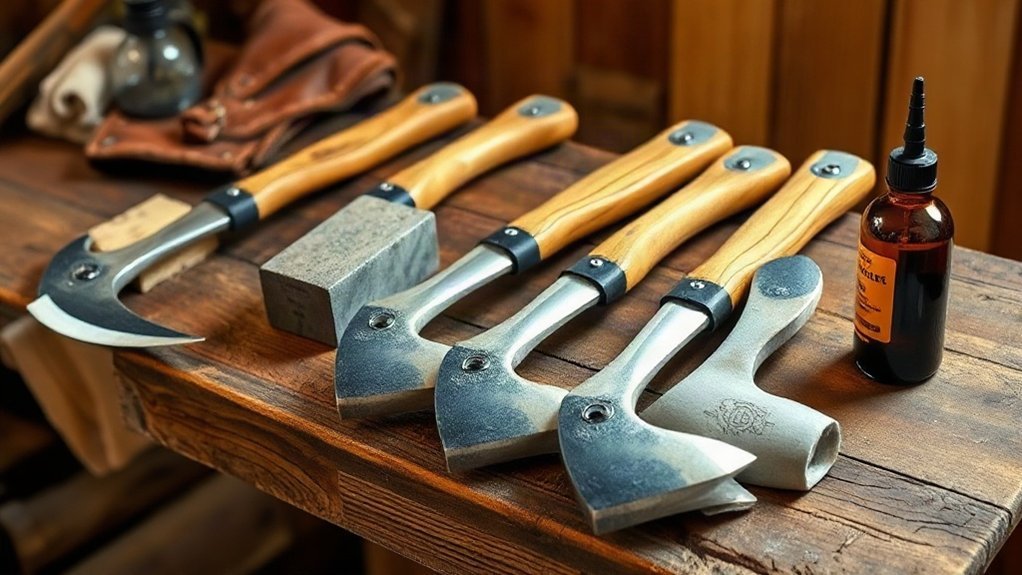
I prevent rust and damage by cleaning my hatchet or tomahawk after every trip. I wipe the head, handle, and hardware with a damp cloth, then dry everything thoroughly before storing the tool apart from its sheath. Once the metal is dry, I apply a light coat of oil and wipe away excess. I also keep the edge sharp, condition wooden handles, and check the head’s fit and tool for damage. A few more care steps help it last.
Key Takeaways
- Clean the head, handle, hardware, and sheath after each trip, removing grit, sap, and debris.
- Dry the head completely before storing; air-dry leather sheaths naturally and keep tools in a cool, dry place.
- Coat clean, dry metal lightly with protective oil, especially after damp use, and remove rust with fine steel wool or another suitable abrasive.
- Sharpen with a stone while preserving the original bevel, and chop only on a stable splitting block.
- Inspect the head, handle, and sheath before use; stop using damaged or loose tools and repair them safely.
Clean Hatchets and Tomahawks After a Trip
After a trip, take your hatchet or tomahawk out of your pack, remove the sheath when it’s safe, and let the tool dry in a secure place. Safe sheath separation gives you access to surfaces where dirt and plant matter can hide. I wipe the blade, handle, and hardware with a damp rag, following the maker’s cleaning guidance. For effective post trip debris removal, check the blade bevels, handle openings, tomahawk parts, and every crevice where grit or moisture may linger. Clean plastic sheaths, too, and keep them apart from the tool during cleaning. Before I apply oil or conditioner, I make sure both the tool and sheath are clean and thoroughly dry. Never put a wet tool away; careful cleanup helps protect your gear and keeps you ready to choose your next route.
Dry the Head and Sheath Completely
After cleaning your hatchet or tomahawk, I dry the head completely, including its bevels and openings. I remove the sheath while the metal dries so trapped moisture won’t cause rust. I clean and dry the sheath separately, letting leather air-dry with the inside and outside exposed.
Dry the Head Thoroughly
Once it’s safe, remove the sheath so moisture can’t linger against the head. After a trip or use, I wipe away dirt, sap, plant matter, and other debris with a damp rag. Then I dry the head thoroughly before storing it; trapped moisture can invite rust and limit your gear’s freedom to serve when you need it.
As I wipe the metal, I inspect grain for signs of damage or wear. I don’t rush this step: I check the head’s surfaces and crevices, where moisture may hide, and make sure they’re dry to the touch. Keep the head separate from its sheath until both are completely dry. Damp leather can pass moisture back onto the metal, undoing your care. I store them together only when no moisture remains.
Remove Moisture From Sheath
When I finish using my hatchet or tomahawk, I remove it from the sheath so trapped moisture can escape. I wipe dirt and debris from the head with a damp cloth, then dry the metal thoroughly. Leaving the sheath on can trap moisture against the steel, so I separate both parts to remove trapped moisture before storage.
I let the sheath dry completely, too. For a leather sheath, I prop it open to improve airflow and leave it to dry naturally. I don’t use forced heat; it can make leather hard, brittle, cracked, warped, or shrunken. Once the head and sheath are clean and fully dry, I store the tool. Damp leather can pass moisture back to the metal and cause rust, so I never rush this step.
Oil Metal to Prevent Rust
I clean dirt, sap, and moisture from the head, then dry it thoroughly before oiling. I apply a thin coat of light protective oil to help prevent rust. After each use, I clean, dry, and re-oil the metal.
Clean and Dry the Head
After each trip or use, I wipe dirt, sap, and plant matter from the head with a damp rag, then dry it thoroughly. I don’t let grime or moisture linger before storage; both can speed corrosion and limit the freedom to rely on my tool outdoors. During debris removal, I check the bevel, openings, and tight spots where residue or water might hide. This bevel inspection helps me catch buildup before it damages the edge. I remove the sheath while drying if it could trap moisture against the metal, and I make sure every surface is dry. If I spot rust, I scrub it with fine steel wool or an abrasive and white vinegar, then wipe the head dry. I store the cleaned tool in a cool, dry place, ready for the next trip.
Apply a Light Oil
Once the head is clean and completely dry, I apply a light coat of Rem Oil or boiled linseed oil to protect the metal from moisture and rust. My oil selection depends on what I have available; either option can help shield the steel. For a reliable coating technique, I spread a thin layer over the entire metal head with a clean cloth, reaching the blade and other exposed surfaces. Then I wipe away any excess so the head isn’t left greasy. This simple step helps keep moisture from setting in and preserves the tool’s readiness for work outdoors. High-carbon steel can rust over time even when it looks clean, so I don’t skip this protection. After oiling, I store the hatchet or tomahawk in a cool, dry place, with its sheath removed.
Reapply After Use
Regular use wears away the clear lacquer on a hatchet or tomahawk head, leaving the exposed steel vulnerable to rust. After each outing, I wipe dirt, sap, moisture, and plant debris from the head, then dry it thoroughly. I apply a light coat of protective oil to the clean, dry steel, paying special attention to the cutting edge and other uncoated areas.
Frequency of reapplication depends on use: I oil the head after every use, especially when I’ve worked in damp conditions. For oil selection, I use Rem Oil, boiled linseed oil, or CLP. If rust appears, I remove it with fine steel wool or another abrasive, wipe on protective oil, and finish with Axe Balm if available. I store my tool in a cool, dry place, never wet or beneath a damp sheath.
Keep the Hatchet or Tomahawk Edge Sharp
To keep your hatchet or tomahawk cutting well, sharpen it with a stone while preserving its original bevel. For sharpening stone selection, I choose the 80-grit side when the edge is dull and the 220-grit side for finer sharpening. I work carefully along the existing angle; original bevel maintenance helps preserve the tool’s cutting performance without reshaping the blade.
I also protect the edge through smart use. I chop on a stable splitting block rather than into the ground, where rocks and dirt can nick or dull the steel. I avoid knots and gritty bark, too, since both can damage the cutting edge. If I use a grinder or sander, I proceed with extreme caution: excess heat can alter the steel’s temper. With a sharp, well-protected edge, I can rely on my tool when I need it.
Oil Wooden Handles and Check the Head Fit
A sharp edge needs a secure handle to work safely, so I condition the wood and check the head’s fit. I apply boiled linseed oil in light coats, letting wood absorption guide when to add more. I wipe away excess, focusing on the end grain, wedge, and wood around the head to limit drying and shrinkage. For a tomahawk, I also oil inside the eye, avoiding buildup that could affect fit.
| Area | What I do | Why it matters |
|---|---|---|
| Handle | Add light coats | Condition wood |
| End grain | Apply oil | Reduce drying |
| Wedge | Wipe excess | Limit shrinkage |
| Tomahawk eye | Oil lightly | Preserve fit |
I check head security regularly. If the handle shrinks and the head loosens, I stop using the tool until it’s properly refitted or repaired.
Care for Sheaths and Store Tools Safely
After each trip, I take my hatchet or tomahawk out of my pack and remove its sheath when it’s safe, so moisture can’t stay trapped against the metal. I brush the sheath and hardware with stiff bristles, then wipe stubborn dirt with a damp cloth. I prop damp leather open, remove small accessories, and let everything dry naturally and thoroughly.
For sheath conditioning, I warm clean, dry leather, apply a suitable conditioner or sealant such as Sno-Seal, let it soak in, and buff away excess. I sheath the blade whenever it’s safe, then choose safe storage: a cool, dry place away from moisture, direct sunlight, and heat. That simple routine keeps gear ready for the next trail, camp, or open-road adventure, without letting dampness compromise your freedom to roam.
Check for Damage and Repair Safely
Once my hatchet or tomahawk is dry and stored safely, I inspect it before each use. During this pre use damage inspection, I check the head, eye, poll, blade, and handle for looseness, cracks, splits, warping, or mushrooming. If damage could make the tool unsafe, I stop using it.
For safe head repair, I secure a loose head by fitting a steel ring wedge into the eye. If I need a new handle, I fit the head, trim the handle, glue and tap in the wedge, then add the ring wedge. I file or grind only slight poll mushrooming, checking for cracks or eye distortion first. I never strike with the poll or butt, twist a lodged blade, or drive steel wedges with the tool. I use a stable surface, eye protection, steel-toed boots, and keep bystanders back.
Frequently Asked Questions
What to Put on an Axe Head to Prevent Rust?
I put a thin Light oil coating on a clean, completely dry axe head to keep moisture from reaching the steel. Rem Oil works well, and I sometimes use boiled linseed oil instead. For longer-lasting defense, I add a Protective wax layer with Axe Balm, which can also protect wood and leather. I’d remove any rust first, then dry and oil the head promptly. Store your axe somewhere cool and dry.
What Can I Put on Tools to Keep Them From Rusting?
I put rust prevention oils or protective tool coatings on clean, fully dry tools. For example, if I’ve just cleaned a hatchet after a wet hike, I wipe on a thin coat of Rem Oil, CLP, or boiled linseed oil before storing it. For longer protection, I use Axe Balm after removing rust; silicone spray also repels water and resists gumming in cold weather. I condition leather sheaths separately and let them dry completely.
How to Stop an Axe From Rusting?
I stop an axe from rusting by cleaning and drying its head after every use, then applying a thin coat of light oil. I don’t put it away wet; I use Dry Storage and remove the sheath if moisture gets trapped. For Regular Inspection, I check the steel after trips and during humid seasons. If rust appears, I scrub it with fine steel wool, dry the head, and oil it again.
What Should I Coat My Axe Handle With?
I recommend a Boiled linseed oil finish for your wooden axe handle because it penetrates the grain and helps limit drying and cracking. Apply several thin coats across the handle, paying extra attention to the end grain, wedge, and area around the head. Let each coat dry for several days, and wipe away oil the wood won’t absorb. For a tomahawk, I’d also consider beeswax handle conditioner; avoid heat and excess moisture.
Conclusion
After each trip, I treat my hatchet or tomahawk like a trusted trail companion: I clean away grit, dry every surface, and apply a light coat of oil before rust can take hold. I keep the edge sharp, condition the handle, and check that the head and sheath are secure. Before storing it somewhere dry, I inspect for damage and fix problems safely. Those small habits keep the tool ready to work when the next trail calls.