What Should You Look for When Buying Knife Sharpening Stones?
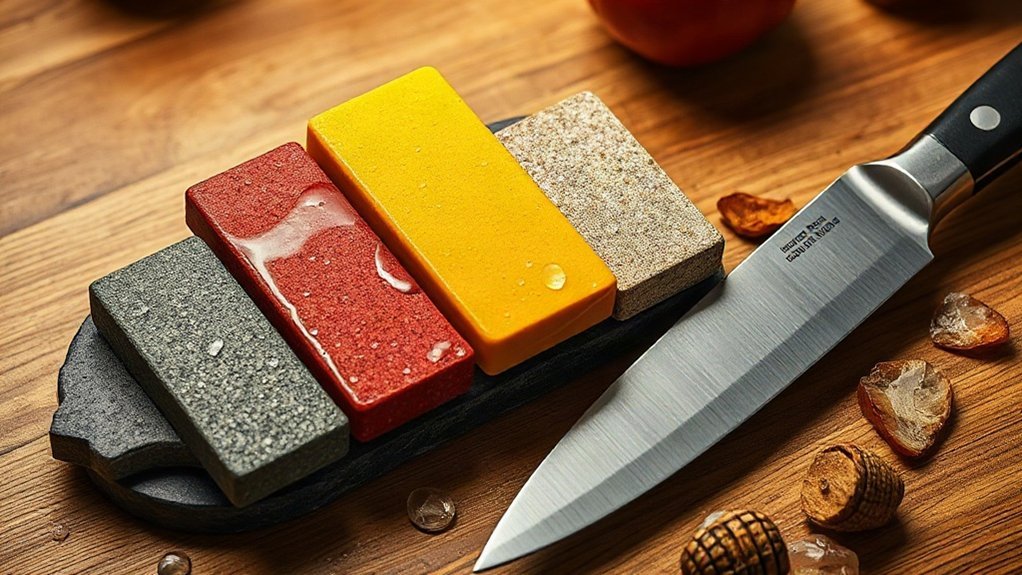
I recommend choosing a sharpening stone by grit, size, and material to match your blade and steel. Start with 220–320 grit to reshape a dull edge, then use 800–1,200 grit to refine it; 2,000 grit can polish the finish. Pick a stone at least as long as your knife blade, and consider diamond for hard, carbide-rich steel or water stones for fast sharpening. I’ll cover the key trade-offs and starter options below.
Key Takeaways
- Choose 220–320 grit to reshape a dull edge, then 800–1,200 grit to refine it; add 2,000 grit for polishing.
- Match stone length to your blade: choose one at least as long as the knife, with about 2 inches of width for most knives.
- Match the abrasive to your steel: diamond handles hard, carbide-rich steels; ceramic and water stones suit many other sharpening needs.
- Consider maintenance: diamond stones need no soaking or flattening, while water stones cut quickly but require periodic flattening.
- Check what’s included, such as a stable base, storage, flattening stone, and clear guidance for maintaining the correct sharpening angle.
Which Sharpening Stone Features Matter Most?
To choose a sharpening stone, start with your blade’s condition and the edge you want: a 220–320-grit stone reshapes a dull edge and raises a burr, while an 800–1,200-grit stone refines it. I also match stone size to my tools: choose a stone at least as long as your knife blade or as wide as your chisel or plane blade. For very hard steel, plated diamond cuts quickly and won’t dish; bonded diamond suits fine sharpening of high-carbide steels. I weigh upkeep, too. Diamond stones need no soaking and can flatten water stones, while water stones sharpen quickly but need periodic flattening. If you want flexibility, check included accessories and stone storage options. I also look for clear Edge angle guidance, so I can sharpen confidently and stay in control.
What Grits Do You Need for Your Edges?
Which grits you need depends on how much work the edge needs. I start with a coarse grit selection when a blade’s dull or damaged, then refine only after it’s sharp.
| Grit | Best use |
|---|---|
| 220–320 | Reshape edge and raise a burr |
| 800–1,200 | Refine a sharp edge |
| 2,000 | Polish for a smoother finish |
| Below 1,000 | Bonded diamond for super steels |
Sharpen the full edge on the coarse stone before moving on; a fine stone removes metal too slowly for efficient reshaping. Grit labels vary by maker, so treat numbers as a guide. For fine grit polishing, I’d consider a ceramic splash-and-go stone, such as a 2,000-grit Shapton, when you want a polished cutting surface. If you sharpen high-carbide super steels, choose diamond abrasives for finer work; below 1,000 grit, use bonded diamond stones. You can match the setup to your edge and sharpening style.
What Stone Size Fits Your Blades?
How long should your stone be? I recommend choosing a stone at least as long as your knife blade. A 9-inch chef’s knife feels easiest to sharpen on a stone that’s 9 inches or longer, giving you room to move freely through each stroke. Common full-size stones measure 8 inches; 6-inch models are compact, while 10- to 12-inch stones offer more working space. If portability matters most, a 3- or 4-inch pocket stone can travel in your toolbox or tackle box.
For knives, stone length matters more than blade width, and a stone about 2 inches wide usually works well. Chisels and plane blades need enough width to support the edge: for a 2⅝-inch plane blade, choose a stone at least 2¾ inches wide.
Which Sharpening Stone Material Suits Your Steel?
Once you’ve chosen a stone size, match its material to your steel and sharpening needs. I’d start with steel hardness and carbide content: diamond stones handle any steel, including hard, carbide-rich super steels, and cut quickly without soaking or flattening. For high-carbide steel, I choose diamond for fine work; below 1,000 grit, use a bonded diamond stone.
Ceramic stones suit most steels and provide finer sharpening, but they can struggle with very hard, carbide-rich blades. Shapton’s 2,000-grit Kuromaku is a recommended option. If you prefer a traditional approach, oil stones cost less, though they sharpen more slowly than diamond or water stones. Water stones cut quickly and offer very fine polishing grits, but you’ll need to flatten them periodically. I’d choose the material that lets you sharpen freely with the care your routine allows.
Which Starter Sharpening Stone Kit Fits Your Budget?
If you’re starting on a budget, I’d choose a coarse-and-fine plated diamond stone: it sharpens quickly, works on hard steels, and needs no soaking or flattening. That keeps your Upfront budget manageable while giving you a practical setup you can use right away.
For more flexibility, I’d consider an 8-inch DuoSharp Plus Kit, which pairs four grits across two stones and includes a base. Its 8 × 2⅝-inch surfaces suit many knives and tools. If you prefer oil stones, the Norton IM200S includes coarse Crystolon, medium India, and soft Arkansas stones in an oil-retaining housing.
A water-stone kit offers more range: the Double-Sided 8 set spans 220 to 8,000 grit and includes a flattening stone, but needs maintenance. For kit expansion, add diamond strops before buying finer stones; let your needs guide the extra cost.
Frequently Asked Questions
What Factors Should I Consider When Choosing a Sharpening Stone?
I’d choose a sharpening stone by weighing Stone Material, Stone Size, grit, steel compatibility, upkeep, and budget. Diamond stones cut quickly and handle hard, high-carbide steel; oil stones cost less, while water stones sharpen fast but need flattening. I’d start with 220–320 grit for repairs, then use 800–1,200 grit to refine an edge. For knives, I’d pick a stone at least as long as the blade, so you can sharpen freely and comfortably.
Are Cheap Whetstones Okay?
Yes, cheap whetstones can work, and I wouldn’t let a tight budget keep you from sharpening. But value versus performance matters: soft aluminum oxide stones wear and dish quickly, and one careless pass can undo your progress. I’d avoid beginner stone risks like relying on a 1,000/6,000-grit combo that lacks a truly coarse shaping surface. Soaking and cleanup can also feel like a chore. Choose carefully, and you’ll keep more freedom—and frustration—out of your routine.
What Is the Difference Between a 1000 Grit and a 3000 Grit Sharpening Stone?
A 1,000-grit stone removes metal faster, so I use it to repair or establish an edge on a dull knife. A 3,000-grit stone works more slowly and smooths the bevel’s scratches. I treat the first as an Edge formation step and the second as Scratch refinement. Raise a burr along the entire edge before switching grits. Grit ratings vary by brand and stone material, so I don’t assume they compare exactly.
What Are Some Good Quality Sharpening Stones?
I’d consider DMT, Norton, Shapton, and Naniwa reliable brands, with the best choice depending on your sharpening style. For a versatile, low-maintenance option, I’d pick an 8-inch DuoSharp Plus diamond stone. Norton’s oil-stone kits offer solid stone durability and useful grit combinations, while Shapton Kuromaku 2,000-grit suits many steels. If you want broader grit choices, I’d look at a water-stone set, but remember to buy a flattening stone for Naniwa or water-stone models.
Conclusion
When I buy a sharpening stone, I check its grit, size, material, and stability before spending a cent. I match coarse stones to chipped edges and finer grits to finishing touches, then choose a size that suits my blades and space. The right stone should also work with my steel and my budget. Start simple, sharpen steadily, and let a well-chosen stone turn dull knives into dependable tools. Small, sensible choices make sharpening safer, smoother, and more satisfying.