What Makes Multitools Different From Regular Pocket Knives?
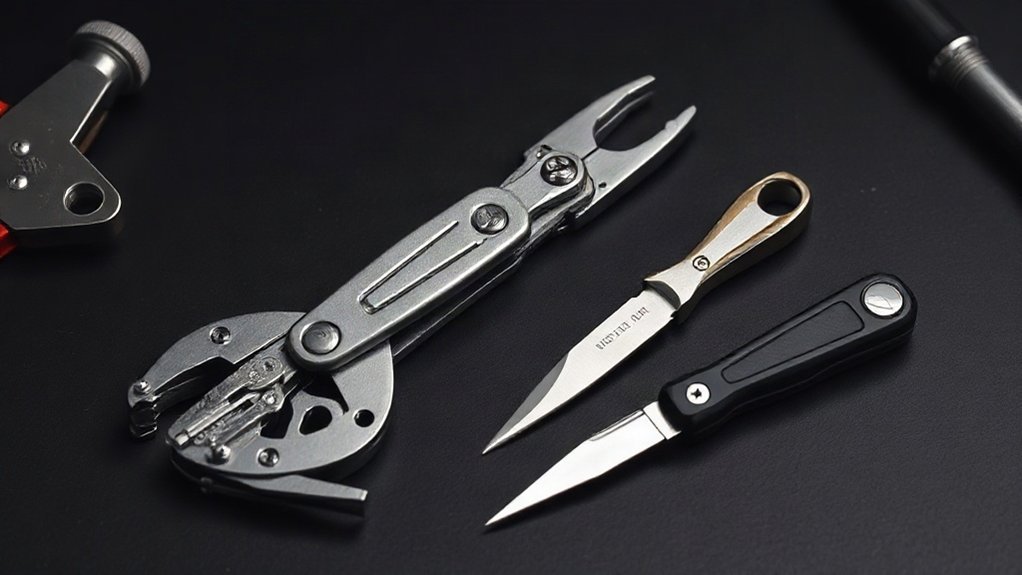
I choose a pocketknife when I want a slim, comfortable tool for frequent cutting. Its dedicated blade handles everyday jobs like opening packages, but it isn’t meant for prying. A multitool adds functions such as pliers, drivers, files, or a saw, so I reach for one when repairs are likely. That extra versatility can mean more weight and bulk, and cutting may feel less comfortable. The right choice depends on my usual tasks, as the options below show.
Key Takeaways
- A pocketknife is built primarily for cutting; a multitool combines a blade with implements for repairs and other tasks.
- Multitools may include pliers, drivers, wire cutters, files, saws, and openers—functions a regular pocketknife typically lacks.
- Pocketknives are usually slimmer and lighter, making them more comfortable for frequent cutting and everyday pocket carry.
- Multitools offer greater versatility but can feel heavier or bulkier, especially during extended cutting.
- Choose a pocketknife for comfortable, routine cutting; choose a multitool when tasks often require pliers, drivers, or other repair tools.
Multitool vs. Pocketknife: What’s the Difference?
What separates a multitool from a pocketknife? I see it in their purpose: a pocketknife centers on cutting, while a multitool pairs a blade with several built-in implements. That distinction matters when you want a tool that fits your own plans, not just one task.
A pocketknife is usually slimmer and lighter, so I find it easier to carry and more comfortable for extended cutting. Its blade geometry and handle ergonomics often favor clean, controlled slices. A multitool adds options, but that capability can mean extra bulk; full-size models may ride in a belt sheath. Some offer straight and serrated blades that open and lock one-handed, while others require opening the tool first. I’d choose a pocketknife for simple, frequent cutting, or a multitool when I want more flexibility on the go.
What Can a Multitool Do Besides Cut?
Beyond cutting, a multitool can handle quick repairs and everyday jobs. I reach for its other tools when a blade won’t solve the problem, giving me more freedom to fix things on the spot.
A multitool offers more than cutting—it’s ready for quick repairs and everyday fixes when a blade isn’t enough.
- Pliers grip, bend, and pull materials. They’re useful for Pulling stubborn fasteners, while models with wire cutters or a crimper can help with electrical and repair tasks.
- Screwdrivers and bit drivers tackle common fixes. Some accept standard quarter-inch bits or specialty expansion bits, so I can match the tool to the job. Files and saws help with shaping rough edges or working materials a knife can’t manage.
- Scissors, bottle and package openers, tweezers, corkscrews, and ratcheting drivers cover smaller needs, depending on the model.
With the right multitool, I can handle varied tasks without relying on a knife alone.
Why Carry a Multitool Every Day?
I carry a multitool because its pliers and screwdrivers help me handle everyday fixes a pocketknife can’t. With several tools in one pocket, I’m ready for more tasks on the go without carrying a separate kit. That versatility comes with extra weight, so I’ll weigh it against how much I cut.
Tools For Everyday Fixes
Everyday fixes often call for more than a blade: pliers can grip a loose part, and a screwdriver or bit driver can tighten a screw. I carry a multitool to handle small repairs without being limited to cutting. It gives you practical options for appliance adjustments, cable management, and loose hardware, so you can solve problems on your own.
- Grip or hold a small part with pliers while you work.
- Tighten or loosen screws with a driver; replaceable bits expand the tasks you can tackle.
- Choose the tool that fits your carry: the 6.7-ounce Leatherman Rebar offers repair tools, while the pocket-sized Skeletool keeps things lighter.
I can pair a compact multitool with a pocketknife, keeping repair tools handy and a comfortable blade ready for routine cutting.
Versatility On The Go
Why carry a multitool every day? I like having more than a blade within reach when plans change. A compact tool can help me cut a loose thread, grip a stubborn part, tighten a screw, or open a bottle without searching for separate gear. That quick deployment gives me more freedom to handle small problems on my own.
A pocket-sized option such as the Leatherman Skeletool pairs a 420HC combo blade with pliers and a bit driver, plus a clip for easy carry. For a key ring, the Gerber Dime offers spring-loaded pliers and openers in a smaller package. Each brings outdoor adaptability, though I weigh portability against capability: full-size tools add functions but weight, while compact models travel more easily and sacrifice some versatility.
What Are the Trade-Offs of Carrying a Multitool?
A multitool earns its extra weight by handling jobs a pocketknife can’t, from tightening screws to gripping small parts. I value that freedom, but I weigh the trade-offs before choosing what to carry:
- Bulk: Full-size models can crowd a pocket. I’d carry one in a belt sheath or choose a compact design, such as the Skeletool, for better pocket ergonomics.
- Blade comfort: Some multitool blades sit inside the handles, and they may feel less comfortable during extended cutting than a dedicated blade.
- Upkeep: More implements mean more parts to clean and check. I factor in long term maintenance when deciding whether extra utility earns its place.
For repairs, pliers and a bit driver broaden my options; for regular cutting, I might pair a smaller multitool with a pocketknife.
Why Choose a Pocketknife for Everyday Carry?
I like a pocketknife for everyday carry because it’s lightweight and slim enough to carry comfortably. Its dedicated blade handles routine cuts, like rope or an apple, without the bulk of a full-sized multitool. With different blade shapes available, I can choose one that suits the tasks I tackle most.
Lightweight, Slim Carry
Because pocketknives are typically lightweight and slim, they’re easy to carry every day and more comfortable in a pocket than a bulky, full-sized multitool. I like how that simple profile supports comfortable pocket placement without weighing me down or limiting my movement. For anyone who values freedom, a pocketknife offers unobtrusive daily carry and a useful blade close at hand.
- Move freely: Its light, narrow build fits easily into a pocket, so I can go about my day without a bulky tool getting in the way.
- Handle quick tasks: I can cut rope or slice an apple without reaching for a larger kit.
- Keep carry simple: A pocketknife takes up little space, making it an easy choice when I want everyday utility without extra bulk.
That balance makes daily carry feel natural and uncomplicated.
Versatile Blade Choices
For everyday cutting, a pocketknife offers more blade choice than a multitool’s all-in-one design. I can choose blade geometry that suits my routine, whether I’m cutting rope, opening packages, or slicing an apple. That focused choice gives me freedom to carry a blade built for the jobs I actually do, rather than extra implements I may rarely use. I can also consider steel composition and pick a blade that fits my priorities for everyday use.
A pocketknife stays slim and lightweight, and its dedicated handle can feel more comfortable during extended cutting than a heavier multitool. I’ll choose one when comfortable carry and dependable cutting matter more than pliers or drivers. I won’t use it to pry, though, and frequent box opening can dull its edge, so I’ll match the blade to the task and maintain it.
When Does a Pocketknife Fall Short?
A pocketknife falls short when a job requires more than cutting. I value the freedom to handle small repairs on my own, but a single blade can’t replace pliers, drivers, or a saw. Here are three signs I need more than a pocketknife:
- I need to tighten a screw, grip a part, or saw through material. A blade won’t do those jobs safely or well.
- I’m tempted to pry with the knife. Its blade isn’t built for blade leverage, and forcing it can break it.
- I open boxes often. That box wear can dull the edge, making the knife less useful for other cuts.
A slim pocketknife travels easily, yet the right tool matters when tasks move beyond slicing. I don’t want a simple repair to limit my choices.
Should You Carry One or Both?
If I mostly cut, I carry a pocketknife; if I often tighten screws or grip parts, I choose a multitool. My carry decisions depend on use frequency: a slim pocketknife feels lighter and more comfortable for everyday slicing, while a multitool earns its space when I regularly need pliers, drivers, a file, or other implements. I avoid prying with a knife blade, which can break, and frequent box opening can dull it. A full-sized multitool may feel heavy and awkward during extended cutting, so I don’t assume it replaces a dedicated knife. When I want both capabilities, I can carry a compact multitool alongside a pocketknife. If I prefer one tool, a pocket-sized multitool with a clip, blade, pliers, and driver covers common needs and lets me travel lighter.
Which Multitool and Pocketknife Pairings Work?
When I want a light, versatile setup, I pair the pocket-sized Leatherman Skeletool—equipped with a 420HC combo blade, pliers, a bit driver, and a pocket clip—with a dedicated pocketknife. That gives me useful repair tools and a blade ready for quick cuts, without weighing down my pocket.
I pair the pocket-sized Skeletool’s repair tools with a dedicated pocketknife for quick cuts without weighing down my pocket.
- Skeletool KBx pairing: I match the 6.7-ounce Leatherman Rebar, with its multiple blades and everyday-fix tools, to the Skeletool KBx. Its locking 420HC combo blade stays accessible outside my pack, while the bottle opener adds convenience. I can remove or replace its pocket clip to suit how I carry.
- Rebar blade pairing: For a straight edge, I pair the Rebar with the Skeletool CX, whose blade uses 154CM steel.
- One-tool freedom: I carry the Skeletool alone when its blade, pliers, and bit driver cover my needs.
Frequently Asked Questions
Which Is Better to Carry, a Multitool or a Pocket Knife?
I’d carry whichever tool fits your Everyday carry needs: a pocket knife for lightness, comfort, and quick cutting, or a multitool when repairs and varied jobs come up often. I value those task specific advantages because they help me choose without carrying more than I need. If you mostly open packages or slice food, pick a knife; if you often need pliers or screwdrivers, choose a multitool and enjoy greater freedom to handle surprises.
Is It Illegal to Carry a Multi-Tool Knife?
It isn’t automatically illegal to carry a multi-tool knife; I’d check Local knife laws before carrying one. Rules may limit blade length, locking mechanisms, or locations, and a multi-tool’s extra tools don’t exempt its blade. I’d also review workplace carry rules and destination restrictions, since policies vary. If blades aren’t allowed, I’d consider a knife-free model, but I’d verify current rules before travel because acceptance isn’t guaranteed. I’d keep my choice both useful and lawful.
What Is the Holy Trinity of Pocket Knives?
I can’t name a standard “holy trinity” of pocket knives from the information available; think of the phrase as a compass without marked directions. Traditional knife categories vary, and no single trio is established here. I’d choose a lightweight, slim pocketknife that suits your everyday tasks, then compare blade steel comparisons for durability and edge retention. You’re free to pick what fits your needs, but don’t pry with the blade or it may break.
What Is the Holy Grail of Pocket Knives?
There isn’t one holy grail of pocket knives; I’d choose the blade that best fits your needs and gives you freedom to carry what works. Limited edition grail knives can attract collectors, while Custom knife craftsmanship offers personal details and a tailored feel. For everyday use, I’d favor a light, slim knife with a blade suited to your tasks. The Skeletool KBx adds a locking combo blade and bottle opener; the CX has a straight 154CM blade.
Conclusion
In the end, I choose a multitool when I need a tiny workshop in my pocket and a pocketknife when I want a simple, sharp blade without the extra bulk. Neither has to win every day: I’ll carry one, both, or switch depending on the job. Think about what you actually do, then pick the tool that fits. The right choice won’t solve every problem on Earth—but it might save your day before lunch.