What Makes Military-Style Tents Different From the Tent You Already Own?
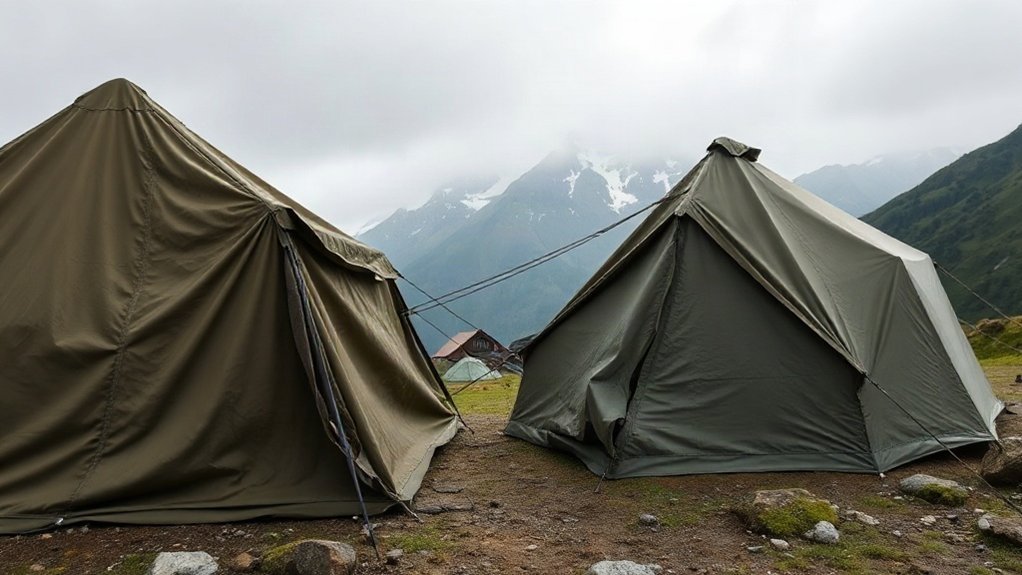
I’d choose a military-style tent for durability and extended use, not the low weight and compact packing of a typical civilian tent. Its heavy canvas or reinforced synthetic fabric, strong stitching, and reinforced stress points can better withstand repeated setup and teardown. That rugged construction usually means more weight, bulk, and setup effort. These tents suit car camping, overlanding, and base camps, but no design is fully windproof or waterproof. The details below clarify what to expect.
Key Takeaways
- Military-style tents prioritize durability and long service over the light weight and compact packing of most recreational tents.
- Heavy canvas, reinforced synthetic fabrics, sturdy frames, and strengthened stress points are built to withstand repeated setup and teardown.
- Their bulk and weight suit car camping, overlanding, and base camps better than backpacking or other weight-sensitive trips.
- Weather protection varies by model: check coatings, seams, ventilation, and wind resistance rather than assuming a tent is waterproof or windproof.
- Surplus and large models may need more setup and maintenance; inspect their condition, packed dimensions, and realistic sleeping capacity before buying.
How Does a Military-Style Tent Compare With Civilian Tents?
Military-style tents trade portability for durability: I’d expect heavy-duty canvas or reinforced synthetic fabric, strong stitching, reinforced stress points, and hardware designed for repeated setup and teardown. Compared with civilian backpacking tents, military-style tents generally favor extended service over low weight and compact packing. A cotton canvas shelter or large modular tent system suits car camping, overlanding, and base camps better than a long backcountry hike. Its low-profile structure can improve wind resistance, though no tent is fully windproof. Some models add camouflage, liners, or groundsheets; these features support varied deployments but can increase bulk. Military surplus may deliver rugged performance for less, but I’d inspect it for mold, mildew, odors, and wear. For greater freedom on foot, consider lighter bivy models and plan for condensation management. Canvas shells and sturdy poles can push these tents into double-digit weights, making them better suited to vehicle trips or base camps than long hikes.
What Materials Build a Military-Style Tent?
That durability comes from materials built to handle repeated field use. I look first at the fabric: a canvas wall tent offers rugged, repairable strength, while ripstop nylon reduces weight. Some models use thick, vinyl-coated polyester for tear resistance, insulation, UV blocking, flame resistance, and waterproof protection. A polyurethane coating may also add water resistance; check each model’s hydrostatic head rating rather than assuming performance.
| Material | Practical trade-off |
|---|---|
| Canvas | Heavy; needs careful canvas care to limit mildew |
| Synthetic fabric | Lighter; ratings vary by model |
I also inspect reinforced seams, strong stitching, and strengthened stress points, which help fabric survive repeated pitching and packing. Older surplus canvas can absorb moisture and grow heavier when wet, so dry it thoroughly before storage. Clean canvas with plain water and a soft brush, then apply canvas reproofing treatment after it is fully dry to help restore water resistance. For independent cold-weather camping, choose materials suited to your load, maintenance tolerance, and intended use.
How Does a Military-Style Tent Handle Weather and Ventilation?
When wind and rain pick up, I look for reinforced fabric and a sturdy frame, but those features don’t guarantee waterproofing: some canvas tents need treatment. A close rainfly and low profile can act as a windbreak, yet they may restrict airflow and trap condensation. I’d check these details before choosing a four-season tent or emergency shelter:
- Inspect seams; apply seam sealer when the manufacturer recommends it.
- Secure guy lines and tension straps to stabilize the structure in gusts.
- Compare screened-window area and mesh vents; a breathable interior depends on airflow.
- Confirm any wood stove jack is designed for safe use with your stove.
A gp small tent’s vent may still close on uneven ground. In one review, the interior reached 81°F on an 81°F day, and condensation formed on the fly both nights. For canvas, wetting and drying the fabric can help the weave shrink tight and improve water resistance.
Is a Military-Style Tent Easy to Set Up and Carry?
Setup and carry effort depend on the model: modular designs can deploy quickly, while heavy GP tents require poles and guy lines and take longer to pitch. I’d check packed weight and dimensions before choosing a shelter for mobile trips.
| Model or feature | Setup | Carry |
|---|---|---|
| One-person tent | Single aluminum pole | 4.8 lb; bulky |
| GP tent | Poles, guy lines | Heavy |
| Medical tent | Extended pitching | Often over 100 lb |
| Bivy sack | Minimal setup | Portable |
The reviewed tent packs to 19 × 7.5 × 5 inches; fixed stake-out points need level ground. A groundsheet or tent footprint won’t reduce its bulk. An a-frame tent, dome tent, or bunker tent may differ, so verify specifications; a NATO stock number identifies an item, not its weight. I’d reserve heavy models for car camping or a base camp, not long-distance travel. For solo pitching, stake the upwind corners before lifting the tent to help keep it steady.
Who Should Choose a Military-Style Tent?

A military-style tent suits you best if you need a rugged shelter for car camping, overlanding, a base camp, reenactments, or emergency preparedness—not lightweight backpacking. I’d choose one for repeated setup on rough ground and demanding weather, especially when reinforced seams and field-use hardware matter more than pack weight.
> Choose a military-style tent for rugged car camping or base camps when durability matters more than pack weight.
- For group camping, a large shelter can fit a camping cot, sleeping bag, and camp kitchen; a pyramid tent with a stovepipe may suit cold-weather use.
- For solo travel, I’d consider a bivy or compact combat tent instead: surplus models can exceed 100 pounds.
- If freedom to hike matters, compare lighter civilian options from Alps Mountaineering or Nemo.
- Before buying surplus, check its condition grade and inspect for mold, mildew, odors, and repairs; storage can hide damage.
Advertised tent capacities can be optimistic, so size up to leave room for packs and boots.
Frequently Asked Questions
What Tent Does the US Military USe?
The U.S. military doesn’t use one standard tent. I’d describe its inventory as a range of mission-specific shelters: lightweight bivy and combat tents, heavy-duty General Purpose (GP) tents, and specialized systems for cold weather, medical care, and command operations. Each service selects equipment to meet operational needs and procurement standards, which can include flame resistance, blackout capability, and performance in extreme conditions. The right tent depends on the mission, environment, and unit.
What Is the Rolls-Royce of Tents?
I wouldn’t name one universal “Rolls-Royce of tents”; the right choice depends on your mission. For a compact personal shelter, prioritize verified waterproofing, ventilation, weight, and tested construction—not military styling alone. For a large, durable field structure, I’d compare Alaska Structures, CAMSS Shelters, and Weatherhaven Resources, which build systems for demanding conditions and military specifications. Expect specialized command or medical tents to be heavy and costly: prices can range from about $500 to over $10,000.
Is a Bivy Better Than a Tent?
A bivy’s better than a tent when you need a compact, lightweight solo shelter—but is minimum pack weight your top priority? I’d choose a bivy, such as the US Issue Gore-Tex ACU model, for a waterproof, low-profile setup that works with a sleeping bag and frees space for other gear. If you want room to sit up, store equipment, or wait out weather comfortably, I’d take a tent, despite its extra weight and bulk.
What Are the Different Types of Military Tents?
I group military tents into five types: pup, General Purpose (GP), combat, bivy, and specialized shelters. Pup tents use snapped tarp halves over a ridgeline; GP models use canvas, poles, and guy lines for camps or storage. Combat tents are lightweight, freestanding, and often double-walled. Bivy tents shelter one person. Specialized options include snow-ready Extreme Cold Weather tents and modular MCPS systems, which can connect into workspaces. I’d choose based on conditions and capacity.
Conclusion
I’d choose a military-style tent when durability, repairability, and weather protection matter more than a light pack. Compared with many civilian models, it may use heavier fabrics, reinforced seams, and sturdy poles, but those strengths can add weight and setup time. Think of it as a fieldwork tool, not a featherweight escape pod: the right choice depends on your conditions and priorities. Before buying, I’d check materials, ventilation, packed weight, and setup requirements against the trips I actually take.
References
Tent and Tarp Selection, https://www.fs.usda.gov/t-d/pubs/htmlpubs/htm07232811/page04.htm
Camping Gear Checklist, https://www.nps.gov/articles/camping-gear-checklist.htm
Choosing a Tent, https://www.rei.com/learn/expert-advice/tent.html
7 comments