What Makes Folding Tactical Knives Different From Regular Pocket Knives?
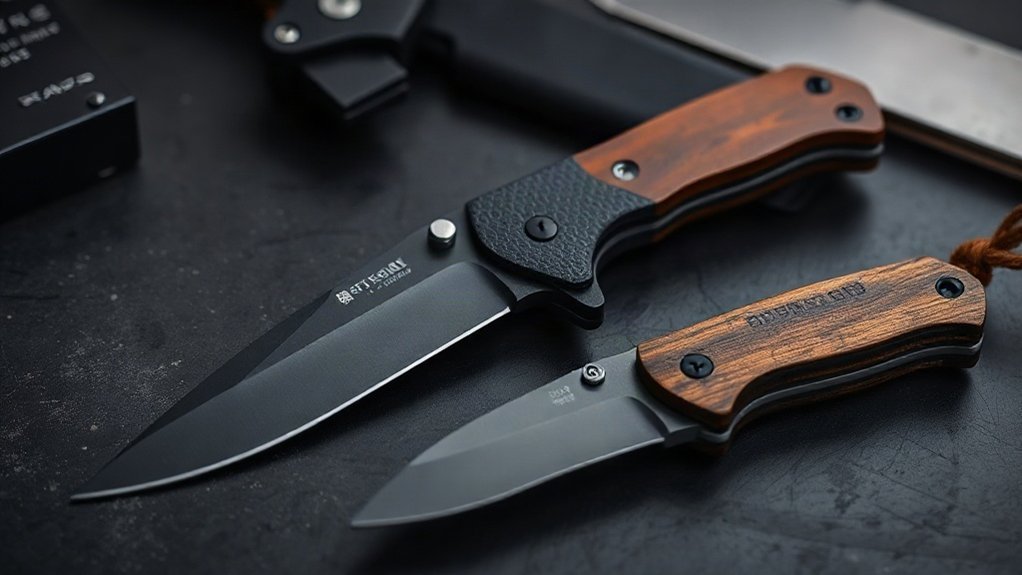
I judge folding tactical knives by their task-focused features, not by the label alone. Compared with regular pocket knives, they may offer quicker-opening mechanisms, specialized locks, grippy handles, or blade designs suited to demanding tasks. But those features don’t automatically make a knife stronger or better for everyday use. For packages, cords, and light chores, I’d focus on a comfortable grip, dependable lock, and convenient carry. The sections below can help you decide which features matter most.
Key Takeaways
- “Tactical” describes a knife’s intended use and features; the label alone doesn’t guarantee greater strength or suitability.
- Tactical folders may offer quick-opening mechanisms, but manual, assisted, and automatic designs differ in operation and maintenance.
- Both tactical and regular pocket knives can use locking blades; assess the specific lock and confirm it engages reliably.
- Blade shape, steel, size, and handle grip matter more than the label for choosing a knife suited to your tasks.
- For everyday carry, prioritize comfort, pocket access, safe use, and local laws; consider a utility knife for heavy job-site work.
What Sets Tactical Folding Knives Apart?
Though both types handle everyday cutting, tactical folding knives are designed around specific tasks and may include one-handed opening features such as a thumb stud, a blade hole, or assisted opening. Regular pocket knives, by contrast, typically focus on routine jobs like opening packages or trimming cord. I look beyond the tactical label when choosing a knife: its Intended use design should match the work I expect it to handle, and its blade steel, lock, and handle grip all matter. Common everyday steels include 440C, 420HC, AUS-8, and D2, each suited to different preferences and demands. I also value model versatility. Tactical folders come in many sizes and carry configurations, with clips set for tip-up or tip-down and left- or right-side carry. Both categories may use Lockback, Frame Lock, or Liner Lock systems, so a tactical name alone doesn’t promise a stronger lock. I choose the knife that fits my needs and carry style.
How Do Tactical Knife Opening Mechanisms Compare?
I’ll compare manual options like thumb studs and blade holes with assisted systems that spring into action after you start opening the blade. Automatic knives deploy with a button or switch, so they work differently from both. As you choose, consider how quickly and easily you can open the knife and how much maintenance its mechanism may need.
Manual Opening Options
How do you want your knife to open? With a manual folder, you control every part of deployment. I can use a thumb stud or a hole in the blade to open it one-handed, without a spring or automatic mechanism taking over. That direct action gives me a simple, predictable option when I want control over how my knife moves.
When I compare models, I check Thumb stud ergonomics and blade hole placement. Can I reach the feature easily with the hand I use to carry the knife? Can I operate it comfortably? A well-placed stud or hole makes opening more natural. Manual mechanisms also use fewer opening-system parts than assisted or automatic designs. I consider the lock separately: it serves a different purpose from the opening mechanism and deserves its own evaluation.
Assisted-Opening Systems
An assisted-opening knife adds a spring to help deploy the blade once I start opening it with a thumb stud or blade hole. Unlike an automatic knife, it won’t open at a button’s press; I initiate the blade manually. That distinction gives me a choice of mechanism while keeping deployment safety in view.
| System | Opening method | Key distinction |
|---|---|---|
| Manual | Direct hand pressure | No spring assist |
| Nitrous Assist | Manual start, spring assist | Assisted |
| SOG Assisted Technology | Manual start, spring assist | Assisted |
| SpeedSafe, Outburst, F.A.S.T. | Manual start, spring assist | Assisted |
These systems support one-handed use without turning the knife into an automatic. Springs and moving parts add complexity, so I keep the pivot clean, follow maker instructions, and include spring maintenance in routine care.
Speed And Ease
Spring-assisted systems change how quickly a blade moves, but they still require me to start opening it by hand. Once I press a thumb stud or use a blade hole, the spring helps finish the motion. SpeedSafe, Outburst, and SOG Assisted Technology are examples of this approach.
A manual folder also opens one-handed through a stud or hole, but I supply the force throughout. An automatic knife deploys when I press a button or switch, so it doesn’t require that initial blade movement. The best choice for Quick access depends on how readily I can reach and operate the mechanism. A pocket clip and left- or right-side carry can make effortless deployment more practical.
Whichever style I carry, I use it carefully and check local laws, which may restrict some mechanisms.
How Do Tactical and Regular Knife Locks Compare?
A knife’s lock matters more than whether it’s labeled tactical or regular: both may use lockbacks, frame locks, or liner locks, while tactical models may also feature designs such as the Axis Lock, Tri-Ad Lock, or Piston Lock. These mechanisms secure the blade open during use; slip-joint knives instead rely on spring pressure and don’t lock.
I wouldn’t assume a tactical label guarantees a stronger or better lock. For average tasks, traditional designs generally work as well as newer ones. I’d choose based on the knife’s intended use, how naturally I can operate it, and whether I can confirm solid lock engagement. You deserve a mechanism that suits your needs, not one chosen for marketing.
Every lock and pivot needs care because dirt and debris can collect around moving parts. I look for straightforward maintenance access and clean the mechanism regularly. Whatever style you choose, keep it clean, inspect its operation, and follow the maker’s guidance.
How Do Tactical Folding Knife Blades Differ?
Although tactical folding knife blades are designed for specific tasks, regular pocket-knife blades usually handle everyday cuts like opening packages or trimming cord. I look at a tactical blade’s shape, size, and steel to see whether it suits the work I need done. A drop point offers versatile utility, while a trailing point commonly suits skinning. A clip point supports piercing and detail work. These choices in edge geometry affect how a blade performs, so I’d match the shape to my intended use rather than assume one design does everything.
Blade size varies, too. A smaller model may ride comfortably in a front pocket; a larger one might suit back-pocket carry. Blade steel also shapes upkeep and sharpening. Stainless grades such as 440C, 420HC, AUS-8, and ATS-34 resist corrosion and need less maintenance. D2 offers a semi-stainless option, while SAE 1095 carbon steel can sharpen easily and hold a fine edge longer. I’d choose what fits my needs and routine.
What Gives Tactical Knife Handles Better Grip?
When my hands are wet or gloved, a tactical knife’s textured, nonslip handle helps me maintain control. Unlike a smooth surface, texture gives my fingers purchase, helping me hold steady when conditions change. Textured handle materials such as G10, Micarta, and glass-reinforced nylon resist moisture and wear, so they can offer a dependable grip through demanding use. For a softer feel, I might choose Kraton or Hypalon; these rubber-like materials grip better than polished wood or smooth metal.
Ergonomic grip contours also matter. A handle shaped to fit my hand, with well-placed finger grooves, helps me keep the knife securely positioned and resist slipping or twisting. That control supports confident, deliberate handling while leaving me free to choose a tool that suits my needs. I’d judge the texture and shape in my own hand, since the best grip depends on intended use as well as comfort. A secure hold should feel natural, not forced.
How Do Tactical Folding Knives Carry?
Because carry comfort depends on size and access, I match the knife to where I plan to keep it. For front pocket carry, I prefer a smaller model that leaves room for my phone, keys, and other essentials. A pocket clip keeps the knife close and ready without a separate pouch, giving me flexibility as I move through my day.
I check whether the clip supports tip-up or tip-down positioning, then choose the orientation that feels most natural to draw and stow. I also look for left- or right-side carry options so I can place it where access feels comfortable and unobstructed. Larger knives may sit better in a back pocket or through belt pouch storage, though I consider how each option affects comfort and access. Before carrying, I check local laws; restrictions vary by location. Knowing the rules lets me choose a carry method that fits my routine while respecting the boundaries where I live and travel.
Which Knife Fits Your Everyday Tasks?
What do you need your knife to do each day? For opening packages, cutting cords or zip ties, breaking down boxes, and slicing an apple, I’d choose a compact folding knife. It gives you useful freedom without adding bulk to your pocket.
Look for a blade around 2–4 inches long, and check local carry laws before you buy; restrictions vary by location. A pocket clip keeps your knife accessible yet unobtrusive, while a comfortable handle and reliable lock make regular use easier. Stainless steel is a practical choice if you want less maintenance and good corrosion resistance.
For package opening tips, use a controlled, shallow cut and keep the blade pointed away from yourself and the contents. Consider food prep suitability, too: a clean, easy-to-maintain blade can handle simple tasks like slicing fruit. If you expect heavy abuse on a job site, I’d pick a replaceable-blade utility knife instead. It’s often better suited to demanding construction work than a pocket folder.
Frequently Asked Questions
What Is the Point of a Tactical Knife?
I see a tactical knife as a compact tool for demanding tasks when ordinary pocket knives may fall short. Its secure lock and one-handed opening can help me deploy it quickly, while a steady grip supports controlled cutting. I’d choose one for emergency utility, such as cutting cord or gear, and consider self defense considerations carefully; laws, training, and safe handling matter. The right design depends on what you’ll actually need it to do.
What Is the Best Folding Tactical Knife?
I can’t name one best folding tactical knife for everyone; I’d match it to your tasks, carry preferences, and local laws. For everyday carry, I’d look for a 2–4-inch blade, corrosion-resistant blade materials, a comfortable, secure grip, and dependable locking mechanisms, such as a lockback, liner lock, or frame lock. Thumb studs or a blade hole make one-handed opening easier. For hard use, I’d favor durable handles and simple maintenance.
What Is the Holy Grail of Pocket Knives?
There’s no single holy grail of pocket knives; beauty is in the eye of the beholder. I’d call it a rare, highly sought-after knife that collectors prize for scarcity, condition, history, craftsmanship, or distinctive materials. Knife Collector Grails might include limited editions, discontinued classics, handmade pieces, or Rare Vintage Folders. You’re free to choose what matters most, but I wouldn’t assume a collectible makes the best everyday carry. I’d document its story and store it safely.
What Is the Holy Trinity of Pocket Knives?
The “Holy Trinity” of pocket knives usually means a useful blade, a secure lock, and a dependable opening method. I’d choose a blade that fits your tasks, a lockback, liner lock, or frame lock for stability, and a thumb stud or blade hole for easy manual deployment. Traditional knife patterns may favor simpler designs, while pocket knife collecting rewards exploring varied mechanisms. Your ideal trio should suit your carry, preferences, and local laws.
Conclusion
A tactical folder isn’t a regular pocket knife wearing sunglasses—it’s built for faster deployment, a firmer lock, a grippier handle, and often a blade shaped for demanding work. I’d choose one when those features match my needs, not because my sandwich fears an ambush. For ordinary everyday tasks, a simpler knife may fit better. Pick the tool that suits your routine, carries comfortably, and stays within local laws; the mall-ninja costume is optional, and best left on the hanger.