Do Military-Style Backpacks Come in Sizes That Fit Women and Smaller Frames?
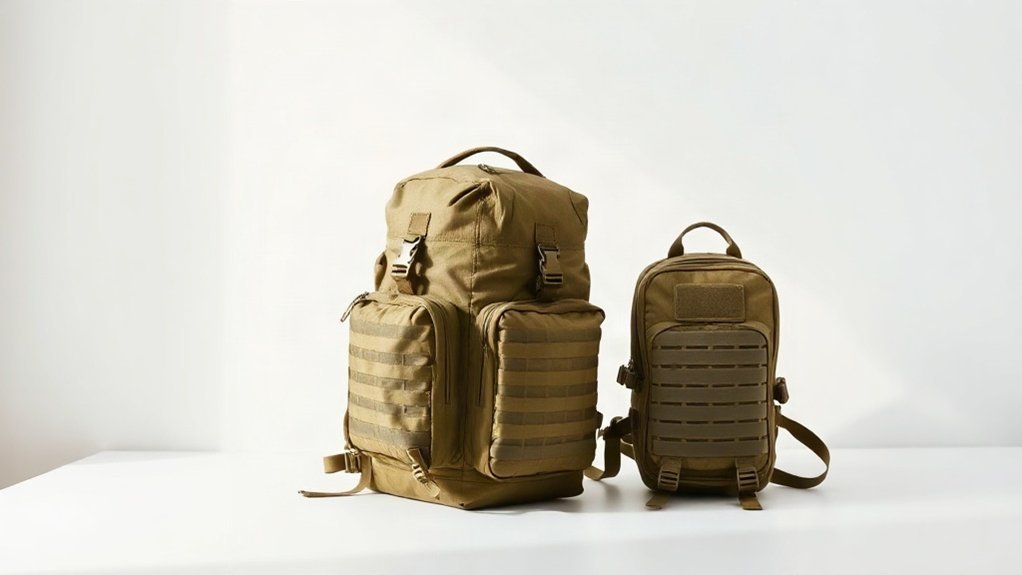
Yes, I’d choose a military-style backpack by torso fit and harness adjustability, not capacity alone. Measure your torso and look for a suitable range or adjustable yoke, then check that the shoulder straps follow your shape and the padded hip belt sits comfortably. Adjust the sternum strap without restricting movement, and test the pack with your typical load. A well-fitted model can suit women and smaller frames; below, I’ll explain what to compare before choosing.
Key Takeaways
- Yes—many military-style backpacks fit women and smaller frames, but torso length and harness design matter more than capacity.
- Look for an adjustable torso or yoke and shoulder straps that follow your shape; fixed harnesses may not fit comfortably.
- Check that the padded hip belt sits securely without pinching or sliding, and that the sternum strap allows free movement.
- Match capacity to your typical load: smaller packs such as 22–31-liter models may suit day use better than a 60-liter pack.
- Test the loaded pack by walking and bending; adjust the straps and confirm the hip belt transfers weight comfortably to your hips.
Do Military-Style Backpacks Fit Smaller Frames?
Yes, some military-style backpacks fit smaller frames, but the design and adjustments matter more than capacity alone. I’d compare torso length, harness shape, and belt placement rather than assume a smaller pack will fit better. Some models offer an adjustable shoulder harness or torso system; the 5.11 RUSH 100, for example, has an adjustable torso strap. Compact options such as the 22–31 L Eberlestock Little Trick may suit commuting or day hikes, where a lighter load supports freedom of movement. A tactical backpack or daysack still needs stable load distribution when packed. Check whether the padded hip belt sits comfortably and whether the sternum strap adjusts without restricting movement. Belt fit varies: some users may find a 40 L REEBOW Gear waist belt unsuitable, while the 24 BattlePack’s hip padding is limited. Torso length is a key measurement when assessing whether a military-style backpack can fit women and shorter frames comfortably.
Check Military-Style Backpack Torso and Strap Fit
When you try on a military-style backpack, adjust the torso or yoke so the load sits against your back—not just according to the pack’s capacity. Check that shoulder straps follow your shape, and that hip straps rest comfortably rather than sliding or pinching. I’d also tighten load lifter straps to see whether they draw the pack close without pulling your shoulders upward. An adjustable torso fit gives you more control over how a tactical assault pack or military rucksack carries.
Torso lengths and harness adjustments vary, so look for a pack with a suitable torso range for your frame. The 11 Tactical RUSH 100 offers an adjustable torso strap, quick release, load lifters, and padded hip straps. The REEBOW Gear 40L has adjustable shoulder straps, though its waist belt may not suit everyone. The 24 BattlePack’s straps may feel short on taller users. For compact comfort, consider the Eberlestock Little Trick; Mystery Ranch’s 2-Day Assault Pack felt secure for extended wear.
Choose a Military-Style Backpack That Fits Your Load
How much you carry should guide your pack choice: the 22–31 L Eberlestock Little Trick suits day hikes, commuting, or range use, while the roughly 27 L Mystery Ranch 2-Day Assault Pack offers an adjustable yoke and suspension designed to distribute an everyday load comfortably.
I’d match your rucksack to your actual loadout, not a bigger-is-better idea. For multi-day gear, the 60 L 5.11 Tactical RUSH 100 has padded hip straps for heavy load carry; its extra volume may be unnecessary for daily use. The 24 BattlePack expands from 20 to 40 L, and compression straps help control a lighter load. Before buying, try the pack loaded. Check torso and waist fit, plus any lumbar support pad or aluminum frame stays, rather than assuming they’ll suit you. A bug out bag needs room for essentials, but a manageable pack gives you more freedom to move. Don’t overload a REEBOW: it can feel unruly above 25 pounds. Measure your torso and match it to the pack’s frame and harness range so the hip belt sits properly and carries the load on your hips, not your shoulders—a good torso fit matters for smaller frames, too.
Compare Tactical Packs for Smaller Frames
For a smaller frame, I’d compare torso fit and loaded weight before capacity. The 22–31 L Eberlestock Little Trick weighs 3.8 lb and has earned comfortable day-hike fit reviews, though its compact look may surprise you. The 27 L Mystery Ranch 2-Day Assault offers an adjustable yoke and suspension designed to distribute weight. For a lighter option, the 25 L 5.11 AMP12 weighs 2.9 lb and has a configurable interior. I’d treat features such as molle webbing, a pals webbing grid, hydration bladder sleeve, and admin pouch as useful only when you’ll use them. Check each model’s fabric—1000d cordura nylon or 500d cordura fabric—ykk zippers, and construction for durability. Materials alone don’t determine comfort; choose the tactical pack that suits your body and needs. Since some assault packs have fixed harnesses, verify the torso length range against your measurements before buying.
Test Your Military-Style Backpack Fit While Loaded
A pack that fits your frame in the store may feel different once it’s loaded, so test it with the weight you expect to carry. I add typical gear, then adjust the shoulder straps, sternum strap, and hip belt. Walk, bend, and check whether the webbing stays secure and the load feels balanced.
For a larger load, I pay close attention to torso length and hip-belt comfort. The 5.11 RUSH 100 has an adjustable torso strap and padded hip straps, though its waist strap may not suit everyone. The REEBOW Gear 40L includes three adjustment points, but its waist belt can be limiting. Short straps or scant padding may also affect fit. Whether you’re comparing condor outdoor, maxpedition, assault, or bug out packs, inspect molle, itw nexus buckles, and duraflex hardware during preparedness testing. A properly adjusted hip belt helps transfer load from your shoulders to your hips.
Frequently Asked Questions
What Are the Different Sizes of Military Backpacks?
Military-style backpacks range from compact 20–31 L packs to large 60 L models. I’d choose a 20–25 L pack for everyday carry, a 25–40 L option for day trips or moderate loads, and a 44–60 L pack for longer outings or heavier gear. Some designs expand, such as the 24 BattlePack (20–40 L) and Eberlestock Little Trick (22–31 L). I’d also check dimensions and adjustable suspension, not just capacity.
Is There a Difference Between Male and Female Backpacks?
Yes—some backpacks differ by gender-specific fit, though labels don’t guarantee comfort. For example, if you have a shorter torso and narrow shoulders, a women’s model with shorter dimensions and contoured straps may sit better. I’d compare torso-length ranges, strap spacing, and hip-belt shape rather than choosing by label alone. Adjustable suspension can suit varied frames. Try the pack loaded; the straps should feel comfortable, and the hip belt should rest on your hips.
What Is the Best Military-Style Backpack?
I’d choose the Mystery Ranch 2-Day Assault Pack as the best all-around military-style backpack. At $229, it earns a 9.5/10 and offers a tri-zip opening, padded laptop sleeve, and durable 500-denier Cordura. Its compact build and adjustable yoke and suspension suit daily carry, hiking, or light emergency use. Before buying, I’d check torso and waist-belt measurements; fit varies, and not every pack’s straps accommodate every wearer.
What Is a Military Style Backpack Called?
I call a military-style backpack a tactical backpack or assault pack. If you’re shopping, check its capacity, materials, and features rather than relying on the label alone. Most use rugged fabric, sturdy zippers, and MOLLE webbing for attaching gear. I’d match the pack to your needs: compact day packs suit lighter loads, while larger models carry more. Some also include hydration sleeves, laptop compartments, or concealed-carry storage, so compare specifications before choosing one.
Conclusion
A military-style backpack can fit a smaller frame, but size labels alone won’t tell you whether it will carry well. I treat the pack like a harness for a small boat: the torso length sets the balance, and the straps keep the load steady. Adjust them, check that the hip belt rests on your hips, then test the pack with your usual gear. If it pulls, rubs, or shifts, I’d try another model before heading out.
References
Backpack Safety, https://orthoinfo.aaos.org/en/staying-healthy/backpack-safety/
Backpack Safety, https://www.healthychildren.org/English/health-issues/injuries-emergencies/Pages/Backpack-Safety.aspx
Backpack Safety, https://kidshealth.org/en/parents/backpack.html