Can You Fly With Military-Style Backpacks as Carry-On Luggage?
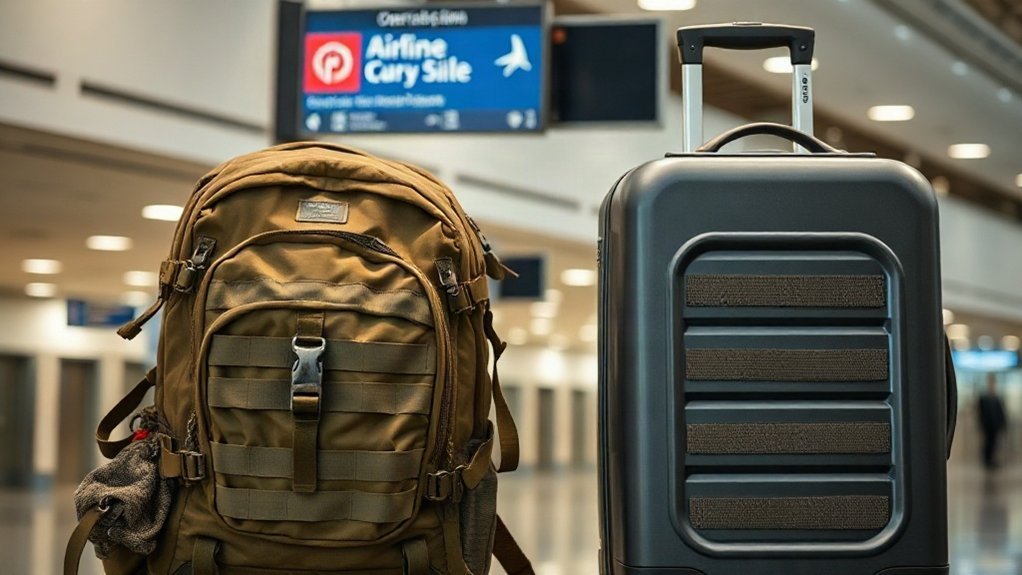
I can usually bring a military-style backpack as a carry-on if its packed dimensions, weight, and contents meet my airline’s rules. I measure it with straps and attached pouches included, then check the carrier’s current limits; the common 22 × 14 × 9-inch benchmark isn’t universal. I also keep prohibited items out and make liquids, electronics, and documents easy to access for screening. Camouflage alone doesn’t disqualify a bag. A few practical checks can help me prepare it for travel.
Key Takeaways
- Yes, military-style backpacks are generally allowed as carry-ons; airlines assess their packed size, weight, and contents, not their appearance.
- Check your airline’s limits and measure the fully packed bag, including handles, straps, and attached pouches; 22 × 14 × 9 inches is a common U.S. benchmark, not a guarantee.
- Remove external pouches or compress the pack if needed; bags over 35 liters may be harder to fit within carry-on limits.
- Keep prohibited items out of your carry-on, including knives, firearms, ammunition, explosives, pepper spray, and tools longer than 7 inches.
- Keep electronics, documents, and liquids accessible for screening; a compliant bag may still be gate-checked if overhead bins are full.
Can You Fly With a Military-Style Backpack?
Yes, you can usually fly with a military-style backpack as a carry-on; airlines and security staff care more about its packed dimensions, weight, and contents than its appearance. I recommend checking your airline’s rules before you leave, since limits vary. A common benchmark is 22 × 14 × 9 inches, but don’t assume it applies to every carrier.
If MOLLE webbing or other attachments add bulk, remove the pouches that push the bag beyond your airline’s limit. Secure loose straps so they won’t snag during handling. Keep prohibited items out: knives, firearms, ammunition, and liquids in containers larger than 3.4 ounces (100 ml) aren’t allowed in carry-on baggage. Extra pouches or a cluttered layout may prompt a hand inspection. Camouflage isn’t usually prohibited, but a streamlined bag can make screening easier and help you move freely. Measure the bag when it’s fully packed, including any attached pouches, to check its packed dimensions against your airline’s carry-on limits.
What Size Military-Style Backpack Fits?
To choose a carry-on-sized military-style backpack, start with your airline’s limit; 22 × 14 × 9 inches (56 × 36 × 23 cm) is a common benchmark, not a universal rule. Check your carrier’s policy before choosing a tactical backpack, since size limits vary.
Assault packs around 30–35 L often fit, but bags over 35 L can be harder to carry on. For a flexible one-bag trip, I’d consider 25–30 L, then check the packed weight against any airline limit.
Pack the bag fully, tighten its compression straps, and measure its height, width, and depth. Include handles, straps, and attached MOLLE pouches: they count toward the overall size. If external pouches push the pack close to your airline’s limit, remove them. I’d measure the loaded bag, not rely on its advertised capacity. Even a pack that meets the size limit may be gate-checked if the overhead bins are full.
What May Airport Security Check?
Even when your military-style backpack looks unusual, TSA screening focuses on what’s inside, not its appearance. I’d expect molle webbing or extra tactical pouches to prompt a hand inspection, so keep compartments tidy and easy to open. Place electronics and liquids where you can reach them quickly; an officer may ask you to unpack or show specific items.
Before leaving, remove carry-on-prohibited items, including knives, firearms, ammunition, firearm parts, tools longer than 7 inches, liquids over 3.4 ounces (100 milliliters), and self-defense sprays. Small amounts of metal in ykk zippers, buckles, or an internal frame generally won’t trigger a metal detector by themselves. Screening procedures can vary, so I check current TSA guidance and my route’s requirements before flying. That preparation helps me move through security with fewer surprises. Secondary screening may take longer if the bag’s contents are difficult to inspect.
Which Items Can’t Go in Your Backpack?
After screening what’s inside, I check that my backpack contains no carry-on-prohibited items. I remove knives, firearms, ammunition, firearm parts, explosives, and other sharp objects; I also leave tools longer than seven inches and self-defense sprays, including pepper spray, at home or pack them only as current rules allow. Fireworks, flares, and blasting caps are banned.
For liquids, I use containers of 3.4 ounces (100 milliliters) or less and place them together in one clear, quart-sized bag. I don’t pack alcohol above 70% ABV. Some canned or jarred foods with more than 100 milliliters of liquid aren’t permitted, either.
I keep electronics accessible for screening and verify current TSA rules before departure. A hydration bladder may be allowed through security, but screening rules can vary depending on whether it is full or empty. That check helps me build a compliant bug out bag loadout without compromising preparedness or my freedom to travel.
Does Camouflage Matter When You Fly?
I find that camouflage generally doesn’t violate airline or TSA rules; your bag’s size, weight, and contents matter more. Still, a conspicuous tactical look may draw extra attention, and local attitudes toward camouflage vary by destination. For a lower-profile choice, I recommend a solid color such as black, navy, wolf grey, or ranger green, without patches or morale gear. If your bag has metal hardware, it may attract extra attention during security screening.
Airline and TSA Rules
When I fly with a military-style backpack, I focus on its contents and dimensions—not its camouflage pattern. TSA rules don’t specifically ban a military rucksack or camouflage, and airlines generally allow both. I check the airline’s size and weight limits before I leave; a common U.S. carry-on benchmark is 22 × 14 × 9 inches, but policies vary. External pouches count toward dimensions and may lead to extra inspection.
Before screening, I empty every pocket and remove prohibited items:
- Knives, firearms, and ammunition can cost you time—and your bag.
- Tools over 7 inches aren’t allowed in carry-ons.
- Liquids in containers larger than 3.4 ounces (100 ml) must go.
- I keep electronics and permitted liquids accessible for inspection.
I also check destination rules, so I can travel prepared and move freely.
Attention and Visibility
Camouflage usually isn’t an airline or TSA issue; the backpack’s size, weight, and contents matter more. Still, a tactical assault pack with visible MOLLE webbing, patches, or morale gear may stand out and invite extra attention or screening. Reports from travelers vary: an old canvas rucksack may blend in, while a modern tactical-looking pack can appear conspicuous. These anecdotes don’t establish a consistent airport policy, so I wouldn’t assume camouflage alone determines your experience.
| Feature | Possible impression | Practical step |
|---|---|---|
| Camouflage | More noticeable | Keep contents compliant |
| MOLLE webbing | Tactical appearance | Remove unused add-ons |
| Patches | Draws attention | Leave them off |
| Extra pouches | Adds bulk | Check carry-on limits |
Choosing Subdued Colors
A subdued color won’t change carry-on rules, but it can make a military-style backpack less conspicuous. Airlines and TSA focus on size, weight, and contents—not camouflage. Still, Multicam fabric, a visible pals webbing grid, and patches may draw attention or invite extra screening. I choose a plain rucksack in black, wolf grey, ranger green, or navy when I want a lower-profile trip.
- Skip camouflage to blend in and move freely.
- Remove patches and morale gear before check-in.
- Choose a civilian-looking daysack for international travel, where reactions to military symbols can vary.
- Leave room in your schedule: screening experiences differ, and inspection remains possible.
Travelers often fly with military-style bags without trouble. I’d prioritize fit and compliant contents, then use subdued styling to avoid unnecessary attention—not because it guarantees faster screening.
How to Choose a Tactical Pack That Fits
To choose a tactical pack that fits, I’d start with 25–35 liters; a 30-liter model often works well for one-bag travel, while larger packs may draw more carry-on scrutiny. I’d check my airline’s size and weight limits before buying; 22 × 14 × 9 inches is a common benchmark, not a guarantee.
| Check | Why it matters |
|---|---|
| Packed dimensions | Handles, straps, and MOLLE pouches count; remove pouches if needed. |
| Carry comfort | Match torso length; a padded hip belt helps with loaded 25L–30L packs. |
I’d measure the fully packed bag, not rely on listed dimensions. A supportive frame can ease carrying, though tactical designs may weigh ½–1 pound more than comparable civilian bags. That trade-off matters when every pound affects your freedom to move. Choose a suspended laptop sleeve for added drop protection and screening access. Fixed-harness packs may fit only a limited torso range, so check the manufacturer’s sizing guidance before buying.
Why Clamshell Access Helps at Airports
I find a clamshell pack speeds security screening because it opens flat in the bin for a clear inspection. Suitcase-like access lets me retrieve a laptop, charger, or documents without unpacking the bag. I also look for a suspended padded laptop sleeve, which can help protect my device if I drop the pack. Attached MOLLE pouches may be screened with the backpack, so keep them accessible for inspection.
Faster Security Screening
At airport screening, a clamshell backpack can speed inspection because it opens flat and lets screeners see its contents more clearly than a top-loading rucksack. I use panel loading to present a tidy layout, which can reduce confusion during an X-ray review or hand inspection. Packing cubes help separate gear without hiding it. I keep electronics together in an accessible admin pouch and place my quart-sized 3-1-1 liquids bag where I can reach it quickly if asked.
- I avoid the stress of unpacking a tangled bag at the checkpoint.
- I keep chargers and devices easy to identify.
- I limit MOLLE attachments and extra pouches that may invite inspection.
- I move through screening with more confidence and less delay.
A clear pack won’t guarantee faster screening, but it gives officers a straightforward view and helps me stay ready to travel freely.
Easier Access to Essentials
Clear packing helps at screening, and clamshell access makes the items I need easier to reach. Unlike a top-loading rucksack, a panel-loading pack opens flat, so I can find a laptop, charger, or travel documents without unpacking everything. I keep electronics and any required liquids bag in accessible pockets, ready to remove when asked. A suspended, padded laptop sleeve holds my computer above the pack’s bottom, adding protection if I set the bag down hard. Internal admin sections or modular pouches keep passports, cables, and batteries organized, while preventing small essentials from vanishing beneath clothing. Before leaving, I check whether the hydration bladder sleeve, hip belt, and webbing crowd the opening or snag items. A well-arranged pack gives me quicker access and more control through the airport.
When Is a Tactical Backpack Too Much?
A tactical backpack becomes too much for carry-on when its packed size exceeds your airline’s limit—often 22 × 14 × 9 inches (56 × 36 × 23 cm)—or when its weight makes it uncomfortable to carry. Check your carrier’s rules, since limits vary. Packs over 35 liters and external MOLLE pouches can quickly crowd your allowance.
Carry-on limits vary, but packs over 35 liters or loaded with MOLLE pouches can quickly exceed your airline’s size allowance.
- A weak waist belt and frameless design can make a loaded 30-liter pack painful on long walks.
- Tighten the sternum strap; good load distribution eases the burden and preserves your freedom to move.
- Camouflage, visible webbing, and patches may draw attention; choose subdued colors for a quieter journey.
- Durable 500d cordura fabric won’t compensate for excess bulk or weight.
I’d remove unnecessary pouches and secure loose straps. Pack only what you can carry comfortably.
Should You Carry On or Check Your Pack?
Should you carry on or check your military-style pack? I’d carry it on only when its packed dimensions and weight meet your airline’s limits. A common U.S. benchmark is 22 × 14 × 9 inches, but carriers set their own rules, so check before you leave. Cabin storage keeps electronics, documents, and other valuables with you and avoids checked-bag loss.
If your pack is oversized or contains cabin-prohibited items, such as knives or larger tools, check it after verifying airline and security rules. Secure or remove loose straps to prevent snags, and use a large duffel or rain cover for protection. For footlocker packing, don’t let external pouches push the pack past size limits. Before gate-checking, remove valuables and fragile gear; durability doesn’t protect delicate contents.
Frequently Asked Questions
Can I Take a Tactical Backpack on a Plane?
Yes, I can take a tactical backpack on a plane as carry-on if it meets my airline’s size and weight limits and passes security screening. I’d check the airline’s rules and measure the fully loaded pack; a common U.S. limit is 22 × 14 × 9 inches. I’d secure straps, count MOLLE pouches, leave prohibited items behind, and keep electronics and liquids accessible for inspection.
Can You Bring a 55L Backpack as a Carry-On?
You can bring a 55L backpack as a carry-on only if it meets your airline’s size and weight limits; capacity alone doesn’t decide acceptance. I’d measure it fully packed, including straps and attached pouches, then compare those dimensions with the airline’s rules. A common benchmark is 22 × 14 × 9 inches, but limits vary. If your bag’s too large, you may need to check or gate-check it, so remove valuables and fragile items first.
What Are the New Carry-On Rules for 2026?
For 2026, I’d check your airline’s current carry-on limits; no universal size applies. For example, a packed backpack measuring 22 × 14 × 9 inches may fit one airline’s benchmark yet exceed another’s limits. I’d include handles, straps, and attached pouches when measuring, and check weight rules—some international carriers allow just 7 kg. Remove prohibited items, including knives, firearms, ammunition, and tools over 7 inches, before heading to airport security.
What Is Forbidden in a Carry-On Bag?
I can’t let you pack knives, firearms, ammunition, firearm parts, explosives, or tools longer than 7 inches in your carry-on; check TSA’s current list for specifics. Keep liquids in containers of 3.4 ounces (100 mL) or less, inside one clear quart-sized bag. Don’t pack pepper spray, fireworks, flares, blasting caps, alcohol over 70% ABV, or canned foods with more than 100 mL of liquid. Remove larger laptops and tablets for screening.
Conclusion
I can fly with a military-style backpack as carry-on luggage, but I check its dimensions against my airline’s limits before leaving home. I also keep prohibited items out, pack liquids and electronics for easy screening, and avoid overloading pockets that could snag or slow inspection. Camouflage isn’t usually the issue; size, contents, and fit are. When a pack meets the rules and stays manageable, I can travel prepared without turning boarding into a tactical operation worthy of Sun Tzu.
References
What Can I Bring?, https://www.tsa.gov/travel/security-screening/whatcanibring/all
Security Screening, https://www.tsa.gov/travel/security-screening
PackSafe, https://www.faa.gov/hazmat/packsafe