How Do You Maintain Military-Style Knives to Prevent Rust and Wear?
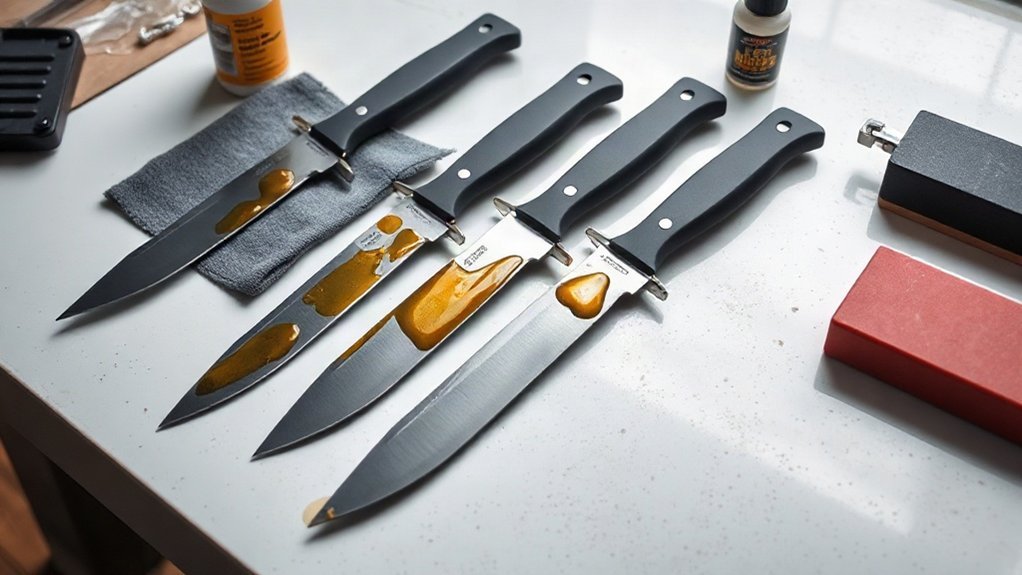
I keep military-style knives rust-free by wiping away dirt, blood, sap, and moisture after each use. For stubborn grime or saltwater, I wash the knife with mild soap and fresh water, rinse it well, and dry every surface and crevice. I apply a thin coat of suitable oil, then check the blade, handle, pivot, and sheath for rust, looseness, or trapped moisture. I store the clean, dry knife outside its sheath; below, I’ll cover rust removal and edge care.
Key Takeaways
- Wipe the knife promptly after use, removing dirt, blood, sap, sweat, and moisture with a clean, soft cloth.
- Wash stubborn grime with warm water and mild soap, rinse thoroughly, then dry the blade, handle, and crevices completely.
- After saltwater exposure or damp use, rinse promptly, dry fully, and apply a thin film of suitable protective oil.
- Inspect the blade, handle, pivot, and sheath for rust, damage, looseness, trapped dirt, or moisture; clean and dry the sheath separately.
- Treat light rust gently with oil and a soft cloth; store the clean, dry knife outside its sheath in a dry, ventilated place.
Clean Your Military-Style Knife After Use
After each use, wipe your military-style knife clean as soon as practical to remove dirt, moisture, blood, sap, and other residue that can stain or corrode the blade. I treat post use residue removal as a simple habit that protects my gear and keeps it ready for the next task. Use a clean, soft cloth, paying attention to spots where grime collects.
For stubborn dirt, I use gentle soap cleaning: wash the knife with warm water and mild dish soap, using a soft cloth or brush. Rinse it thoroughly so no soap or loosened residue remains. If you’ve used your knife around saltwater, rinse it promptly with fresh water; salt can corrode even stainless steel.
I dry the entire knife completely before putting it away, including the handle and accessible crevices. Skip the dishwasher, harsh chemicals, and abrasive cleaners, which can damage the edge or blade finish. Careful cleaning helps you maintain dependable equipment without needless wear.
Dry and Oil Your Military-Style Knife
Once I’ve cleaned my military-style knife, I dry the blade and handle completely with a clean, soft cloth. Moisture left behind can invite rust, so I don’t rush this step. To keep my knife ready for the next task, I follow a simple routine:
> I dry my knife thoroughly after cleaning, since even a little leftover moisture can invite rust.
- After each use, I wipe blade and handle to remove any remaining sweat, blood, dirt, or moisture, then dry both thoroughly.
- If saltwater gets on my knife, I rinse it with fresh water as soon as possible, dry it completely, and apply protective oil in a thin film.
- I give carbon steel prompt drying and more frequent oiling than stainless steel. Stainless steel still needs care after salt exposure or prolonged dampness.
- For a blade that contacts food, I use food-grade mineral oil. For other knives, I choose blade oil the manufacturer recommends.
With normal use, I oil about once a month. After wet conditions or humid storage, I oil more often, keeping my knife dependable wherever I roam.
Inspect the Knife, Handle, and Sheath
Regular inspections help me catch small problems before they compromise my knife. I check the blade, handle, and sheath for rust, cracks, looseness, wear, and trapped dirt or moisture. A quick look keeps my gear dependable and helps me stay ready for the next task.
I pay close attention to the handle junction, where gaps or debris can weaken my grip or hold moisture against the blade. On a folding knife, I inspect the pivot and lock for grit, corrosion, or damage. I follow the maker’s instructions instead of taking the knife apart without a good reason.
I also check sheath condition: it should be clean and completely dry. Moisture, salt, or blood inside can corrode the blade, so I don’t leave residue trapped there. After wet or coastal use, I look for salt and early rust spots, then clean and dry the knife and sheath promptly. These simple checks help me protect my equipment and maintain confidence in it.
Remove Rust and Maintain the Edge
When I find light surface rust, I apply a little oil and gently rub along the blade with a cork or soft cloth, not across it. To Remove surface rust that’s raised, I use 0000 steel wool or 1000-grit wet paper with oil and light pressure. I avoid the edge bevel, coatings, and harsh abrasives. Pits usually remain, so I clear only loose oxide, then dry and protect the blade.
To maintain blade sharpness, I match the tool to the edge:
- I smooth a rolled edge with a ceramic rod or strop.
- When sharpening’s needed, I use a medium diamond plate or combination stone, holding about 15–20 degrees per side.
- For serrations, I use a small conical sharpener.
- On a tanto, I sharpen the primary edge and point edge separately to preserve the tip.
Careful maintenance keeps the knife ready for demanding work and lets you depend on your gear without surrendering control of its upkeep.
Store Your Military-Style Knife Safely
Where you store your knife can matter as much as how you maintain it. I choose a dry storage location with good airflow, away from damp basements and hot garages. A stable, ventilated spot helps protect your knife while keeping it ready for your next trip outdoors.
Before putting it away, I clean the blade, dry it completely, then apply a thin coat of blade wax or another protectant recommended by the maker. For storage lasting weeks, I use a dry box or case and use silica gel packs to help manage moisture.
I keep the knife out of its sheath during long-term storage, especially when the sheath is damp or made of leather that can hold moisture. I clean the sheath and let it dry fully before storing it separately. Every so often, I inspect the knife for moisture, rust spots, or damage. If I find a problem, I address it promptly, so my gear stays dependable and ready for independent use.
Frequently Asked Questions
What Can I Put on My Knife to Keep It From Rusting?
I use a thin film of blade wax for general protection, or food-safe mineral oil if my knife touches food. These Knife blade protectants support corrosion prevention, but I apply them only after cleaning and drying the blade completely. For non-food knives, I choose light machine oil or a maker-recommended inhibitor, then wipe away excess. I reapply after use or moisture exposure, and check the label and knife maker’s guidance first.
What Type of Knives Will Not Rust?
No steel knife is completely rust-proof, but ceramic blade knives won’t rust because they contain no steel. Stainless steel alloys resist corrosion better than carbon steel, and I’d choose MagnaCut for wet or salty conditions. Even then, I rinse, dry, and inspect my knife after use; moisture and salt can still cause corrosion over time. You’re free to choose what suits your needs, but remember: “stainless” doesn’t mean maintenance-free.
Will WD-40 Remove Rust From a Knife?
Yes, WD-40 can loosen light surface rust, but it won’t remove heavy rust or fix pitting. For safe rust removal methods, I apply it sparingly, then gently wipe along the blade with a soft cloth or nylon brush. I check the maker’s care instructions before using a fine abrasive on stubborn rust. Afterward, I clean and dry the knife, then protect it with suitable oil or wax. For food knives, I choose food-grade oil instead.
What Is the Best Oil to Keep Knives From Rusting?
I’d choose food safe mineral oil for kitchen knives; for carbon steel knives, I’d use camellia oil. Rust doesn’t need an invitation, though damp storage practically rolls out a red carpet. I clean and completely dry my blade, apply a thin coat, then wipe away excess so grime won’t cling. After saltwater exposure, I rinse with fresh water, dry thoroughly, and oil promptly. For long storage, I keep knives dry, not trapped in damp sheaths.
Conclusion
I treat knife maintenance as a small ritual, not a chore: rinse away grit, dry every surface, and apply a thin coat of oil before rust gets a foothold. I check the edge, handle, and sheath for damage, then store the blade clean and dry. A neglected knife dulls and darkens; a cared-for one stays ready and dependable. With a few minutes of attention after each use, I keep wear at bay and preserve its strength for the next task.