How Do You Maintain Machetes and Kukris to Prevent Rust and Damage?
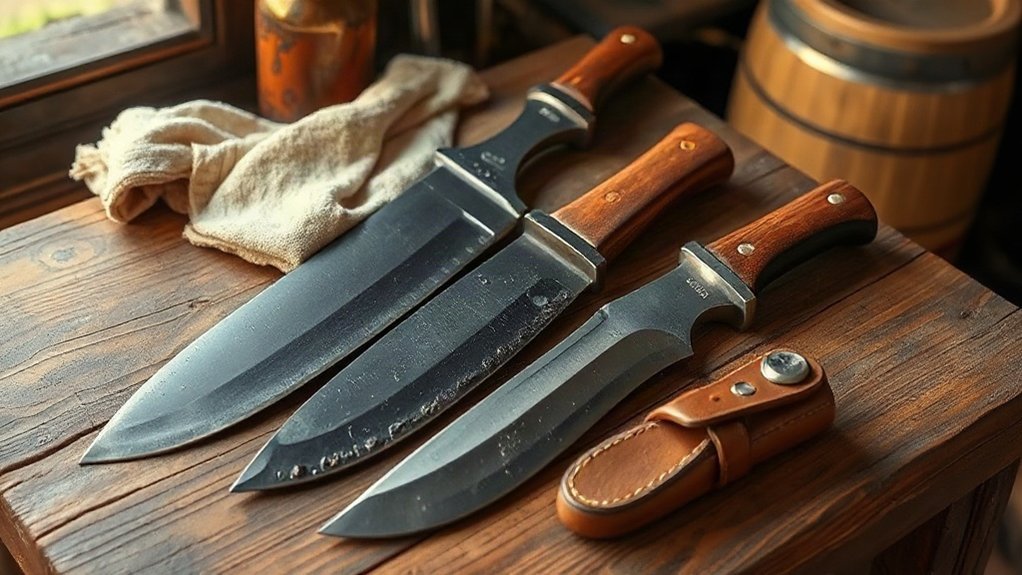
I keep machetes and kukris in good condition by wiping away dirt, sap, and moisture after each use, then drying the blade completely before storage. I apply a thin coat of mineral or camellia oil, especially to carbon steel, and remove light rust with an oiled cloth and gentle strokes. I store blades outside their sheaths in a cool, dry place, check handles and fittings regularly, and let leather scabbards dry fully before use. I’ll explain the care steps that help prevent lasting damage.
Key Takeaways
- Wipe blades clean after use, remove all residue, and dry them completely, including after washing or exposure to rain.
- Apply a thin coat of mineral or camellia oil to dry carbon steel; inspect stainless steel too, especially in humid conditions.
- Store blades clean and dry, preferably outside their sheaths in a cool, humidity-controlled place; inspect them monthly and re-oil as needed.
- Remove light rust with oiled 0000 steel wool or a copper pad using gentle strokes, then wipe, dry, and re-oil the blade.
- Keep handles and fittings clean and sound, and dry leather scabbards fully before conditioning or returning a blade to them.
How to Prevent Rust on Machetes and Kukris
After using a machete or kukri, wipe the blade completely dry to remove fingerprints, dirt, sap, and other moisture that can cause rust. I treat this simple step as the first defense, especially in humid climates, where damp air can quickly threaten exposed steel.
For a carbon-steel blade, I apply a thin, even coat of mineral, camellia, or 3-in-1 oil. These protective coatings help block moisture without adding much effort. I avoid vegetable and olive oils because they can turn rancid or leave a gummy film.
I store my blade in a cool, dry place, outside its leather sheath if I won’t use it for a while. Leather can trap moisture against the steel, so leaving the blade sheathed may invite corrosion. Once a month, I check stored blades and reapply oil if the protective film has worn away. This routine keeps my tool ready and lets me rely on it wherever freedom takes me.
Clean and Dry the Blade After Use
Regular oiling helps prevent rust, but I also clean and dry my machete or kukri after every use. A quick Post use wipe clears away dirt, sap, fingerprints, and moisture before they can damage the steel. I run a clean, soft cloth along the entire blade, from handle to tip, taking care not to miss the edge.
If I’ve used the blade for food preparation, I remove all residue and clean it thoroughly for hygiene. Then I dry the blade completely before putting it away. Even a few drops of water can start corrosion, especially on high-carbon steel.
When rain or washing leaves my blade wet, I dry it promptly and keep it out of its leather sheath for an hour or two. That gives both the blade and sheath lining time to air-dry. Before storage, I check for rust, discoloration, or damage and address any spots promptly. A clean, dry blade supports moisture free storage and keeps my tool ready for the next task.
Oil Machete and Kukri Blades
Once the blade is completely dry, I apply a thin, even coat of protective oil to help prevent rust. This simple habit keeps my machete or kukri ready for the next job without tying me to complicated maintenance.
Once your blade is fully dry, a light coat of protective oil helps keep rust at bay and your tool ready for the next job.
- Choose the oil: For carbon steel, I use mineral or camellia oil. For a working blade, 3-in-1 oil is another practical option. I avoid olive and vegetable oils because they can turn rancid or gum up.
- Cover the steel: I spread oil over the full exposed blade, including the tang where I can reach it. Then I wipe away excess, leaving a light, even film rather than a slippery mess.
- Prepare for storage: If I’m putting a blade away for a long time, I apply a heavier storage coating. I keep my kukri out of its leather scabbard, which can trap moisture against the steel.
WD-40 may help dry a wet blade, but I don’t rely on it for lasting protection.
Remove Light Rust With an Oiled Cloth
For light, smooth tarnish, I put a few drops of blade oil on a clean, soft cloth. I rub gently along the blade’s grain until the rust lifts, then wipe away residue and dry the blade. I finish with a thin coat of fresh oil; if spots persist or feel rough, I’ll use a lightly oiled 0000 steel wool or copper pad.
Use Light Pressure
When light grey or brown rust appears, add a few drops of mineral or camellia oil to a soft cloth and rub gently along the blade. I use gentle pressure, letting the cloth lift surface rust without forcing the steel. A careful rust assessment helps me protect the blade—and my freedom to rely on it—without scratching its finish or stripping away patina, the protective grey-blue or grey-brown surface.
- Keep each pass light and even; hard scrubbing can damage steel or remove patina.
- Wipe loosened rust and excess oil with a clean cloth, leaving a thin protective film.
- If orange-brown spots feel rough or resist the cloth, switch to a finer rust-removal method instead of pressing harder.
I check the blade again over the next week; lingering moisture can bring rust back.
Wipe Along the Grain
If light rust remains after a gentle assessment, I put a few drops of mineral or camellia oil on a clean, soft cloth and wipe along the blade’s existing grain. I use light, even strokes, following the grain direction rather than scrubbing across the steel. This simple scratch prevention step helps keep the finish clean while freeing the blade from surface rust or grey-brown tarnish. I wipe away loosened rust and excess oil, leaving only a thin protective film.
If orange-brown rust feels rough, I switch to fine 0000 steel wool or a copper scouring pad, add oil, and work lengthwise with care. After cleaning, I dry the blade and re-oil it. When I’ve found rust, I inspect the steel again over the next week so I can catch any return early.
Sharpen Machete and Kukri Edges Safely
A sharp edge makes a machete or kukri safer and more effective, but secure the blade and keep your fingers clear while honing. I choose the method that fits the edge: chakmak honing maintains a sound kukri edge; whetstone sharpening restores a dull or chipped one.
- For chakmak honing, rest the kukri’s spine on flat wood, edge up, and clear away stones or metal that could chip it. Hold the chakmak at 20–25 degrees, then draw it lightly from handle to tip. Make 6–10 smooth strokes per side.
- For whetstone sharpening, match the existing bevel, typically 20–25 degrees per side on a working kukri. Use light pressure and alternate sides every few strokes.
- Secure a machete or kukri before sharpening, and keep your fingers clear throughout. When you’re done, test the edge on paper; it should cut cleanly.
With a controlled approach, I can keep a dependable tool ready for the work and travel I choose.
Check Handles, Hilts, and Fittings
Check handles, hilts, and fittings regularly, since loose parts or neglected materials can compromise a tool. I inspect each part for movement, cracks, and wear so I can keep my machete or kukri dependable wherever I take it.
Handle materials need different care. I keep wooden machete handles dry and occasionally apply lemon oil or furniture polish to help prevent cracking and warping. For water-buffalo horn or hardwood kukri handles, I wipe the surface with a clean cloth and apply a light coat of mineral oil every few months. I never soak horn or leave it in direct sunlight for long. A thin coat of beeswax or furniture wax can protect hardwood once a year. Micarta and G10 need no oil; I simply wipe dirt away with a damp cloth.
For fitting polish, I use brass polish on brass and a silver cloth or mild silver cream on Kothimora fittings. I avoid abrasives that could scratch engraved details.
Dry and Condition Leather Scabbards
If your leather scabbard gets wet, I’d wipe it with a soft, dry cloth and let it air-dry away from heat and sunlight. I condition mine once or twice a year with a light coat of suitable leather balm, and I check its stitching and lining for wear. To prevent moisture damage, don’t resheath a damp blade or store it in the scabbard long-term.
Dry Leather Safely
When a leather scabbard gets wet, wipe it with a soft, dry cloth and let it air-dry at room temperature. I don’t rush the process with heat; patience protects the leather and helps keep your gear ready for the next trip.
- Blot away water gently with the cloth. Don’t scrub, which can stress the surface.
- Set the scabbard in a ventilated spot, away from direct sunlight, radiators, and other concentrated heat. Let air do the work.
- Wait until the leather is completely dry before returning your blade. Damp leather can trap moisture against steel and encourage rust.
I check the inside and seams, too, since hidden dampness can linger. A fully dry scabbard gives you more freedom to store and carry your machete or kukri without inviting avoidable damage.
Condition the Scabbard
Once a leather scabbard is completely dry, I condition it once or twice a year with a small amount of mink oil, neatsfoot oil, or suitable leather balm, especially in dry climates. This conditioning frequency helps keep the leather supple without compromising its strength. For conditioner selection, I choose a product made for leather and suited to the scabbard’s finish. I apply it sparingly with a clean cloth, following the product directions, then let the leather absorb it. I don’t saturate the scabbard: too much conditioner can soften or damage it, leaving it less able to protect my blade. Before I return the machete or kukri, I check that the leather lining and blade are completely dry. For storage lasting months or longer, I keep the blade outside the leather scabbard to limit corrosion risk.
Prevent Moisture Damage
To prevent moisture damage, I dry my kukri or machete before it goes near its leather scabbard. After wet use, I wipe the blade and let it air-dry outside the scabbard for an hour or two, then apply a light coat of oil. Never trap damp steel in leather: surface rust can appear within 24–72 hours, with pitting developing over weeks.
- If the scabbard gets wet, I blot it with a soft, dry cloth and air-dry it at room temperature, away from sunlight and radiators.
- Once or twice yearly, I apply a thin coat of mink oil, neatsfoot oil, or suitable leather balm.
- For storage lasting months, I keep the blade outside the scabbard.
Dry storage and humidity control give me more freedom to protect both tools and gear.
Store Blades Outside Their Sheaths
For long-term storage, keep your machete or kukri outside its sheath: leather can hold moisture against the steel and invite rust. I store mine dry and protected, so you can keep yours ready without letting damp leather dictate its condition.
| Storage step | What I do | Why it helps |
|---|---|---|
| Prepare | Wipe the blade completely dry; apply thin protective oil | Limits moisture exposure |
| Choose a place | Use a clean, dry wooden box, case, or gun safe | Keeps steel away from humidity and other metal |
| Check | Inspect regularly for moisture or rust | Catches problems early |
A damp leather lining can rust a 5160 high-carbon-steel kukri in 24–72 hours and cause pitting within weeks. Choose a cool, dry location and humidity controlled storage; freedom from constant upkeep starts with smart placement. If you must leave the blade sheathed temporarily, oil it first and check it often. I make corrosion monitoring part of each inspection, then move the blade out of its sheath as soon as possible. Don’t let a convenient cover become a hidden source of damage.
Care for Carbon and Stainless Steel Blades
Carbon and stainless steel need different care, but both stay in better shape when you clean and dry them after use. I match my routine to the blade, so you can keep your machete or kukri ready for the next trip without unnecessary upkeep.
Clean and dry your blade after use, then tailor the rest of your care to its steel.
- Carbon Steel: Water, sap, and damp air can quickly encourage rust. I dry the blade thoroughly, then spread a thin, even coat of mineral, camellia, or 3-in-1 oil over it. Skip cooking oils; they can turn rancid or gummy. Oil carbon steel regularly.
- Stainless Steel: It resists corrosion better, but it isn’t rustproof. I clean and dry it after use, check for spots in humid conditions, and oil it less often. Store it clean and dry.
- Either blade: I remove light rust promptly with a soft cloth and oil. For stubborn spots, I use fine 0000 steel wool with light strokes.
A few minutes of care keeps your blade dependable and lets you head out on your own terms.
Frequently Asked Questions
Does WD-40 Prevent Tools From Rusting?
Yes, I use WD-40 to displace water and help prevent rust temporarily, but I don’t trust it as lasting protection. I dry each tool completely, then apply a thin coat of mineral or suitable knife oil. For WD 40 for machete storage, I choose protective oil instead of relying on WD-40 alone. I also check stored tools regularly and use moisture barriers for tool sheds to limit dampness and corrosion.
What Is the Best Oil to Keep Knives From Rusting?
I recommend food safe mineral oil for dependable, neutral-smelling rust protection, especially on carbon-steel knives. Camellia oil for knife storage is another excellent traditional choice. Clean and completely dry your blade first, then apply a thin, even coat and wipe off any excess. You’ll keep rust at bay without restricting your choices or adding much upkeep. I avoid olive and vegetable oils because they can turn rancid, gum up, or leave residue.
How to Get Rid of Rust on a Machete?
To remove rust from your machete, wipe off dirt and moisture, then add a few drops of oil. Why let rust hold your blade back? For light staining, rub gently along the blade with a soft cloth; for moderate rust, use oiled #0000 steel wool or a copper pad with light pressure. These rust removal methods support machete surface restoration. Dry completely, oil lightly, and inspect daily for a week.
What Can I Put on My Knife to Keep It From Rusting?
I coat a clean, completely dry knife with a thin layer of mineral or camellia oil to help keep moisture and rust at bay. For a blade that touches food, I choose food safe oil, such as food-grade mineral oil, rather than cooking oil, which can turn rancid or gummy. I wipe off excess after each use. For longer storage, I apply a heavier coat or protective wax and keep the knife outside its sheath.
Conclusion
I keep my machetes and kukris ready by cleaning and drying them after use, applying a light coat of oil, and checking their edges, handles, and fittings regularly. I also dry leather scabbards thoroughly and store blades outside them to limit trapped moisture. Whether your blade is carbon steel or stainless, a little routine care can prevent rust and damage. Follow these simple habits, and your trusty blade could outlast a mountain of chores.