Are Machetes and Kukris Suitable for Camping and Wilderness Trips?
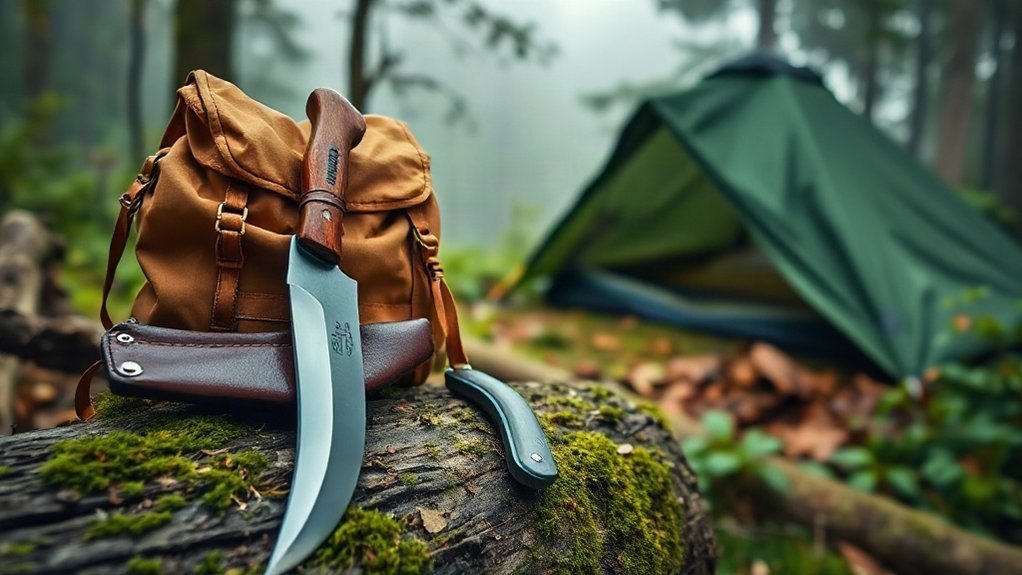
I find kukris and machetes useful for camping and wilderness trips when I match the blade to the job. I choose a machete for grass, vines, and light brush; its reach clears vegetation quickly. For kindling, small limbs, and mixed camp chores, I prefer a forward-weighted kukri. Neither replaces an axe for heavy firewood or a compact knife for precise cuts. I also consider blade length, pack space, and safe handling. The right choice depends on your terrain and trip.
Key Takeaways
- Machetes suit clearing grass, vines, and light brush; their reach supports efficient sweeping cuts over broad areas.
- Kukris handle light-to-medium chopping, kindling, and small limbs better, thanks to their forward-weighted blades.
- Neither tool replaces an axe for substantial firewood or a compact knife for precise food preparation and carving.
- Choose blade length for the trip: 12–16-inch kukris balance portability and camp utility; longer blades add reach but bulk.
- Use a secure sheath, clear the swing area, wear gloves, and clean and dry the blade after use.
Are Kukris and Machetes Good for Camping?
Yes—kukris and machetes can both be useful for camping, but they suit different chores. I choose between them based on the campsite, my plans, and the freedom I want to move light and work efficiently.
For Trail preparedness, a kukri gives me compact chopping power for kindling, small limbs, and camp wood. A 15-inch model often balances reach and portability; a heavier 15–18-inch blade can tackle tougher chopping, though I’d avoid carrying that bulk on a long backpacking trip. I’d pick a machete when I expect sustained grass, vine, or brush clearing, since its longer reach helps open a route.
Seasonal conditions matter: dense summer growth may favor a machete, while a wood-focused camp may call for a kukri. Neither replaces a compact knife for fine tasks or an axe for heavy processing. I make sure I have a clear swing area and sheath the blade whenever I’m not using it.
What Does Each Blade Do Best at Camp?
I’ll compare how each blade handles brush clearing, firewood chopping, carving, and everyday camp tasks. A machete’s reach suits sweeping vegetation, while a kukri’s weight favors close-in woodwork. I’ll also explain where each blade’s strengths—and limits—matter most.
Clearing Brush
When I clear brush at camp, I match the blade to the growth: a machete’s long, light reach sweeps efficiently through grass, vines, and other soft vegetation, while a kukri’s forward-weighted blade handles thicker woody stems and small limbs with more chopping power.
For trail maintenance or campsite clearing across wide areas, I favor the machete. Repeated sweeping cuts let me cover ground faster and open a path with less effort. In tight camp spaces, though, its long reach can feel awkward. I switch to a kukri for close-in work; its shorter blade maneuvers easily around obstacles and delivers compact chops where I need them. Choose based on the brush, not a fixed preference: I use a machete for soft growth and a kukri for woody patches, keeping each task controlled and suited to the terrain.
Chopping Firewood
After clearing brush, I turn to firewood, where a forward-weighted kukri offers more useful chopping power than a machete. At roughly 15–18 inches, it can handle kindling, limbs, and campfire-sized wood without tying me to a heavy axe. An Ang Khola pattern favors a hatchet-like chop; a WWII pattern swings more lightly while retaining useful bite. I’d choose a 15–16-inch kukri for a portable camp setup, or an 18-inch model when extra chopping reach matters more than pack space. A machete still clears light brush quickly, but its thin blade can struggle with seasoned or knotty wood. I check firewood seasoning before choosing splitting techniques, and I keep expectations sensible: neither blade replaces an axe for heavy processing. That balance lets me travel light and manage camp fuel confidently.
Carving And Camp Tasks
At camp, I use each blade where its shape works best: a kukri’s forward-weighted belly chops kindling and limbs, while its narrow section near the handle handles rough carving. For fire starting tasks, I also use it to prepare firewood. Its sturdy profile can notch poles and cut small timber for a simple shelter.
I reach for a machete to clear grass, vines, and brush, or to trim leafy roofing. Its long, thin blade can cut light shelter material and prepare fruit or kindling. I’ll use its spine carefully to tap tent stakes, but neither blade replaces a compact knife for precise carving or food preparation. I avoid digging with either; rocks and soil can damage the edge. Choosing the right tool keeps camp work efficient and leaves me free to explore.
Which Blade Chops Camp Wood Better?
I find a forward-weighted kukri usually chops camp wood better than a machete, thanks to its heavy, curved belly. For green branches and vegetation, though, a machete may be the handier choice; the right blade depends on the wood’s size and hardness. I’ll compare how blade shape and weight affect each tool’s chopping performance.
Kukri Versus Machete
When camp wood needs chopping, I’d choose a kukri over a similarly sized machete. Its forward-weighted design generally bites deeper into branches and campfire-sized wood, while a machete’s reach suits clearing grass, vines, and brush. You can choose the tool that fits your route and needs.
| Task | Better choice |
|---|---|
| Chopping camp wood | Kukri |
| Clearing brush | Machete |
For routine chores, I’d carry a 15–16-inch kukri; a 15-inch Ang Khola offers compact chopping power. An 18-inch model delivers more power, but adds bulk. Material durability matters in either choice, so I’d check the steel and construction before heading out. Regional traditions may guide your preference, but match the blade to the work. Neither replaces an axe for heavy wood processing: I’d pick a machete when vegetation clearing takes priority.
Blade Shape And Weight
Because its forward-curving belly concentrates weight near the edge, a kukri generally chops camp wood with fewer swings than a thin, straight machete. I find that edge geometry makes the difference: the kukri delivers more force with each controlled strike, while a machete’s long, light blade favors quick, sweeping cuts through grass, vines, and green brush. Its balance point and forward weight help it bite into small limbs and seasoned wood; one comparison chopped a roughly three-inch oak branch in fewer swings. Heavier patterns, such as the Ang Khola, feel more like a hatchet, while slimmer kukris trade some chopping power for speed. For a self-reliant trip, I’d choose a 15–16-inch kukri for a useful balance of chopping ability and carry comfort, without hauling a bulkier model.
Wood Size And Chopping Needs
For camp wood, a forward-weighted kukri usually chops more effectively than a thin, straight machete, especially when the wood is seasoned or knotty. I’d choose a 15–16-inch kukri for routine camp chores; an 18-inch model adds chopping power but takes more space and weight on the trail. An 18-inch WWII kukri has been reported to chop and split campfire-sized wood, while a Chiruwa Ang Khola can handle logs up to about six inches across.
Your choice should match the wood species, its size, and your willingness to carry a heavier blade. I use a controlled splitting technique and keep the work within the tool’s limits. A machete clears grass, vines, and light brush quickly, but neither blade replaces an axe for heavy wood processing.
Is a Kukri or Machete Better for Brush?
A machete usually clears brush faster, while a kukri offers more control for close work. When I’m opening a trail through grass, vines, cane, or soft, dense growth, the machete’s long blade lets me make quick, sweeping cuts. Its Reach advantage matters across wider ground, especially when vegetation density makes every step a fight.
I prefer a kukri in tight camp spaces or where brush work mixes with chopping. Its shorter, forward-weighted blade feels easier to guide near small limbs, and I can use it for compact cuts or kindling. That control gives me room to work without swinging a long blade awkwardly.
I choose based on the growth and terrain: a machete for broad swaths of soft vegetation, a kukri for close work and varied chores. Either way, I make sure I have a clear swing path and handle the tool carefully. Neither replaces a compact knife for fine tasks, so I carry the right tool for the job.
How Big a Blade Should You Carry?
How big a blade should you carry? I match length to the trip, balancing cutting reach with carry comfort and pack fit. A compact blade gives me more freedom to travel light; extra length adds capability but takes up space and weight.
| Blade length | Best fit |
|---|---|
| 12-inch kukri | Light hiking and camping |
| 15–16-inch kukri | Routine camp tasks; practical for extended trips |
| 18–20-inch kukri | More reach and chopping power; bulkier for long trips |
For extended backpacking, I’d generally keep a kukri within 15–16 inches. A 16.5-inch model may still work, though it can feel large to carry. An 18-inch kukri offers greater reach; an 18-inch CAK, for instance, was recommended for logs up to about six inches in diameter. I’d reserve a 20-inch model for heavier chopping or car camping. With machetes, shorter blades are easier to carry, while 14–24-inch blades provide more reach for clearing vegetation. I’d choose the smallest length that suits my trip and gear.
When Do You Need a Knife or Axe?
When camp chores call for precision, I reach for a knife; for vegetation, I choose a machete; and for heavy firewood, I use an axe. A compact knife gives me better control than a kukri or machete for food preparation, carving, and other fine cuts. I also value it as an Emergency backup when a larger tool doesn’t suit the task.
For light-to-medium chopping, kindling, small limbs, and mixed camp work, I may choose a kukri. A 15-inch model can handle routine chores, but I’d pick a hatchet or axe if I expect frequent wood processing or need to split large rounds. Neither a knife nor a machete replaces an axe for substantial firewood.
Before choosing, I make a terrain assessment: grass, vines, and light brush favor a machete’s reach and sweeping cuts. Seasoned wood calls for a different tool. Matching blade to task lets me travel lighter and keep camp work efficient.
How Can You Carry and Use Them Safely?
Once I’ve matched a blade to the job, I carry it in a secure sheath that fully covers the edge and tip. I check sheath retention and make sure the fit follows the blade’s shape, especially a kukri’s forward curve. When portability matters, I prefer a 12–16-inch kukri; an 18–20-inch model adds bulk and suits car camping or heavier chopping better.
Before I swing, I clear the cutting path and backswing of people, limbs, and gear. I point the blade away from my body, grip it firmly, and wear gloves. A kukri’s forward-heavy balance delivers power but demands control; a machete’s longer reach needs space for sweeping cuts.
After use, I clean and dry the blade, apply protective oil or wax, and store it securely away from children. For U.S. air travel, I pack it sheathed or securely wrapped in checked baggage, never in carry-on luggage, so I can travel responsibly without giving up useful gear.
Frequently Asked Questions
Is It Illegal to Carry a Machete While Hiking?
It isn’t automatically illegal to carry a machete while hiking; I’d check local machete carry laws before heading out. Rules vary by location and may limit blade length, concealed carry, or knives in parks and wilderness areas. I’d review hiking knife regulations for my exact route, including trail systems, and carry the blade securely sheathed. If I’m flying, I’d pack it in checked baggage, never my carry-on, and follow airline requirements.
Are Kukri Knives a Good Tool for Bushcraft?
Yes—a kukri can be a good bushcraft tool: where a hatchet chops and a knife whispers, its forward-weighted curve bridges both. I’d choose a 15–16-inch model for a useful balance of power and portability; Ang Khola patterns favor chopping, while WWII and BAS styles suit slicing and brush. It won’t replace an axe or small knife. For Bushcraft carving techniques, I’d use a finer blade; Kukri maintenance practices keep the edge dependable. Always clear your swing path.
Which Is Better for Camping, a Hatchet or a Machete?
I’d choose a hatchet for campsite firewood preparation because its compact, heavy head handles frequent chopping and splitting better. For clearing grass, vines, and light brush, I’d take a machete; its reach makes trail work faster. Hatchet versus machete weight matters too: I’d carry the tool that fits my workload, not add gear I won’t use. A machete can manage small branches, but I wouldn’t trust a thin model with seasoned hardwood.
What Is the Best Machete for Camping?
I’d choose a Latin-style machete as the best machete for camping because it balances portability and versatility. The Best blade length depends on your campsite: I’d pick 14–18 inches for general use, or longer for sweeping through brush. I’d weigh weight and balance against chopping needs; a bolo or panga suits woody growth. Ideal handle grip and comfort matter, so I’d seek a secure, sturdy handle. For heavy firewood, I’d bring a hatchet.
Conclusion
I’d take a kukri or machete camping only when the trip calls for heavy chopping or clearing; neither is a magic wand that turns wilderness into a backyard. I’d match the blade to the terrain, carry the smallest useful size, and pack a knife or axe when those tools fit better. Most of all, I’d use a sheath and keep a safe distance from others. A little care beats learning the hard way—one careless swing can make a very long story.