How Do Machetes and Kukris Help With Tough Outdoor Chores?
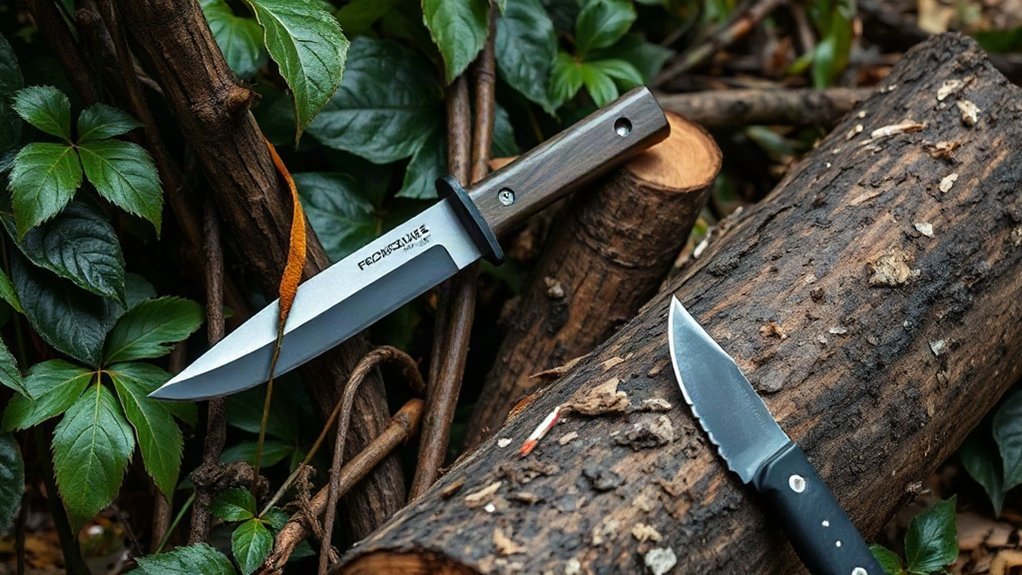
I choose a machete for fast, repeated brush clearing: its long, light blade sweeps through grass, vines, and briars while keeping my hand farther from thorny growth. For chopping firewood, thicker limbs, or shelter poles, I prefer a kukri. Its forward-weighted belly delivers stronger, focused blows, and its sturdy blade handles wood better than a thin machete. I match the tool to my toughest regular chore, since the best choice depends on the terrain and work ahead. Further details can help you decide.
Key Takeaways
- Machetes clear grass, vines, briars, and light brush efficiently with long, sweeping strokes.
- Their 14–24-inch blades provide reach, cover wide areas, and help keep hands away from thorny growth.
- Kukris handle heavier chores, such as chopping firewood, cutting thick limbs, and shaping shelter poles.
- A kukri’s forward-weighted belly delivers focused chopping force, while its thick blade resists bending and binding.
- Choose a machete for extended brush clearing and a kukri for wood-heavy tasks; kukris can tire users faster during prolonged clearing.
Which Blade Should You Choose for Outdoor Chores?
For long sessions clearing grass, vines, briars, and small branches, I’d choose a machete: its 14–24-inch blade reaches farther and makes quick, sweeping cuts. That reach lets you open trails and manage brush without stopping to reposition constantly. A lighter blade can also support carrying comfort over a full day outdoors.
For heavier chores, I’d consider a kukri. Its forward-weighted, curved blade focuses force for chopping firewood, shaping shelter poles, or cutting thicker limbs; some models handle wood around 3–4 inches thick. That extra weight may tire you sooner during prolonged clearing, though, so I’d match the tool to the work rather than carry more than I need.
Before buying, I’d check the steel, heat treatment, and secure full tang. Reliable construction matters when you depend on a blade away from home. I’d also plan Blade maintenance: keep the edge clean, dry, and sharp, and choose the tool that gives you confidence and freedom outside.
Why Does a Kukri Chop Wood Better?
When I need to chop wood, a kukri’s forward-curving blade concentrates weight near its broad belly, giving it more striking force than a thin, straight machete of similar size. That forward balance helps me make short, controlled swings, so I can work efficiently without oversized motions.
| Feature | Wood-chopping benefit |
|---|---|
| Broad belly | Delivers focused impact |
| Edge convexity | Bites deeply into wood |
| Thick, stiff blade | Resists binding or bending |
| Forward balance | Supports controlled swings |
The Wood grain impact matters: a substantial, often convex edge cuts into seasoned branches and small logs more effectively than a blade built for lighter work. In one comparison, a kukri chops through a three-inch branch in the time a machete takes three swings. I can also baton with a thick kukri to split small logs. For demanding cuts, I’d choose well-treated 5160 spring steel, valued for toughness and shock absorption. That dependable performance gives me greater freedom to handle tough wood chores confidently.
Why Does a Machete Clear Brush Faster?
A machete clears brush faster because its long, light blade reaches farther and sweeps a wider arc with each stroke. When I’m opening a path, that Longer sweeping reach lets me cut grass, vines, briars, and other soft growth without stepping into every tangle. An 18-inch blade can clear low vegetation in one broad stroke, while keeping my hand farther from thorny bushes. That distance gives me more room to work with confidence.
I also value how the machete’s balanced build supports Lighter repeated swings. Compared with a forward-weighted kukri, it tires me less when a patch needs several passes. I can keep moving and make steady progress toward open ground.
- I use broad strokes to cover more light vegetation at once.
- I keep a safe gap between my hand and thorny growth.
- I expect the thin blade to cut green brush, not thick limbs or seasoned wood; those can bind or resist.
That makes the machete a practical choice for clearing light brush efficiently.
Which Blade Handles Camp Tasks Best?
Although both blades can earn a place at camp, I’d choose a kukri for chores that demand chopping power. Its forward-weighted blade helps me split small logs, chop firewood, cut thicker branches, and notch shelter poles. For kindling preparation, that power can turn scrap wood into useful fuel without making the job a struggle.
A machete earns its place when I need to clear grass, vines, or leafy brush around camp. Its longer reach and lighter handling make repeated sweeping cuts easier. It’s also handy for trimming fruit and cutting thin vegetation.
For camp meal prep, I’d use a kukri for rough food tasks and a machete for lighter trimming. Size matters: a Cold Steel LTC Kukri handled trees 3–4 inches across, while a typical 18-inch machete suits vegetation better than seasoned wood. Before packing either blade for firewood, I’d check for fallen wood and choose a durable model suited to the work.
Which Blade Suits Your Terrain Best?
Choose your blade for the terrain’s toughest regular task: a machete clears soft, dense growth, while a kukri handles hardwood and mixed terrain. I match the tool to the ground I’ll cover and the work I can’t avoid.
> Match the blade to the terrain: a machete sweeps through dense growth, while a kukri tackles hardwood and mixed ground.
- Vines, grass, and brush: I reach for a machete with a 14–24-inch blade. Its length lets me sweep through growth quickly. For lowland jungle or long trail-clearing days, an 18–20-inch model gives useful reach without the weight and fatigue of a kukri.
- Hardwood and firewood: I choose a sturdy kukri. Its forward-weighted belly adds chopping force in short, controlled swings, making it better for limbs, shelter work, and seasoned wood. A machete may bind or lose its edge there.
- Mixed ground: I weigh slope adaptability and wetland footing alongside the chores. Varied terrain often favors the kukri when wood matters; vegetation-dominated routes favor the machete.
That choice keeps me moving freely with a blade suited to the work, not just the scenery.
Frequently Asked Questions
Is a Kukri Better Than a Machete?
A kukri isn’t always better than a machete; I’d choose based on your task. Its forward-weighted Blade balance boosts chopping efficiency on thick limbs, seasoned wood, and small logs. A machete’s longer reach and lighter feel make it better for quickly clearing grass, vines, and brush. For mixed camp chores, I’d favor a sturdy, full-tang kukri; for long trail-clearing sessions, you may prefer a machete. Comfort and build quality matter, too.
Is a Machete Good for Yard Work?
Yes, I find a machete handy for yard work: its blade sweeps through weeds and vines like a scythe through summer grass. It’s useful for Garden cleanup and light hedge trimming, while an 18-inch blade gives me reach around brambles and small branches. I choose a lighter machete for long sessions and keep a secure grip to limit fatigue. For thick limbs or firewood, I reach for a heavier chopping tool instead.
What Are Kukri Machetes Used For?
I use kukri machetes for demanding outdoor work where a compact, powerful blade gives me more freedom than carrying several tools. Their forward-curved edges chop thick branches and small trees, cut firewood, split small logs, and shape shelter poles. They’re useful for Field clearing and trail maintenance, though I’d choose a long, straight machete for quickly sweeping through light vegetation. I also use a kukri for rough food prep, not delicate slicing.
Is a Machete a Good Home Defense Weapon?
No—I wouldn’t recommend a machete for home defense. Its long, thin blade can be difficult to control indoors, and its weight, balance, and construction vary. I’d prioritize prevention, secure locks, and contacting emergency services instead; those safer alternatives don’t depend on wielding a blade under stress. I’d also check local legal considerations before keeping or carrying one. A machete’s useful for vegetation and farm work, but that doesn’t establish it as an effective or safe household weapon.
Conclusion
I choose a kukri when I need to split kindling or tackle thick branches; its weight does the hard work. For fast brush clearing, I’d reach for a machete, especially on open, overgrown trails. Around camp, either blade can help with practical chores, but I match the tool to the task and terrain. Think of it as choosing your trusty steed—only this medieval knight carries a modern sheath. Keep your blade sharp, use it carefully, and let the landscape guide your choice.