Are Folding Tactical Knives Easy to Carry and Use With Gloves?
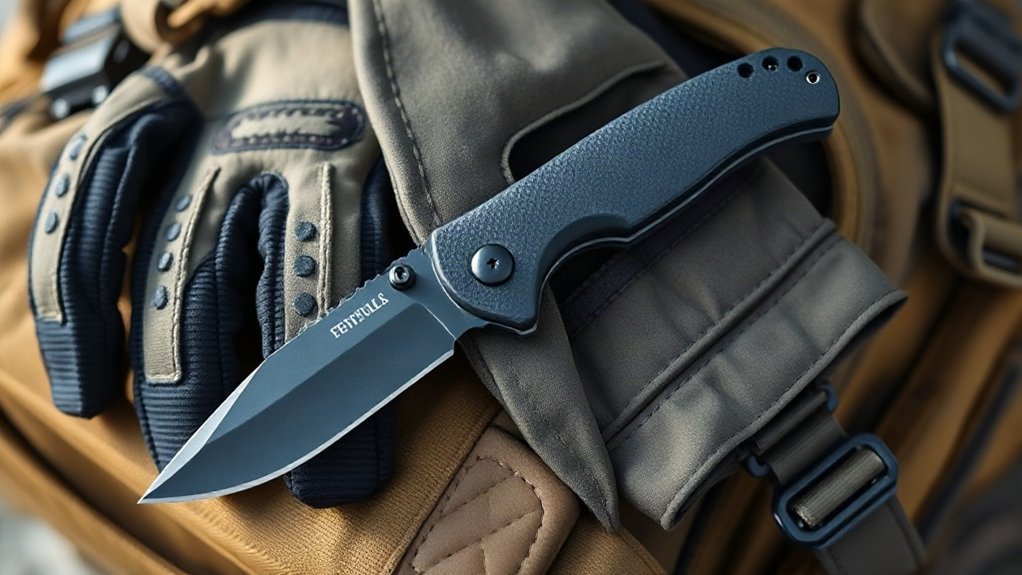
I find folding tactical knives easy to carry because their blades fold into compact handles, making them practical for pockets, bags, commuting, and outdoor tasks. With gloves, I look for textured, contoured scales, a secure fit, and controls I can reach reliably. Large thumb studs may be easier to operate than small controls, while bulky gloves can obstruct flippers. I also practice safely with a trainer and check local carry laws; the details below can help guide your choice.
Key Takeaways
- Folding knives are compact and lightweight, making them easier to carry than fixed-blade knives in pockets or bags.
- Pocket clips improve access and can keep a knife discreet, but check local rules on blade length and carry.
- Textured, ergonomic handles and secure finger contours can improve grip, but must fit comfortably over your gloves.
- Large thumb studs or accessible thumb holes may work better with gloves; bulky gloves can hinder flipper tabs.
- Practice slowly with a trainer in a clear space, keeping fingers clear of the blade path and checking current carry laws.
Are Folding Tactical Knives Easy to Carry?
Because the blade folds into the handle, a folding tactical knife is easy to carry in a pocket or bag. I find that compact storage makes it a practical choice when I want a useful tool without the bulk of a fixed-blade knife. Its lightweight design also gives me more freedom to move through the day, whether I’m commuting, hiking, or handling everyday tasks.
A pocket clip can improve pocket accessibility by keeping the knife close at hand. For example, the deep-carry clip on the CRKT M16-03DB helps secure it inside a pocket while limiting how much it shows. Many folding knives have blades around two to four inches long, offering a balance between portability and everyday utility.
Before carrying one, I check local laws. Rules can vary by location and may cover blade length, opening mechanisms, or concealed carry. Knowing those limits helps me choose a carry option that suits my needs and respects the law.
What Grip Features Help With Gloves?
When I wear gloves, I look for a textured, ergonomic handle that stays secure even when I have less finger feel. That grip helps me stay in control as I move freely outdoors, without relying on bare-hand sensitivity. G10 textured handle scales can provide useful traction, while contours guide my hand into a steady hold.
- Choose deliberate texture. Deep grooves and grippy scales help prevent slipping when gloves dull my sense of touch. I favor texture that anchors my fingers without feeling harsh.
- Look for shaping. Pronounced finger contours and a flared handle butt can help keep my gloved hand from sliding forward or backward during use.
- Check the fit. I make sure the handle leaves enough room for my glove thickness while preserving control. I also practice gripping and operating the knife with my expected gloves, using a trainer when appropriate.
A secure grip gives me confidence and freedom to work, hike, or handle everyday tasks while gloved.
Which Folding Knife Openers Work With Gloves?
The opener that feels effortless bare-handed may become awkward with gloves, so I test how easily I can find and use it. Large thumb studs usually stand out beneath fabric, giving me a clear point to press. I prefer them to small, flush controls when I want dependable access without taking off my gloves.
Flipper tabs can offer quick, one-finger opening, but bulky gloves may block the tab or make it tough to operate. Accessible thumb holes provide an ambidextrous option, though I check whether my gloved thumb fits through the opening comfortably. The CRKT M16-14DSFG combines a flipper with thumb studs, so I can compare both options on the same knife.
I try each opener while wearing the gloves I expect to use. That simple test helps me choose a design that opens reliably and preserves the freedom to carry and use my knife as conditions change.
How Do You Practice Safe Gloved Handling?
After choosing an opener that works with gloves, I practice safe handling with a purpose-made trainer, such as the CRKT Provoke Trainer (4041T), which mimics the live knife’s weight and balance. Trainer based handling lets me build control without exposing myself or others to a live edge. I start slowly in a clear, safe practice space, keeping each motion deliberate.
- I check that my gloves fit securely, provide a firm grip, and let me use the knife’s intended controls. If they snag or restrict movement, I stop and adjust.
- I rehearse grip changes and opening or closing motions without rushing. I keep my fingers clear of the blade path and point the knife away from myself and anyone nearby.
- I use a safe backstop, then inspect and clean the knife after practice. I seek qualified instruction before trying advanced techniques.
Careful repetition supports confident, independent use; speed can wait until control feels consistent. I never treat gloves as a substitute for attention.
What Laws Limit Folding Knife Carry?
Because folding-knife laws vary by state and locality, I check the rules wherever I live or travel. I want to protect my freedom to carry, so I verify current laws before bringing a knife into public.
Restrictions may depend on blade length, knife type, opening mechanism, and whether I carry the knife openly or concealed. Legal ownership doesn’t always mean legal public carry. Some jurisdictions prohibit particular designs, including switchblades, daggers, or dirks. For example, California Penal Code § 21510 prohibits carrying switchblades with blades two inches or longer.
I also check restricted locations, since rules can differ on business premises and other sites. Texas Penal Code § 46.03, for instance, allows certain signs to prohibit weapons on business premises. I don’t assume a familiar knife is allowed everywhere; I confirm the rules that apply to my specific knife, method of carry, and destination. A quick check helps me carry responsibly without giving up lawful choices.
Frequently Asked Questions
What Is the Best Concealed Carry Folding Knife?
I can’t name one best concealed-carry folding knife for everyone; I’d choose a compact model with a secure lock, grippy handle, and one-handed opening I can operate confidently. I’d weigh concealment comfort against blade size and intended use, then check carry legality, including local limits on blade length, opening mechanisms, and concealed carry. I’d inspect and maintain its moving parts regularly, practice safe handling, and remember that a folder is less durable than a fixed blade.
Are Folding Knives Good for Self-Defense?
A folding knife can feel reassuring in your pocket, but I wouldn’t count on it as a dependable self-defense tool. Under stress, opening and controlling the blade takes practice, and a lock or mechanism can fail. I’d prioritize escape, distance, and Nonlethal safety planning. Before carrying one, I’d check Self defense knife legality where I live and seek qualified training; responsible choices protect my freedom and others’ safety.
What Is the Holy Grail of Pocket Knives?
I don’t believe there’s one holy grail of pocket knives; the right one depends on what you need and how you like to carry it. For everyday freedom, I’d choose a compact folder with a dependable lock, comfortable grip, and steel that balances edge retention, corrosion resistance, and sharpening ease. Pocket knife collecting can introduce you to fascinating blade steel combinations, but I’d prioritize safe handling, maintenance, and local carry laws before choosing.
What Is the Best Tactical Folding Knife?
I’d choose the CRKT M16-14DSFG as the best tactical folder for versatile deployment: its flipper and thumbstud give you options, while handle materials support different preferences. I’d compare Blade steel, Grip ergonomics, and carry comfort before buying, since your needs matter most. If you prioritize a secure lock, consider the CRKT M16-03DB with its Deadbolt® mechanism and deep-carry clip. Check local laws, then choose the knife that fits your intended use and budget.
Conclusion
I find folding tactical knives easy to carry, but gloves can make grip and opening more challenging. Look for textured scales, secure locks, and a thumb stud or flipper you can operate without fumbling. Practice slowly with your gloves on, keeping fingers clear of the blade’s path. Remember, “practice makes perfect”—but check local carry laws before heading out. The right knife, safe habits, and a little preparation can make gloved handling more confident.