How Do Hatchets and Tomahawks Help With Essential Outdoor Tasks?
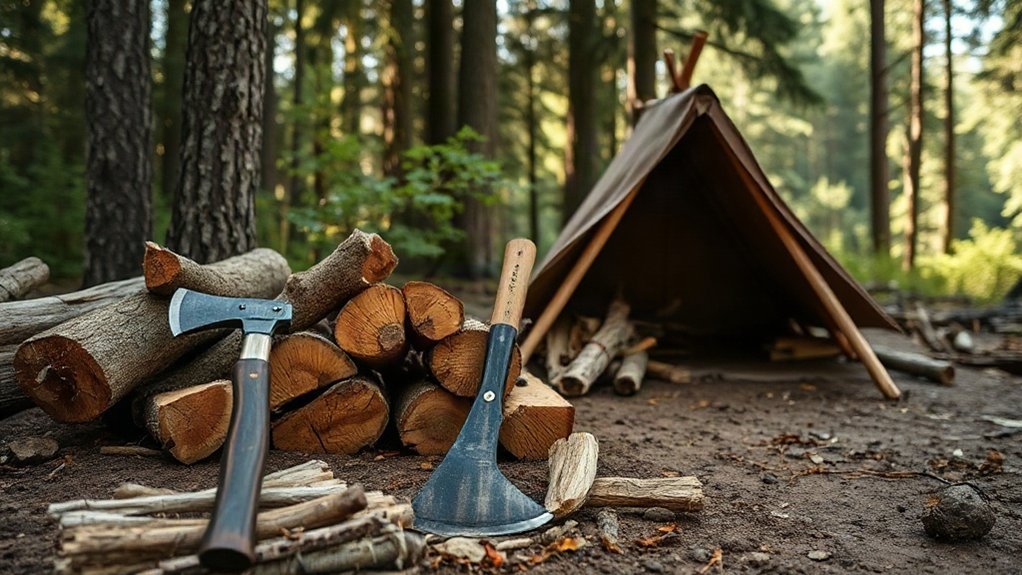
I use a hatchet or tomahawk to cut small branches, prepare kindling, and shape shelter materials. A hatchet’s heavier, thicker head suits repeated chopping and splitting, while a lighter tomahawk offers reach for lighter work. I can also use a hatchet’s flat poll to tap tent stakes into place. I match the tool’s weight and handle length to the task, clear my work area, and check the head and sheath. The details below can help you choose and use one safely.
Key Takeaways
- Hatchets chop small branches and split kindling; their heavier heads suit repeated, forceful firewood work.
- Tomahawks cut branches and help shape shelter materials, while their longer handles provide reach and leverage.
- A hatchet’s flat poll can drive tent stakes and tap camp hardware into place.
- Choose a tool based on workload, branch size, reach, control, comfort, and packing needs; a folding saw can handle larger cuts.
- Sheath and secure the tool when carrying it, check that its head is firmly fitted, and clear the work area before swinging.
Compare Hatchets and Tomahawks for Camp
When I’m preparing for camp, I choose a hatchet for chores like splitting kindling, cutting small branches, and shaping tent stakes. Its thick chopping edge and head-heavy design handle firewood tasks effectively, while a typical 1–2-pound head and 10–16-inch handle give me a useful balance of control and power. That makes a hatchet a dependable choice when I want the freedom to manage camp chores with one compact tool.
A tomahawk often weighs about a pound, so it can suit lighter tasks and may feel easier to carry. But its thinner edge can chip with repeated firewood splitting, and its 16–22-inch handle offers leverage at the cost of close control. Before packing, I consider camp tool versatility and outdoor gear selection: I want a durable blade and comfortable balance. I also bring a folding saw to complement either tool for branch cutting, keeping my kit practical without limiting my options.
Choose a Tool for Chopping Branches
When I choose a tool for chopping branches, I match the blade to the wood and workload: a hatchet suits repeated chopping, while a folding saw may handle larger cuts better. I look for a sharp, sturdy edge and a 1–2-pound head for chopping power. For control, I prefer a 10–16-inch handle.
Match Blade To Branches
For chopping branches and clearing small limbs, choose a hatchet with a sturdy, thicker edge that can handle repeated impacts. I match the blade to the branch diameter and the work ahead, so you can clear a campsite without worrying that a delicate edge will fail. A hatchet’s 10–16-inch handle gives me control for trimming limbs and handling everyday camp chores. I also look for edge durability: a thicker blade stands up better to repeated contact with wood. A tomahawk’s thinner blade can cut branches, but hard, repeated strikes may chip it, making it a poor choice for demanding woodwork. Choose a tool for the branches you’ll actually face, not its appearance. With a dependable hatchet, you can keep your outdoor plans flexible and your gear ready for practical tasks.
Prioritize Chopping Power
If chopping branches is the priority, choose a hatchet with a sturdy blade and a 1–2-pound head built to drive into wood. I reach for this design when camp chores call for cutting branches, making kindling, or preparing small pieces of firewood. Its thicker edge supports edge durability under repeated hard impacts, while the head’s weight improves impact efficiency, helping me work through wood with fewer wasted swings. A tomahawk may suit lighter tasks, but its thinner edge can chip when I push it into demanding chopping. I match the tool to the branch size and workload so I can work confidently and stay self-reliant outdoors. For cuts beyond a hatchet’s efficient range, I add a small folding saw rather than forcing the blade through oversized wood.
Choose Handle Length
Choose a 10–16-inch hatchet handle for chopping branches; it gives me better control during woodwork than a longer, throwing-oriented handle. Its shorter reach helps me manage small branches and camp chores without sacrificing freedom to work in tight spaces. I also check the handle grip and balance before choosing, since a comfortable feel supports steady swing control.
| Handle length | Best use |
|---|---|
| 10–16 inches | Branch chopping and camp chores |
| 16–22 inches | Tomahawk throwing rotation |
| Mid-length | Varied outdoor tasks |
A longer handle can add leverage and swing power, but it may feel clumsy when I’m shaping wood or cutting branches. Tomahawk handles often run 16–22 inches, making them less nimble for this work. If you want one tool for different outdoor jobs, I’d consider a mid-length option and test its balance. Choose the length that feels controlled in your hands, not simply the one that promises the biggest swing.
Split Kindling and Build Simple Shelters
When you split kindling, a sturdy hatchet’s thick, chopping-focused blade handles repeated impacts better than a thinner throwing tomahawk blade. I use controlled, directed strikes to turn small firewood into pieces that catch easily, keeping a secure grip throughout kindling preparation. A hatchet’s roughly 10–16-inch handle gives me close control for camp woodwork, so I can work efficiently without carrying more than I need.
For a simple shelter, I may choose a tomahawk with a longer handle when cutting branches; its added leverage helps me shape materials for a site that suits my plans. Some traditional tomahawks have removable heads, which I can use separately for wood shaving or scraping shelter components. I select the tool for the task, keep each motion deliberate, and make only the cuts the job requires. With practical gear and sound technique, I can prepare firewood and shelter materials while staying self-reliant outdoors.
Drive Stakes and Hammer With the Poll
For pounding tent stakes into firm ground, I use a hatchet or tomahawk with a flat hammer poll, saving the blade for cutting. The poll also lets me tap stakes into position and drive camp hardware that needs repeated blunt impacts. This keeps my cutting edge ready for other work and gives me a practical tool for setting up camp.
For safe tent stake placement, I set each stake securely, then strike its top squarely with the poll. I keep my fingers and feet clear, reducing the chance that a glancing blow will cause an injury. Good poll impact control matters: I aim each swing carefully rather than rushing, especially when working near shelter fabric or other gear.
I choose a tool with a sturdy poll and a head firmly fitted to its handle. Repeated hammering can loosen a poorly fitted head, so I check the fit before relying on it. With careful strikes, I can secure my campsite and stay ready to move on independently.
Match Weight and Handle Length to the Task
I match weight to purpose: a 1–2-pound hatchet packs power for chopping, while a roughly one-pound tomahawk is easier to carry and balance for throwing. I choose a 10–16-inch hatchet handle for control or a 16–22-inch tomahawk handle for throwing rotation. For general outdoor use, I look for a mid-length handle and, if I can, hold the tool to check its balance and comfort.
Match Weight to Purpose
Choose a hatchet or tomahawk by matching its weight and handle length to the work. I reach for a hatchet when camp chores demand chopping power; I prefer a lighter tomahawk when carry comfort and throwing balance matter.
| Tool | Weight and best use |
|---|---|
| Hatchet | 1–2 pounds; chopping branches and making kindling |
| Tomahawk | About 1 pound; throwing and light outdoor tasks |
| Hatchet handle | 10–16 inches; controlled chopping |
| Tomahawk handle | 16–22 inches; throwing rotation |
If I want one tool for camp chores and general outdoor use, I consider a mid-length handle and test how the weight and balance feel in my hand. That choice gives me flexibility without forcing a tool into work it handles poorly. Match the tool to your priorities, and you’ll carry less guesswork into the outdoors.
Choose the Right Handle Length
Once you’ve matched a tool’s weight to your tasks, check that its handle length suits the work too. I choose a hatchet with a 10–16-inch handle when I need control for chopping kindling, branches, or small firewood. A tomahawk’s 16–22-inch handle lets it rotate more smoothly for throwing; a shorter one can be difficult to throw, while a longer one may feel awkward for chopping.
For a versatile outdoor tool, I’d consider a mid-length handle. If possible, hold it before buying: a comfortable grip and balanced feel matter when you’re working freely outdoors. I also weigh handle length against packing convenience. A compact tool is easier to carry, but the right reach and control should guide your choice. Match the handle to your tasks, not just your pack.
Carry and Use Hatchets Safely
Before carrying a hatchet, cover its blade with a secure sheath and fasten it to your belt or pack so it can’t shift. I look for a sheath attachment that holds the tool firmly, letting me move freely without worrying about a loose blade.
Before each task, I check that the head sits firmly on the handle. A traditional friction-fit tomahawk may tighten with a swing, but I inspect it regularly rather than trusting motion alone. I keep a firm, comfortable grip and make sure there’s ample grip clearance around me before chopping branches or splitting kindling. Clear nearby people, gear, and obstacles from the swing path.
For small camp jobs, I use a hatchet to cut branches, prepare kindling, or set tent stakes instead of repeatedly chopping with a knife. I never wrap a lanyard around my wrist: if the tool slips during a swing, the blade could strike me. Careful checks and clear space help me work confidently outdoors.
Frequently Asked Questions
Why Do Navy Seals Use Tomahawks?
Navy SEALs use tomahawks because they offer a compact, versatile tool for survival and utility—not just combat. I’d value one for chopping branches, preparing firewood, and using its hammer poll to strike or drive objects. Some models add a spike for specialized breaching utility. Their tactical heritage matters, but practical design matters more: durable materials, a protective sheath, and a secure grip help you carry and use one confidently outdoors.
Which Is Better for Self Defense, a Tomahawk or a Hatchet?
Neither a tomahawk nor a hatchet is better for self-defense; both can turn a tense moment into a wildfire. I’d avoid confrontation and seek safety instead. The Self defense differences are modest: a tomahawk is often lighter, while a hatchet’s heavier head can make it harder to maneuver. Their defensive limitations matter more than their design. I’d choose either for legitimate outdoor work, carry it sheathed, and protect my freedom by leaving it out of conflict.
Is It Illegal to Carry a Hatchet for Self Defense?
It depends on where you live and travel; I can’t say carrying a hatchet for self-defense is always legal. Legal restrictions vary by country, state, and city, and some places limit carrying axes in public, especially concealed, in vehicles, or at schools and government buildings. Check official local guidance or ask a qualified attorney before carrying one. Follow Safe transport and storage rules. I’d also avoid using it against anyone; that could cause grave injury and criminal charges.
What Are Hatchets Best Used For?
I use a hatchet for camp chores—not just chopping logs. Its heavier, durable head makes Firewood preparation efficient, from splitting kindling to cutting small branches, while its controlled swing helps with Shelter construction, such as trimming poles or driving tent stakes. You might think a hatchet’s too small for serious work, but it handles many essential tasks without a bulky tool. Choose a well-made model that fits your needs, and you’ll stay capable and self-reliant outdoors.
Conclusion
When I choose between a hatchet and a tomahawk, I match the tool to the job: chopping branches, splitting kindling, building a simple shelter, or driving stakes with the poll. I favor a comfortable weight and handle length, then carry and use the tool with care. Here’s a useful benchmark: a 2023 USDA report estimates that the average American household throws away about 30% of its food—so a campfire meal made with gathered wood may feel especially satisfying.