What Handle Features Make Machetes and Kukris More Comfortable to Use?
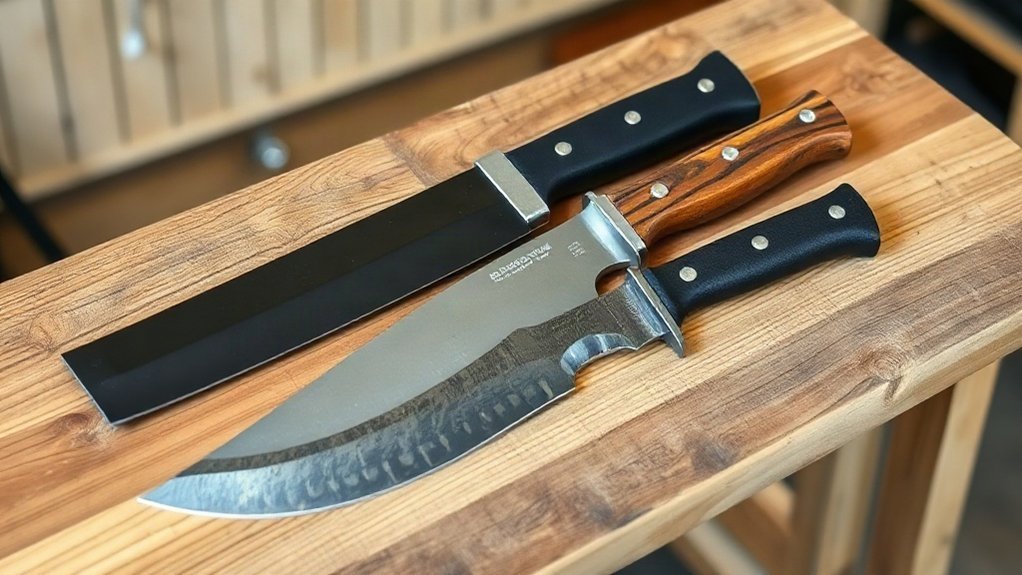
I find machete and kukri handles more comfortable when their shape fits my hand, their grip stays secure without a hard squeeze, and their design helps me control impact. Rounded contours, a flared pommel, and textured material can improve comfort and control, though rough surfaces may irritate. I also consider balance, gloves, and cushioning, since a forward-heavy kukri can be harder to manage. If chopping hurts, I stop and reassess. I’ll explain how to choose features that suit your work.
Key Takeaways
- Choose a rounded, contoured handle that fills your palm without forcing a tight grip; test its fit with work gloves on.
- Textured rubber or Kraton can improve grip security, but overly rough surfaces may irritate skin or cause blisters.
- A flared pommel, guard, or lanyard can help retain control without requiring a stronger squeeze.
- Consider balance and handle material: kukris are tip-heavy, while hickory handles can absorb more chopping shock.
- Keep the handle dry and any grip tape smooth and secure; stop if chopping causes pain.
What Makes Machete and Kukri Handles Comfortable?
A comfortable machete or kukri handle fits securely without making you squeeze tightly. I look for a grip that stays steady during a swing, since a relaxed hold gives you more control and freedom to work naturally. A traditional kukri’s flared butt can help keep the tool from slipping, while a rounded or contoured surface may rest more comfortably in your palm than hard, square edges.
Your hand size matters, but comfort also depends on the surface. Aggressive texture can irritate your skin or cause blisters over time. If a Cold Steel grip feels too rough, you can lightly smooth it with 400-grit sandpaper or add hockey or grip tape. A lanyard and well-fitting work gloves can further improve control. Handle material affects impact comfort, too: hickory is reported to absorb more shock than a full-tang machete. With a secure, comfortable hold, I can focus on edge alignment without clenching or fighting the handle.
Choose a Handle Shape That Fits Your Hand
Choose a handle that fills your palm without making you squeeze hard; traditional kukri handles often feel secure even with a loose grip. I look for a palm filling profile that matches my hand’s size, not one that forces my fingers into an awkward position. A handle that feels natural lets me work with less strain and more freedom.
A flared pommel can help keep a kukri from slipping during swings, without demanding a powerful squeeze. I also consider the handle’s contours and material. For example, the Schrade Large Kukri Machete has a contoured, rubberized handle that can feel comfortable and secure in the hand.
I avoid hard, square-edged shapes and protrusions that press into my fingers. The 5.11 Kold Khukri’s square edges and spikes felt uncomfortable during testing, so those features may not suit you either. If texture rubs too much, I’d lightly smooth it with 400-grit sandpaper to reduce irritation and blistering. Choose a shape that works with your hand, rather than making your hand adapt.
Find a Secure, Comfortable Grip
How secure does a grip need to feel? I want a handle that stays put without forcing me to squeeze until my hand hurts. A traditional kukri’s flared handle can help me hold it more loosely while keeping a secure feel.
Textured rubber or Kraton scales can improve purchase, but I check that the surface won’t rub or blister my hand during repeated swings. Some Cold Steel machete grips feel overly aggressive. If a grip irritates me, I can smooth it briefly with 400-grit sandpaper or cover it with hockey or grip tape for a more comfortable surface.
A hand guard or pommel flare can help stop my hand from sliding forward or off the handle during chopping. I also try the grip with my work gloves on, since they change how it feels. A lanyard adds lanyard security, helping me keep control without gripping harder—and letting my hand stay relaxed.
Balance Machete and Kukri Handles for Control
I look at balance alongside grip shape because both affect how much control you have. A kukri’s forward-heavy balance adds chopping power, while a more even machete balance helps guide repeated sweeps. I’d test each tool safely secured and choose the one that feels controllable for your task.
Forward-Heavy Balance
Because a kukri carries much of its weight near the tip, I look for a handle that stays controllable during short, deliberate swings. That forward-heavy balance delivers chopping power, but it can challenge Tip angle retention if I have to squeeze too hard. I test the grip with the blade angled forward; it should feel secure without stressing my wrist or elbow. A machete distributes weight more evenly, which supports a quicker swing cadence and can ease fatigue during long brush-clearing sessions. If a grip’s aggressive texture causes blisters, I may smooth it with 400-grit sandpaper, or add work gloves or hockey tape for comfort. A lanyard can also help me retain control of a heavy blade, letting me work confidently without fighting its balance.
Grip Shape And Control
A kukri’s forward-heavy balance concentrates weight near its curved blade, so I favor a secure, well-shaped grip for controlled short swings. I check finger placement and wrist alignment before each cut, letting the handle guide the blade without forcing a tight squeeze. A comfortable traditional kukri grip can feel slightly loose, while a pronounced pommel or hand guard helps keep my hand from slipping. Machetes usually balance more evenly, so I can guide them through repetitive sweeping cuts with less fatigue during long brush-clearing sessions. I choose a handle that fits my hand and supports the task, not one that restricts movement. If aggressive texture causes blisters, I can smooth a Cold Steel grip lightly with 400-grit sandpaper, or add hockey tape and gloves for comfort and control.
Reduce Shock During Repeated Chopping
To reduce shock during repeated chopping, I’d choose a hickory handle, which can absorb more impact than a full-tang handle. I’d add grip tape if I want a softer feel, and wear padded gloves for extra cushioning. Try a relaxed grip, and stop if chopping aggravates wrist or elbow pain.
Choose Shock-Absorbing Handles
If repeated chopping leaves your hands sore, I’d choose a tool with a hickory handle, which can absorb more shock than a full-tang machete. That Hickory shock absorption can make a difference during long yard-work sessions, helping you stay comfortable and work independently. For axe alternatives, I’d consider a small, 20-inch Wetterlings axe or a Council Tool Brush Axe; both offer hickory handles suited to repeated chopping. Choose the tool that fits your tasks and feels manageable, so you can move freely without carrying more weight than you need. A shock-absorbing handle may reduce impact discomfort, but it can’t prevent every strain. If chopping aggravates wrist or elbow problems, stop and reassess your technique or workload. Don’t push through pain: protecting your mobility matters more than finishing a job quickly.
Add Grip Tape
Hockey or grip tape can cushion a machete or kukri handle, making repeated chopping more comfortable and softening textures that may cause blisters. I use even tape application to add padding without making the handle bulky or awkward to hold. A smooth, secure grip lets you work with greater comfort and control, giving you more freedom to keep moving through a task.
If a textured Cold Steel handle irritates your hand, I’d lightly smooth it with 400-grit sandpaper before adding tape. I wear work gloves while preparing the handle, then make grip maintenance checks to confirm the tape stays firmly in place. Replace or rewrap it if it loosens or shifts; a stable grip helps you chop comfortably and maintain control through repeated swings.
Wear Padded Gloves
Even with a cushioned handle, I wear snug, padded work gloves to soften the shock of repeated chopping. Good glove fit lets me move freely while keeping a secure hold. I also look for nonslip palms, especially when my machete or kukri handle feels smooth or gets damp.
| Check | What I want | Why it matters |
|---|---|---|
| Fit | Snug gloves | Secure control |
| Padding | Padded protection | Softer impact |
| Palm | Nonslip surface | Firmer hold |
| Handle | Dry or smooth | Grip check |
Gloves can make chopping more comfortable, but they can’t erase impact or prevent overuse pain. I don’t treat padding as permission to push through discomfort. If your wrist, hand, or elbow starts hurting, stop and rest. A free, confident swing depends on control and sensible breaks, not tougher hands.
Check Handle Materials and Tang Construction
When you check a machete or kukri handle, consider both grip and impact comfort. I look for a handle that feels secure without forcing me to accept a design that doesn’t suit my work. Material durability matters, but so does how the handle manages chopping shock.
- Choose the surface. Rubberized Kraton, used on KA-BAR and Ontario kukris, offers a grippy feel; a guard or pommel can help keep your hand from slipping. The Schrade Large Kukri’s contoured rubberized handle is shaped to sit comfortably in your hand.
- Assess texture. Cold Steel polypropylene handles may feel overly rough. If that texture isn’t right for you, light sanding with 400-grit paper or hockey tape can make the surface less abrasive.
- Check construction. Full-tang steel runs through the handle, as on the Condor kukri, providing tang reinforcement for demanding chopping. Still, handle material affects impact comfort: hickory can absorb more shock than a full-tang machete.
I’d compare options before choosing the freedom to work your way.
Prevent Blisters and Manage Joint Discomfort
If a Cold Steel machete’s rough grip starts raising blisters, I smooth it with 400-grit sandpaper for about five minutes; hockey or grip tape and work gloves can add comfort, while a lanyard may improve control. For Blister prevention, I check that tape sits smoothly and the handle stays secure, so I can work without unnecessary friction or a death grip.
A kukri’s flared traditional handle can support a looser hold, which may reduce squeezing and improve joint comfort. Still, I don’t assume a comfortable grip protects my wrists or elbows: repeated chopping impacts can aggravate carpal tunnel or tennis-elbow discomfort, even when I’m not squeezing pruner-style handles.
If swinging hurts, I stop and choose a lower-impact option, such as loppers, a survival saw, or a hickory-handled tool. Hickory absorbs more shock than a full-tang machete. I’d rather change tools than push through pain; that choice lets me keep working safely and freely.
Frequently Asked Questions
Is a Kukri Better Than a Machete?
I wouldn’t call a kukri better in every situation; I’d match the tool to your task. Its forward-curving, tip-heavy blade delivers strong kukri chopping efficiency for wood, roots, and varied camp chores. A machete gives you more reach and supports repeated sweeping cuts, while its lighter feel can improve machete handling comfort during long brush-clearing sessions. I’d choose the kukri for compact power, or the machete for speed and extended vegetation work.
What Type of Steel Is Best for a Machete?
I’d choose 1055 carbon steel for a practical, affordable machete; it offers dependable toughness for routine chopping. If you need a harder-working blade, 1075 or 1095 can suit heavier tasks, but Steel hardness depends on heat treatment, not grade alone. I’d inspect the maker’s reputation and edge quality before buying. Carbon steel needs care: it doesn’t offer much corrosion resistance, so I’d sharpen and oil it regularly, especially after damp use.
Can a Kukri Be Used as a Machete?
Yes—a kukri can clear brush like a machete, putting real bite behind each swing. I’d choose it for vines, trails, and controlled chopping: its forward-curving, tip-heavy kukri blade shape delivers powerful cuts, while kukri chopping technique favors compact, precise swings. A longer machete gives you more reach and may feel less tiring during hours of repetitive clearing. For thicker branches, I’d use a survival saw to spare my wrist and keep moving freely.
Who Makes the Highest Quality Kukri?
I don’t consider any maker the definitive leader in kukri craftsmanship; I’d choose based on your priorities. For hard use, I’d look at Himalayan Imports, especially its ASTK, and blemished models may cost around $40–$60 plus shipping. If you value traditional Nepalese khukuri makers and a comfortable, flared grip, I’d consider Kukri House. Ontario Knife Company offers balanced, heavy-duty chopping, while Zombie Tools’ excellent Vakra costs about $280.
Conclusion
A comfortable machete or kukri handle should feel like a trusted guide, not a fight with your grip. I look for a shape that fits my hand, secure traction, steady balance, and materials that soften shock. Sound tang construction matters, too, while smooth edges help prevent blisters and ease joint strain. When these details work together, each swing feels more controlled and less tiring. Choose thoughtfully, and your tool becomes an extension of your hand—not a burden.