Which Hatchets and Tomahawks Are Best for Splitting Kindling?
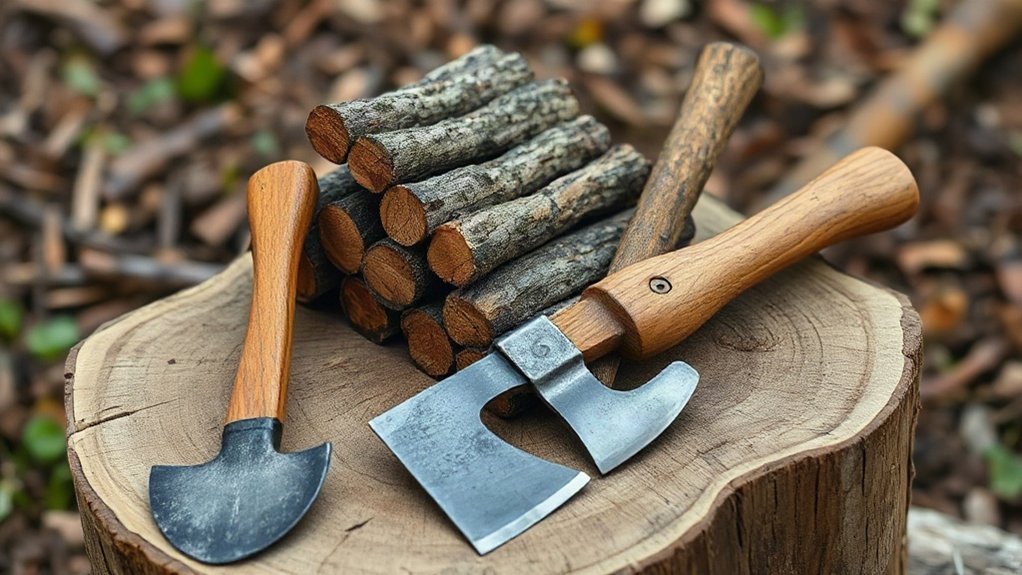
I’d choose a kindling hatchet or tomahawk that feels secure and lets you make accurate, repeatable strokes. For fine kindling, a light 1- to 1½-pound hatchet, such as the Fiskars X7, offers quick control; a compact 2-pound axe balances speed and striking power. A broader, heavier head suits medium splits, not delicate starter pieces. Match handle length to your space and strength, and prioritize a sharp edge and comfortable grip. I’ll explain how to choose and use one safely.
Key Takeaways
- Choose a hatchet or tomahawk with a sharp, thin bit and relatively flat cheeks for controlled splits that stay on the blade.
- A 1- to 1½-pound head suits quick, precise work; a manageable 2- to 2¼-pound head offers more splitting force.
- The Fiskars X7 suits fine camp kindling, while the broader Fiskars X25 handles medium pieces but may feel awkward on tiny splits.
- A compact 19- to 24-inch handle offers control; choose a longer handle only if you have room and need extra reach.
- Match the tool to your wood and strength, and split short pieces with controlled strokes on a stable block.
What Makes a Good Kindling Axe?
What makes a good kindling axe? I look for a tool that feels comfortable in my hands and suits the way I split. There’s no single best choice; your axe should match your strength and style, giving you freedom to work at your own pace.
Handle balance and length shape control. A compact setup, such as a 2-pound axe with a handle no longer than 24 inches, is handy, while a 28-inch handle can give you leverage for larger pieces. A full-size 2–4-pound head can split with a controlled drop or slow stroke; lighter axes generally need a faster swing.
For clean bites, I favor a thin bit and longer edge, which help the head enter and stay embedded. A wide poll opens splits quickly, and flat cheek geometry helps keep wood from sliding off.
How Much Axe Weight Suits Your Swing?
I find that a light axe needs a faster swing, while a 2–2¼-pound head offers a useful balance of mass and speed. A heavier 3–4-pound head can split tougher wood with less swing speed, so you can work more slowly. Choose a weight that feels manageable with your technique and chopping block.
Light Axe, Faster Swing
If you swing quickly, a light 1- to 1½-pound hatchet can drive through kindling with a fast, controlled stroke. I’d choose this weight if it matches your natural pace and lets you work without strain. A lighter head rewards a steady Swing rhythm and rapid follow through; you’ll need enough speed to carry the edge through the wood. Keep your grip relaxed, aim carefully, and let the hatchet’s momentum do its job rather than forcing each cut. I’d test it on your usual chopping block with the kindling you actually split. Notice whether you can guide the head accurately and repeat each stroke comfortably. The right weight isn’t a rule imposed on you; it’s the tool that gives you control and confidence to split kindling your way.
Medium Weight, Added Speed
A medium-weight axe of about 2 to 2¼ pounds can split kindling well, but you’ll need a fairly brisk swing to drive the edge through the wood. I’d choose this range if you can generate added impact speed without straining or losing control. The Brisk swing technique lets the head’s mass work with your motion, making short kindling sessions feel efficient and freeing you from relying on brute force.
Your natural swing matters more than a number on a label. I’d test an axe with your chopping block and the kindling you usually split. Notice whether you can guide the edge accurately and repeat each stroke comfortably. If you must force the blow, the weight doesn’t suit you; if the axe feels controlled and bites cleanly, you’ve found a practical match.
Heavy Head, Slower Splitting
When a brisk swing feels tiring or hard to control, a heavier head can let its weight do more of the work. I’d consider a 4-pound axe if I wanted to split kindling with little movement and a deliberate, controlled swing. That Heavy head can ease the effort, but it may feel excessive if you prefer quick, light swings.
For larger hardwood, I’ve found a 3-pound head on a 28-inch handle can bite and crush effectively. A lighter axe, around 2 pounds, usually needs more speed to drive through wood; medium weights benefit from added speed too. Your splitting block and natural swing matter as much as the number on the scale. I’d also choose a comfortable, well-shaped handle. One user preferred a custom-handled 2-pound axe, while a shortened 4-pound axe suited Slower splitting.
How Long Should a Kindling Axe Handle Be?
For fine kindling, I’d start with a compact 19–20-inch handle for control; choose 24 inches for a useful balance of reach and maneuverability, or go up to 28 inches for more leverage on larger pieces. The right length depends on your splitting style and what feels secure in your hands. I’d prioritize Handle comfort over a fixed rule: a shorter handle gives me compact control, while a longer one adds swing reach and leverage. A 19-inch house axe or 20-inch miner’s axe shows how compact options can work; 24 inches remains manageable for short pieces. When I’m splitting small pieces, I can avoid a full swing by dropping the axe and wood together onto a chopping block. That controlled method can feel safer, even with a longer handle, and lets you work with freedom.
Which Hatchets Work Best for Small Kindling?
For fine camp kindling, I like the Fiskars X7, whose thin bit starts easily and splits small pieces against a log. You’ll find a sharp 2-pound axe with a handle up to 24 inches—or a 19-inch boy’s axe—easy to control. For short pieces, I set the edge on the wood and drop both from about 2 feet onto a chopping block instead of swinging at the kindling.
Thin-Bit Starter Kindling
Which hatchet works best for fine starter kindling? I look for thin bit geometry: a narrow, keen edge bites into wood more readily than a wide, thick bit. That easy entry gives me more control over starter grain selection, so I can work with the piece instead of forcing it.
For camp use, the Fiskars X7 handles fine kindling well; the wider X25 suits medium splits better. A boy’s axe with a roughly 19-inch handle or a 2-pound axe with a handle up to 24 inches can also serve small pieces. If I use a full-weight head, I choose one with a thin first quarter of the bit, set it on the wood, and drop both onto a chopping block from about two feet. I don’t swing at short kindling.
Compact Axe Handling
When I’m making short kindling, I use a compact axe that I can control without swinging at the small pieces. A Fiskars X7 suits fine camp kindling and small splits against a log, while a larger Gransfors SFA is better for limbs and bigger wood. For a manageable option, I’d choose a boy’s axe with a roughly 19-inch handle or a 2-pound axe with a handle no longer than 24 inches. Keep a secure axe grip and a balanced chopping stance so you can work with confidence and stay in control. I set the edge on the wood, then lower both onto a chopping block with a controlled drop of about 2 feet. A truck tire on a stump can hold short pieces together while I split them.
Controlled Drop Splitting
A controlled drop lets me split small kindling without swinging at it: I set the edge on the wood, then lower both together from about 2 feet onto a chopping block. This gives me control and frees me from aiming a hard swing at a tiny piece. I choose an axe with enough head weight to split on impact; a 2-pound head and handle no longer than 24 inches make a suitable setup. A thin bit helps the edge bite and keeps the axe and kindling together during the drop. For stump stability, I work on a firm chopping block and can fit a truck tire around the stump to hold short pieces in place. The Fiskars X7 suits very fine camp kindling against a log; a sharp X25 handles medium splits but may be too wide for starters.
When Is a Heavier Axe Better for Kindling?
If you’re splitting larger or tougher hardwood, a heavier axe can do more of the work for you: its mass helps the edge bite and crush without a hard swing. For Heavy hardwood, I’d choose weight when I want Low effort splitting and can comfortably handle the tool.
| Axe setup | Best use | Trade-off |
|---|---|---|
| 3-pound head, 28-inch handle | Larger hardwood | Needs room to swing |
| About 0.6-pound-lighter boy’s axe | Easier carrying | Struggles beyond ideal conditions |
A 4-pound axe can split kindling and small boards with very little movement, so I can work slowly and stay in control. Its full-size head also suits the wood-and-axe drop method: set the edge on the wood, then drop both onto a chopping block. I’d choose this heavier option only if its weight and handle length feel manageable.
How Do the X25, SFA, and Boy’s Axe Compare?
For medium splits, the Fiskars X25 handles short pieces of burr oak and hickory, while the Gränsfors Small Forest Axe suits limbs and larger camp wood. I’d choose by the work, not by a single ranking: Fiskars X25 splitting strengths show up when I’m breaking down those solid, medium-sized pieces. Its broad head can feel awkward when I want fine starter kindling, though. The SFA camp versatility comes from handling limbs and larger camp pieces, so I’d reach for it when my woodpile calls for more than small splits. For compact kindling work, a boy’s axe on a roughly 19-inch handle offers a handy option; a 2¼-pound model has served as a primary kindling maker. I also look for a thin bit, long edge, and relatively flat cheeks—features that can matter as much as the axe name.
How Can You Split Short Kindling Safely?
Once I’ve chosen an axe for kindling, I keep short pieces steady by placing the edge on the wood and dropping both together onto a chopping block, rather than swinging at a small target. I control the drop; about two feet can be enough to split the piece without a risky, forceful swing. An axe with a thin bit helps the wood stay with the blade, so I can work with greater control. I set a truck tire on a stump to corral short pieces while I split them. Before starting, I put on Cut resistant gloves and make sure I have stable footing and clear space around the block. For finer kindling, I use a machete and a round locust mallet to reduce pieces to about thumb thickness, at my own pace.
How Can You Protect a Wooden Axe Handle?
To guard a wooden axe handle from ordinary splitting damage, I wrap thin steel wire around the haft just below the head and seal it with epoxy. This Wire reinforced haft can help stop gouges when you split kindling, but it won’t protect against a severe overstrike. For a simple, replaceable option, I wind hockey tape around the handle several times. I use black as a base, then add red or green so I can spot the hatchet easily.
You can also make a beeswax leather guard. I attach leather with contact cement, coat it with hot beeswax, then use a heat gun to work the wax into the hide. As the leather cools, it tightens around the handle. Choose the protection that suits your work, and inspect it regularly.
Frequently Asked Questions
What Is the Best Hatchet for Splitting Wood for Making Kindling?
I’d choose a hatchet that fits your hand like a trusted compass, because comfort matters more than a universal winner. For most kindling, I’d start with a roughly 2-pound axe and a handle no longer than 24 inches; a 19-inch boy’s axe offers a compact alternative. Look for a thin bit, long edge, wide poll, and flat cheeks. These Best Kindling Hatchet qualities make Compact Splitting Axes practical, dependable tools.
What Is the Best Way to Split Kindling?
I find the safest splitting technique is to set the axe edge on the wood, then drop both together onto a chopping block. Use a controlled drop of about two feet, keeping the piece supported—don’t swing at short kindling. A thin first quarter of the bit helps the edge bite. For extra control, I place a truck tire around the stump to steady pieces. For fine kindling preparation, I use a machete and round locust mallet.
What Type of Axe Is Best for Splitting Firewood?
For splitting firewood, I’d choose a comfortable splitting axe with a wedge-shaped head—but one detail can change everything. Axe head weight matters: I favor 2–3 pounds for larger hardwood, since it can split effectively without a punishing swing. A thin bit starts the split, while a long edge and wide poll help open it. Choose a handle length and handle material that feel right to you, then split with a motion that suits your axe.
What Is the Hardest Wood to Split With an Axe?
Burr oak and hickory rank among the hardest woods I split with an axe, though wood grain and knot placement can make any piece stubborn. I’ve found worm-damaged chunks especially unpredictable. For tough hardwood, I choose a sharp, heavy axe with a thin bit: it starts the split easily, then its weight drives through. For short pieces, I set the axe on the wood and drop both onto a chopping block rather than swinging at them.
Conclusion
I choose a kindling axe for control, not brute force: a sharp, moderately weighted head and a handle that suits my reach make small splits easier. I’d reach for a compact hatchet or tomahawk for short pieces, and step up to a heavier axe when the wood demands it. I always split on a stable block, keep my hands clear, and protect a wooden handle from damage. The right tool feels obvious—until the first stubborn round tests my judgment.