Are Hatchets and Tomahawks Suitable for Camping and Bushcraft?
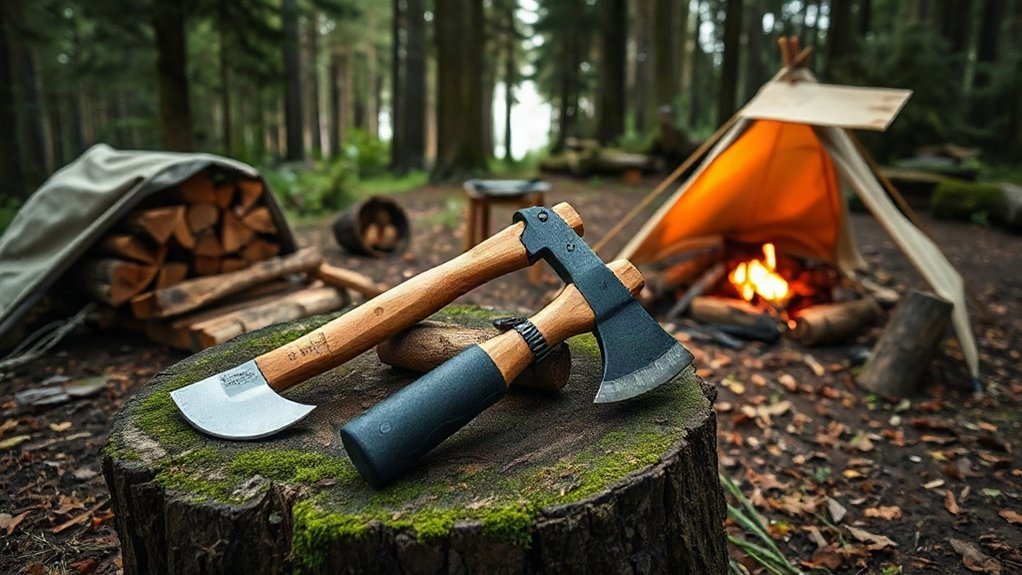
Yes, I’d use either tool for camping and bushcraft, but I’d match it to the work. I’d choose a hatchet for frequent chopping, kindling, and splitting, since its heavier head delivers more force. For lighter chores, small branches, carving, and easier carrying, I’d favor a lighter, balanced tomahawk. I’d also consider handle length, control, and a secure head fit. A tomahawk made for throwing can suit target practice, and the sections below explain how to choose safely.
Key Takeaways
- Hatchets suit camping and bushcraft that involve frequent chopping, splitting firewood, and preparing kindling.
- Tomahawks work well for lightweight trips, small branches, carving, and other light-duty camp chores.
- A hatchet’s heavier head delivers stronger chopping blows, while a tomahawk’s lighter, balanced design is easier to carry and maneuver.
- Avoid using thin-bladed tomahawks for repeated forceful splitting; they may chip under heavy impacts.
- Choose based on your workload, handle comfort, and secure head fit, and follow safe-use and maintenance practices.
Hatchet vs. Tomahawk: Which Suits Camp Tasks?
For frequent camp chores like chopping kindling, trimming small branches, and preparing firewood, I’d choose a hatchet: its heavier, thicker head handles wood impacts better. Most hatchets weigh 1–2 pounds and have 10–16-inch handles, giving me useful control and chopping power without restricting my freedom around camp.
A tomahawk usually weighs about a pound, with a thinner edge for light chopping, carving, and other precise tasks. Its 16–22-inch handle may feel unwieldy when I need close, controlled strokes. I’d carry one when lighter weight and versatile light-duty use matter more than regular wood processing.
Whatever I choose, I follow safety precautions and basic maintenance techniques, keeping the tool in sound condition and using it for its intended workload. I match my gear to the work, not the other way around.
What Makes a Hatchet Better for Woodwork?
When I’m processing wood regularly, I reach for a hatchet because its heavier head builds momentum for chopping branches and splitting kindling. That extra weight helps me work efficiently and stay ready for camp chores, without relying on bulky gear.
- A typical 1–2-pound head delivers force for repeated impacts, while the thicker, wedge-shaped blade geometry handles wood better than a thinner edge.
- A 10–16-inch handle gives me control when trimming branches, preparing firewood, or shaping tent stakes.
- Steel toughness matters: I choose quality steel to resist dulling and chipping during frequent use.
With a dependable hatchet, I can shape the wood I need and keep moving on my own terms. Its design favors forceful woodwork, making it a practical tool when camp tasks demand steady chopping and splitting.
When Does a Tomahawk Make More Sense?
I’d choose a tomahawk when you want a lightweight tool for backpacking and light outdoor tasks, not frequent firewood splitting. If you plan to throw or practice on a target, its balanced design and longer handle can make more sense than a hatchet. I’ll look at how its packability and light-duty versatility suit mobile bushcraft.
Lightweight Packability
If every ounce counts, a tomahawk often makes more sense: at around a pound, it’s lighter than a typical 1–2-pound hatchet and handles light chopping, carving, and small camp chores with an agile feel.
For compact carry and reduced fatigue, I’d choose one on an ounce-conscious trip where freedom of movement matters more than heavy-duty wood processing. Before packing, I’d check its design and intended tasks:
- A thin edge isn’t suited to repeated, forceful splitting.
- A 16–22-inch handle may be harder to stow than a 10–16-inch hatchet.
- Modest camp chores suit its light, agile balance; substantial firewood favors a hatchet.
I’d match the tool to the work ahead: take a tomahawk when my wood needs are light, but choose a hatchet when dependable chopping and splitting power matters more.
Throwing and Target Practice
For recreational target practice, I’d choose a tomahawk: its roughly 1-pound head and balanced feel help it rotate smoothly, while its longer handle supports a consistent throw. A typical 16–22-inch handle gives the tool room to turn; a hatchet’s shorter handle and heavier head suit controlled chopping better. I’d choose a tomahawk made for throwing and use a purpose-built target in a designated throwing area. When choosing targets, I’d avoid people, animals, and unsuitable surfaces, and keep the area clear before each throw. I’d also establish a routine for safe retrieval: wait until everyone has stopped throwing, then collect the tomahawk only when the lane is clear. If I want one tool for camp chores and occasional practice, I’d compare its balance and handle length, accepting a performance compromise.
Light-Duty Versatility
A tomahawk makes more sense when I’m packing light and handling varied, light-duty tasks like carving, trimming small branches, or occasional chopping. Its lighter head, often around a pound, and 16–22-inch handle can make it easier to carry and quicker to maneuver than a typical hatchet. That freedom matters when I want one tool for flexible camp chores.
- For carving versatility, I can shape pegs, scrape kindling, or prepare simple camp projects.
- For trail maintenance, I can trim small limbs without hauling a heavier tool.
- For target throwing or recreational practice, a balanced tomahawk can offer better rotation than a head-heavy hatchet.
Some models add a hammer poll or spike for limited utility, but I wouldn’t count on either for serious wood chopping. If I’m splitting firewood or making kindling often, I’ll choose a hatchet instead.
How Do Weight and Balance Affect Use?
I find a hatchet’s extra weight helps me chop and split with more force, though repeated swings can tire me. A lighter, center-balanced tomahawk feels more agile and rotates smoothly when throwing. If you can, hold each tool to see which balance suits your intended use.
Weight and Chopping Power
When I choose between a hatchet and a tomahawk, I consider how weight and balance affect each swing. A typical hatchet weighs 1–2 pounds, with mass concentrated in its head. That head geometry builds swing momentum, helping me chop branches and split kindling with fewer strikes. The trade-off is fatigue during long sessions.
- For campsite firewood, I’d carry a sturdy, heavier hatchet. Its stronger blows make demanding chopping more efficient.
- A tomahawk often weighs around a pound, so I can maneuver it quickly and carry it farther with less burden.
- For repeated chopping, I’d consider its limits: a lighter tomahawk generally delivers less power, and its thinner edge may chip under heavy impacts.
I choose based on the wood I’ll process and the freedom I want on the trail.
Balance and Throwing Control
Balance matters as much as weight, especially if you plan to throw your tool. I find that head weight shapes how a hatchet performs: its 1–2 pounds and heavier head build chopping momentum, but can tire my arm or make rotation less predictable. A tomahawk often weighs about a pound, so I can handle it faster and work toward a smoother, more consistent throw.
Handle length also changes rotation. Hatchets commonly have 10–16-inch handles for chopping control; tomahawks often use 16–22-inch handles for throwing. I check grip alignment and how the tool sits in my hand before choosing. If I can, I test its balance and grip in person. That simple check helps me find a tool that fits my style and keeps outdoor tasks under my control.
What Handle Length Works Best for Camping?
For most camping and bushcraft chopping, I’d choose a 10–16-inch handle: it gives me control for kindling and small branches without being difficult to pack. This range balances chopping reach with easy maneuvering, so I can work around camp without hauling an unwieldy tool. I’d match the length to the wood chores I expect to tackle:
- Compact carry: A shorter handle packs easily and feels nimble, though I sacrifice leverage and reach.
- Everyday camp work: A mid-length handle offers a practical compromise for kindling, branches, and general chopping.
- Longer handles: At 16–22 inches, many tomahawks suit throwing, but they can feel cumbersome for routine camp tasks.
I’d also consider handle comfort and whether I can swing the tool comfortably while keeping control. When possible, I’d hold it before choosing.
What Should You Check Before Buying?
After choosing a handle length that suits your camp chores, check whether the head, weight, and construction fit the work. I’d match a thick, sturdy edge to frequent firewood chopping; a thinner tomahawk blade suits light work and precise cuts. Hold it before buying: a head-heavy hatchet brings more chopping power, while a lighter, balanced tomahawk is easier to carry and throw.
Inspect Steel quality and head security, too. High-carbon steel can hold an edge well, and a firm head-to-handle fit helps withstand repeated impacts. I’d also look for practical features, not just a striking finish. A hammer poll can handle useful camp tasks, while a removable tomahawk head makes maintenance easier. Choose the tool that gives you reliable performance and the freedom to work confidently outdoors.
Frequently Asked Questions
Should I Get a Hatchet or Axe for Camping?
I’d choose a hatchet for most camping trips. For campfire wood chopping, its compact, wedge-shaped head handles kindling, small branches, and modest firewood without the bulk of a full-size axe. Hatchet vs. axe portability matters when you’re packing: a typical hatchet weighs one to two pounds and is easier to carry and control. I’d choose an axe only for larger logs or heavy wood processing. Check local rules, then chop safely on stable ground.
Why Do Navy Seals Use Tomahawks?
Navy SEALs use tomahawks because they’re compact, light, and adaptable; I picture one riding close to a pack, ready for a quick task. Its narrow head can handle light chopping, prying, and, in some models, hammering or military breaching. That tactical versatility helps when space and weight matter, and lets operators choose tools suited to their mission. Not every SEAL carries one, though, and I wouldn’t choose it over a hatchet for sustained firewood chopping.
Is There a Difference Between a Hatchet and a Tomahawk?
Yes, I’d distinguish them by their typical design and purpose, though the terms sometimes overlap. A hatchet usually has a heavier, wedge-shaped head and shorter handle, making it effective for chopping and splitting firewood. A tomahawk is often lighter, with a longer handle suited to quick handling or throwing. Head shape variations and handle attachment methods differ across models, so I’d compare each tool’s build and choose the one that best supports your outdoor freedom.
What Is the Best Axe for Camping and Survival?
I’d choose a 1–2-pound hatchet with a sturdy, high-carbon-steel head and a 10–16-inch handle: that balance gives you useful chopping power without weighing down your pack. For Choosing a Camping Axe, match the blade to your expected work; a lightweight tomahawk suits light tasks, but repeated firewood processing calls for a hatchet. Survival Axe Maintenance matters, too: I keep the edge sharp, clean, and dry so you can depend on it outdoors.
Conclusion
For camping and bushcraft, I choose the tool that fits the work, not the look. A hatchet earns its place when I’m splitting kindling or shaping wood; a tomahawk suits lighter, more versatile tasks. I test the balance, grip, handle length, and build before buying, because comfort matters when the fire’s fading and daylight slips behind the trees. Pick carefully, and your tool will feel less like extra weight and more like a steady hand at camp.