Can Hammocks Keep You Warm When Night Temperatures Drop?
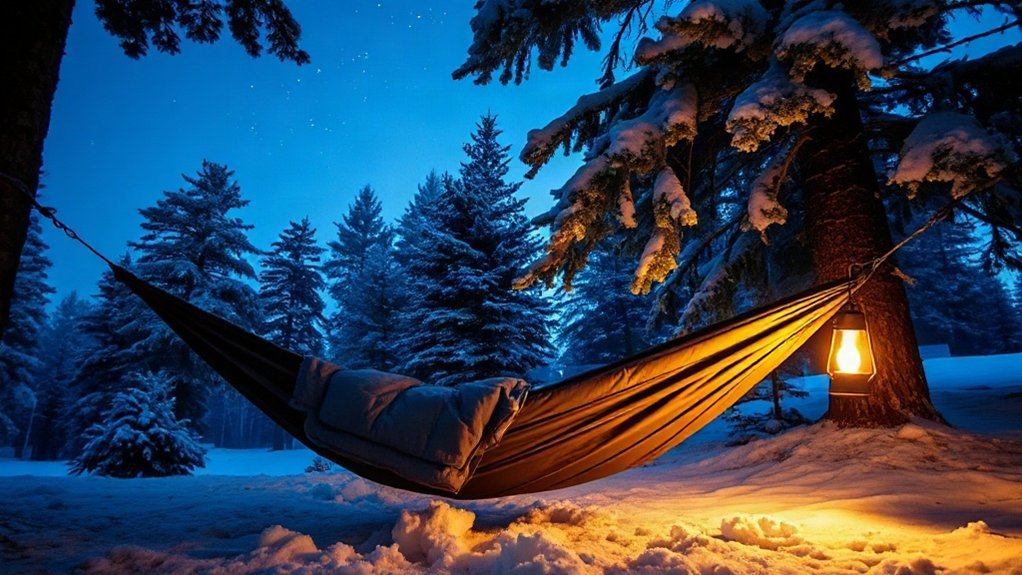
Yes, I can stay warm in a hammock when temperatures drop, but I need insulation above and below me. I use an underquilt or a well-fitted sleeping pad beneath the hammock, then add a sleeping bag or top quilt over my body. A low, sheltered tarp helps block wind and rain, while dry layers protect heat. I always test my full setup before a cold trip. The right pad, quilt fit, and campsite choices make the difference.
Key Takeaways
- Yes—hammocks can keep you warm in cold weather, but the hammock fabric alone provides little insulation.
- Use insulation beneath you, such as a properly fitted underquilt or pad, because body weight compresses a sleeping bag’s underside.
- Pair bottom insulation with a sleeping bag or top quilt, plus dry base layers, warm socks, and a beanie.
- Pitch a low, secure tarp in a sheltered spot to block wind and rain while allowing some airflow.
- Test your complete setup beforehand; if you develop persistent shivering, numbness, clumsiness, or confusion, seek warmth immediately.
Can a Hammock Keep You Warm in Cold Weather?
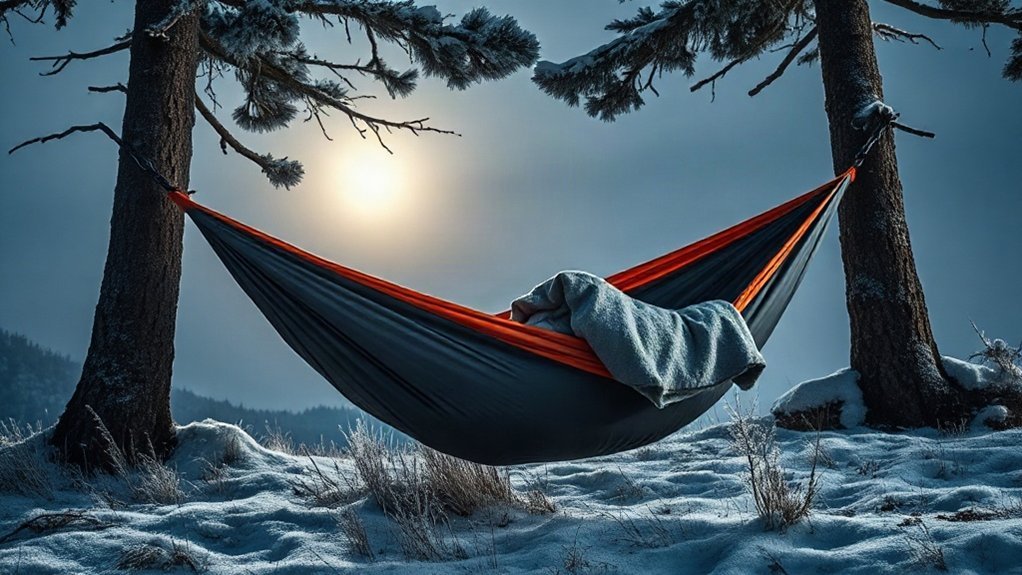
A hammock can keep you warm in cold weather, but the fabric alone offers little insulation, and wind beneath you can pull heat away fast. I focus on blocking that heat loss and building a sleep system suited to the forecast, so you can travel light without sacrificing rest.
For insulation beneath me, I use an underquilt or an insulated sleeping pad; above me, I add a sleeping bag or top quilt. A bag alone may not keep your back warm because your weight compresses its insulation underneath you. I also pack dry base layers, warm socks, and a beanie, then pitch a tarp or use a natural windbreak to limit wind and precipitation. A bivy can add warmth by trapping dead air and cutting wind, but it produces no heat of its own.
Before heading out on a cold-weather trip, I test the complete setup close to home. If I feel cold, I add insulation rather than trusting a fixed temperature rating. That lets me adjust my gear to conditions and stay comfortable while keeping the freedom to camp outdoors.
Choose a Pad or Underquilt for Cold Nights
Once you’ve planned your cold-weather sleep system, choose an underquilt for insulation that hangs beneath your hammock without being compressed by your body, or a pad for a lower-cost, versatile option you can also use on the ground. I favor an underquilt when wind protection matters; adjustable shock cords let me snug it against the hammock and limit drafts. A pad gives me flexibility on trips where I might sleep on the ground, but I check that it’s wide enough to cover my shoulders and the backs of my arms. A hammock wraps around you more than a tent floor, so narrow pads can leave cold spots and trigger cold butt syndrome. If I use a double hammock, I can tuck the pad between its layers to reduce shifting. I match either option to the coldest expected night, not the forecast average. An inflatable pad can offer more R-value per inch and pack smaller than a foam mat. With an inflatable pad, I also pack a repair kit: a puncture can leave me without insulation. A sleeping bag won’t fix gaps beneath me.
Add a Sleeping Bag or Top Quilt Above You
To trap warmth above you, pair your hammock’s underquilt or pad with a sleeping bag or top quilt; the hammock itself provides little insulation. This top layer holds warm air around you, while insulation beneath counters heat loss where your body presses down. Together, they help keep a camping hammock comfortable without limiting your freedom to rest naturally.
Choose gear that suits your expected conditions and how warm you sleep:
- Match the bag or quilt’s temperature rating to the coldest night you expect, allowing for your personal comfort and metabolism.
- Drape a roomy sleeping bag over yourself, or unzip it fully and use it as a top quilt.
- If temperatures fall unexpectedly, add dry clothing or a blanket; a sturdy, leak-proof hot-water bottle near your core or feet can add warmth.
I favor a lightweight top quilt when easy movement matters, but a sleeping bag can work just as well. Keep your top layer paired with the underquilt or pad for balanced insulation. Sleeping bag ratings are not a promise of coziness, so choose one with a comfort rating below the coldest temperature you expect.
Pick a Sheltered Site for Your Hammock
Because wind strips heat from your hammock, choose a campsite sheltered by dense trees, large boulders, or a hill. Good campsite selection starts with reading the terrain: I look for a sheltered campsite partway up a slope, where cold air is less likely to pool. I avoid valleys, depressions, and low spots near water, since settled cold air can make a night feel harsher.
Before I commit, I check the forecast. If high winds or heavy snowfall are expected, I move to a safer, more protected location rather than trusting a spot that looked calm at dusk. Natural cover helps, but I don’t rely on trees or rocks alone; I secure my hammock and hammock tarp firmly for changing winter conditions.
I position the tarp low and close enough to provide a windbreak, while leaving room for airflow. That balance helps limit condensation and keeps my shelter more comfortable without trapping excess moisture. A hammock’s elevated pitch also keeps you off wet ground, though it requires suitable trees.
Set Your Tarp to Block Wind and Rain
When wind or rain picks up, I pitch my tarp low and close to the hammock to shield it from the elements and help hold in warmth. A well-positioned rain fly cuts exposure without adding much weight, giving you room to roam while keeping your sleep system drier. Choose a waterproof tarp sized to cover the hammock, then secure it for the conditions.
- Stake or tie out every corner, and pull the sides taut so gusts can’t lift the tarp or drive rain underneath.
- Keep a small gap between the tarp edges and ground to let air circulate; sealing everything too tightly can trap condensation.
- In winter, adjust the pitch as wind or precipitation shifts, while preserving enough ventilation.
I check the tie-outs before settling in and after weather changes. A taut, breathable setup balances protection with airflow, helping limit dampness inside your shelter. You’ll stay better shielded without turning your hammock into a sealed, stuffy space. Turning the tarp’s narrow end into the wind can help reduce its exposure to gusts.
Wear Dry Layers and Pack a Hot Water Bottle

A well-pitched tarp helps block wind and rain, but dry clothing adds another layer of warmth. Before bed, I change into dry base layers; damp fabric can pull heat from my body, especially in exposed hammocks. I choose merino wool or synthetic materials that wick moisture, and leave cotton at home because it holds water and insulates poorly when wet.
I add warm socks and a beanie to cover my feet and head. On a thru-hiking trip, I keep spare socks and gloves inside my sleeping bag, where they stay warm and ready for morning. This small habit makes a cold campsite easier to manage without adding bulky gear.
For extra warmth, I fill a sturdy, leak-proof bottle with boiled water and tuck it near my core or feet. In a gathered-end hammock, I place it where it won’t press uncomfortably against me. Dry layers and a hot bottle help me sleep comfortably while keeping my kit simple. If your sleeping bag feels tight around your feet, a longer sleeping bag can give them room and help prevent the footbox from compressing insulation.
Test Your Cold-Weather Hammock Setup
I test my full hammock setup close to home on a milder night before trusting it in colder weather. I match my underquilt or pad and top insulation to the forecast, then check for gaps or a cold back that could signal poor coverage or compression. I also try my tarp and clothing layers, and adjust any gear that leaves me cold or damp. A diagonal sleeping position can help reduce the banana-shaped curve that contributes to hammock back pain.
Test Close to Home
Before you rely on your hammock setup in cold weather, test it close to home on a milder night. I use a single hammock and my usual hammock ridgeline, underquilt, and top insulation so the trial reflects my real sleep system. A quick setup in the yard makes it easy to retreat indoors if I get too cold or uncomfortable. Tell a friend where you’ll be, even when camping nearby.
During the test, I check how the complete system performs in conditions resembling the forecast. I note:
- Cold spots or drafts that interrupt sleep
- Condensation that dampens gear or clothing
- A shifting pad or other insulation changes
I adjust the setup before heading out. Comfort depends on your insulation and personal needs, not a universal temperature cutoff. A safe trial gives you freedom to refine your kit before a colder trip.
Check Insulation Fit
When I check insulation fit, I make sure the underquilt or pad is rated for the coldest temperature I expect, since a hammock alone won’t block heat loss underneath. Cold air can pull warmth away fast, so I inspect the full setup, not just my sleeping bag.
I hang the underquilt snugly against the hammock, leaving no gaps but avoiding compression that weakens its loft. I check the suspension system for even tension, including on a bridge hammock, and confirm the bug net won’t snag or shift insulation. With a pad, I keep it centered and wide enough to cover my back and the backs of my arms; a double-layer hammock can help hold it steady.
I pair insulation above and below me, since a warm bag can’t fix compressed insulation beneath my body.
Practice In Milder Weather
A mild night close to home gives me a safer chance to test my complete hammock sleep system before colder weather. I use the same gear I’ll carry on a trip, including tree-friendly straps and insulation above and below me. A durable setup should feel secure, but comfort matters just as much:
- Hang my underquilt or place my pad beneath me, then add my sleeping bag or top quilt.
- Check my back and arms for cold spots that could signal gaps or inadequate insulation.
- Tell a friend where I’ll camp before an overnight test.
If I wake chilly, I adjust the fit or layers and try again on another mild night. One trial can’t guarantee warmth in colder conditions, but testing close to home helps me refine my setup before heading farther off-grid.
Know the Signs of Hypothermia and When to Get Out

Persistent shivering, clumsiness, numbness, or fuzzy thinking can signal hypothermia—don’t try to sleep through them in your hammock. I treat these signs as a cue to leave my campsite setup, not as discomfort to tough out. Unclip carefully, using stable footing, and move to a safer, warmer place; don’t linger beneath tree straps while deciding.
Once sheltered, I change into dry, warm layers and sip a warm liquid. Keep those spare clothes packable and accessible, rather than buried in a bushcraft kit or at the bottom of your bag. If symptoms persist or worsen, seek medical help promptly. Hypothermia can become life-threatening, and a warm drink or better insulation isn’t a substitute for care.
Before a cold-weather trip, I tell someone where I’ll camp and when I plan to return. That simple check-in gives them a chance to raise the alarm if I don’t make contact. Freedom outdoors works best with a clear exit plan.
Frequently Asked Questions
How Cold Is Too Cold to Sleep in a Hammock?
There’s no universal temperature at which it’s too cold to sleep in a hammock; I judge it by my insulation and comfort. A hammock alone won’t protect you from cold air beneath you, so I pair an underquilt or insulated pad with a sleeping bag or top quilt rated for the forecast. I test my full setup nearby first. If you shiver persistently or feel confused, get warm immediately.
How to Stay Warm in a Hammock at Night?
I stay warm in a hammock by insulating above and below: I hang a temperature-rated underquilt beneath it or place an insulated pad inside, then add a sleeping bag or top quilt suited to the forecast low. I wear dry base layers, warm socks, and a beanie, changing out of damp clothes before bed. I pitch my tarp low to block wind, leave ventilation, choose a sheltered site, and keep a sealed hot-water bottle nearby.
Is It Okay to Sleep in a Hammock Every Night?
Yes, you can sleep in a hammock every night if it supports your body and you stay comfortable. Funny enough, the same freedom that makes hammock camping appealing depends on a reliable setup. I’d use a properly sized hammock, an underquilt or sleeping pad, and top insulation rated for your coldest nights. Keep bedding dry, ventilate to limit condensation, and add a tarp against wind and rain. Test your gear nearby before committing nightly.
Are Hammocks Good for Cold Weather?
Yes, I find hammocks can work well in cold weather when I match my insulation to the lowest expected temperature. I use an underquilt or insulated pad beneath me, since cold air circulates below and a sleeping bag compresses under my body. I add a top quilt or sleeping bag and a tarp for wind and precipitation, keeping ventilation open. I choose sheltered campsites, wear dry layers, and test my setup nearby first.
Conclusion
A hammock can keep you warm when temperatures drop—but only if you insulate the underside, where your sleeping bag gets compressed. I’d pair a fitted underquilt or pad with a top quilt, then pitch a low tarp in a sheltered spot. Dry layers and a hot water bottle help, too. Test the setup before a cold night; shivering isn’t a charming campfire story. If you can’t get warm or feel confused, leave the hammock and seek help.
References
Cold Weather Camping, https://www.nps.gov/articles/10essentials-cold-weather.htm
Staying Warm in the Backcountry, https://www.rei.com/learn/expert-advice/how-to-stay-warm.html
Cold Weather Camping, https://www.fs.usda.gov/visit/know-before-you-go/winter-safety
1 comment